Explained
Surf Wetsuits, Explained
After reading, you will understand what the foam, seam, and zip terms on a wetsuit page mean and which ones actually change how warm and durable the suit is.
In this guide
Wetsuit pages are full of brand names that sound like specs and are not. A fullsuit is a close-fitting neoprene suit that traps a thin layer of water against your skin, and your body warms it. First-time buyers often compare thickness alone and ignore seams, entry, and foam. This guide covers the terms that change how a suit performs.
The 30-second version
- Thickness is only the start, because the foam type and seams change warmth and stretch just as much as millimetres.
- Glued and blind stitched seams are the standard for a suit that should keep water out, and a taped finish adds protection.
- Entry style changes the feel, with back zips easiest, chest zips lower flush, and zipperless suits the stretchiest.
- A stated temperature range is rare, so treat any maker that gives one as helping you compare.
- A generic description is a flag, because a page that names no foam or seam is asking you to take its word.
The products this guide is about
Our verdict on each, with the full reasoning on the companion review.
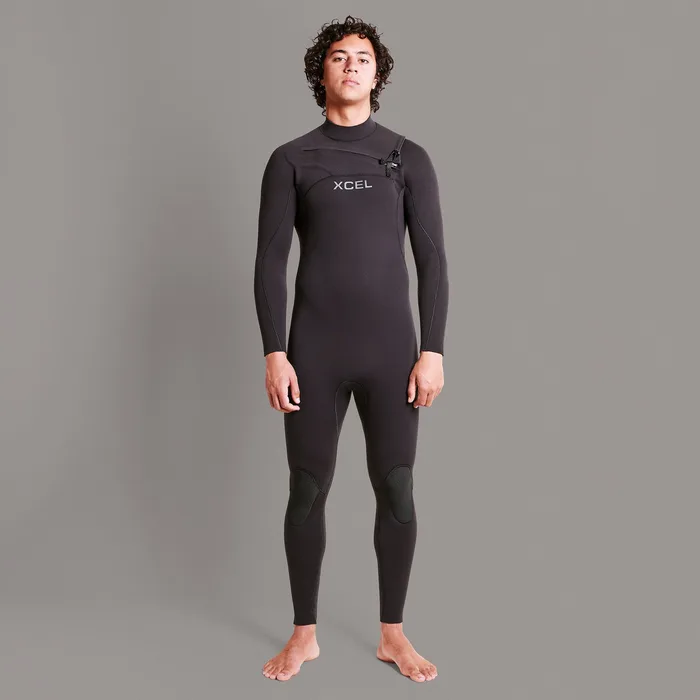
- Buy Xcel Comp+ Full Wetsuit 4/3mm The most fully specified 4/3 in the group: limestone neoprene, triple glued and blind stitched seams, and an infrared-fibre lining.
- Buy Quiksilver Everyday Sessions 4/3 mm Chest Zip Full Wetsuit A chest-zip GBS 4/3 with a plant-based rubber foam and a warm recycled-fibre lining at a mid-range tier.
- It depends Vissla High Seas II 4-3 Full No Zip Wetsuit A zipperless limestone 4-3 that Vissla rates for 13 to 18 degrees Celsius water, wrong if you dislike a tight entry.
- Skip Hurley Plus 4/3 mm Fullsuit A premium-tier 4/3 whose page says the least about its foam, warmth, and temperature fit.
What actually matters
- Foam type - Limestone neoprene, Yamamoto neoprene, and plant-based rubbers are marketed as lighter and stretchier than basic foam. A named type means you can compare suits across brands.
- Thickness - It is listed in millimetres, such as 4/3 or 3/2. Thicker foam is warmer and less flexible, so match it to your water.
- Seams - Glued and blind stitched seams keep water out while still stretching. Cheaper stitching can let water through.
- Entry type - Back zip, chest zip, and zipperless each trade ease for flush and stretch. Choose by who will be wearing it and how.
- Lining - A fleece or fibre lining speeds up the warm-up. It also changes how long the suit takes to dry.
- Neck and cuff seals - Sealed necks and cuffs reduce flushing, the cold rush of water through the suit. They matter in colder water.
- Fit - A suit that bridges at the back or sags at the crotch will flush no matter what the foam is. Try sizes if you can.
The specs, in plain English
Green flags vs red flags
Green flags
- The foam type is named on the page, such as limestone neoprene or plant-based rubber.
- The seams are described as glued and blind stitched, or triple glued.
- The page states a temperature range or an intended water range.
- The entry style and zipper type are both stated.
- The page names the lining and the neck seal.
Red flags
- The page says neoprene with no further detail.
- The seam description is only the word durable.
- There is no thickness stated beyond a marketing name.
- The suit is described as good for every condition.
- The page gives no care or warranty information.
Who's who: the brands
- Xcel - A wetsuit specialist whose current lines include Comp+, Infiniti, and Drylock, with named foams and linings on its pages.
- Vissla - A surf brand whose High Seas II suits state their limestone composition and a water temperature range.
- Quiksilver - A long-running surf brand with Everyday Sessions, Highline, and Young Guns 4/3 suits on its current site.
- Rip Curl - A surf brand with Dawn Patrol, Omega, and E-Bomb suits, including a zip-free E-Bomb 4/3 on its site.
- O'Neill - A surf brand whose Hyperfreak line includes a 4/3 comp zipless suit and a chest-zip 4/3.
How to read a listing without getting fooled
Start with the thickness and entry style, then look for the foam name and the seam construction. A good page states all four, plus the lining. Check whether the thickness is given in millimetres or only in the product name, and whether a temperature range is stated at all. If the page lists a range, compare it with your actual water, and add a hood or boots as it drops. A page that leans on adjectives and gives no foam or seam name is asking you to take its word for it.
How much should you spend?
Wetsuits fall into mid-range and premium tiers, and the premium tier does not always mean a more documented suit. Mid-range 4/3 suits from Quiksilver and Vissla state their foam, seams, and lining clearly. The premium tier buys a more detailed foam and lining story, as with the Xcel Comp+, but not always more stated information, as the Hurley Plus shows. Budget fullsuits exist, and they tend to describe their build in general terms. Pay for the tier only if the page states what it adds. Gloves, boots, and a hood are separate costs in colder water.
Questions, answered
What thickness do I need?
It depends on your water and how long you stay in. A 4/3 is a cool-water suit, and one maker states 13 to 18 degrees Celsius for its own 4-3. Go thicker, or add a hood and boots, as the water cools. A suit that is a little too warm is easier to manage than one that is too cold.
How should a wetsuit fit?
It should be snug everywhere with no bridging at the back or gaps at the armpits and crotch. A loose suit flushes water and feels colder than its thickness suggests. It should still let you raise your arms and paddle freely. Try more than one size if you can.
Can I use a surf wetsuit for swimming?
Yes, a fullsuit works for open-water swimming, though the suit is built for paddling and pop-ups. A dedicated swim suit sits differently on the shoulders. If you mostly swim, look at shoulder flexibility and how the neck seals. The foam and seam rules in this guide still apply.
How do I care for a wetsuit?
Rinse it inside and out with fresh water after each use. Hang it to dry in the shade and avoid direct sunlight, as Vissla directs on its care page. Do not fold it hard or store it damp. These habits protect the seams and the foam.
Or jump to the head-to-head: Xcel Comp+ Full Wetsuit 4/3mm vs Quiksilver Everyday Sessions 4/3 mm Chest Zip Full Wetsuit.