

Outdoors & Fitness
The Best Surf Wetsuits: 4 Compared (and One to Skip)
We compared four current 4/3 full-length wetsuits on neoprene type, seam construction, entry style, and what each maker actually states about warmth.
The short version
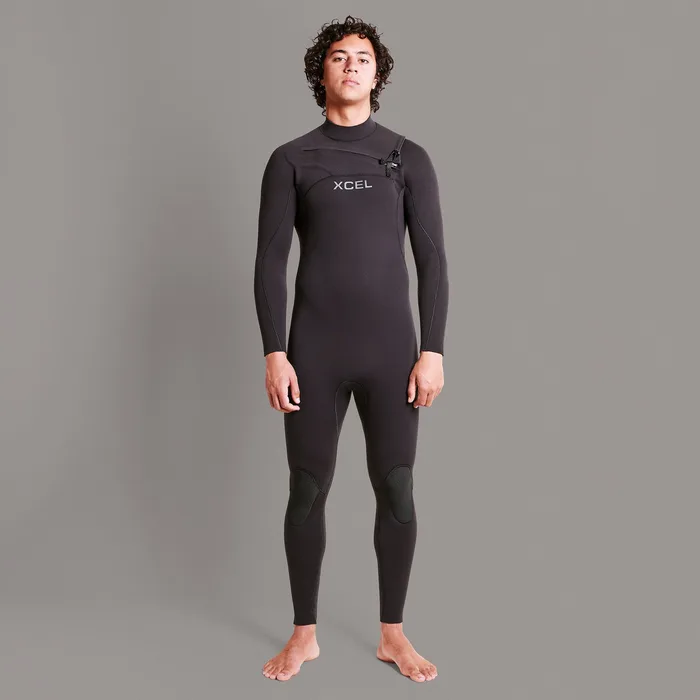
The Xcel Comp+ 4/3 is our best overall because it is the one suit here that names its foam as Japanese limestone neoprene, triple glues and blind stitches its seams, and calls its own interior and exterior stretch panels out by name. The Quiksilver Everyday Sessions 4/3 is the value pick: a chest-zip GBS suit with a plant-based rubber foam that Quiksilver describes as neoprene free, a warm Primaloft-based lining, and a clear seam spec. The Vissla High Seas II 4-3 No Zip is the one that depends: it is the only maker page in this group that gives a water temperature range, but a zipperless suit is harder to get into and rewards flexible surfers. The Hurley Plus 4/3 is the skip, because its page names no foam type, gives no temperature guidance, and double glues its seams where two rivals triple glue theirs. Best for: surfers and swimmers who want a cold-water 4/3 and care what is stated on the tag.
Our picks at a glance
- Xcel Comp+ Full Wetsuit 4/3mm - Buy. The most fully specified 4/3 in the group: limestone neoprene, triple glued and blind stitched seams, and an infrared-fibre lining.
- Quiksilver Everyday Sessions 4/3 mm Chest Zip Full Wetsuit - Buy. A chest-zip GBS 4/3 with a plant-based rubber foam and a warm recycled-fibre lining at a mid-range tier.
- Vissla High Seas II 4-3 Full No Zip Wetsuit - It depends. A zipperless limestone 4-3 that Vissla rates for 13 to 18 degrees Celsius water, wrong if you dislike a tight entry.
- Hurley Plus 4/3 mm Fullsuit - Skip. A premium-tier 4/3 whose page says the least about its foam, warmth, and temperature fit.
The verdict in 30 seconds
What mattered most
- Stated thickness
- Foam type on maker page
- Seam construction
- Entry type
- Lining
- Maker temperature range
A 4/3 neoprene fullsuit is the workhorse for cold-water surf and swim sessions, and the label on the hangtag tells you less than the spec sheet does. What separates a suit that lasts and stays warm from one that floods and cracks is mostly three things: the foam, the seams, and how you get into it. We read the maker pages for four current 4/3 suits from Xcel, Quiksilver, Vissla, and Hurley and compared only what each brand states. Two earn a clear buy, one suits a specific kind of surfer, and one is hard to justify given how little it says about itself.
The most fully specified 4/3 in the group: limestone neoprene, triple glued and blind stitched seams, and an infrared-fibre lining.
Best for: A regular cold-water surfer who wants a suit with documented foam, seams, and stretch.
- Xcel states the foam as Nanoprene Lite Japanese limestone neoprene, so you know what you are paying for.
- Seams are listed as triple glued and blind stitched, with Fusion X tape for added durability.
- The Thermo Dry Infrared interior and Channel Flex exterior are described as lighter and more stretchy than a plain jersey lining.
- The product page does not say where the zipper sits, so check the size guide and photos before ordering.
- Xcel gives no temperature range on this page, so you have to choose by thickness and local water.
- It sits in the premium tier, which is more than most casual surfers need.
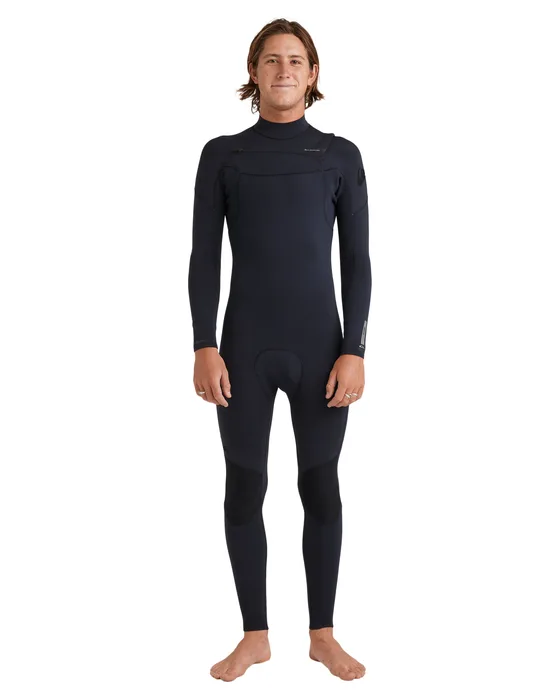
A chest-zip GBS 4/3 with a plant-based rubber foam and a warm recycled-fibre lining at a mid-range tier.
Best for: A surfer who wants GBS seams and a warm lining without paying for the flagship tier.
- Seams are stated as GBS, glued and blind stitched, with reinforcement tape at high stress points.
- The foam is Ocena natural rubber made from bio-based content and recycled carbon black, listed as 100% neoprene free.
- The interior uses Primaloft Biot Warm fabric and a water-based glue.
- The page gives no temperature range.
- The foam is not limestone or Yamamoto, so it will not read as a traditional neoprene suit on a spec comparison.
- Chest-zip entry is harder to pull on than a back zip for some people.
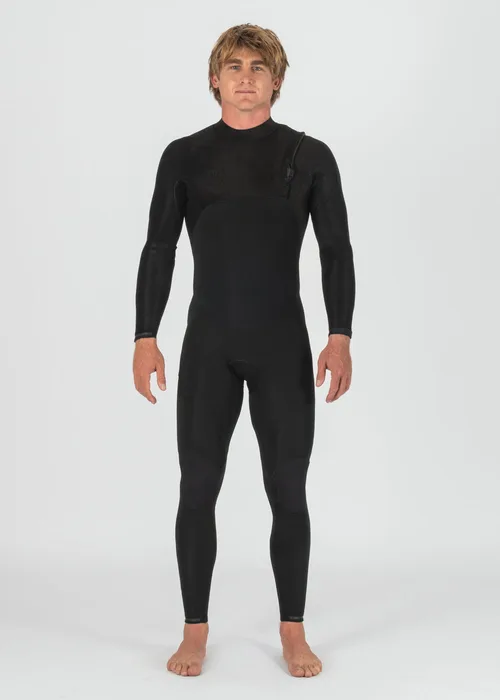
A zipperless limestone 4-3 that Vissla rates for 13 to 18 degrees Celsius water, wrong if you dislike a tight entry.
Best for: A flexible surfer who wants the stretchiest suit in this group and a stated temperature range.
- Vissla is the only maker here that states a range: made for cool water at 56 to 65 degrees Fahrenheit, or 13 to 18 degrees Celsius.
- The foam is listed as 80% limestone and 20% nylon, with triple glued and blind stitched seams.
- Stitch-less outer arm seams and liquid-taped cuffs are aimed at stretch and less flushing.
- Vissla warns that a zipperless suit takes fitness and flexibility to put on.
- The page gives no millimetre thickness beyond the 4-3 in the name.
- Warranty cover is one year on seams and one year on the neoprene.
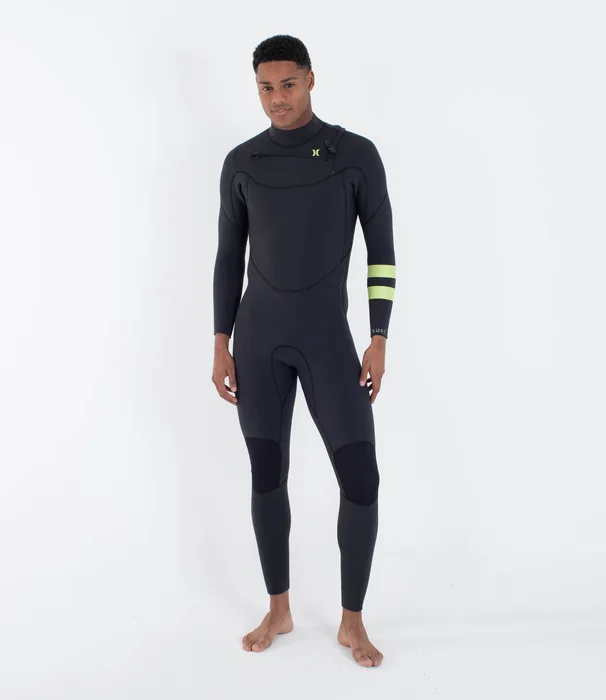
A premium-tier 4/3 whose page says the least about its foam, warmth, and temperature fit.
Best for: A Hurley loyalist who tries it on in a shop and likes the fit.
- The page lists fully taped, double glued, blind-stitched seams and a watertight chest zip.
- A quick-dry Xtend 2.0 lining and thermal jacquard lining in key areas are named.
- A Smoothskin neck seal and interior key pocket are listed.
- The only foam description is superstretch neospan, with no named neoprene type.
- Seams are double glued, where the Xcel and Vissla suits triple glue.
- Hurley states no temperature range, so you cannot match it to your water.
- It sits in the premium tier, but gives the buyer less to verify than the mid-range suits.
| Criteria | Xcel Comp+ Full Wetsuit 4/3mm Top pick | Quiksilver Everyday Sessions 4/3 mm Chest Zip Full Wetsuit | Vissla High Seas II 4-3 Full No Zip Wetsuit | Hurley Plus 4/3 mm Fullsuit |
|---|---|---|---|---|
| Verdict | Buy it | Buy it | It depends | Skip it |
| Best for | A regular cold-water surfer who wants a suit with documented foam, seams, and stretch. | A surfer who wants GBS seams and a warm lining without paying for the flagship tier. | A flexible surfer who wants the stretchiest suit in this group and a stated temperature range. | A Hurley loyalist who tries it on in a shop and likes the fit. |
| Price tier | $$$ · premium | $$ · mid-range | $$ · mid-range | $$$ · premium |
| Stated thickness | 4/3mm | 4/3mm | 4-3 (in name) | 4/3mm |
| Foam type on maker page | Nanoprene Lite Japanese limestone neoprene | Ocena natural rubber, neoprene free | Limestone neoprene, 80% limestone 20% nylon | Superstretch neospan, type not named |
| Seam construction | Triple glued, blind stitched, Fusion X tape | GBS, glued and blind stitched | Triple glued, blind stitched, stitch-less outer arms | Fully taped, double glued, blind stitched |
| Entry type | Watertight zipper, position not stated | Chest zip | Zipperless | Watertight chest zip |
| Lining | Thermo Dry Infrared interior | Primaloft Biot Warm interior | Thermal Fever Fiber lining | Xtend 2.0 quick-dry, thermal jacquard in key areas |
| Maker temperature range | Not stated on page | Not stated on page | 13 to 18 C (56 to 65 F) | Not stated on page |
| Neck and cuff sealing | Glide skin collar | Not stated on page | Glideskin neck, liquid taped cuffs | Smoothskin neck seal |
| Price tier | $$$ · premium | $$ · mid-range | $$ · mid-range | $$$ · premium |
Which one is right for you?
- A regular cold-water surfer who wants a suit with documented foam, seams, and stretch. Buy it Xcel Comp+ Full Wetsuit 4/3mm
- A surfer who wants GBS seams and a warm lining without paying for the flagship tier. Buy it Quiksilver Everyday Sessions 4/3 mm Chest Zip Full Wetsuit
- A flexible surfer who wants the stretchiest suit in this group and a stated temperature range. It depends Vissla High Seas II 4-3 Full No Zip Wetsuit
- A Hurley loyalist who tries it on in a shop and likes the fit. Skip it Hurley Plus 4/3 mm Fullsuit
How we judged the field
Five things matter in a surf wetsuit. Foam type and thickness decide warmth and stretch. Seam construction decides whether the suit floods or splits. Entry style decides how easy it is to put on and how much water flushes through. Lining decides how warm it feels the moment you step in. Last is how much the maker will tell you, since a stated range or foam type lets you check a claim, and a missing one means you are guessing.
The field splits into suits that name their foam and seams and suits that describe them in general terms. We picked four 4/3 fullsuits from four brands that have current pages, covering a limestone suit, a plant-based rubber suit, a zipperless suit, and a premium suit that says little. We compared only what each maker states and left out the figures it does not give.
The Xcel Comp+ 4/3 is the suit that tells you the most about itself. The page names the foam as Nanoprene Lite Japanese limestone neoprene, the interior as Thermo Dry Infrared, and the exterior as Channel Flex. Seams are triple glued and blind stitched, reinforced with Fusion X tape, and the collar is a Glide skin design. Xcel also notes dope-dye yarn and water-based glue. The page describes it as the most comfortable wetsuit Xcel makes, which is the brand’s own claim and not a measurement. The gaps are small but real: no temperature range, and no statement of where the zipper sits. It is also in the premium tier. If you surf cool water most weekends and want a stretchy suit with a documented build, this is the one to buy. If you only paddle out a few times a year, a cheaper suit with the same seam build is plenty.
The Quiksilver Everyday Sessions 4/3 is the sensible pick for most surfers. It is a chest-zip suit with GBS seams, meaning glued and blind stitched, plus reinforcement tape at high stress points. The foam is Ocena natural rubber, made from bio-based content and recycled carbon black, and Quiksilver lists it as 100% neoprene free. The interior uses Primaloft Biot Warm fabric and the glue is water based. That is a thoughtful spec for the mid-range tier. The trade-offs are that the page gives no temperature range, the foam will not satisfy someone who specifically wants limestone or Yamamoto neoprene, and a chest zip is a little slower to get into than a back zip. For a surfer who wants a warm, well-sealed 4/3 without paying flagship money, it is hard to beat. It suits regular surfers and swimmers who value seams and lining over a famous foam name.
The Vissla High Seas II 4-3 No Zip is the right suit for a specific buyer. It is made from 80% limestone and 20% nylon, uses Vissla’s Feather foam, and has triple glued, blind stitched seams with stitch-less outer arm seams. It is also the only maker page in this group that gives a temperature range: 56 to 65 degrees Fahrenheit, or 13 to 18 degrees Celsius. The catch is the entry. Vissla itself warns that a zipperless suit is harder to put on and needs fitness and flexibility. Liquid-taped cuffs and a Glideskin neck seal keep flushing down, and the warranty is one year on seams and on neoprene. If you are supple, surf cool water, and want the stretchiest option here, buy it. If you change in a car park with cold hands, take a zip suit.
The Hurley Plus 4/3 is a perfectly capable suit that gives the buyer too little to go on for its tier. The page lists fully taped, double glued, blind-stitched seams, a watertight chest zip, a Smoothskin neck seal, Xtend 2.0 quick-dry lining, and thermal jacquard lining in key areas. It does not name a neoprene type beyond superstretch neospan, and it gives no temperature range. Compare that with the Xcel and Vissla suits, which triple glue their seams and name their foam. At the premium tier, that is a poor trade. Hurley’s fit advice is to order your usual size, so a shop try-on will tell you more than the page does. It is the right call only for a Hurley fan who has tried one on and loves the fit. Everyone else gets more documented build elsewhere.
Xcel Comp+ Full Wetsuit 4/3mm vs Quiksilver Everyday Sessions 4/3 mm Chest Zip Full Wetsuit: which should you buy?
The Xcel Comp+ and the Quiksilver Everyday Sessions both give you glued and blind stitched seams, a named lining, and a zipper. The difference is the foam story and the tier. Xcel names Japanese limestone neoprene, triple glues its seams, and describes its infrared interior and stretch exterior in detail. Quiksilver uses a plant-based rubber foam it calls neoprene free, with GBS seams and a Primaloft-based lining. Neither page gives a temperature range, so thickness and your local water decide the rest.
Choose the Xcel if you surf often, want a limestone foam, and will pay for a more finely specified build. Choose the Quiksilver if you want the same core seam construction and a warm lining in the mid-range tier, and you are happy with a bio-based foam. If your water sits in the 13 to 18 degrees Celsius band Vissla states and you are flexible, the zipperless Vissla is the stretch option, but it is a different kind of buy.
What to look for
- Foam type: Look for a named foam such as limestone neoprene, plant-based rubber, or Yamamoto, since a generic neoprene label tells you nothing about stretch or weight.
- Seam construction: GBS means glued and blind stitched, and triple glued is a step up. A seam that is only described as durable is a flag.
- Entry type: Back zip is easiest, chest zip flushes less, and zipperless is the stretchiest and the hardest to put on.
- Thickness in millimetres: 4/3 means a thicker torso and thinner arms and legs, so match it to your water and add a hood or boots as it cools.
- Maker temperature range: A stated range lets you check the suit against your water. Treat a missing range as a gap to fill by asking, not a feature.
- Neck and cuff seals: Glideskin or smooth neck seals and taped cuffs cut flushing, which matters more than an extra millimetre.
Our final take
Buy the Xcel Comp+ 4/3 if you surf cool water often and want a suit that states its foam, seams, and lining. Buy the Quiksilver Everyday Sessions 4/3 if you want the same GBS seam construction at a lower tier. Pick the Vissla High Seas II 4-3 No Zip only if you are flexible, surf the 13 to 18 degrees Celsius range Vissla states, and accept a tough entry. Skip the Hurley Plus 4/3 unless you have tried one on and love it, because its page names no foam, gives no range, and double glues its seams at a premium tier. In every case, check what the maker will actually state before you pay.
Questions, answered
Is a 4/3 wetsuit warm enough for cold water?
It depends on the water and your tolerance, and only one of the four makers here states a range. Vissla says its High Seas II 4-3 is made for cool water at 13 to 18 degrees Celsius. Xcel, Quiksilver, and Hurley give no range on their product pages. Treat a 4/3 as a cool-water suit and add a hood, boots, or gloves as water gets colder.
What does 4/3 mean on a wetsuit?
The two numbers are neoprene thicknesses in millimetres. The first is the thicker panel, usually the torso, and the second is the thinner panel, usually the arms and legs. The thinner arms and legs give you flexibility for paddling. Check the product page, since a brand can use the number loosely.
Chest zip, back zip, or zipperless?
A back zip is the easiest to get into and the most common on entry suits. A chest zip lets water flush through less and gives you a seamless back, but the opening is tighter. Zipperless suits are the stretchiest, and Vissla warns that they need fitness and flexibility to put on. If you share a suit with someone or change in a car park, choose a zip.
What is the difference between limestone neoprene and a plant-based foam?
Limestone neoprene is made from calcium carbonate, rather than the petroleum base of older foam, and Xcel and Vissla both name it on their pages. Quiksilver instead uses Ocena natural rubber and calls it 100% neoprene free. Both are marketed as lighter and stretchier than plain foam, though the pages do not give a head-to-head figure. Pick based on the seams and fit before the foam label.
How long should a surf wetsuit last?
The makers here do not state a lifespan. Vissla lists a one-year warranty on seams and on neoprene, which is a fair guide to what the brand will stand behind. Rinsing inside and out in fresh water and drying in shade, as Vissla directs, is the most reliable habit for making a suit last. Seams and knee panels usually wear first.
Deciding between the top two? See our head-to-head: Xcel Comp+ Full Wetsuit 4/3mm vs Quiksilver Everyday Sessions 4/3 mm Chest Zip Full Wetsuit.
More Outdoors & Fitness reviews
 The Best Swim Goggles: 4 Compared (and One to Skip)
  The Best Table Tennis Sets: 4 Compared (and One to Skip)
  The Best Tennis Rackets for Beginners and Intermediates: 4 Compared (and One to Skip)
  The Best Tent Footprints: 4 Compared (and One to Skip)
  The Best Tent Stakes: 4 Compared (and One to Skip)
  The Best Trail Running Shoes: 4 Compared (and One to Skip)