

Outdoors & Fitness
The Best Tent Footprints: 4 Compared (and One to Skip)
A footprint has to be cut smaller than the tent floor or it collects rain and channels it underneath you. Only one maker here says so out loud.
The short version
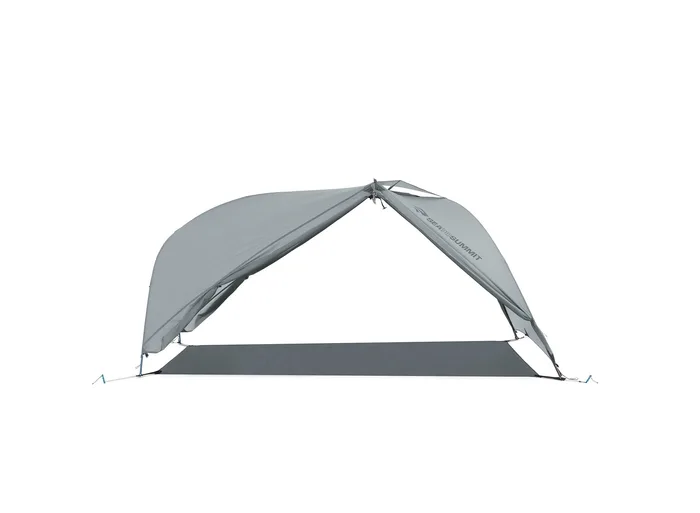
The Sea to Summit Telos Lightfoot is the pick and the only one here that states the whole picture: 68 denier waterproof polyester with a 1200mm waterhead rating, circular-bartacked hypalon attachment points, and a shape Sea to Summit says is sized to avoid water pooling. It also enables a fly-only pitch. The Big Agnes Copper Spur UL2 footprint is the lighter answer for that tent at a stated 141 grams, and it unlocks the Fast Fly configuration using footprint, fly, poles and stakes with the tent body left at home. The NEMO Hornet OSMO footprint does the core job well as an abrasion-resistant polyester tarp sized to its own tent, though NEMO publishes neither a denier nor a hydrostatic head. Skip the MSR Universal Footprint for most people: it is a generic rectangle in eight sizes, so it cannot be cut to a tent, cannot enable a fly-only pitch, and at 227 grams for a two-person regular it is heavier than a fitted one. Best for: buying the footprint made for your tent, not a rectangle that nearly fits.
Our picks at a glance
- Sea to Summit Telos Lightfoot Footprint - Buy. The only footprint here that publishes its fabric, its waterproof rating and the fact that its shape was drawn to stop water pooling.
- Big Agnes Copper Spur UL2 Footprint - Buy. A stated 141 grams, cut for one tent, and the key that unlocks pitching the fly without the tent body.
- NEMO Equipment Hornet OSMO Footprint - It depends. An abrasion-resistant polyester tarp cut to the tent it belongs to, described clearly and specified thinly.
- MSR Universal Footprint - Skip. A generic rectangle in eight sizes, which is convenient, heavier than a fitted footprint, and the one shape this product should not be.
The verdict in 30 seconds
What mattered most
- Cut for a specific tent
- Stated weight
- Fabric stated
- Hydrostatic head
- Fly-only or fast pitch
- Attachment hardware
A footprint looks like a rectangle of plastic and is one of the few bits of camping kit that can actively make your night worse. Cut it to the shape of the tent and it protects the floor and lets you pitch the fly on its own. Leave it sticking out past the edge and rain running off the fly lands on the footprint, puddles, and runs under the tent instead of into the ground. That single geometric fact decides most of this category, along with a second question: whether the footprint lets you pitch without the tent body at all.
The only footprint here that publishes its fabric, its waterproof rating and the fact that its shape was drawn to stop water pooling.
Best for: Telos owners, and anyone who wants the footprint spec sheet to actually contain specifications.
- 68 denier waterproof polyester with a stated 1200mm waterhead rating, which is a real number where most competitors give none.
- Sea to Summit states it is sized to avoid water pooling and collecting dirt, naming the failure mode directly.
- Strong hypalon perimeter attachment points, circular-bartacked so they flex without tearing out.
- Enables a Fly Only pitch, so the tent body can stay home on ultralight trips.
- Supports dry set-up and take-down, keeping the tent inner off wet ground during pitching.
- 267 grams for the TR2 size, heavier than the Big Agnes equivalent.
- Model-specific to the Telos range, so it is useless on any other tent.
- Premium price for what is fundamentally a shaped sheet of coated fabric.
- Two sizes only, TR2 and TR3, following the tents rather than offering a general fit.
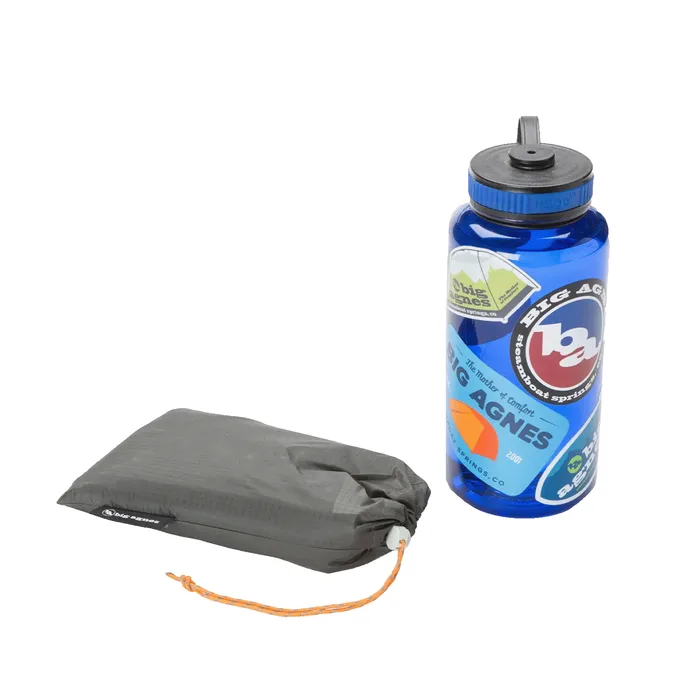
A stated 141 grams, cut for one tent, and the key that unlocks pitching the fly without the tent body.
Best for: Copper Spur owners, especially anyone who wants the option of a fly-only pitch to save weight.
- 141 grams, the lightest footprint in this comparison.
- Enables the Fast Fly configuration, which Big Agnes specifies as footprint, fly, poles and stakes with the tent body left behind.
- Cut specifically for the Copper Spur UL2, so the edges sit inside the tent floor where they belong.
- Also listed as compatible with the Copper Spur UL2 Bikepack, so one footprint covers both versions.
- Big Agnes publishes no denier and no hydrostatic head for the fabric.
- Fits two tent models and nothing else.
- The Fast Fly pitch needs the poles and fly from the same tent, so it is not a standalone shelter.
- A very light footprint is the one most likely to be punctured by the ground it is protecting you from.
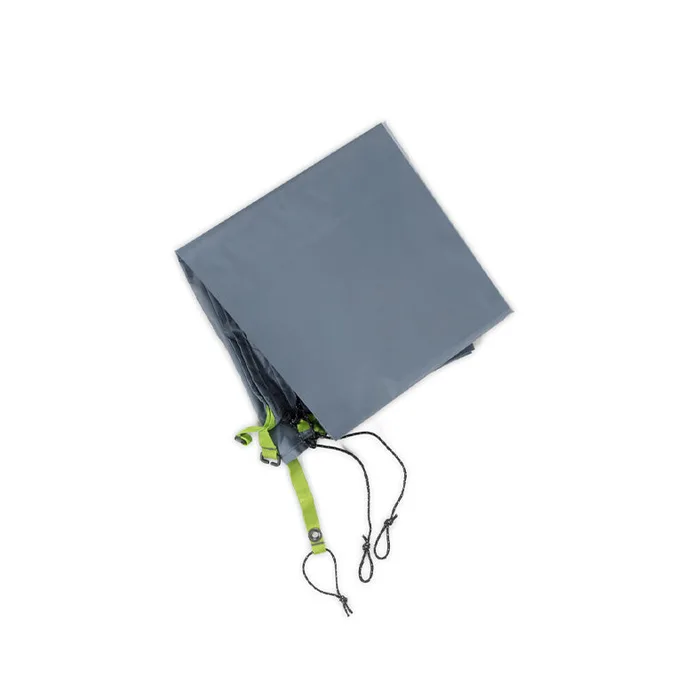
An abrasion-resistant polyester tarp cut to the tent it belongs to, described clearly and specified thinly.
Best for: Hornet owners who want the correctly shaped footprint and do not need a fly-only pitch.
- NEMO states it is perfectly sized to fit underneath the corresponding NEMO tent, which is the property that matters most.
- Abrasion-resistant polyester aimed squarely at rough and rocky ground.
- Offered in 1, 2 and 3 person versions to follow the tent range.
- NEMO is explicit about the purpose, reducing wear on the tent floor rather than claiming to add warmth or waterproofing.
- No denier published for the fabric.
- No hydrostatic head published, so the waterproof claim has no number attached.
- No weight published on the product page.
- No mention of a fly-only or fast pitch option, which the Big Agnes and Sea to Summit both support.
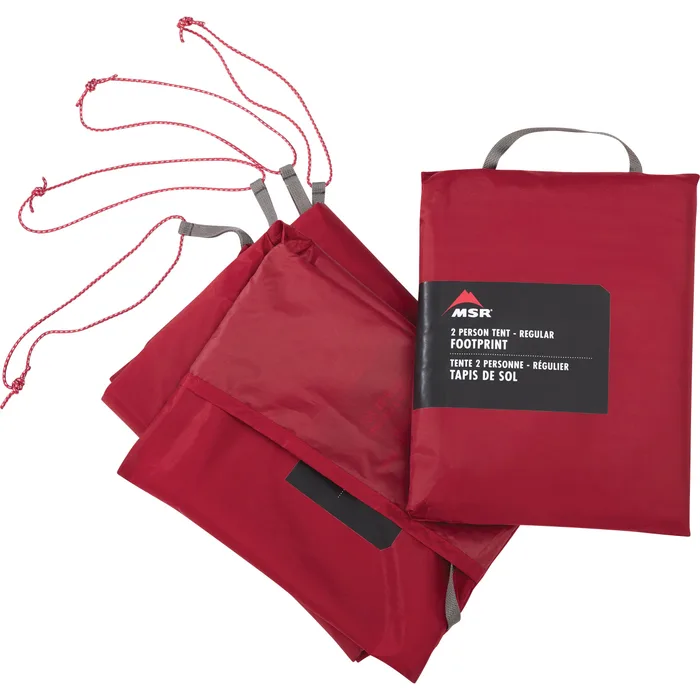
A generic rectangle in eight sizes, which is convenient, heavier than a fitted footprint, and the one shape this product should not be.
Best for: An older or obscure tent with no footprint made for it, accepting that you should trim or tuck the edges.
- Eight sizes from 1 person regular up to 6 person large, so something will roughly fit almost any tent.
- Full weights and floor dimensions published for every size, from 198 grams at 83 by 28 inches to 567 grams.
- Useful as a general ground sheet, a gear tarp or a porch mat rather than strictly as a tent footprint.
- Comes from a maker whose tents and stakes are well specified elsewhere.
- Being universal, it is a rectangle, so it cannot follow a tent's tapered floor and will protrude somewhere.
- A footprint that sticks out past the fly catches runoff and channels it under the tent, which is the exact failure to avoid.
- No fly-only or fast pitch capability, because that requires a footprint with the tent's own pole and stake attachment points.
- 227 grams for a two person regular against 141 grams for a fitted Big Agnes, so you carry more to get less.
| Criteria | Telos Lightfoot Footprint | Copper Spur UL2 Footprint | Hornet OSMO Footprint | Universal Footprint |
|---|---|---|---|---|
| Verdict | Buy it | Buy it | It depends | Skip it |
| Best for | Telos owners, and anyone who wants the footprint spec sheet to actually contain specifications. | Copper Spur owners, especially anyone who wants the option of a fly-only pitch to save weight. | Hornet owners who want the correctly shaped footprint and do not need a fly-only pitch. | An older or obscure tent with no footprint made for it, accepting that you should trim or tuck the edges. |
| Price tier | $$$ · premium | $$ · mid-range | $$ · mid-range | $$ · mid-range |
| Cut for a specific tent | Yes, Telos TR2 and TR3 | Yes, Copper Spur UL2 and UL2 Bikepack | Yes, per NEMO tent and size | No, generic rectangle in eight sizes |
| Stated weight | 267 g (TR2); 362 g (TR3) | 141 g | Not published | 198 g to 567 g by size; 227 g at 2 person regular |
| Fabric stated | 68 denier waterproof polyester | Not published | Abrasion-resistant polyester, denier not stated | Not published |
| Hydrostatic head | 1200 mm | Not published | Not published | Not published |
| Fly-only or fast pitch | Yes, Fly Only setup | Yes, Fast Fly with fly, poles and stakes | Not stated | No |
| Attachment hardware | Circular-bartacked hypalon perimeter points | Tent-specific attachment | Not stated | None tent-specific |
| Shape addresses water pooling | Stated: sized to avoid pooling and collecting dirt | Implied by the fitted cut | Implied by the fitted cut | No, a rectangle will protrude |
| Floor dimensions published | Not published | Not published | Not published | Yes, every size, e.g. 83 x 28 in at 1 person regular |
Which one is right for you?
- Telos owners, and anyone who wants the footprint spec sheet to actually contain specifications. Buy it Sea to Summit Telos Lightfoot Footprint
- Copper Spur owners, especially anyone who wants the option of a fly-only pitch to save weight. Buy it Big Agnes Copper Spur UL2 Footprint
- Hornet owners who want the correctly shaped footprint and do not need a fly-only pitch. It depends NEMO Equipment Hornet OSMO Footprint
- An older or obscure tent with no footprint made for it, accepting that you should trim or tuck the edges. Skip it MSR Universal Footprint
How we judged the field
Five things decide a footprint and the first is geometry rather than fabric. The footprint has to be cut smaller than the tent floor, because anything protruding past the fly’s drip line collects runoff and channels it underneath you. That is the failure this product exists to prevent, and it is the reason a fitted footprint beats a rectangle even when the rectangle is made of better material. The second is whether the footprint carries the tent’s own pole and stake attachment points, because that is what enables a fly-only pitch with the inner body left at home. The third is fabric, described as a denier figure and ideally a hydrostatic head. The fourth is weight, which is the cost of the first three. The fifth is the attachment hardware at the corners, which is what tears out first.
On disclosure the field is uneven in a way worth naming. Sea to Summit publishes a denier, a waterproof rating in millimetres, the hardware type and an explicit statement that the shape was drawn to stop water pooling. Big Agnes publishes a weight and the Fast Fly capability but no fabric figures. NEMO describes the material qualitatively and publishes no numbers at all. MSR, unusually, publishes the most complete size table of the four, with a weight and floor dimensions for all eight sizes, and is nonetheless the one we would steer people away from, because the thing it is missing is the fitted shape rather than the data.
Sea to Summit Telos Lightfoot Footprint - buy
The Telos Lightfoot is the footprint we would hold up as the template for how these should be sold. Sea to Summit states 68 denier waterproof polyester with a 1200mm waterhead rating, which are the two figures that tell you what the fabric will actually do, and almost nobody else in this category provides either. The perimeter attachment points are hypalon with circular bartack stitching, which is the detail that matters because corner attachments are where a footprint fails, and a bartacked flexible patch survives the repeated tug of a guyed-out pitch better than a sewn webbing tab. The shape is stated as sized to avoid water pooling and collecting dirt, which is the maker naming the failure mode rather than leaving you to discover it. It also supports a Fly Only pitch and dry set-up, keeping the inner off wet ground while you put the tent up. The costs are that it weighs 267 grams in the TR2 size, it is premium-priced, and it fits Telos tents and nothing else.
Big Agnes Copper Spur UL2 Footprint - buy
The Copper Spur UL2 footprint is the lighter answer and it is bought for one feature. At a stated 141 grams it is the lightest here by a comfortable margin, and it is cut for the Copper Spur UL2, so its edges sit inside the tent floor rather than out in the drip line. The reason to own it is Fast Fly: Big Agnes specifies the configuration as footprint, fly, poles and stakes, with the tent body left behind. That converts a three-season tent into a much lighter shelter for trips where bugs are not the issue, and it is a capability a generic sheet cannot give you at any weight. It also covers the Copper Spur UL2 Bikepack, so one purchase serves both. Against it, Big Agnes publishes no denier and no hydrostatic head, so you are trusting the brand on fabric, and a footprint this light is the one most likely to be punctured by exactly the ground it is there to protect you from.
NEMO Equipment Hornet OSMO Footprint - it depends
The Hornet OSMO footprint does the main job properly and tells you very little about how. NEMO describes an abrasion-resistant polyester tarp perfectly sized to fit underneath the corresponding NEMO tent, which is the single most important property, and it is offered in 1, 2 and 3 person versions so the shape follows the tent range. NEMO is also admirably clear about scope, framing the footprint as reducing wear and tear on the tent floor from rough or rocky ground rather than making vaguer claims about warmth or waterproofing. What is absent is numbers: no denier, no hydrostatic head, no weight on the product page, and no mention of a fly-only pitch. That last one is the substantive gap against the Big Agnes and the Sea to Summit, both of which turn the footprint into a weight-saving option rather than only a protective layer. If you own a Hornet and want the right shape, this is the right buy; you are simply buying it on trust.
MSR Universal Footprint - skip
The Universal Footprint is the most thoroughly documented product here and the one we would not buy, which is an unusual combination. MSR publishes a weight and floor dimensions for all eight sizes, from 198 grams at 83 by 28 inches up to 567 grams, which is more size data than the other three combined. The problem is the word universal. A footprint that fits any tent is a rectangle, and tents are not rectangles: they taper, they have angled corners, and their flies shed water along a line the footprint needs to stay inside. A rectangle will protrude somewhere, and where it protrudes it collects runoff and guides it under the floor. It also cannot support a fly-only pitch, because that needs the tent’s own attachment points. And the weight goes the wrong way: 227 grams for a two person regular against 141 grams for a fitted Big Agnes. There is one good reason to buy it, which is an older or obscure tent with no fitted option, and in that case trim or tuck the edges.
Sea to Summit Telos Lightfoot Footprint vs Big Agnes Copper Spur UL2 Footprint: which should you buy?
The Telos Lightfoot and the Copper Spur footprint are the two to choose between, and in practice the choice is made for you by which tent you own. Both are fitted, both enable a pitch without the inner body, and both are the right answer for their own shelter. What is worth comparing is how the two makers sell them, because it tells you what you are getting.
Sea to Summit gives you the fabric in denier, the waterproof rating in millimetres, the hardware at the corners, and a sentence about why the shape is what it is. Big Agnes gives you a weight and a capability. The Sea to Summit is 126 grams heavier in the sizes quoted, and some of that weight is the 68 denier fabric and the hypalon attachment points doing real work on rough ground. The Big Agnes is the one to take if your priority is the lightest possible Fast Fly setup and you pitch mostly on forgiving surfaces. Buy the Sea to Summit if you want to know what you are carrying, and the Big Agnes if you want to carry as little of it as possible.
What to look for
- Buy the footprint made for your tent: the fitted shape is the feature, and it is the one thing a generic sheet cannot replicate.
- Check it enables a fly-only pitch if you want one: that needs the tent’s own pole and stake attachment points, which only a fitted footprint carries.
- Look for a denier and a hydrostatic head: 68D and 1200mm are real figures, and most makers publish neither.
- Compare weight against a fitted alternative: a universal rectangle can weigh more and do less, at 227 grams against 141.
- Inspect the corner attachments: bartacked hypalon patches outlast plain sewn tabs, and corners are where footprints fail.
- If you improvise, cut it small: a home-made sheet is fine as long as no edge reaches past the fly’s drip line.
Our final take
Footprints are the rare accessory that can make things worse if you buy the wrong shape, because a sheet that sticks out past the fly turns rain into a puddle under your floor. That makes fit the whole game, and it is why a fitted footprint at 141 grams beats a universal rectangle at 227. Sea to Summit’s Telos Lightfoot is the best-documented example in the category, publishing a denier, a waterproof rating and an explicit note that the shape exists to stop water pooling. Big Agnes gives you the lightest fitted option and the Fast Fly pitch. And a universal footprint is the answer to exactly one question, which is what to do about a tent nobody makes one for.
Questions, answered
Why does a footprint need to be smaller than the tent floor?
Because of where the rain goes. Water runs off the fly and lands just outside the tent, and if your footprint extends past that line it catches the runoff like a shallow tray. The water then sits between the footprint and the tent floor and finds its way under you, which is worse than having no footprint at all. A fitted footprint stops short of the fly's drip line, so runoff hits the ground and soaks away. Sea to Summit is unusually direct about this, stating that the Telos Lightfoot is sized to avoid water pooling. If you use a generic sheet, tuck or trim the edges so nothing protrudes.
What is a fly-only or fast pitch?
It is pitching the tent using the footprint, the fly, the poles and the stakes, leaving the mesh inner body at home. Big Agnes calls it Fast Fly and Sea to Summit calls it Fly Only. You get a covered shelter with a protected floor at a large weight saving, at the cost of no bug protection and more draughts. It only works with a footprint made for that tent, because the footprint has to carry the same pole and stake attachment points the tent body would. That is the clearest argument for buying the maker's own footprint rather than a generic sheet.
Is a footprint worth the weight at all?
It depends on the ground and how much you value the tent. A footprint protects the floor from abrasion and punctures, which is the expensive part of a tent to replace and the one that leaks when it fails. On grass and soft forest floor you can reasonably skip it. On granite, gravel, desert crust or anywhere with thorns, it is cheap insurance. The other consideration is that a fly-only capable footprint pays for its own weight on trips where you leave the tent body behind.
Can I just use a sheet of plastic?
Yes, and plenty of people do. Polycryo window film and builder's plastic are both popular, very light and very cheap. The two rules are the same as for a bought footprint: cut it smaller than the tent floor so it cannot catch runoff, and accept that it will not give you a fly-only pitch because it has no attachment points. A home-made sheet is the sensible answer for an old tent with no footprint available, which is also the one case where MSR's universal makes sense.
What do denier and hydrostatic head actually tell me?
Denier describes the thickness of the yarn, so a 68 denier fabric resists abrasion better than a 15 denier one and weighs more. Hydrostatic head, quoted in millimetres, is how tall a column of water the fabric resists before it leaks, so 1200mm is a real waterproof rating rather than a water-resistant one. Sea to Summit publishes both. Nobody else in this comparison publishes either, which does not make their footprints bad, but it does mean you are buying on the brand rather than on the fabric.
Deciding between the top two? See our head-to-head: Sea to Summit Telos Lightfoot Footprint vs Big Agnes Copper Spur UL2 Footprint.
More Outdoors & Fitness reviews
 The Best Tent Stakes: 4 Compared (and One to Skip)
  The Best Trail Running Shoes: 4 Compared (and One to Skip)
  The Best Treadmills: 4 Compared (and One to Skip)
  The Best Trekking Poles: 4 Compared (and One to Skip)
  The Best Via Ferrata Sets: 4 Compared (and One to Skip)
  The Best Adjustable Weight Benches: 4 Compared (and One to Skip)