Explained
Sun Hats, Explained
After reading, you'll understand what a UPF number promises, how much brim you need, and which claims on a hat page are worth trusting.
In this guide
First-time buyers often assume any wide-brim hat protects against the sun. In practice, protection depends on the fabric rating, the brim width and how well the hat stays on your head. Listings also mix measured facts, like a UPF number, with soft claims like breathable and cooling. This guide separates the two so you can read a maker page quickly and decide.
The 30-second version
- A UPF number is a fabric rating, so it only tells you about the material the maker tested.
- Brim width matters as much as the fabric, and the Skin Cancer Foundation suggests at least three inches.
- A hat with no chin cord is a gamble, because wind turns a wide brim into a sail.
- No UPF claim means no measured protection, even if the product name includes the words sun hat.
- Packability is a claim to check, since some makers say it packs flat and others say not to pack it.
The products this guide is about
Our verdict on each, with the full reasoning on the companion review.
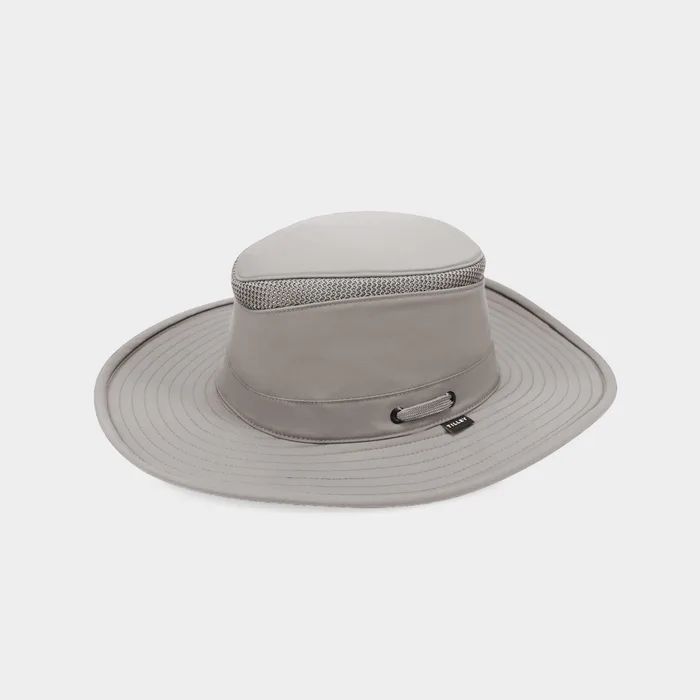
- Buy Tilley LTM6 Airflo Sun Hat A rated UPF 50+ broad-brim hat with a tuck-away wind cord, mesh crown vents and a for-life guarantee.
- Buy Sunday Afternoons Ultra Adventure Hat A UPF 50+ hat with a neck cape, adjustable chinstrap and a brim that packs small and flat.
- It depends Outdoor Research Helios Sun Hat A very light UPF 50+ nylon hat with a detachable chin cord and a narrower 2.75 inch brim.
- Skip Wallaroo Catalina A hand-crocheted raffia hat with a 3 1/2 inch brim that states no UPF rating and is not meant to be packed.
What actually matters
- UPF rating - This tells you how much UV passes through the fabric, and a higher number means less gets through. A maker that states a number has made a claim you can compare, and one that does not has left it out.
- Brim width - A wider brim shades more of your face, ears and neck. The Skin Cancer Foundation suggests at least three inches.
- Chin cord - This keeps the hat on in wind and on boats. Detachable and tuck-away versions are more comfortable when you do not need them.
- Neck cape - A cape hangs from the back of the hat and shades the neck and sometimes the shoulders. It adds coverage but can feel warm in still air.
- Ventilation - Mesh panels at the crown let heat out. A hot hat gets taken off, which defeats the point.
- Fabric weave - Tightly woven fabric lets less light through than loose weaves. The Skin Cancer Foundation recommends tight weaves over loose straw.
- Care and packing notes - These tell you how the hat will behave in a bag or a wash. Some hats say not to wash or pack them.
The specs, in plain English
Green flags vs red flags
Green flags
- The maker page states a UPF number, such as UPF 50+.
- The page gives brim width in inches or centimeters, ideally three or more.
- A chin cord or strap is named, with details on whether it detaches.
- Ventilation is described by location, such as mesh at the crown.
- Care and packing notes are specific and say how the hat should be stored.
Red flags
- The page says sun hat but states no UPF rating.
- No brim measurement is given.
- There is no chin cord, strap or fit adjuster listed.
- The care notes say do not wash or packing not recommended.
- The weave is open or crocheted, which lets light through.
Who's who: the brands
- Tilley - A hat maker known for the buoyant, for-life-guaranteed Airflo and its tuck-away wind cord.
- Sunday Afternoons - A sun-protection hat brand known for neck capes, flat-packing brims and UPF 50+ claims across many styles.
- Outdoor Research - An outdoor gear maker whose sun hats lean light and technical, with detachable chin cords.
- Wallaroo - A hat maker known for travel and fashion hats, many with UPF claims and some, like the Catalina, with none.
How to read a listing without getting fooled
Read a hat page in this order. First find the UPF line: a number means a claim, and silence means none. Then find the brim measurement and compare it with three inches. Next find the retention system, whether cord, strap or cinch. Then look at the fabric and weave, and at the care notes, which are where makers admit limits such as do not wash or packing not recommended. Be careful with soft words like breathable, cooling or lightweight, because they are not measured. A page that states numbers for UPF, brim and weight has given you something to compare.
How much should you spend?
Budget hats can carry a UPF rating and a chin cord, so price is not a guide to protection. Mid-range hats usually add a neck cape, better venting or a flat-packing brim. Premium hats such as the Tilley charge for build quality, a for-life guarantee and features like buoyancy. Straw and raffia hats sit across the tiers, but a higher price does not add a UPF claim the maker did not make. Spend more only if you wear the hat often enough to use its durability.
Questions, answered
Do I still need sunscreen with a UPF hat?
Yes. A hat shades the areas under and near the brim, but it does not cover your lower face, arms or hands. The Skin Cancer Foundation lists clothing as one layer of protection, not a replacement for others. Use sunscreen on exposed skin and reapply as directed.
Does a wet hat lose protection?
It can. The Skin Cancer Foundation says clothing that gets stretched or wet loses some protective ability and becomes more transparent. That matters for fishing and boating hats that get splashed. Check the maker's care notes, and if the hat gets soaked, consider whether it still shades you well.
Is a boonie better than a baseball cap for sun?
For shade, usually yes, because a boonie has a brim all around and a cap does not. A cap leaves the ears and the back of the neck exposed unless it has a cape. Choose a cap only if you need the fit under a helmet or the low profile.
How should I wash a technical sun hat?
Follow the maker's care notes. Tilley says to machine wash delicate or hand wash cold with mild detergent, remove the wind cord and foam from the crown pocket first, then reshape and air dry. Other makers give different steps, and some straw hats say not to wash at all.
Or jump to the head-to-head: Tilley LTM6 Airflo Sun Hat vs Sunday Afternoons Ultra Adventure Hat.