Explained
Snow Sleds, Explained
After reading, you'll understand what a sled's material, weight limit, age range and steering actually tell you, and which details to demand before buying.
In this guide
Sled pages range from detailed spec tables to a single line of marketing. First-time buyers often compare colour and shape and miss the facts that matter. The biggest trip-up is assuming every sled states a weight limit and age, when many do not. The second is treating steering and braking as extras rather than the main difference between designs.
The 30-second version
- Look for a stated weight limit, because some makers publish one and others publish nothing.
- Check for a minimum age, since the Hamax sleds here state 4 years and up.
- Steering and braking hardware, such as a wheel and handbrake, is what separates a controllable sled from a drag-to-stop one.
- Material changes the ride, from HDPE with steel to foam to an inflatable skin.
- Read the maker's safety notes, which for Hamax include a helmet, obstacle-free runs and early braking.
The products this guide is about
Our verdict on each, with the full reasoning on the companion review.
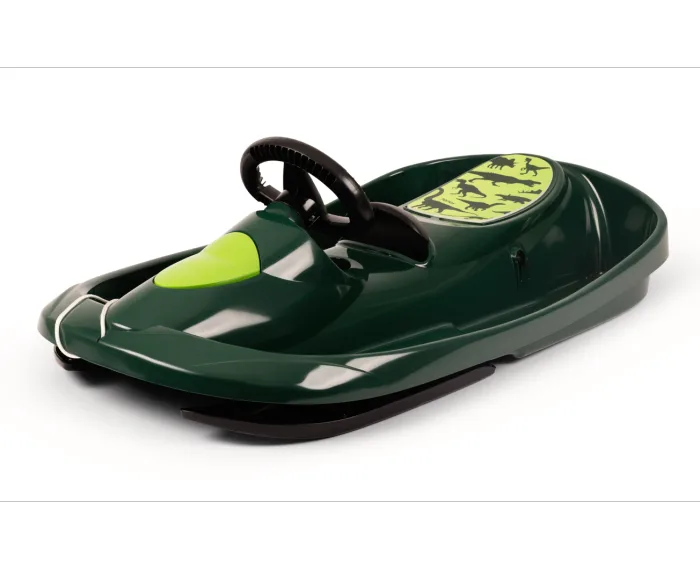
- Buy Hamax Sno Rex A steerable kids' sled with a handbrake and clearly stated age and weight limits.
- Buy Hamax Sno Glider A light, simple board sled for younger kids with stated limits and a pull thread.
- It depends Slippery Racer Downhill Falcon Foam Toboggan A 49 inch foam toboggan for one or two riders that the maker says suits kids and adults.
- Skip Airhead Justa Tube A dual-use inflatable tube whose page lists no weight limit, age range, rider count or handles.
What actually matters
- Weight limit - This is the heaviest load the maker says the sled is built for. It tells you whether the sled fits your rider and whether the maker has thought about it at all.
- Recommended age - A minimum age shows who the maker designed the sled for. Without one you cannot compare the sled to your child.
- Steering - Wheel, handle or none. It decides whether a rider can choose a direction.
- Braking - A handbrake or foot brake gives a way to slow down. Tubes and board sleds typically depend on drag instead.
- Material - HDPE, foam and inflatable skins react differently to cold, impact and punctures. A cold-resistant claim from the maker matters for plastic.
- Weight and length - A lighter, shorter sled is easier for a child to pull uphill and easier to store.
- Safety notes - Helmet advice, slope selection and braking guidance show the maker has thought about real use.
The specs, in plain English
Green flags vs red flags
Green flags
- A stated weight limit and minimum age on the maker page.
- A steering wheel, handbrake or other braking feature.
- A material described as cold-resistant.
- Clear safety notes such as helmet and slope guidance.
- A weight and length you can actually carry and store.
Red flags
- No weight limit or age on the product page.
- No handles listed on a tube.
- No steering or braking at all on a sled sold for kids.
- Vague marketing with no material or size details.
- A dual-purpose product that is mainly a water toy.
Who's who: the brands
- Hamax - Publishes weight limits, ages and safety notes for its steerable plastic sleds.
- Slippery Racer - Sells plastic, foam and inflatable sleds and tubes under a cold-resistant coating it calls IceVex.
- Airhead - Known for towable and water tubes, with a small range of plastic sleds and tubes for snow.
- STIGA - Swedish maker with a Snowracer line and winter sports ranges.
- Flexible Flyer - A long-established American sled name, which we could not load for specs this round.
How to read a listing without getting fooled
Start with the spec block, not the photos. Find the material, the length, the stated weight limit and the recommended age. Then look for steering and braking. If a page leaves out limits, ask yourself whether you are happy guessing. Read any warnings, such as a Proposition 65 notice, and check whether the maker gives guidance on helmets and where to sled.
How much should you spend?
Budget sleds are usually simple plastic or foam boards or tubes, and they can be fine for gentle slopes if the limits are stated. Mid-range sleds add steering, braking hardware and a steel-reinforced frame, which is where control improves. Premium sleds add more engineering for older riders, such as the Hamax Sno Blade with its twin-tip skis. Paying more matters most when it buys steering, braking and published limits.
Questions, answered
Can adults use a kids' sled?
Check the stated weight limit first. The Sno Glider is rated to 60 kg and the Sno Rex to 80 kg rider weight, so many adults exceed them. A longer two-rider design like the Falcon is aimed at kids and adults, but its page gives no weight limit. Choose the sled that states a limit above your rider.
Are foam sleds safer than hard plastic?
The pages we read do not make that claim. Foam is softer, but it often has no steering or braking and may publish no limits. Safety depends on speed, slope, control and a helmet, not just the material.
How do I carry a sled back uphill?
Many sleds include a pull thread or rope. The Sno Glider has a thread attached to the board, and the Airhead plastic sleds have an attached rope lanyard. A lighter sled, such as the 1.20 kg Glider, is much easier for a child to tow.
What should I check about the slope?
The Hamax pages advise choosing runs free of dangerous obstacles and braking early. Pick a slope with a clear, gentle runout, and keep it away from roads and water. Supervise young children.
Or jump to the head-to-head: Hamax Sno Rex vs Hamax Sno Glider.