Explained
Sleeping Bags, Explained
After reading this you will know what a sleeping bag's temperature rating, fill power, and shape actually mean, and how to pick one that keeps you warm without overpaying or overpacking.
In this guide
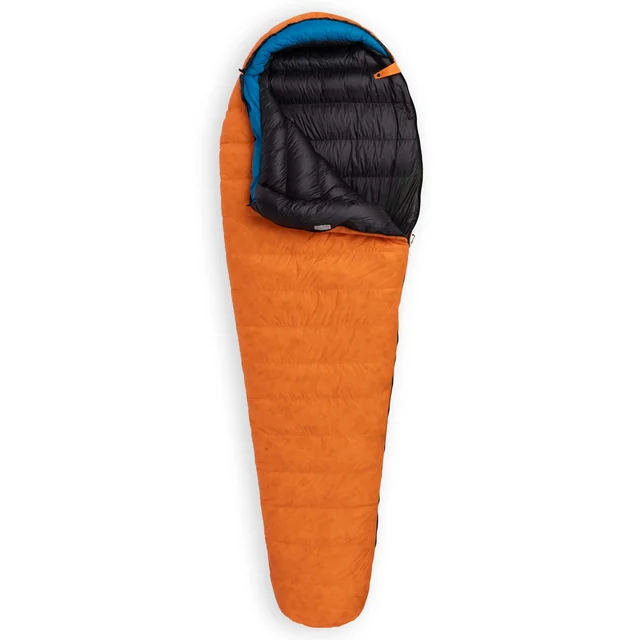
A sleeping bag looks simple until you start shopping and hit a wall of numbers: a '20-degree' rating, '850 fill power', 'ISO comfort limit', mummy versus spoon. The single thing that trips up most first-time buyers is trusting the big number in the product name, which is often closer to a survival figure than the temperature you will actually be comfortable at. This guide decodes the specs so you can match a bag to how cold it gets, how you sleep, and how far you have to carry it.
The 30-second version
- Trust the comfort rating, not the name. The number in the title (like '20') is usually a lower-limit or survival figure; the standardized ISO/EN comfort rating is the temperature an average cold sleeper actually stays warm at.
- Down wins on warmth-to-weight; synthetic wins when wet. Down packs smaller and weighs less for the same warmth, but synthetic keeps insulating when damp and costs less, which is why it is the safer pick for persistently wet trips.
- Fill power is efficiency, not total warmth. A higher fill power means the same warmth for less weight and bulk, so an 850-fill bag can be lighter and smaller than a 550-fill bag rated for the identical temperature.
- Shape decides comfort as much as warmth. A snug mummy is warmest and lightest, but side sleepers and larger bodies often sleep far better in a roomier or spoon-shaped cut.
- Your real-world warmth varies. Metabolism, sleeping pad, clothing, and humidity all shift how warm a bag feels, so build in a margin for the coldest night you expect.
The products this guide is about
Our verdict on each, with the full reasoning on the companion review.
- Buy Feathered Friends Swallow UL 20 The warmth-to-weight benchmark: near-two-pound warmth in a genuinely sub-two-pound bag.
- Buy NEMO Disco 15 Endless Promise A spoon-shaped down bag that trades a little weight for the roomiest, most comfortable side-sleeping on trail.
- It depends Kelty Cosmic Down 20 The perennial value pick in real down, as long as you judge it by the comfort number rather than the name on the tag.
- Skip Marmot Trestles Elite Eco 20 A capable, damp-proof synthetic bag whose weight and bulk make it a tough sell for carrying any real distance.
What actually matters
- Honest temperature rating - the standardized comfort rating, not the marketing number, tells you the night-time low you can actually sleep through in comfort.
- Warmth-to-weight ratio - how much warmth you get per ounce carried; this is the difference between a pleasant hike and a miserable one if you backpack.
- Insulation type (down vs synthetic) - down is lighter, more compressible, and longer lasting; synthetic is cheaper and keeps working when wet.
- Packed size - a bag that will not compress eats scarce pack volume even if it is light, so weight and packed size matter together.
- Fit and shape - the cut determines whether you sleep restfully or fight the bag all night, especially for side sleepers.
- Moisture resilience - a water-resistant shell and treated (hydrophobic) down buy margin against tent condensation and damp weather.
- Durability and care - how well a bag holds its loft over years, which decides whether it is a one-season purchase or a decade-long one.
The specs, in plain English
Green flags vs red flags
Green flags
- The listing quotes a standardized ISO/EN comfort rating, not just a single marketing number.
- Higher fill-power down (roughly 800 and up) if you are counting weight and pack space.
- A shape that matches how you sleep - roomier or spoon-shaped for side sleepers, trim mummy for weight savings.
- A water-resistant shell and, for down, hydrophobic treatment if you camp in damp conditions.
- A draft tube along the zipper and an adjustable, insulated hood and collar.
- A brand with a reputation for conservative, trustworthy temperature ratings.
Red flags
- Only a single bold temperature number with no ISO/EN comfort figure anywhere in the specs.
- A 'backpacking' bag that weighs well over three pounds and packs bulky - that is really a car-camping bag.
- Low fill-power down (around 550) sold at a premium price, since you pay for down without the weight savings.
- Vague fill claims like 'goose-type down' or unstated fill power.
- No draft tube, no hood cinch, or a flimsy zipper prone to snagging.
- Reviews and owner reports consistently saying it sleeps colder than its label.
Who's who: the brands
- Feathered Friends - US hand-built premium down bags known for high fill power and conservative, trustworthy temperature ratings.
- NEMO - Design-led bags known for comfort features like spoon shapes and venting, plus recyclable-construction efforts.
- Kelty - Long-running value brand whose down bags are the perennial budget entry point into real down.
- Marmot - Broad outdoor line with capable, often eco-focused synthetic and down bags across price tiers.
- REI Co-op - House brand offering dependable, fairly priced bags that are easy to compare and return.
- The North Face - Widely available bags spanning casual camping to technical mountaineering use.
How to read a listing without getting fooled
Start by ignoring the big number in the product name and hunting for the ISO/EN comfort rating in the spec table - that is the temperature you can actually sleep through. Next, read the insulation line: note whether it is down or synthetic, and for down, the fill power, which tells you how efficiently it turns weight into warmth. Then check two weights together, the 'trail' or fill weight and the packed size, because a light bag that will not compress still hogs pack volume. Confirm the shape and cut match how you sleep, and look for a draft tube, an adjustable hood, and a water-resistant shell. Finally, weigh owner reports about whether the bag runs warm or cold, since real-world experience often corrects an optimistic label.
How much should you spend?
Spend based on how often and how seriously you camp rather than on chasing the highest number. Two things drive cost most: the insulation (high fill-power down is far more expensive than synthetic or low fill-power down) and the quality of the shell and construction. For occasional weekend trips in mild conditions, a mid-range down or a good synthetic bag delivers most of the comfort for a fraction of a flagship's cost, and the extra weight rarely matters. Paying up for premium high fill-power down is worth it mainly when you hike real distances and every ounce and liter of pack space counts, or when you want a bag that holds its loft for many years. It is rarely worth paying flagship money for a bag you will use a handful of nights a year, and it is never worth paying a premium for low fill-power down, since you get the cost of down without the weight savings.
Questions, answered
What temperature rating do I actually need?
For spring-through-fall camping in most temperate areas, a bag with a comfort rating in the low 20s to low 30s Fahrenheit covers the majority of nights. Read the ISO/EN comfort rating rather than the number in the product name, which is often a lower-limit or survival figure. When in doubt, choose a bag rated a few degrees colder than you expect and vent it on warm nights.
Down or synthetic - which should I buy?
Down is lighter, packs smaller, and lasts longer, making it the default for backpacking and most camping. Synthetic keeps insulating when damp, dries faster, and costs less, so it is the better pick for persistently wet trips, boating, or a tight budget. Many people happily own a down bag and protect it with a waterproof stuff sack.
Does a higher fill power always mean a warmer bag?
No. Fill power measures efficiency, not total warmth - how much loft an ounce of down produces. A high fill-power bag delivers the same warmth for less weight and bulk, but a lower fill-power bag can be just as warm if it simply uses more down. Higher fill power costs more, so it mainly pays off when saving weight and space matters.
Why do people say a bag sleeps colder than its rating?
Ratings are standardized estimates for an average sleeper, but real warmth depends on your metabolism, what you wear, your sleeping pad's insulation, humidity, and how well fed you are. Women and colder sleepers often sleep several degrees colder than a bag's rating suggests. Treat the rating as a comparison tool and build in a margin for the coldest night you expect.
How do I care for a sleeping bag so it lasts?
Store it loosely in a large cotton or mesh sack rather than compressed, keep it dry on trail inside a waterproof stuff sack, and wash it only occasionally with an insulation-appropriate cleaner. For down, drying on low heat with a couple of clean tennis balls helps restore loft. Long-term compression is the fastest way to kill a bag's warmth.
Or jump to the head-to-head: Feathered Friends Swallow UL 20 vs NEMO Disco 15 Endless Promise.