Explained
Sleeping Pads, Explained
After reading this you will understand what a sleeping pad's specs actually mean and how to match one to how you sleep and where you camp.
In this guide
A sleeping pad does two jobs: it cushions you off the hard ground and, more importantly, it stops the cold ground from stealing your body heat all night. First-time buyers usually shop on thickness and comfort alone and get cold, because the number that really matters, R-value, is buried in the spec sheet. This guide decodes the jargon so you can buy once and sleep well.
The 30-second version
- Warmth is a number, not a feeling. A pad's R-value tells you how well it blocks ground cold, and it matters more than thickness for a good night's sleep.
- Weight, warmth, and comfort trade off. You can usually optimize two of the three, so decide which one you are willing to give up before you shop.
- Pad type sets the ceiling. Air pads, self-inflating pads, and closed-cell foam each have inherent strengths, so pick the family first and the model second.
- Modern pads are far quieter than their reputation. The old crinkle has largely been engineered out, but if you are a light sleeper it is still worth checking.
- R-values add up. Stacking a foam pad under an air pad combines their warmth, which is how many campers extend one pad into colder trips.
The products this guide is about
Our verdict on each, with the full reasoning on the companion review.
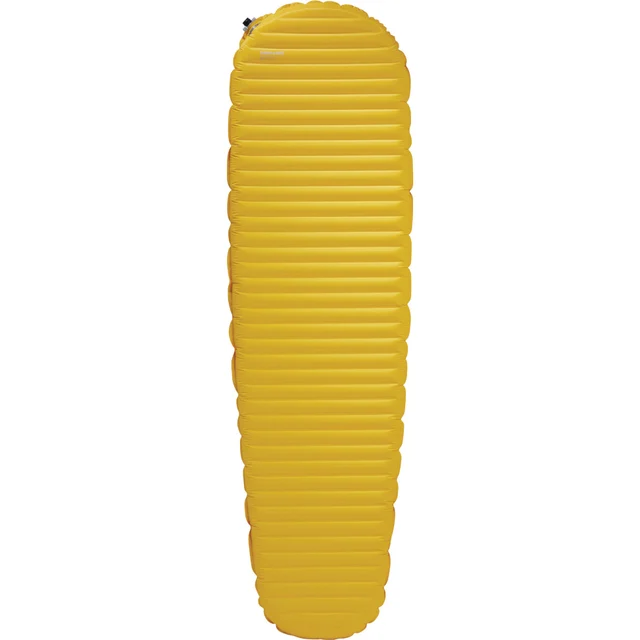
- Buy Therm-a-Rest NeoAir XLite NXT The warmth-to-weight benchmark that made the old crinkle a non-issue.
- Buy NEMO Tensor All-Season The quietest, warmest pad here for barely any weight penalty.
- It depends Sea to Summit Ether Light XR Insulated A near-silent, mattress-thick pad for comfort seekers willing to carry more.
- Skip Therm-a-Rest Z Lite Sol Indestructible and cheap, but too thin and cold to be most people's main bed.
What actually matters
- R-value (warmth): this single number decides whether you sleep warm or lie awake shivering; aim for roughly 4 to 5 for three-season trips and higher for genuine cold.
- Weight and packed size: for backpacking these track together and come straight off your back and out of your pack, so every ounce and liter counts.
- Thickness and comfort: more loft keeps side sleepers and heavier sleepers off the ground, but adds bulk and usually weight.
- Pad type: air pads maximize warmth-to-weight, self-inflating pads balance comfort and convenience, and closed-cell foam is indestructible but thin and cold.
- Noise: a rustling pad can wake a light sleeper every time they roll over, so it matters more than the spec sheet suggests.
- Durability and setup: thin fabrics need care, valves and pump sacks affect how fussy a pad is to use, and foam simply cannot fail.
- Fit and shape: length, width, and a tapered versus rectangular cut change both comfort and weight, so match the pad to your body.
The specs, in plain English
Green flags vs red flags
Green flags
- A published, standardized R-value that matches the seasons you actually camp in.
- A warmth-to-weight ratio in line with or better than comparable pads in its class.
- An included pump sack and a valve owners describe as easy to inflate and micro-adjust.
- Loft and width that fit how you sleep, especially if you are a side or restless sleeper.
- Owner reports of quiet performance if you are a light sleeper.
- A repair or patch kit included, and readily available replacement parts.
Red flags
- A comfort or thickness pitch with no R-value listed anywhere, which usually means it is a warm-weather pad only.
- Very thin, low-denier fabric marketed for rough terrain without any mention of care.
- Widespread owner reports of slow leaks, valve failures, or seams giving out.
- A flagship price paired with an R-value that trails cheaper, lighter competitors.
- Excessive crinkle noise noted repeatedly by owners if your sleep is easily disturbed.
- A packed size far larger than rivals with no offsetting gain in warmth or comfort.
Who's who: the brands
- Therm-a-Rest - The category's benchmark brand, known for warmth-to-weight leaders and the classic indestructible foam pads.
- NEMO - Design-forward pads praised for quiet baffles, plush loft, and strong all-season warmth.
- Sea to Summit - Comfort-first inflatables with thick, near-silent air-cell construction and well-regarded valves.
- Big Agnes - Broad lineup of backpacking and car-camping pads, often integrated with the brand's tents and sleep systems.
- Exped - Swiss maker respected for high-R-value, durable pads favored by cold-weather and expedition campers.
How to read a listing without getting fooled
Start with the R-value and ignore the hero photo. If a listing leads with thickness and comfort but hides or omits the R-value, assume it is a warm-weather pad and be cautious about relying on it in the shoulder seasons. Next, read weight in the regular size, not the short or the smallest option, so you compare pads on the same footing, and check packed size against a familiar object like a water bottle. Look at the denier of the face fabric to gauge how careful you must be, and confirm whether a pump sack is included rather than sold separately. Finally, weight your reading of owner reports toward the failures that matter to you: leaks and durability if you camp hard, noise if you sleep light, and inflation fuss if you value quick camp setup.
How much should you spend?
Spend according to how far you carry the pad and how cold you sleep. Budget foam pads cost the least and never fail, but they are thin and cold enough that most people should treat them as a supplement rather than a primary bed. The value sweet spot sits with mid-to-upper air pads that deliver a three-season R-value at a genuinely low weight; this is where most backpackers get the best return and rarely regret the purchase. Paying up to the flagship tier is worth it only when you are buying a specific quality you cannot get lower down, such as maximum comfort, near silence, or expedition-grade warmth. If you are a casual or car camper who is not counting ounces, you can often spend less and get more comfort, because weight and packed size, the things you pay a premium to reduce, matter far less to you.
Questions, answered
What R-value do I actually need?
For spring-through-fall trips in temperate areas, roughly R 4 to 5 is the reliable sweet spot. Go higher only if you camp in genuine cold or on snow, and remember that in a cold snap you can stack a foam pad under an air pad to add their R-values together.
Are inflatable pads still noisy?
Much less than they used to be. The old potato-chip crinkle has largely been engineered out with reflective films and quieter baffles, and some pads are now effectively silent. If any residual rustle would wake you, favor a pad owners specifically call quiet, or use closed-cell foam.
Do I have to use the pump sack, or can I just blow it up?
You can inflate by mouth, but the pump sack is worth it. Your breath carries moisture that condenses inside the pad over time, which can dampen the insulation and encourage mildew. A pump sack fills the pad in a few rounds and keeps the interior dry.
How worried should I be about punctures?
Leaks are uncommon with reasonable care. Clear sharp debris before setup, lie on a groundsheet or inside your tent, and carry the patch kit. Thicker, higher-denier fabrics resist punctures better, while foam pads cannot leak at all, which is why some campers carry one as a fail-safe.
Is a closed-cell foam pad ever the right main pad?
For most people, no. Its low R-value and thin profile leave you cold and feeling the ground outside of high summer. It shines as a supplement, a summer minimalist's choice, or a winter booster stacked under an air pad, and it doubles as a sit pad and pack stiffener.
What is the difference between a self-inflating pad and an air pad?
A self-inflating pad has foam inside that draws in air on its own and needs only a few breaths to finish; it is comfortable and convenient but heavier and bulkier. A pure air pad you inflate fully; it packs smaller and offers the best warmth-to-weight, which is why backpackers usually prefer it.
Or jump to the head-to-head: Therm-a-Rest NeoAir XLite NXT vs NEMO Tensor All-Season.