

Outdoors & Fitness
The Best Ski Mittens and Glove Liners: 4 Compared (and One to Skip)
We compared three mittens and one liner on insulation, waterproofing, touchscreen use, wrist leashes and cuff length, using only what each maker publishes.
The short version
Our top pick is the Black Diamond Mercury Mitts, a waterproof, long-cuff mitten with a removable Primaloft Gold liner and a maker-stated range of -15 to 0 F. The value pick is the Dakine Scout 2.0 Mitts, which include a removable touchscreen-compatible fleece liner, a waterproof insert and a wrist leash. The Hestra Touch Point Active liner depends on what you already own. It is a thin, phone-friendly layer that Hestra rates 3 of 8 for warmth, so it complements a mitten but does not replace one. Skip the Burton Park Mittens for cold days, because Burton lists them as water-resistant and describes them for mild days and spring sessions. Buy a waterproof mitten first, then add a liner if you want phone access. Best for: skiers who want warm hands on cold lifts without losing their phone.
Our picks at a glance
- Black Diamond Mercury Mitts - Buy. A waterproof, long-cuff mitten with a removable Primaloft Gold liner and a maker temperature range printed on the page.
- Dakine Scout 2.0 Mitts - Buy. A waterproof-insert mitten that ships with a removable touchscreen-compatible fleece storm liner and a removable wrist leash.
- Hestra Touch Point Active 5-finger liner - It depends. A thin polyester and elastane liner glove with conductive thumb and index finger, rated 3 out of 8 on Hestra's own warmth scale.
- Burton Park Mittens - Skip. A light, fleece-lined, water-resistant mitten that Burton frames for mild days and spring sessions.
The verdict in 30 seconds
What mattered most
- Type
- Insulation
- Waterproofing
- Maker warmth rating
- Touchscreen
- Wrist leash
Mittens keep your fingers together and share warmth, which is why they usually beat gloves when the lift ride is cold. The trade is dexterity, and that is where liners come in: a thin layer that keeps your hands covered when the mitten comes off. We picked three mittens and one liner from four makers and checked every claim against the maker's own page. For five-finger gloves see our best ski gloves review, for battery gloves see best heated gloves, and for pocket warmers see best rechargeable hand warmers.
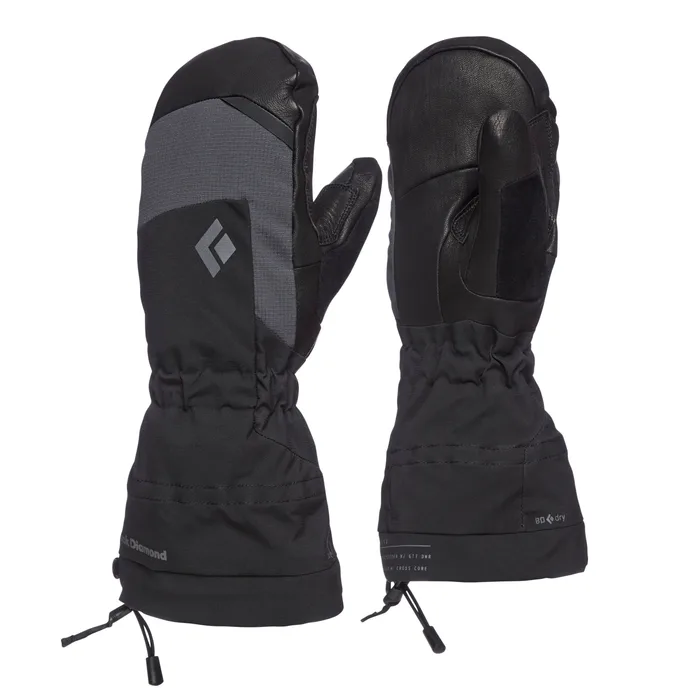
A waterproof, long-cuff mitten with a removable Primaloft Gold liner and a maker temperature range printed on the page.
Best for: Skiers who ride in real cold and wet snow and want one dependable mitten with a stated temperature range.
- The 100% waterproof BD.dry insert and DWR-treated shell cover wet snow, which is where plain insulated mitts fail first.
- The insulated liner is removable and filled with Primaloft Gold Cross Core, so you can dry it separately or swap it.
- Black Diamond publishes a temperature range of -15 to 0 F, a rare concrete number in a category full of vague warmth claims.
- The page lists no wrist leash, so a dropped mitt on a lift is on you.
- Touchscreen compatibility is not listed, and the mitten shape makes phone use awkward anyway.
- It sits at the expensive end of the mitten field.
- Weight is listed at 268 g, heavier than a bare liner, and a mitten of this size is bulkier than a glove.
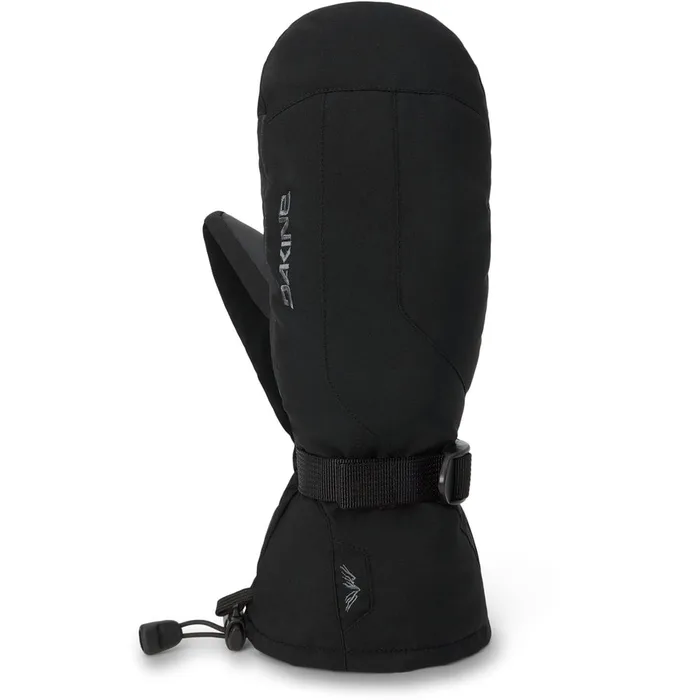
A waterproof-insert mitten that ships with a removable touchscreen-compatible fleece storm liner and a removable wrist leash.
Best for: Resort skiers and riders who want a complete mitten and liner system without paying premium-brand money.
- The mitten comes with a removable mid-weight 280g stretch fleece storm liner that Dakine lists as touchscreen compatible, so you get two layers in one purchase.
- A DK Dry waterproof insert, a one-hand cinch gauntlet and a removable wrist leash with a cord lock are all on the spec list.
- An internal heat pack pocket is listed, which pairs well with a disposable or rechargeable warmer.
- Dakine gives no temperature rating, so you judge warmth from the insulation description alone.
- The warranty terms are not shown on the product page, only linked.
- The palm is a synthetic material, which tends to wear faster than leather in heavy use.
- Weight is not listed.
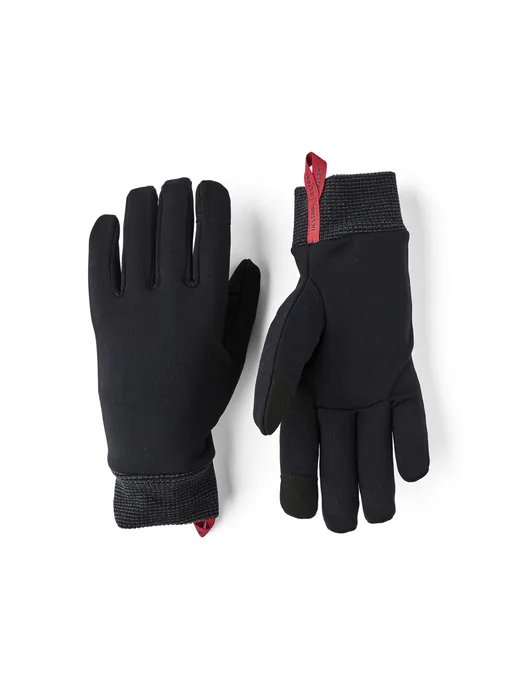
A thin polyester and elastane liner glove with conductive thumb and index finger, rated 3 out of 8 on Hestra's own warmth scale.
Best for: Skiers who already own an insulated mitten and want a thin, phone-friendly layer for lift rides, photos and mild days.
- Hestra lists the thumb and index finger as touchscreen compatible, so you can check a phone without exposing bare skin.
- It is machine washable and has a puller at the cuff, which helps when pulling it on under a tight glove.
- Hestra rates mobility at 7 of 8, the precision end of its scale, so it adds little bulk inside a mitten.
- Hestra's own warmth rating is 3 of 8, described as light insulation for crisp days.
- It is not waterproof, so a wet outer mitten will wet it too.
- No wrist leash is listed, which matters little for a liner but means it can slip out when you take a mitt off.
- It adds some warmth but does not replace an insulated mitten.
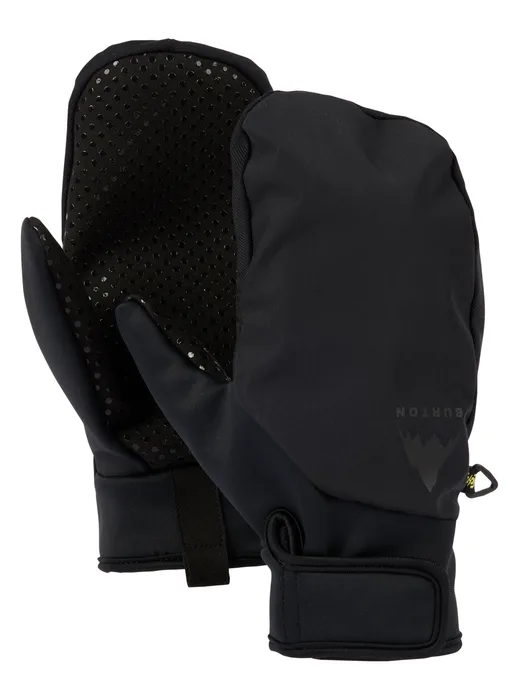
A light, fleece-lined, water-resistant mitten that Burton frames for mild days and spring sessions.
Best for: Spring skiers and park riders on mild days who want a throwaway second pair.
- The page lists a removable wrist leash, a cuff pull loop and an under-cuff fit.
- Burton lists it as touchscreen friendly and backs it with a lifetime warranty.
- It is cheap enough that it works as a spare or a shoulder-season mitten.
- It is listed as water-resistant, not waterproof, so a day of wet snow will soak through eventually.
- The page does not list an insulation type or weight, so you cannot compare warmth with a mitten that does.
- Burton itself describes it for mild days and spring sessions, which rules out cold mid-winter skiing.
- The cuff is low-profile and tucks under a jacket, so snow can find its way in during a fall.
| Criteria | Mercury Mitts Top pick | Scout 2.0 Mitts | Touch Point Active 5-finger liner | Park Mittens |
|---|---|---|---|---|
| Verdict | Buy it | Buy it | It depends | Skip it |
| Best for | Skiers who ride in real cold and wet snow and want one dependable mitten with a stated temperature range. | Resort skiers and riders who want a complete mitten and liner system without paying premium-brand money. | Skiers who already own an insulated mitten and want a thin, phone-friendly layer for lift rides, photos and mild days. | Spring skiers and park riders on mild days who want a throwaway second pair. |
| Price tier | $$$ · premium | $$ · mid-range | $ · budget | $ · budget |
| Type | Mitten | Mitten with liner | Liner glove | Mitten |
| Insulation | Primaloft Gold Cross Core, removable liner | Hi Loft recycled polyester plus fleece liner | None listed (thin jersey) | Fleece-lined, insulation not listed |
| Waterproofing | BD.dry insert, 100% waterproof | DK Dry insert | Not waterproof | Water-resistant only |
| Maker warmth rating | -15 to 0 F range | None listed | 3 of 8 on Hestra's scale | None listed |
| Touchscreen | Not listed | Liner listed compatible | Thumb and index finger | Listed as touchscreen friendly |
| Wrist leash | Not listed | Removable, cord lock | Not listed | Removable |
| Cuff | Long gauntlet | One-hand cinch gauntlet | Cuff puller | Low-profile, under-cuff |
| Warranty or care | Practical product lifetime warranty | Terms not shown on page | Machine washable | Lifetime warranty |
Which one is right for you?
- Skiers who ride in real cold and wet snow and want one dependable mitten with a stated temperature range. Buy it Black Diamond Mercury Mitts
- Resort skiers and riders who want a complete mitten and liner system without paying premium-brand money. Buy it Dakine Scout 2.0 Mitts
- Skiers who already own an insulated mitten and want a thin, phone-friendly layer for lift rides, photos and mild days. It depends Hestra Touch Point Active 5-finger liner
- Spring skiers and park riders on mild days who want a throwaway second pair. Skip it Burton Park Mittens
How we judged the field
Five things matter in a ski mitten or liner. Insulation type and the maker’s stated rating tell you how warm it should be, and a number like Black Diamond’s temperature range beats an adjective. A waterproof insert or membrane decides whether the warmth survives wet snow. Touchscreen compatibility, usually in the liner, decides whether you can use your phone. A wrist leash keeps the mitten on you at the lift. Cuff length decides whether snow gets in. We used only what each maker publishes and left out anything a page does not state.
The field splits into three kinds of product: a full waterproof insulated mitten, a mitten that includes a liner, and a standalone liner. We picked the first two as buys, a liner as the conditional pick, and a light water-resistant mitten as the skip. For five-finger gloves, heated gloves and warmers we point to our other reviews and do not repeat their picks.
The Mercury Mitts are the one to buy if you ski cold, wet days and want a single mitten that handles them. Black Diamond builds it around a 100% waterproof BD.dry insert under a DWR-treated recycled polyester shell, with a goatskin palm and a long gauntlet cuff that goes over a jacket sleeve. Inside is a removable insulated liner filled with Primaloft Gold Cross Core, so you can pull it out to dry after a soaking day. The standout is the temperature range Black Diamond prints on the page, -15 to 0 F. Most makers leave you guessing, and a stated range lets you match the mitten to your coldest ski days. The compromises are practical. The page lists no wrist leash and no touchscreen compatibility, and the listed weight is 268 g. Mittens also cost you finger dexterity, so buckling a boot or fixing a strap means taking one off. If cold hands are your main problem, that trade is usually worth it. It is for skiers who spend winter on cold lifts and want to stop thinking about their hands.
Dakine’s Scout 2.0 earns the value spot because it ships as a system. The shell is a mitten with a DK Dry waterproof insert, Hi Loft recycled polyester insulation, a one-hand cinch gauntlet and a removable wrist leash with a cord lock. Inside sits a removable mid-weight 280g stretch fleece storm liner that Dakine lists as touchscreen compatible, so you can slip the mitten off, keep the liner on, and answer a phone or take a photo. There is also an internal heat pack pocket, handy if you carry a disposable or rechargeable warmer. What you give up is a published temperature rating, a listed weight and visible warranty terms on the page. The palm is a synthetic material, which usually trades some durability for lower cost. For most resort days that is a fair deal, and it covers more of the checklist than mittens that make you buy the liner and leash separately. Pick it if you want complete coverage without paying for a premium name.
The Touch Point Active is not a mitten, and it is not meant to replace one. It is a thin liner glove made from 97% polyester and 3% elastane tricot, with conductive material on the thumb and index finger so it works with a phone. Hestra rates it 3 out of 8 for warmth, described on its page as light insulation for crisp days, and 7 out of 8 for mobility. That combination is the point. Wear it inside a mitten for extra warmth and keep your hands covered when you pull the mitten off to use a screen or adjust a strap. It is machine washable and has a puller at the cuff. The catch is that it is not waterproof, so it only works as well as the mitten over it, and no wrist leash is listed. It also adds little warmth by itself on a truly cold day. It depends on what you already own. If you have a good mitten and want a phone-friendly layer, it is a sensible add-on. If you are looking for a primary hand solution, look elsewhere.
The Burton Park Mittens are a real, commonly sold ski mitten, and the case against them is mostly about fit for purpose. Burton calls them fleece-lined and touchscreen friendly, with a removable wrist leash, cuff pull loop, grippy silicone palm and a lifetime warranty. Those are all useful touches. The problem is the weather rating. Burton lists the shell as water-resistant, not waterproof, and its own description says the mitten is for mild days and spring sessions. The page lists no insulation type or weight, so you cannot compare warmth against anything else. Add a low-profile, under-cuff design, and the mitten is built for a short, forgiving day, not a cold lift ride in wet snow. That is fine if you want a light spare. It is the wrong buy if your plan is to ski through a cold January with one pair. Spend a little more on a mitten with a waterproof insert and a stated insulation type, and keep this one for April.
Black Diamond Mercury Mitts vs Dakine Scout 2.0 Mitts: which should you buy?
The Mercury and the Scout 2.0 are both waterproof mittens with a removable inner layer, so the choice comes down to what you value. The Mercury has a goatskin palm, a long gauntlet, Primaloft Gold Cross Core insulation and a published temperature range of -15 to 0 F. The Scout 2.0 has a removable wrist leash, a touchscreen-compatible fleece storm liner and a heat pack pocket, but no published temperature rating.
Pick the Mercury if you ski cold days and want a stated range to plan around. Pick the Scout 2.0 if you want everything on the checklist for less money and you mostly ski in typical resort temperatures. If you buy the Mercury, a thin liner like the Hestra Touch Point Active fills in the touchscreen gap, since the Mercury page does not list it.
What to look for
- Maker temperature or warmth rating: a stated range or scale, like Black Diamond’s -15 to 0 F or Hestra’s numbered scale, is more useful than an adjective like warm.
- Waterproof insert or membrane: water-resistant shells shed light snow, but a waterproof insert keeps insulation dry in wet snow.
- Removable liner: it lets you dry the insulation after a wet day and wear the liner alone when you need dexterity.
- Touchscreen-compatible liner: look for conductive fingertips listed on the page, usually on thumb and index finger.
- Wrist leash: check the spec list, since a leash is a listed feature on some mittens and absent on others.
- Cuff length: a gauntlet goes over the jacket for deep snow, while an under-cuff design is less bulky but lets snow in more easily.
Our final take
Buy a waterproof mitten first. The Black Diamond Mercury is the best choice for cold days because of its waterproof insert, removable Primaloft Gold liner and published temperature range. The Dakine Scout 2.0 is the value pick, bundling a touchscreen fleece liner, leash and heat pack pocket. Add the Hestra Touch Point Active only if you want a thin, phone-friendly layer to wear inside a mitten. Skip the Burton Park Mittens for cold days, since Burton itself points them at mild weather and spring sessions. That is a fine job for a spare pair, but a poor plan for a January ski week. If you only buy one thing from this list, make it a waterproof mitten with a published insulation type, and treat everything else as an upgrade.
Questions, answered
Are mittens really warmer than gloves for skiing?
In general, yes. A mitten lets your fingers share heat in one space, and there is less surface area exposed than with separate fingers. The trade is dexterity, since you cannot grip a strap or phone easily. If your hands run cold, a mitten is usually the better choice, and a thin liner gives you something to wear when the mitten is off. Only the maker's rating tells you how warm a specific model is.
Do I need a waterproof membrane in a ski mitten?
For wet snow and spring slush, yes. A water-resistant shell, like the one Burton lists for the Park Mittens, sheds light snow but can soak through over a long day. Black Diamond and Dakine both list a waterproof insert in the mittens we picked, and Hestra's liner has none. Wet insulation loses much of its warmth, so waterproofing matters most in marginal temperatures.
Can I use my phone with a liner or mitten on?
With a liner, usually yes if the maker lists conductive fingertips. Hestra lists the Touch Point Active as touchscreen compatible on the thumb and index finger, and Dakine lists the Scout 2.0's removable storm liner the same way. The Mercury and Burton pages do not guarantee it for the mitten itself. Mittens are awkward for typing, so the liner is the practical route.
Why does a wrist leash matter on a mitten?
A mitten is easy to slip off with one hand, and it can drop from a chairlift. A leash keeps it attached to your wrist. Dakine lists a removable leash with a cord lock on the Scout 2.0, and Burton lists one on the Park Mittens. Black Diamond does not list a leash on the Mercury page. Check the spec list before assuming one is included.
How long should the cuff be?
A gauntlet cuff goes over the jacket sleeve and is better for deep snow and falls, because snow cannot fall into the mitten. A low-profile cuff tucks under the sleeve and is less bulky. Black Diamond lists a long gauntlet on the Mercury and Dakine lists a one-hand cinch gauntlet on the Scout 2.0. Both are better choices than an under-cuff design for cold, snowy days.
Deciding between the top two? See our head-to-head: Black Diamond Mercury Mitts vs Dakine Scout 2.0 Mitts.
More Outdoors & Fitness reviews
 The Best Ski Touring Backpacks: 4 Compared (and One to Skip)
  The Best Backpacking Sleeping Bags: 4 Compared (and One to Skip)
  The Best Backpacking Sleeping Pads: 4 Compared (and One to Skip)
  The Best Snorkel Sets: 4 Compared (and One to Skip)
  The Best Snow Boots: 4 Compared (and One to Skip)
  The Best Snow Sleds: 4 Compared (and One to Skip)