Explained
Ski Jackets, Explained
After reading, you'll understand waterproof and breathability ratings, fabric layers, seam sealing and insulation, and how to choose between insulated jackets and shells.
In this guide
Ski jacket listings mix useful numbers with marketing names for fabrics. The details that decide whether you stay dry are the waterproof rating, how the seams are sealed and whether the shell is waterproof or only water-resistant. Warmth depends on insulation grams, and comfort on vents and breathability.
The 30-second version
- Water-resistant is not waterproof, and ski jackets should say waterproof.
- Seam sealing matters as much as the rating, so look for fully taped or fully sealed seams.
- Insulation grams predict warmth, especially when listed separately for body and sleeves.
- Shells are more versatile, while insulated jackets are simpler for cold resort days.
- Snow features separate ski jackets from coats, like powder skirts, vents and helmet-compatible hoods.
The products this guide is about
Our verdict on each, with the full reasoning on the companion review.
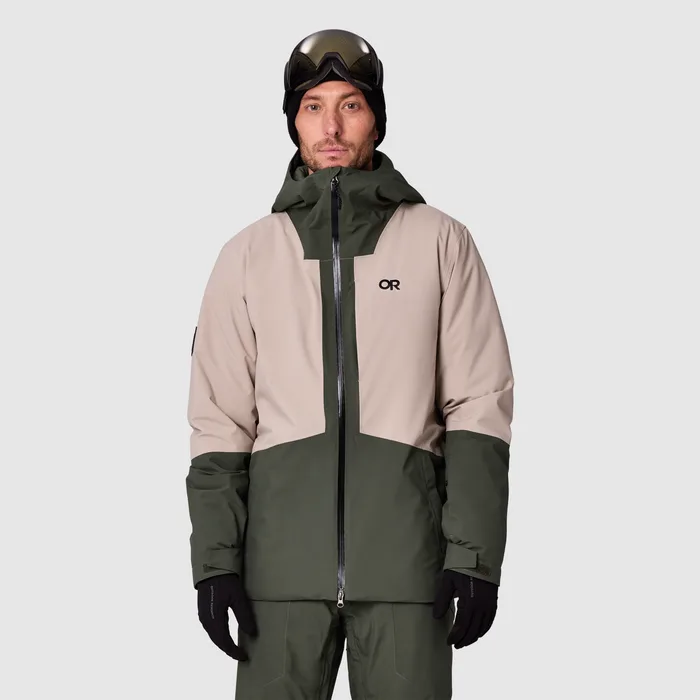
- Buy Outdoor Research Snowcrew Jacket A fully seam-taped, insulated resort jacket with the snow features that matter and a lifetime guarantee.
- Buy Strafe Pyramid Jacket A 3-layer, 20K/20K stretch shell with full seam sealing and every resort feature.
- It depends Obermeyer Raze Jacket A polished, lightly insulated resort jacket with more fit options than most, and a few fine-print catches.
- Skip Arctix Men's Tundra Insulated Jacket A warm, cheap winter coat sold as a ski jacket that its maker describes as only water-resistant.
What actually matters
- Waterproof rating - Given in millimeters or K, such as 20K. Higher numbers resist more water pressure, but brands test differently.
- Breathability rating - Given in grams or K, such as 20K. Higher numbers move more sweat vapor out, which matters on active runs.
- Seam sealing - Fully taped seams block leaks at the stitching. Critical seam sealing tapes only key areas like shoulders and hood.
- Fabric layers - 2L, 2.5L and 3L describe how the membrane is built in. 3L is usually the most durable and breathable.
- Insulation - Synthetic insulation is listed in grams per square meter. More grams mean more warmth and bulk.
- Powder skirt - An inner hem band that seals against your pants. Removable versions add flexibility.
- Vents and hood - Underarm or core vents release heat; a helmet-compatible hood fits over your helmet in storms.
The specs, in plain English
Green flags vs red flags
Green flags
- The word waterproof with a published rating.
- Fully taped or fully sealed seams.
- Insulation grams listed by zone.
- A powder skirt and vents.
- A helmet-compatible hood and a clear warranty.
Red flags
- Only "water-resistant" in the description.
- No seam sealing information.
- Fabric that changes by color without clear ratings.
- No powder skirt or vents on a jacket sold for skiing.
- A temperature rating in place of real specs.
Who's who: the brands
- Outdoor Research - Seattle brand known for technical outerwear covered by its Infinite Guarantee.
- Strafe - Aspen ski outerwear brand known for its 3-layer shells.
- Obermeyer - Aspen-based family ski apparel company founded by Klaus Obermeyer.
- Arctix - Budget winter apparel brand known for low-priced snow jackets and pants.
- Flylow - Colorado ski apparel brand known for workwear-inspired jackets.
How to read a listing without getting fooled
Find the fabric and technology section first. Check that the shell is called waterproof, then note the waterproof and breathability ratings and the seam sealing. Next, find the insulation type and grams, if any. Then check the snow features: powder skirt, vents, hood and cuffs. Watch for fabric that changes by color, and for jackets where only the description, not the spec table, mentions waterproofing. Finally, check the warranty and the size chart, including any tall or short lengths.
How much should you spend?
Budget ski jackets often use water-resistant shells, lighter seam sealing and few snow features. Mid-range jackets add waterproof taped shells, real insulation and powder skirts, which cover most resort skiing. Premium jackets add 3-layer fabrics, higher ratings, stretch and extras like RECCO reflectors. Spend more if you ski many days, in wet climates or away from the resort.
Questions, answered
How should a ski jacket fit?
Roomy enough for a base layer and a mid layer, with sleeves long enough to cover your wrists when you reach forward. The hem should cover your lower back when you bend. Try it with the layers you'll wear.
How do I wash a ski jacket?
Use a detergent made for waterproof outerwear, wash cold or warm, and avoid fabric softener. Strafe warns against hot water or high dryer heat, which can damage the membrane and seam tape. Restore the DWR if water stops beading.
Is down or synthetic better for ski jackets?
Synthetic insulation keeps more warmth when damp and is common in ski jackets. Down is warmer for its weight but loses warmth when wet. Many skiers use a synthetic insulated jacket or a shell with a down mid layer.
Do I need ski pants that match my jacket?
Not matching, but compatible. Some jackets and pants connect with a powder skirt or snaps. Waterproof pants matter as much as the jacket when you sit on lifts or fall in snow.
Or jump to the head-to-head: Outdoor Research Snowcrew Jacket vs Strafe Pyramid Jacket.