Explained
Ski Pants, Explained
After reading, you'll understand waterproof ratings, seam sealing, insulation, gaiters and vents, and how to choose between insulated pants and shells.
In this guide
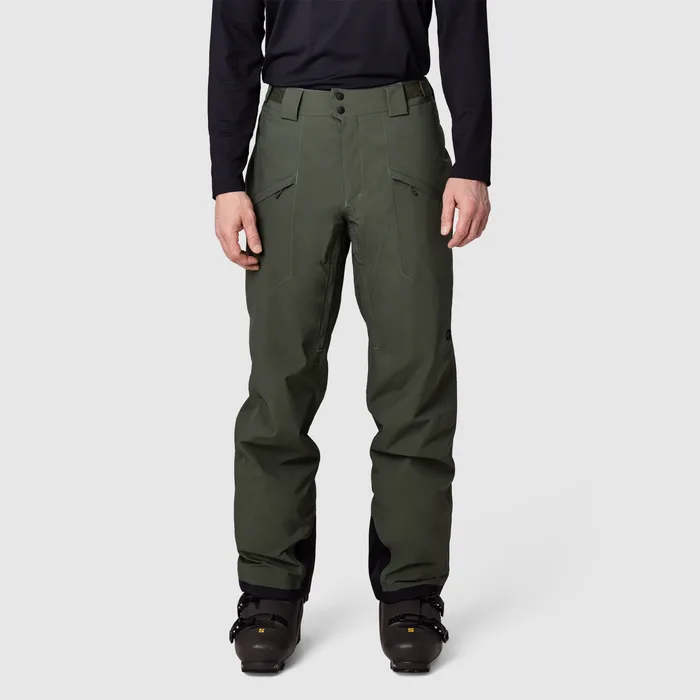
Ski pants get wetter than jackets, because you sit and kneel in snow all day. The labels that matter are whether the shell is waterproof, how the seams are sealed and whether the pants have gaiters and cuff guards. Warmth and venting come next.
The 30-second version
- Pants need real waterproofing, because sitting and kneeling push water into fabric.
- Taped seams stop leaks, especially at the seat and knees.
- Gaiters keep snow out, by sealing the pant leg over your boots.
- Cuff guards add years, since ski edges cut the inner ankles.
- Shells need layers, while insulated pants trade flexibility for simplicity.
The products this guide is about
Our verdict on each, with the full reasoning on the companion review.
- Buy Outdoor Research Snowcrew Pant An insulated, fully taped resort pant with the snow features that matter and a lifetime guarantee.
- Buy Strafe Capitol Pant A 3-layer, 20K/20K stretch shell pant with full seam sealing and a complete feature set.
- It depends Flylow 2025 Chemical Pant A tough, well-vented hardshell pant for aggressive riders, at the cost of some weight.
- Skip Arctix Men's Insulated Snow Pants Warm, cheap snow pants that their maker describes as water-resistant, not waterproof.
What actually matters
- Waterproof rating - Given in millimeters or K, such as 20K. Higher numbers resist more pressure.
- Breathability - How well sweat vapor escapes. Matters most for active skiing and hiking.
- Seam sealing - Fully taped seams keep water out at stitch holes.
- Insulation - Synthetic insulation adds warmth. Shells have none and rely on layers.
- Snow gaiters - Inner cuffs that grip boots so snow can't get in.
- Cuff reinforcement - Tough fabric at the inner ankle resists ski edge cuts.
- Vents - Thigh or hamstring zips release heat on warm days.
The specs, in plain English
Green flags vs red flags
Green flags
- The word waterproof with a published rating.
- Fully taped or fully sealed seams.
- Snow gaiters and reinforced cuffs.
- Thigh or hamstring vents.
- A clear warranty or guarantee.
Red flags
- Only "water-resistant" in the description.
- No seam sealing information.
- No gaiters on pants sold for skiing.
- No cuff reinforcement.
- A temperature rating in place of real specs.
Who's who: the brands
- Outdoor Research - Seattle outdoor brand with an Infinite Guarantee on its gear.
- Strafe - Aspen ski outerwear brand known for 3-layer shells.
- Flylow - Colorado ski apparel brand known for durable, workwear-inspired pants and bibs.
- Arctix - Budget winter apparel brand selling low-priced snow pants and bibs.
- Obermeyer - Aspen ski apparel company with a wide range of resort pants.
How to read a listing without getting fooled
Find the fabric section first and check that the shell is called waterproof, with a rating if possible. Then check seam sealing, insulation and venting. Look for snow gaiters and cuff reinforcement, then pockets, beacon features and suspenders if you want them. Finally, check the inseam, the size chart and the warranty.
How much should you spend?
Budget snow pants usually use water-resistant fabric and basic seam sealing. Mid-range ski pants add waterproof taped shells, gaiters, vents and better cuff protection. Premium pants add 3-layer stretch fabrics, higher ratings, tough face fabrics and features like suspenders and RECCO. Spend more if you ski often or in wet climates.
Questions, answered
How should ski pants fit?
Loose enough for a base layer and full knee bend, with the hem covering your boot tops. Try a deep squat in them. Too long and they drag; too short and snow gets in.
Can I wear snowboard pants for skiing?
Yes. Most ski and snowboard pants share the same features. Snowboard pants are sometimes cut looser.
How do I wash ski pants?
Use a detergent made for waterproof outerwear and avoid fabric softener. Strafe warns against hot water or high heat, which can damage the membrane and seam tape. Restore the DWR when water stops beading.
Do I need to wear base layers under ski pants?
With shell pants, yes, for warmth. With insulated pants, a light base layer adds comfort and wicks sweat. Avoid cotton, which stays wet.
Or jump to the head-to-head: Outdoor Research Snowcrew Pant vs Strafe Capitol Pant.