Explained
Ski Socks, Explained
After reading, you'll understand what fiber content and cushion levels mean, and how to match a ski sock to your boots.
In this guide
Most people buy the thickest ski sock they can find, and many end up with colder feet. Ski boots are meant to fit closely, so a sock that fills the boot presses on the foot and limits circulation. The useful specs are the fiber blend, the cushion level and where the padding sits.
The 30-second version
- Thicker is not warmer, because a sock that crowds the boot restricts blood flow to your toes.
- Merino percentage is a real number, so compare it instead of trusting a "wool blend" label.
- Shin padding matters most, since the boot tongue presses on your shin all day.
- Over the calf is standard, so the cuff sits above the boot instead of bunching inside it.
- One sock beats two, because layers slide against each other and cause blisters.
The products this guide is about
Our verdict on each, with the full reasoning on the companion review.
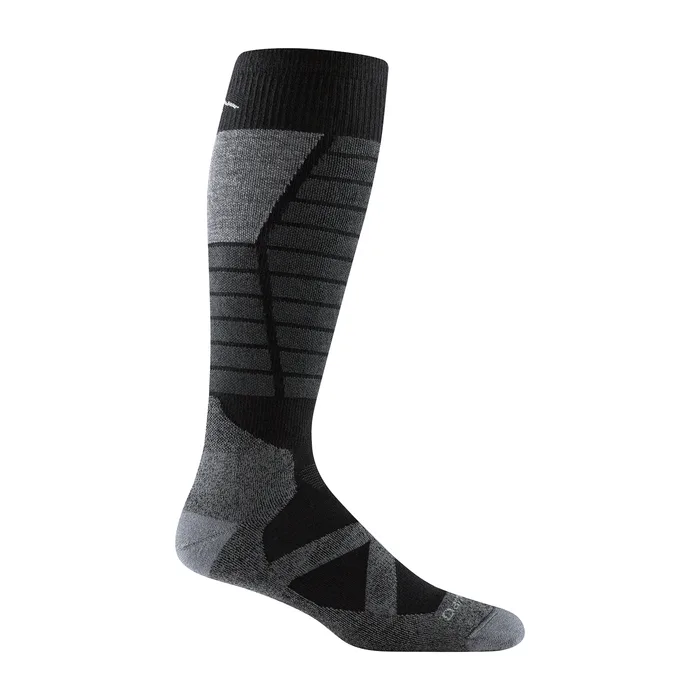
- Buy Darn Tough Function X Over-the-Calf Midweight Ski & Snowboard Socks A merino-rich midweight ski sock with targeted cushioning and an unconditional lifetime guarantee.
- Buy Bridgedale Ski Lightweight Merino Performance Over Calf A thin, close-fitting ski sock with shin and underfoot pads and a lifetime guarantee for less.
- It depends Farm to Feet Park City 2.0 Full Cushion A plush, US-made merino ski sock that suits cold feet in roomy boots.
- Skip Stance Serape Mid Poly Snow A fun-patterned polyester snow sock that costs about the same as merino socks with better guarantees.
What actually matters
- Fiber content - Merino holds warmth when damp and resists odor, while nylon adds durability. The ratio, when published, tells you what the sock is built for.
- Cushion level - Ranges from no cushion to full cushion. Snug boots want less; roomy boots and cold feet can use more.
- Shin protection - Terry loops or a smooth pad at the shin reduce pressure and rubbing from the boot tongue. Look for it named in the features.
- Height - Over-the-calf socks sit above the boot cuff. Shorter socks can bunch or leave skin exposed to the liner.
- Fit system - LYCRA or spandex through the sock keeps it from sliding and wrinkling. A wrinkle in a ski boot becomes a blister by lunch.
- Construction - Needle count and reinforced heels and toes affect how smooth and durable the knit is. Makers that publish these details usually back them with guarantees.
- Guarantee - Several ski sock makers offer lifetime guarantees. It is a useful tiebreaker between similar socks.
The specs, in plain English
Green flags vs red flags
Green flags
- Published fiber percentages with a meaningful merino share.
- A named shin pad or shin cushion.
- Over-the-calf height.
- Elastic through the foot and leg.
- A lifetime or long guarantee.
Red flags
- A vague "blend" with no percentages.
- Cotton in the fiber list.
- Only very thick cushioning for a performance boot.
- Crew or mid-calf height sold as a ski sock.
- Very limited sizing, such as only S, M and L.
Who's who: the brands
- Darn Tough - Vermont sock mill known for merino socks with an unconditional lifetime guarantee.
- Bridgedale - UK sock maker known for technical hiking and ski socks with a lifetime guarantee.
- Farm to Feet - US sock maker that uses American-grown merino wool.
- Smartwool - Merino apparel brand with a large range of ski socks by cushion level.
- Stance - Sock brand known for bold designs across everyday and sport socks.
How to read a listing without getting fooled
Scroll past the pattern photos to the materials line and find the merino percentage. Then check the cushion level and where the cushion sits: shin, underfoot, or everywhere. Confirm the height is over the calf. Look for elastic in the blend and features like a heel pocket or reinforced heel. Finally, check the guarantee and the size chart, since some brands size by shoe size and others by letter. If the listing says "blend" without numbers, that is a sign to compare against a brand that publishes them.
How much should you spend?
Budget ski socks cover the basics with synthetic blends or lower merino shares. Mid-range socks usually have more merino, better shin padding and lifetime guarantees. The highest-priced socks add US or UK manufacturing, finer merino and full cushion. A good ski sock lasts many seasons, so paying a bit more for a guaranteed merino sock is usually worth it.
Questions, answered
How should a ski sock fit?
Snug everywhere with no slack at the heel or toes, and tall enough to finish above the boot. A sock that is too big will bunch; one that is too small will pull down. Use the brand's size chart, since sizes vary.
Do I need different socks for skiing and snowboarding?
Not usually. Many ski socks are sold for both. Snowboard boots are softer and often roomier, so some riders prefer a bit more cushion than skiers in hard boots.
Why do my toes get cold in ski boots?
Common causes are boots that are too tight, socks that are too thick, damp socks, or buckles cranked down hard. Try a thinner dry sock and looser buckles first. Heated socks are another option, and we compare them separately.
How do I wash merino ski socks?
Turn them inside out, wash cold on a gentle cycle, and tumble dry low or hang dry. Darn Tough gives these instructions for its socks. Avoid bleach and hot water, which can shrink wool.
Or jump to the head-to-head: Darn Tough Function X Over-the-Calf Midweight Ski & Snowboard Socks vs Bridgedale Ski Lightweight Merino Performance Over Calf.