

Ski & Snowboard
The Best Ski Jackets: 4 Compared (and One to Skip)
We compared four ski jackets on waterproofing, seam sealing, insulation, snow features and what each maker publishes about its fabric.
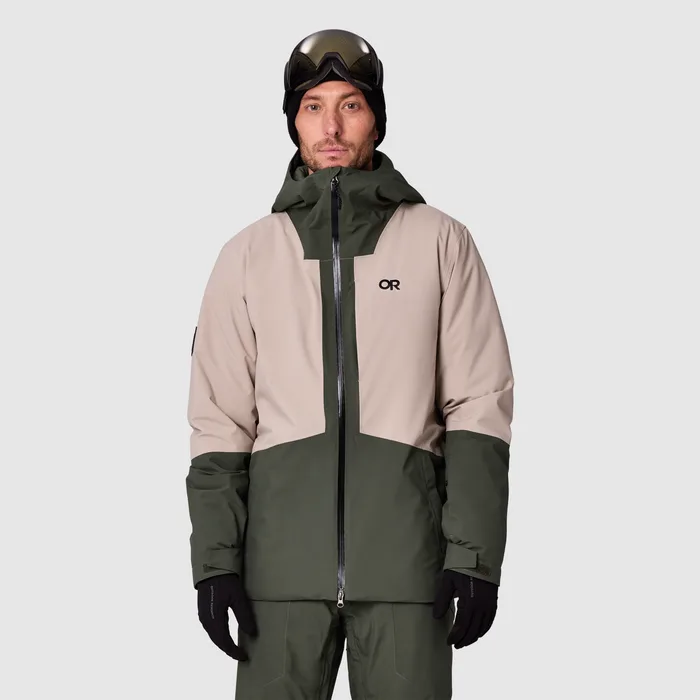
The short version
The Outdoor Research Snowcrew is the pick: a waterproof, breathable, fully seam-taped Ventia 2L shell, VerticalX Eco insulation (80 g/m² body, 60 g/m² sleeves and hood), a powder skirt, a helmet-compatible hood and OR's Infinite Guarantee at a mid-range price. The Strafe Pyramid is the premium buy for skiers who layer, a 3-layer 20K/20K stretch shell with full seam sealing, a removable powder skirt, underarm vents and a RECCO reflector at 715 g. The Obermeyer Raze suits resort skiers who want polish and warmth, with 60 g / 40 g insulation, CZV vents and a removable hood, but only critical seams are sealed and several colors use the lesser HydroBlock Sport fabric. Skip the Arctix Tundra: Arctix calls it water-resistant, not waterproof, and lists no powder skirt or vents. Best for: resort skiers and riders buying one jacket for most days.
Our picks at a glance
- Outdoor Research Snowcrew Jacket - Buy. A fully seam-taped, insulated resort jacket with the snow features that matter and a lifetime guarantee.
- Strafe Pyramid Jacket - Buy. A 3-layer, 20K/20K stretch shell with full seam sealing and every resort feature.
- Obermeyer Raze Jacket - It depends. A polished, lightly insulated resort jacket with more fit options than most, and a few fine-print catches.
- Arctix Men's Tundra Insulated Jacket - Skip. A warm, cheap winter coat sold as a ski jacket that its maker describes as only water-resistant.
The verdict in 30 seconds
What mattered most
- Shell
- Waterproof / breathable
- Seam sealing
- Insulation
- Powder skirt
- Vents
A ski jacket has to keep out snow and wet, let sweat escape on the way down, and keep you warm on a slow chairlift. The differences hide in the fabric line: whether the shell is waterproof or only water-resistant, whether every seam is taped, and how much insulation there is. We compared an insulated resort jacket, a 3-layer shell, a fashion-forward insulated jacket and a best-selling budget coat.
A fully seam-taped, insulated resort jacket with the snow features that matter and a lifetime guarantee.
Best for: Resort skiers and riders who want one warm, waterproof jacket for most winter days.
- Waterproof, breathable Ventia 2L shell with fully taped seams.
- VerticalX Eco synthetic insulation: 80 g/m² in the body, 60 g/m² in the sleeves and hood.
- Powder skirt, helmet-compatible halo hood, vents, thumb holes, a waterproof pass pocket and OR's Infinite Guarantee.
- OR publishes no numeric waterproof or breathability rating, only its own scale.
- A 2-layer shell, generally less breathable than a 3-layer shell on hard efforts.
- Fixed insulation can run warm on mild spring days.
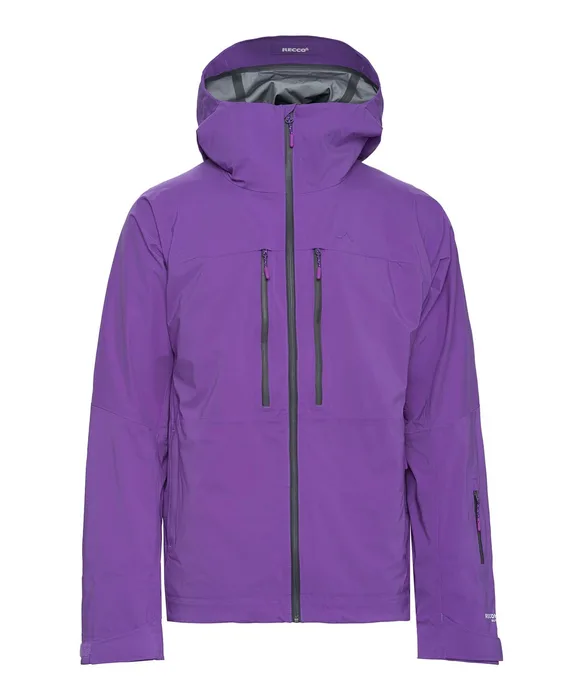
A 3-layer, 20K/20K stretch shell with full seam sealing and every resort feature.
Best for: Skiers who ride in all conditions and prefer to control warmth with layers.
- Recon Elite 3L 4-way stretch shell rated 20K/20K with a PFAS-free membrane and full seam sealing.
- Removable powder skirt, exposed underarm vents, a helmet-compatible hood with 3-point adjustment and a RECCO reflector.
- Light for a fully featured shell at a listed 715 g.
- No insulation, so you need your own mid layers on cold days.
- Costs about twice as much as the Snowcrew.
- Not every color and size was in stock at the time of writing.
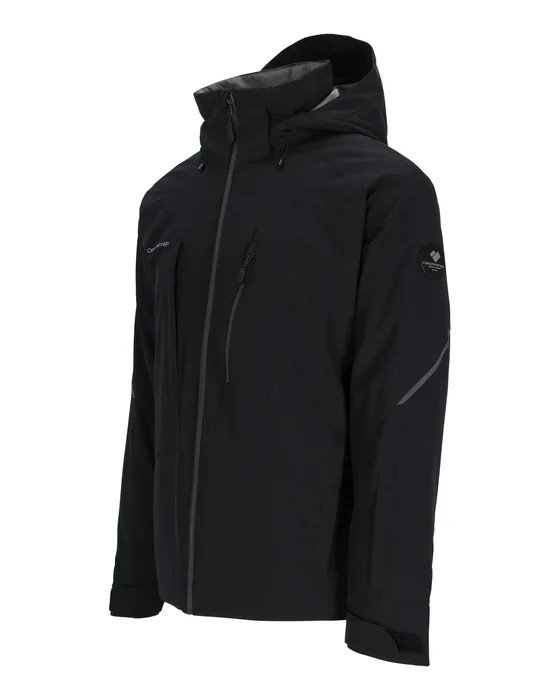
A polished, lightly insulated resort jacket with more fit options than most, and a few fine-print catches.
Best for: Resort skiers who value fit options and a clean look, and mostly ski in cold, dry snow.
- 60 g insulation in the body and 40 g in the sleeves and hood.
- CZV Control Zone Ventilation, YKK AquaGuard zippers, a removable helmet-compatible hood and a snap-away powder skirt.
- Sizes from XS to 3XL with regular, tall and short lengths, and a limited lifetime warranty.
- Obermeyer lists Skier Critical seam sealing, meaning key seams are taped rather than every seam.
- The 15k/15k HydroBlock Pro stretch fabric applies to some colors; several others use HydroBlock Sport plain weave with no rating given.
- Obermeyer notes the jacket contains PFAS and can't ship to California or New York.
- Priced well above the Snowcrew for less complete seam sealing.
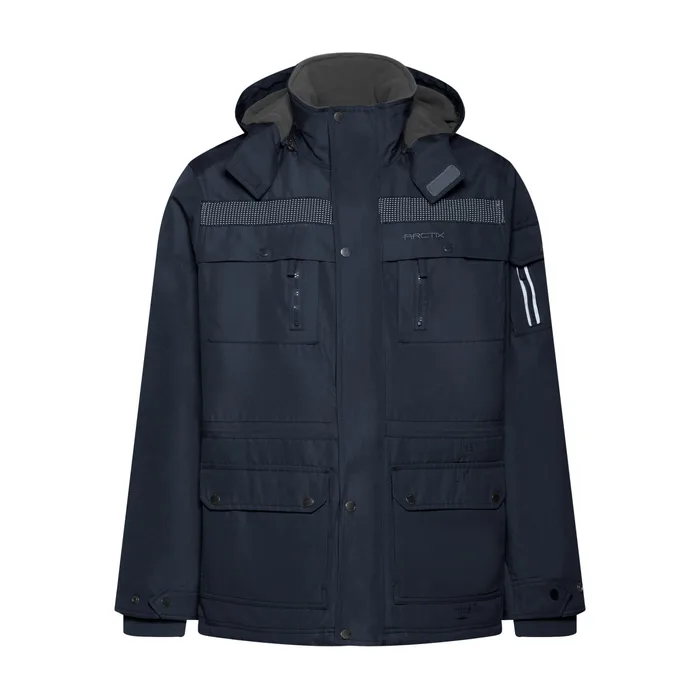
A warm, cheap winter coat sold as a ski jacket that its maker describes as only water-resistant.
Best for: Cold, dry days of casual sledding or city winter wear rather than regular skiing.
- 85 g ThermaTech insulation and a microfleece-lined removable hood.
- Tough ballistic polyester Oxford shell with reflective webbing.
- Machine washable, with regular and tall lengths in some sizes.
- Arctix describes it as water-resistant and wind-resistant, not waterproof.
- No powder skirt or underarm vents listed.
- No breathability information, so it can feel clammy on active runs.
- The Snowcrew adds a waterproof taped shell and snow features for a mid-range price.
| Criteria | Snowcrew Jacket Top pick | Pyramid Jacket | Raze Jacket | Men's Tundra Insulated Jacket |
|---|---|---|---|---|
| Verdict | Buy it | Buy it | It depends | Skip it |
| Best for | Resort skiers and riders who want one warm, waterproof jacket for most winter days. | Skiers who ride in all conditions and prefer to control warmth with layers. | Resort skiers who value fit options and a clean look, and mostly ski in cold, dry snow. | Cold, dry days of casual sledding or city winter wear rather than regular skiing. |
| Price tier | $$ · mid-range | $$$ · premium | $$$ · premium | $ · budget |
| Shell | Ventia 2L | Recon Elite 3L stretch | HydroBlock Pro or Sport | Ballistic polyester Oxford |
| Waterproof / breathable | Waterproof; no number published | 20K/20K | 15k/15k (Pro fabric) | Water-resistant only |
| Seam sealing | Fully taped | Fully sealed | Critical seams | Reinforced sealed seams |
| Insulation | 80 g/m² body, 60 g/m² sleeves | None | 60 g body, 40 g sleeves | 85 g ThermaTech |
| Powder skirt | Yes | Removable | Snap-away | Not listed |
| Vents | Yes | Underarm | CZV vents | Not listed |
| Hood | Helmet-compatible | Helmet-compatible, 3-point | Removable, helmet-compatible | Removable, fleece-lined |
| Guarantee | Infinite Guarantee | Warranty and repair program | Limited lifetime | Not stated on page |
Which one is right for you?
- Resort skiers and riders who want one warm, waterproof jacket for most winter days. Buy it Outdoor Research Snowcrew Jacket
- Skiers who ride in all conditions and prefer to control warmth with layers. Buy it Strafe Pyramid Jacket
- Resort skiers who value fit options and a clean look, and mostly ski in cold, dry snow. It depends Obermeyer Raze Jacket
- Cold, dry days of casual sledding or city winter wear rather than regular skiing. Skip it Arctix Men's Tundra Insulated Jacket
How we judged the field
Five things decide whether a ski jacket keeps you comfortable all day. Waterproofing is first, and the real test is whether the maker calls the shell waterproof and publishes a rating. Seam sealing is second, since fully taped seams stop leaks that fabric ratings don’t cover. Insulation decides warmth on the lift, and the useful listings give grams by zone. Snow features, a powder skirt, a helmet-compatible hood and vents, separate a ski jacket from a winter coat. Finally, a guarantee shows how long the maker expects it to last.
The field splits into insulated resort jackets, uninsulated technical shells, style-led resort jackets and budget winter coats sold as ski jackets. We picked the Outdoor Research Snowcrew, the Strafe Pyramid, the Obermeyer Raze and the Arctix Tundra, all men’s versions. Every fabric, rating and feature below comes from the maker’s own product page.
The Outdoor Research Snowcrew is the pick because it delivers the things that keep a resort skier dry and warm without paying for extras. OR builds it from a waterproof, breathable Ventia 2L shell with fully taped seams, and fills it with VerticalX Eco synthetic insulation: 80 g/m² in the body and 60 g/m² in the sleeves and hood. The snow features are all there, including a powder skirt, a helmet-compatible halo hood, vents for dumping heat, adjustable cuffs, thumb holes and a waterproof pass pocket. It is also covered by OR’s Infinite Guarantee for the life of the product. The limits are modest. OR publishes its own waterproofing and breathability scale instead of numbers, a 2-layer shell is usually less breathable than a 3-layer on hard efforts, and the fixed insulation can run warm in spring. For most resort skiers and riders, it is the jacket to buy.
The Strafe Pyramid is the premium pick for skiers who want a technical shell and prefer to manage warmth with layers. Strafe uses its Recon Elite 3L 4-way stretch nylon with a PFAS-free microporous membrane, rated 20K/20K and fully seam sealed, with a 168 g/m² face fabric. The feature list is complete: a helmet-compatible hood with 3-point adjustment, a microfleece-lined front hood and chin guard, exposed underarm vents, a removable powder skirt with gripper elastic and YKK snaps, thumbhole cuffs, pack-friendly seamless shoulders and a RECCO reflector. Strafe lists the weight at 715 g. There is no insulation, so on cold days you will need a good mid layer, and it costs about twice as much as the Snowcrew. Not every color and size was in stock at the time of writing. For skiers who ride storms, spring slush and the occasional hike, it is worth the price.
The Obermeyer Raze is a polished resort jacket with more fit options than most. It comes in XS to 3XL with regular, tall and short lengths, uses 60 g insulation in the body and 40 g in the sleeves and hood, and adds Obermeyer’s CZV Control Zone Ventilation, YKK AquaGuard zippers, a removable helmet-compatible hood, a snap-away powder skirt, a pass pocket and thumbhole cuffs. It carries a limited lifetime warranty. The fine print matters, though. Obermeyer lists Skier Critical seam sealing, meaning key seams are taped rather than every seam. The headline 15k/15k HydroBlock Pro stretch fabric applies to some colors, while several others use HydroBlock Sport plain weave with no rating given. Obermeyer also notes the jacket contains PFAS and can’t ship to California or New York. For skiers who want a sharp fit and mostly ski cold, dry days, it is a good jacket; for wet climates, the Snowcrew’s full taping is safer for less.
The Arctix Tundra is one of the most common budget ski jackets, and it is warm for the money. Arctix pairs a ballistic polyester Oxford shell with 85 g of ThermaTech insulation, a quilted taffeta lining, a microfleece-lined removable hood, reflective webbing and reinforced sealed seams, and it is machine washable. The problem is in Arctix’s own description: the jacket is water-resistant and wind-resistant, not waterproof. There is no powder skirt or underarm vent in the feature list and no breathability information, so it can soak through in wet snow or on a wet lift seat and feel clammy on active runs. For casual sledding, city winters or a single dry day at a small hill, it will do. For regular skiing, the Outdoor Research Snowcrew costs more but adds a fully taped waterproof shell and real snow features, and it is the better buy.
Outdoor Research Snowcrew Jacket vs Strafe Pyramid Jacket: which should you buy?
The Snowcrew and the Pyramid take different approaches. The Snowcrew is an insulated jacket with a 2-layer waterproof shell, full seam taping and 80 g/m² insulation in the body, so you put it on and go. The Pyramid is an uninsulated 3-layer shell rated 20K/20K with full seam sealing, underarm vents and a RECCO reflector, so it relies on your layers but breathes better and works across more conditions. Both have powder skirts and helmet-compatible hoods.
Choose the Snowcrew if you ski mostly at resorts in cold weather, want one simple jacket, and want to spend less. Choose the Pyramid if you ski in varied conditions from storms to spring, run warm, hike for turns, or already own good mid layers. For very cold climates, the Pyramid with a warm puffy underneath can be warmer than any single insulated jacket.
What to look for
- Waterproof, not water-resistant: look for the word waterproof and, ideally, a published rating.
- Fully taped seams: full seam sealing keeps water out at the stitching, where leaks usually start.
- Insulation by zone: grams for the body and sleeves tell you how warm it will be on the lift.
- Powder skirt: an inner hem band that seals against your pants keeps snow out in falls and powder.
- Vents: underarm or core vents let you dump heat without taking the jacket off.
- Helmet-compatible hood: a hood that fits over a helmet matters in storms.
Our final take
For most resort skiers and riders, the Outdoor Research Snowcrew is the jacket to buy: a fully taped waterproof shell, real insulation, the key snow features and a lifetime guarantee at a mid-range price. If you ski in varied conditions and like to layer, the Strafe Pyramid is a top-tier 3-layer shell worth the premium. The Obermeyer Raze offers a sharp fit and good features, but check the fabric for your color and note its critical-seam taping. The Arctix Tundra is warm and cheap, but as a water-resistant coat without a powder skirt, it is not a ski jacket for regular use.
Questions, answered
What waterproof rating does a ski jacket need?
Many skiers treat 10K as a baseline and 20K as a strong rating for wet storms, but the number only tells part of the story. Seam sealing matters as much, since water gets in through stitching long before it soaks through good fabric. A fully taped shell with a moderate rating often beats a high rating with only critical seams taped. Be wary of jackets described only as water-resistant.
Insulated jacket or shell?
An insulated jacket is simpler: put it on and go, which suits most resort skiers in cold climates. A shell has no insulation and relies on your mid layers, which makes it more versatile across cold and mild days and better for hiking or touring. If you ski in very different conditions, a shell plus layers is more flexible. If you want one jacket and ski mostly cold days, insulated is easier.
Do I need a powder skirt?
It helps a lot on powder days and in falls. A powder skirt is an elastic band inside the jacket hem that seals against your pants and keeps snow from getting up your back. Removable or snap-away skirts can be taken out when you don't need them. Many budget winter coats don't have one.
What does 2L and 3L mean?
It describes how the waterproof membrane is built into the fabric. In 2-layer fabric, the membrane is bonded to the outer fabric with a separate hanging liner. In 3-layer fabric, the membrane is sandwiched between the outer fabric and a thin inner backer, which is usually more durable and breathable. Strafe's Pyramid is 3-layer; OR's Snowcrew is 2-layer.
Is a regular winter coat OK for skiing?
For a first day in dry cold, it can work. For regular skiing, a winter coat usually lacks a waterproof taped shell, a powder skirt, vents and a helmet-compatible hood. When you fall or sit on wet lifts, a water-resistant coat can soak through. That is the main reason we skip the Arctix Tundra.
Deciding between the top two? See our head-to-head: Outdoor Research Snowcrew Jacket vs Strafe Pyramid Jacket.
More Ski & Snowboard reviews
 The Best Ski Socks: 4 Compared (and One to Skip)
  The Best Snowboard Bindings: 4 Compared (and One to Skip)
  The Best Ski Bags: 4 Compared (and One to Skip)
  The Best Ski Gloves: 4 Compared (and One to Skip)
  The Best Ski Goggles: 4 Compared (and One to Skip)
  The Best Ski Helmets: 4 Compared (and One to Skip)