Explained
Satellite Messengers, Explained
After reading, you'll understand what a satellite messenger does, what the subscription covers, and which spec claims to check before you buy.
In this guide
A satellite messenger looks like a gadget but works like a service. The device talks to a satellite network, and a monthly plan decides what you can do with it. First-time buyers often compare weight and screen size and miss the plan terms, the SOS coordination center, and the mode behind each battery number. This guide covers those parts so you can read a maker page with the right questions in mind.
The 30-second version
- Plan before device, because every unit in our comparison needs an active subscription to do its job.
- Read who monitors SOS, since the maker names a coordination center and says whether it is staffed around the clock.
- Look for the words two-way, on the page for your exact model, not the brand overall.
- Battery numbers come with a mode, so find the tracking interval and sky conditions behind them.
- Coverage claims differ, from a global network statement to a map of primary and fringe zones.
The products this guide is about
Our verdict on each, with the full reasoning on the companion review.
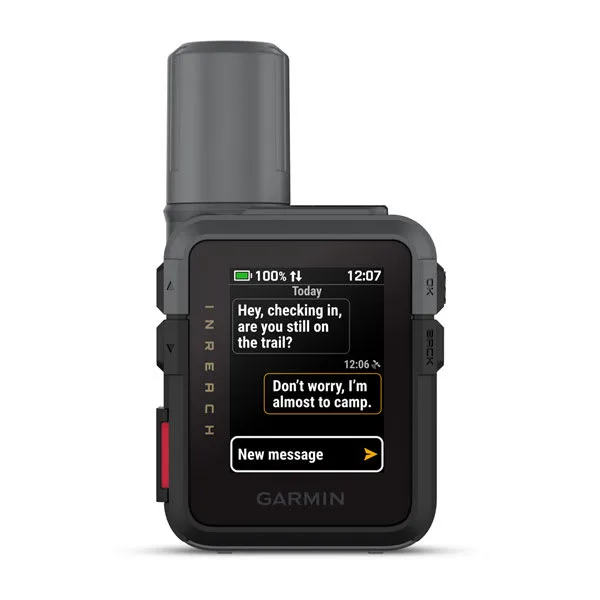
- Buy Garmin inReach Mini 3 A compact satellite communicator with a color touchscreen, on-device typing, and Garmin's interactive SOS.
- Buy Garmin inReach Messenger A light, phone-first satellite messenger with Garmin's SOS service and a long stated battery life.
- It depends ZOLEO Satellite Communicator A phone-first satellite messenger that switches between cellular, Wi-Fi, and Iridium satellite.
- Skip SPOT Gen4 A button-based SPOT satellite GPS messenger whose maker page does not describe two-way messaging.
What actually matters
- SOS coordination center - This is the team that receives your alert and contacts rescuers. Garmin names Garmin Response, ZOLEO names Global Rescue, and SPOT names FocusPoint International.
- Subscription plan - The plan activates messaging and monitoring. Compare the message allowance, the minimum term, and how extra messages are handled.
- Two-way messaging - You can send a message and read a reply. Without it, you cannot tell whether help is on the way.
- Battery mode - A battery claim only makes sense with an interval or condition attached, such as 10-minute tracking under full sky view.
- Phone pairing - Bluetooth links the device to an app for typing and reading. Check whether the device works without the phone.
- Network and coverage - Iridium is the satellite network Garmin and ZOLEO name. SPOT describes mapped coverage zones.
- Water and dust rating - IP and IPX codes tell you how the device handles rain and immersion, which matters on a pack strap.
The specs, in plain English
Green flags vs red flags
Green flags
- The maker page names the SOS coordination center and states 24/7 monitoring
- The page says two-way messaging for your exact model
- Battery claims list the mode, interval, and sky condition
- Plan terms are published, including minimum term and message limits
- Coverage is described with a named network and a note about clear sky
Red flags
- The page describes only outbound features and never says two-way
- SOS coverage is limited to mapped areas that do not match your route
- The battery figure has no mode attached
- The plan terms are hard to find or auto-renew without clear notice
- The listing does not state whether a phone is required
Who's who: the brands
- Garmin - Sells the inReach line, including the Mini 3 and the Messenger, with SOS routed to Garmin Response.
- ZOLEO - Sells a phone-first satellite communicator with two published monthly plans and SOS via Global Rescue.
- SPOT - Sells satellite messengers including the Gen4 and the SPOT X, with SOS coordination by FocusPoint International on the Gen4 page.
- Iridium - The satellite network named by Garmin and ZOLEO, not a device brand.
How to read a listing without getting fooled
Open the maker page for the exact model, then look for four things in order: two-way messaging, the SOS coordination center, the subscription statement, and the battery claim with its mode. Check the footnotes, because that is where makers put conditions like clear sky, jurisdiction notices, and plan requirements. If a figure appears in a headline but not in the spec table, treat it as marketing until you see the conditions.
How much should you spend?
Prices fall into three tiers for the device: budget, mid-range, and premium. Think of the monthly plan as a second price that runs for as long as you keep the device active. A lower device price can come with more limited messaging, and a higher one can add a screen and navigation features. Compare total cost over a season of use, not the sticker on the box.
Questions, answered
Is a satellite messenger the same as a personal locator beacon?
Not on the pages we read. The units here are subscription services that send messages through a satellite network. We did not compare personal locator beacons, so check the maker's documentation and your local rules if you are considering one.
Can I pause the plan between trips?
It depends on the maker. ZOLEO's plans page has a Pause section and lists a three-month minimum term. Garmin and SPOT publish their own plan terms, so read those before buying and again before you activate.
Will it work inside a tent or under tree cover?
Not reliably, based on the makers' own wording. ZOLEO says satellite communication requires a clear view of the sky, and Garmin's Messenger battery table gives shorter figures under moderate tree cover. Test the device in the conditions you expect.
Should I test it before a trip?
Yes. Activate the plan, pair the device to your phone, and send a message from open sky before you leave. This confirms the account, the pairing, and your contacts. Do not trigger an SOS as a test.
Or jump to the head-to-head: Garmin inReach Mini 3 vs Garmin inReach Messenger.