Explained
Ski and Snowboard Roof Racks, Explained
After reading, you'll understand how to read a carrier's capacity, lock and crossbar-fit claims, and when a magnetic or suction mount makes sense.
In this guide
First-time buyers usually look at the price and the number of ski pairs, then discover their crossbars do not fit or they cannot reach the roof. Capacity is stated in pairs of skis and boards, and the two numbers are different. Crossbar fit hides in a compatibility list and sometimes a separate kit. Magnetic and vacuum carriers sound easier, but they come with surface and speed rules.
The 30-second version
- Read capacity twice, once for ski pairs and once for snowboards, because the two limits differ.
- Check your crossbar shape first, since round, square, aero and T-slot bars sometimes need different fittings.
- A lock is a deterrent, and some models, like the Menabo Igloo, do not include one.
- Slide-out arms help on tall vehicles, and fixed arms are fine on a lower car.
- Magnetic carriers need a steel roof, and the maker lists speed and time limits.
The products this guide is about
Our verdict on each, with the full reasoning on the companion review.
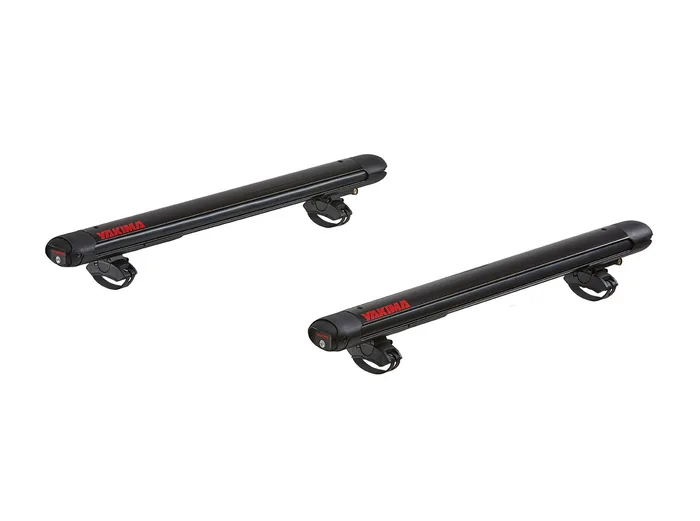
- Buy Yakima FatCat EVO 6 A six-pair roof carrier with a hinge that handles fat skis and tall bindings, integrated locks, and a clamp that fits most crossbar shapes.
- Buy Rhino-Rack Ski and Snowboard Carrier (3 Skis or 2 Snowboards) A compact, lockable three-pair carrier that clamps to a long list of bar types and carries a five-year warranty.
- It depends Thule SnowPack Extender A six-pair carrier whose arms slide out so you can load without leaning over the roof.
- Skip Menabo Igloo Magnetic Ski Rack A two-pair magnetic carrier with no crossbars needed, held on by magnets alone and limited to steel roofs.
What actually matters
- Capacity - This is how many pairs of skis or snowboards the carrier holds. Makers list them separately, so read both numbers.
- Locks - Locks secure the carrier to the bars and the gear to the carrier. Matching keys across your bars and carrier is a convenience.
- Crossbar fit - Carriers clamp to bars, and the clamp has to match the bar shape. A compatibility list on the maker page tells you what is supported.
- Loading reach - A fixed arm means you load over the roof, while a slide-out design moves the carrier to the side. Tall vehicles benefit most.
- Binding clearance - Tall bindings and wide skis need room to close, so lift or hinge features matter more than extra pairs.
- Stated load rating - Some makers publish a limit and many do not. Your bars and roof also have limits in the car's manual.
- Roof surface - Magnetic carriers need flat steel, and vacuum mounts need a clean smooth surface. Check the maker's rules for your roof.
The specs, in plain English
Green flags vs red flags
Green flags
- The maker page lists your bar type and any needed kit.
- Locks are included and keyed alike with your bars.
- Capacity is stated in pairs and in snowboards separately.
- The page names a warranty length.
- Features for tall bindings or fat skis are described.
Red flags
- Capacity text that contradicts itself between description and FAQ.
- No lock mentioned at all.
- A magnetic carrier sold without a mention of roof material.
- A load rating that is blank and not explained.
- Missing crossbar compatibility for your bar shape.
Who's who: the brands
- Yakima - Big-capacity carriers with hinge features for fat skis, listed on its ski rack pages.
- Thule - Slide-out and standard carriers that fit Thule bars, round bars and most factory racks.
- Rhino-Rack - Lockable carriers in several sizes with long bar compatibility lists and a stated 5 year warranty.
- SeaSucker - Vacuum-mount ski racks that mount without bars, listed in its Ski and Board category.
- Inno - Offers a winter sports range that includes ski and snowboard racks and roof-direct options.
How to read a listing without getting fooled
Start on the maker page and look for four lines: capacity in pairs and boards, the crossbar compatibility list, whether locks are included, and the warranty. Then check weight and length against your bars and any roof box. Treat a blank load rating as a reason to check your bars' own limit and the roof limit in your car manual. If a description and an FAQ disagree, as the Rhino-Rack page does on snowboards, ask the maker before buying.
How much should you spend?
Ski carriers sit in three broad tiers. The budget tier is mostly magnetic or simple carriers with few features. The mid-range tier covers bar-mounted, locking carriers with modest capacity. The premium tier covers large carriers and slide-out designs, where you are paying for capacity, reach and finishing details. Spend where it helps you: capacity if you carry a group, reach if you load alone on a tall vehicle.
Questions, answered
Can I use a ski rack on factory rails?
Often yes, if the maker lists factory bars as compatible. Yakima says the FatCat EVO 6 fits round, square, factory and most aerodynamic bars. Thule says the SnowPack Extender fits most factory racks. Check the spread between bars, because some factory setups sit closer or further apart than a carrier's allowed range.
Do ski racks hurt fuel economy?
Any roof-mounted gear adds drag, and the carrier itself sits above the roof line. Makers do not publish a fuel figure on the pages we checked, so we cannot give a number. Removing the carrier when it is not in use is the simple fix.
Should skis face forward or backward?
Rhino-Rack's instructions say ski tips must face the rear of the vehicle, and Menabo lists the same for its magnetic carriers. Following the maker's direction avoids wind lifting the tips. Always read the instruction sheet that comes with your carrier.
Is a vacuum-mount rack a good alternative?
It can be if you have no bars and a smooth roof. SeaSucker's pages describe no-drill vacuum mounts for roof, trunk or hatchback attachment and give general pull strengths for its mounts. Capacity wording on the Pallavicini page is not consistent, so read the product page for the model you choose. Check that the carrier you want is in stock, since several models showed as sold out when we looked.
Or jump to the head-to-head: Yakima FatCat EVO 6 vs Rhino-Rack Ski and Snowboard Carrier (3 Skis or 2 Snowboards).