Explained
Santoku Knives, Explained
After reading, you'll understand what makes a santoku cut well, which specs actually matter, and how to avoid paying for looks over performance.
In this guide
A santoku is the Japanese all-purpose kitchen knife: shorter, flatter, and lighter than a Western chef's knife, and built for quick up-and-down chopping rather than rocking. Shopping for one throws a lot of jargon at you - VG-10, HRC hardness numbers, Damascus cladding, edge angles in degrees - and it's easy to overpay for a pretty blade that doesn't cut better than a plain one. This guide decodes the terms so you can tell real cutting performance from marketing shine.
The 30-second version
- The steel and its hardness set the ceiling. The core alloy and its Rockwell (HRC) number determine how sharp the edge can get and how long it stays that way - everything else is secondary.
- Thin behind the edge beats a fancy finish. How thin the blade is just above the cutting edge decides whether it glides through an onion or wedges and splits it; geometry matters more than looks.
- Harder edges cut better but chip easier. A very hard, acute edge holds keen sharpness longer but is less forgiving of bone, frozen food, and hard boards, so match the knife to how carefully you cook.
- Damascus is mostly cosmetic. The wavy pattern usually comes from soft outer cladding layers wrapped around a single hard core; the core alloy does the cutting, not the pattern.
- Free lifetime sharpening changes the math. A maker that hones and sharpens your knife for life removes the biggest reason good knives go dull, which can justify a higher upfront price.
The products this guide is about
Our verdict on each, with the full reasoning on the companion review.
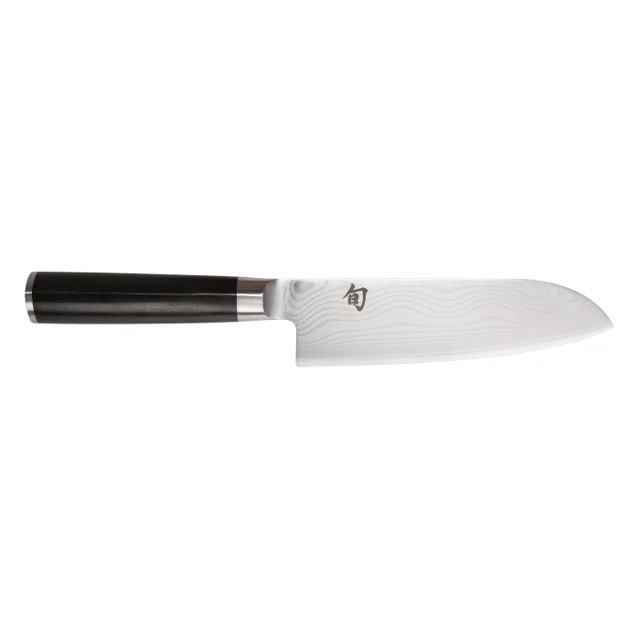
- Buy Shun Classic 7" Santoku The most well-rounded santoku for most home cooks, with a genuinely sharp edge and the easiest ownership story. Amazon
- Buy Tojiro DP Santoku 170mm (F-503) Pro-tier VG-10 steel and thin geometry at a fraction of the premium price, if you can live with plain fit and finish. Amazon
- It depends Miyabi Birchwood SG2 5000MCD Santoku A flagship showpiece with scalpel-like sharpness, but the price and delicate edge make it a narrow recommendation. Amazon
- Skip Victorinox Swiss Classic Santoku 7" (Fluted Edge) A durable, cheap, dishwasher-friendly workhorse, but it is a Western knife wearing a santoku shape rather than the real thing. Amazon
What actually matters
- Core steel - alloys like VG-10, VG-MAX, and SG2 take and hold a far finer edge than the softer stainless used in cheap knives, which is the single biggest driver of real-world performance.
- Hardness (HRC) - a higher Rockwell number means a finer, longer-lasting edge but less toughness; many quality santoku sit in the low 60s HRC, a deliberate balance of sharpness and durability.
- Blade geometry - a santoku should be thin behind the edge so it slices cleanly with little effort; thicker, more Western profiles wedge in dense produce no matter how sharp the very edge is.
- Edge angle - measured in degrees per side, a more acute angle (often in the mid-teens or lower) cuts more keenly but is more delicate than a broad Western grind.
- Handle and ergonomics - shape, weight, and balance decide whether the knife feels natural; some handle shapes suit certain hands better than others, and an uncomfortable knife gets left in the block.
- Maintenance and support - how easily the steel resharpens at home, plus any warranty or free sharpening, sets the true long-term cost of owning the knife.
- Size - 170-180mm (about 7 inches) is the versatile standard; shorter improves control, longer covers more per stroke but is less nimble.
The specs, in plain English
Green flags vs red flags
Green flags
- A named quality core steel such as VG-10, VG-MAX, or SG2, with a stated hardness in the low 60s HRC
- A blade described as thin behind the edge with an acute edge angle
- A comfortable handle matched to your hand size
- A maker warranty, and ideally free lifetime honing or sharpening
- A 170-180mm blade length for versatile all-round home use
Red flags
- No steel named at all, or vague terms like ‘high-carbon stainless’ with no hardness given
- Heavy emphasis on the Damascus pattern or blade looks with nothing said about the cutting core
- Marketed as dishwasher-safe as a headline feature (a sign of soft, low-maintenance steel)
- A thick, Western-style blade profile sold as a santoku
- ‘Never needs sharpening’ or serrated-santoku gimmick claims
Who's who: the brands
- Shun - Premium Japanese maker known for VG-MAX steel, Damascus blades, comfortable D-shaped PakkaWood handles, and free lifetime sharpening.
- Tojiro - The value benchmark of Japanese cutlery; its VG-10 santoku delivers pro-tier cutting with plain, utilitarian fit and finish.
- Miyabi - The flagship end of the market, offering hand-honed SG2 powder-steel blades and premium handles for enthusiasts and collectors.
- Victorinox - Swiss maker of durable, inexpensive stainless knives that are easy to sharpen but more Western than a true santoku.
- Wusthof - Established German brand offering forged Western-steel santoku-shaped knives - tough and easy to maintain, but softer than Japanese steel.
How to read a listing without getting fooled
Start with the core steel, not the photo. If the listing names a real cutlery alloy (VG-10, VG-MAX, SG2) and gives a hardness in the low 60s HRC, you're looking at a genuine performer; if it just says ‘high-carbon stainless’ with no numbers, temper your expectations. Treat the Damascus pattern as decoration - it tells you nothing about the cut, so look for the core alloy hiding under it. Then check geometry: words like ‘thin behind the edge’ and an acute edge angle matter more than blade weight or a fancy bolster. Confirm the length sits in the 170-180mm sweet spot, note whether the handle suits your hand, and finally weigh the ownership story - a warranty and especially free lifetime sharpening lower the true cost more than the sticker suggests.
How much should you spend?
You don't have to spend big to get a santoku that genuinely outcuts a supermarket knife - the value sweet spot is a no-frills Japanese blade with real VG-10 steel, where nearly all the money goes into the cut and none into cosmetics. Stepping up to a premium knife buys you a more refined handle, a beautiful finish, and often free lifetime sharpening, which can be worth it if you want one knife that's a pleasure to hold and effortless to keep sharp. The flagship tier, with exotic powder steel and hand-finished handles, is mostly paying for sharpness you may not notice day to day plus showpiece looks and materials; it makes sense only for enthusiasts who will maintain a delicate edge with care. For most people, the smartest spend is mid-range on steel and geometry, not top-dollar on appearance.
Questions, answered
What's the difference between a santoku and a chef's knife?
A santoku is shorter, lighter, and flatter, with a rounded tip, and it favors a straight up-and-down chopping motion. A Western chef's knife is longer with a curved belly built for rocking. A santoku shines on vegetables, herbs, and boneless proteins; a chef's knife is a bit more versatile for large cuts and rocking cuts.
Is a harder, higher-HRC steel always better?
Not always. Higher hardness holds a finer edge longer, but it's more brittle and can chip on bone, frozen food, or hard boards, and it's harder to resharpen at home. For most home cooks a balanced low-60s HRC blade used on a wood or soft board is the sweet spot; the very hardest powder steels reward careful owners and punish careless ones.
Does the Damascus pattern make a knife cut better?
No. On most kitchen knives the wavy pattern comes from soft outer layers wrapped around a single hard cutting core, so it's essentially decorative. What determines the cut is the core alloy, its hardness, and how thin the blade is behind the edge - judge those, and treat the pattern as looks.
Can I put a santoku in the dishwasher?
You shouldn't. Heat, harsh detergent, and jostling degrade the edge and can damage the handle. Hand-wash and dry any quality knife right after use. Some budget knives are marketed as dishwasher-safe, but even those last far longer with hand-washing.
What size santoku should I buy?
A 170-180mm blade (roughly 7 inches) is the standard and the most versatile for home kitchens. A shorter blade gives more control but limits you on larger produce; a longer one covers more per stroke but feels less nimble. Most cooks are best served in that 170-180mm range.
How often will I need to sharpen it?
With normal home use, hone on a rod as needed and do a full sharpening once or twice a year; heavy users more often. Softer steels are easy to sharpen at home, while hard powder steels are more demanding. Some premium makers offer free lifetime sharpening, which removes the learning curve entirely.
Or jump to the head-to-head: Shun Classic 7" Santoku vs Tojiro DP Santoku 170mm (F-503).