

Home & Kitchen
The Best Santoku Knives: 4 Compared (and One to Skip)
We compared four current santoku knives on steel, sharpness, edge retention, ergonomics, and value to find the one worth buying.
The short version
A santoku should give you a thin, precise, low-effort cut on vegetables and boneless proteins, and the best all-round choice for most home cooks is the Shun Classic 7": sharp VG-MAX steel, a comfortable handle, and free lifetime sharpening that removes the usual maintenance worry. If you care about performance more than looks, the Tojiro DP delivers pro-tier VG-10 cutting for a fraction of the cost and is the smartest value. The Miyabi Birchwood is a stunning flagship, but its price and delicate edge make sense only for enthusiasts. The Victorinox is a rugged budget utility knife rather than a true santoku, so skip it if the authentic santoku cut is what you are after. Best for: most home cooks are best served by the Shun Classic, with the Tojiro DP as the value pick.
Our picks at a glance
- Shun Classic 7" Santoku - Buy. The most well-rounded santoku for most home cooks, with a genuinely sharp edge and the easiest ownership story.
- Tojiro DP Santoku 170mm (F-503) - Buy. Pro-tier VG-10 steel and thin geometry at a fraction of the premium price, if you can live with plain fit and finish.
- Miyabi Birchwood SG2 5000MCD Santoku - It depends. A flagship showpiece with scalpel-like sharpness, but the price and delicate edge make it a narrow recommendation.
- Victorinox Swiss Classic Santoku 7" (Fluted Edge) - Skip. A durable, cheap, dishwasher-friendly workhorse, but it is a Western knife wearing a santoku shape rather than the real thing.
The verdict in 30 seconds
What mattered most
- Core steel & hardness
- Out-of-box sharpness
- Edge retention
- Ease of home sharpening
- Handle & ergonomics
- Toughness / chip resistance
A santoku is the Japanese all-purpose knife: shorter and flatter than a Western chef's knife, built for fast up-and-down chopping of vegetables, boneless proteins, and herbs. We synthesized independent testing and long-run owner reports across four current, buyable-in-2026 models spanning budget to flagship. The short version: one premium knife is the best all-rounder for most people, a budget-Japanese model is the smartest value, a stunning flagship makes sense only for a narrow buyer, and one popular Western pick is the one we would skip if a true santoku is what you actually want.
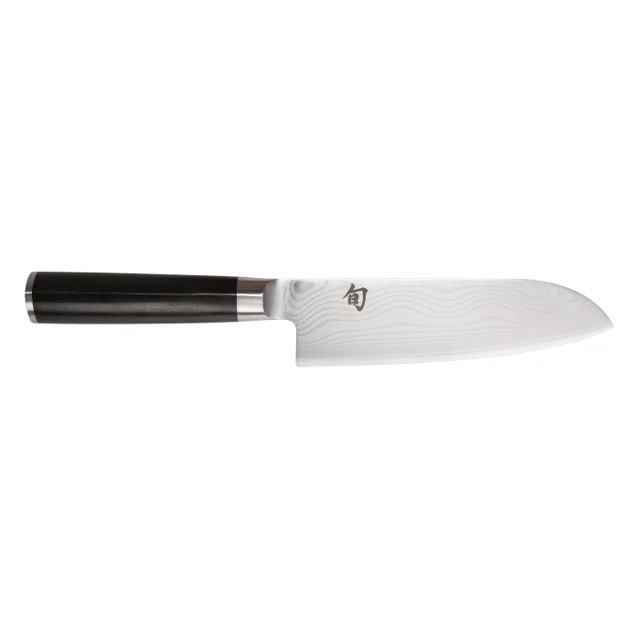
The most well-rounded santoku for most home cooks, with a genuinely sharp edge and the easiest ownership story.
Best for: Home cooks who want one premium santoku that performs well, feels good in hand, and is easy to keep sharp.
- VG-MAX core takes and holds a keen 16-degree edge
- Comfortable D-shaped PakkaWood handle that the maker says suits both left- and right-handed users
- Free lifetime honing and sharpening from the maker removes the biggest ownership hurdle
- The relatively hard, thin edge can chip if used on bone or frozen food
- The D-shaped handle is a fixed shape, so hands at either extreme of size may prefer something else
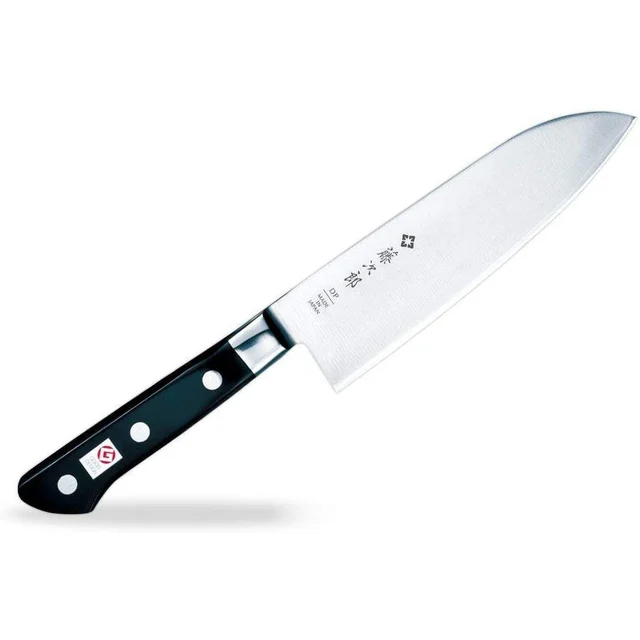
Pro-tier VG-10 steel and thin geometry at a fraction of the premium price, if you can live with plain fit and finish.
Best for: Value-driven cooks and first-time Japanese-knife buyers who care about the cut, not the cosmetics.
- VG-10 core delivers cutting performance well above its price bracket
- Thin behind the edge, so it glides through vegetables cleanly
- Easy to resharpen and widely regarded as the benchmark first serious Japanese knife
- Basic riveted handle and bolster with noticeably rougher fit and finish than premium rivals
- Utilitarian looks and no free lifetime sharpening like the Shun
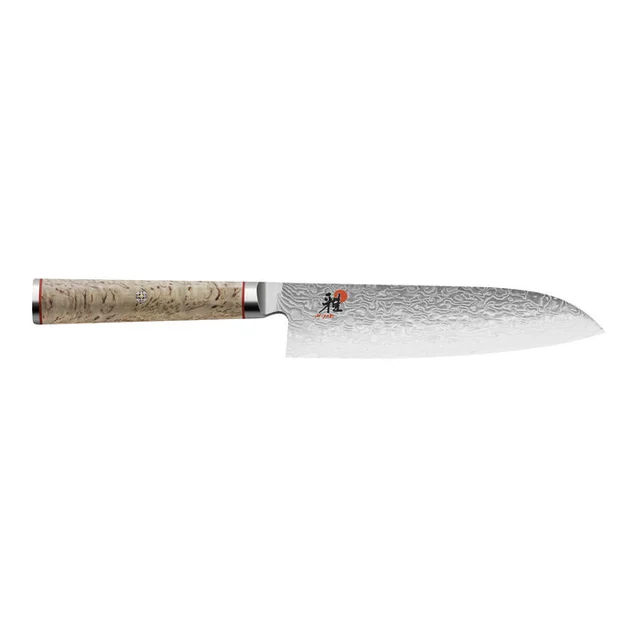
A flagship showpiece with scalpel-like sharpness, but the price and delicate edge make it a narrow recommendation.
Best for: Enthusiasts and collectors who want a showpiece and will treat and maintain it accordingly.
- MC63 micro-carbide powder steel at about 63 HRC holds an exceptionally fine edge
- Hand-honed using the traditional three-step Honbazuke process for standout out-of-box sharpness
- Striking 100-layer Damascus blade and premium Karelian birch handle
- Flagship pricing that most cooks will not recover in day-to-day usefulness
- The very hard, acute edge is less forgiving and can chip under careless use or contact
- Harder powder steel is more demanding to resharpen at home
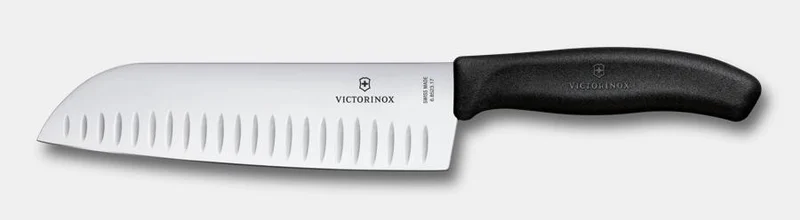
A durable, cheap, dishwasher-friendly workhorse, but it is a Western knife wearing a santoku shape rather than the real thing.
Best for: Budget buyers who want a rugged, low-maintenance utility knife and are not chasing the true santoku cutting experience.
- Very inexpensive and hard to damage, with a grippy, wet-safe polymer handle
- Softer steel is easy to sharpen and forgiving of rough treatment
- Fluted (Granton) edge helps release sticky slices
- Softer steel loses its edge faster than the Japanese-steel rivals
- Thicker, more Western blade geometry lacks the thin, precise cut a santoku is prized for
- No Damascus cladding or the refined feel buyers seeking a santoku usually expect
| Criteria | Shun Classic 7" Santoku Top pick Buy it Buy | Tojiro DP Santoku 170mm (F-503) Buy it Buy | Miyabi Birchwood SG2 5000MCD Santoku It depends Buy | Victorinox Swiss Classic Santoku 7" (Fluted Edge) Skip it Buy |
|---|---|---|---|---|
| Best for | Home cooks who want one premium santoku that performs well, feels good in hand, and is easy to keep sharp. | Value-driven cooks and first-time Japanese-knife buyers who care about the cut, not the cosmetics. | Enthusiasts and collectors who want a showpiece and will treat and maintain it accordingly. | Budget buyers who want a rugged, low-maintenance utility knife and are not chasing the true santoku cutting experience. |
| Price tier | $$$ · premium | $$ · mid-range | $$$$ · flagship | $ · budget |
| Core steel & hardness | VG-MAX core | VG-10 core | MC63 (SG2) powder steel, ~63 HRC | Stainless, softer |
| Out-of-box sharpness | Very good | Very good for the price | Exceptional | Good |
| Edge retention | Strong | Strong | Excellent | Modest |
| Ease of home sharpening | Moderate (plus free maker service) | Easy | Demanding | Very easy |
| Handle & ergonomics | D-shaped PakkaWood, fits left or right hand | Basic riveted, utilitarian | Premium Karelian birch | Grippy polymer, wet-safe |
| Toughness / chip resistance | Moderate | Moderate | Lower (acute, hard edge) | High (forgiving) |
| Warranty & support | Lifetime warranty + free sharpening | Check the seller's warranty terms | Lifetime warranty | Lifetime warranty |
| Price tier | $$$ · premium | $$ · mid-range | $$$$ · flagship | $ · budget |
Which one is right for you?
- Home cooks who want one premium santoku that performs well, feels good in hand, and is easy to keep sharp. Buy it Shun Classic 7" Santoku
- Value-driven cooks and first-time Japanese-knife buyers who care about the cut, not the cosmetics. Buy it Tojiro DP Santoku 170mm (F-503)
- Enthusiasts and collectors who want a showpiece and will treat and maintain it accordingly. It depends Miyabi Birchwood SG2 5000MCD Santoku
- Budget buyers who want a rugged, low-maintenance utility knife and are not chasing the true santoku cutting experience. Skip it Victorinox Swiss Classic Santoku 7" (Fluted Edge)
How we judged the field
We do not run our own cutting lab. Instead, we synthesized independent testing and a large body of long-run owner reports, then weighed the factors that actually determine whether you will reach for a santoku every day.
The criteria that mattered most:
- Steel and hardness - the core alloy and its Rockwell hardness set the ceiling for sharpness and edge retention, and also hint at how prone the edge is to chipping.
- Cutting performance - how thin the blade is behind the edge, how sharp it arrives, and how long it stays that way in real kitchens.
- Ergonomics - handle shape, balance, and weight, because a knife that is uncomfortable gets left in the block.
- Maintenance and support - how easy the steel is to resharpen at home, plus any warranty or free sharpening that lowers the cost of ownership.
- Value - performance relative to price tier, not price in isolation.
Where sources disagreed, we favored the consensus of independent testing corroborated by owner reports over any single strong opinion.
Shun Classic 7” Santoku
Buy itThis is the knife we would hand to most people asking for one good santoku. The VG-MAX core is ground to a keen 16-degree edge, clad in a Damascus jacket that is as much about looks as function. Reviewers consistently describe it as arriving very sharp and holding that edge well, and the D-shaped PakkaWood handle draws praise for comfort in medium-to-large hands. The decisive advantage is ownership: the maker offers free lifetime honing and sharpening, which removes the single biggest reason people let good knives go dull. The trade-offs are real but narrow - the hard, thin edge dislikes bone and frozen food, and the D-shaped handle is a fixed shape that will not suit every hand.
Tojiro DP Santoku 170mm (F-503)
Buy itThe Tojiro DP is the value benchmark of Japanese cutlery, and it earns a buy on performance alone. Its VG-10 core is a genuinely pro-tier alloy, and the blade is thin behind the edge, so it slips through onions and squash with little wedging. Independent testing and owner reports repeatedly single it out as the smartest first serious Japanese knife, because the cut punches far above its modest price. What you give up is polish: the riveted handle, bolster, and overall fit and finish are noticeably rougher than the premium field, and there is no free lifetime sharpening like the Shun offers. If you judge a knife by how it cuts rather than how it photographs, none of that matters.
Miyabi Birchwood SG2 5000MCD Santoku
It dependsThis is the flagship, and it is spectacular. The SG2-class micro-carbide powder-steel core is hardened to around 63 HRC, hand-honed with the Honbazuke process, and wrapped in a 100-layer Damascus blade with a prized Karelian birch handle. Out of the box it is the sharpest knife in this comparison, and enthusiasts report it stays that way. But the case for it is narrow. The flagship price is hard to justify on daily usefulness alone, the very hard and acute edge is the least forgiving of the group and can chip under careless contact, and the powder steel is more demanding to resharpen at home. Buy it if you want a showpiece and will maintain it with care; otherwise the premium and value picks deliver most of the real-world benefit for far less.
Victorinox Swiss Classic Santoku 7”
Skip itThe Victorinox is a fine, durable, inexpensive knife - and that is exactly why it disappoints as a santoku. Its softer stainless steel sharpens easily and shrugs off rough treatment, the fluted edge helps release sticky slices, and the grippy polymer handle stays secure when wet. But the blade is thicker and more Western in geometry, and the softer steel loses its edge faster than the Japanese-steel rivals. If you specifically want the thin, precise, low-effort cut that makes a santoku worth owning, this is the one to skip. If you simply want a rugged budget utility knife, it is competent, but that is a different shopping trip.
Shun Classic vs Tojiro DP: which should you buy?
These two are the strongest all-round choices, and the decision comes down to what you value. The Shun Classic costs meaningfully more, but you get a more comfortable handle, a more refined fit and finish, a beautiful Damascus blade, and - crucially - free lifetime sharpening that keeps it performing with zero effort on your part. The Tojiro DP cuts nearly as well thanks to its thin VG-10 blade, resharpens easily, and costs a fraction as much, but it looks and feels utilitarian and you are on your own for maintenance.
Buy the Shun if you want one premium knife that is a pleasure to hold and effortless to keep sharp. Buy the Tojiro if you want maximum cutting performance per dollar and either enjoy sharpening or do not mind learning. Neither is a mistake; they simply serve different priorities.
What to look for
- Core steel and hardness - VG-10, VG-MAX, and SG2 hold better edges than soft stainless; higher hardness means a finer edge but less tolerance for abuse.
- Blade geometry - a santoku should be thin behind the edge for a clean, low-effort cut; thicker Western-style blades wedge in dense produce.
- Size - 170-180mm (about 7 inches) is the versatile standard for home kitchens.
- Handle fit - match the handle shape and size to your hand; check that the shape suits your hand.
- Maintenance reality - factor in whether you will sharpen at home or rely on a service, and note that free lifetime sharpening materially lowers ownership cost.
- Use discipline - keep hard Japanese edges off bone, frozen food, and stone or glass boards to avoid chipping.
Our final take
For most home cooks, the Shun Classic 7” Santoku is the knife to buy: it is sharp, comfortable, and effectively maintenance-free thanks to free lifetime sharpening. If value is your priority, the Tojiro DP delivers most of the cutting performance for far less and remains the smartest entry into serious Japanese cutlery. The Miyabi Birchwood is a genuine flagship that rewards the enthusiast willing to pay for and care for it, but it is overkill for everyday cooking. And the Victorinox, competent as a budget utility knife, is the one to skip if what you actually want is a true santoku cut. Match the knife to how you cook and how you maintain, and any of the top three will serve you for years.
Questions, answered
What is a santoku, and how is it different from a chef's knife?
A santoku is a Japanese general-purpose knife, typically 165-180mm long, with a flatter edge and a rounded, sheepsfoot-style tip. Compared with a Western chef's knife it is shorter, lighter, and flatter, which favors a straight up-and-down chopping motion rather than the forward-and-back rocking a curved chef's knife encourages. It excels at slicing and dicing vegetables, herbs, and boneless proteins.
What size santoku should I buy?
The 170-180mm (roughly 7-inch) size is the standard and the most versatile for home use. A shorter blade improves control but limits you on larger produce; a longer blade covers more in one stroke but is less nimble. All four knives here sit in the 170-180mm range, which is the sweet spot for most kitchens.
Can I put a santoku in the dishwasher?
Hand-washing and drying is strongly advised for any quality knife. The Japanese-steel models here should stay out of the dishwasher, because heat, detergent, and jostling degrade the edge and handle. Some budget knives are marketed as dishwasher-safe, but even then owners report that hand-washing preserves the edge and finish far longer.
Are hard Japanese steels like SG2 and VG-10 too fragile?
Harder steels hold a finer, longer-lasting edge but trade away some toughness, so they are more prone to chipping if used on bone, frozen food, or hard cutting boards, or if twisted during a cut. Used as intended on vegetables and boneless proteins with a wood or soft-composite board, owners report they hold up well for years. The flagship SG2 edge is the least forgiving of the group.
How often will I need to sharpen a santoku, and who does it?
With normal home use, honing on a rod as needed and a full sharpening once or twice a year is typical; heavy users sharpen more often. You can learn to sharpen on whetstones at home, which is straightforward on the softer steels and more demanding on hard powder steels. Some premium makers, including the brand behind our top pick, offer free lifetime sharpening, which removes the learning curve entirely.
Deciding between the top two? See our head-to-head: Shun Classic 7" Santoku vs Tojiro DP Santoku 170mm (F-503).
More in Home & Kitchen
Santoku Knives, Explained Plain-English guide → Shun Classic 7" Santoku vs Tojiro DP Santoku 170mm (F-503) Head-to-head →  The Best Sewing Machines for Beginners: 4 Compared (and One to Skip)
  The Best Sheet Pans: 4 Compared (and One to Skip)
  The Best Shower Filters: 4 Compared (and One to Skip)
  The Best Shower Heads: 4 Compared (and One to Skip)