

Home & Kitchen
The Best Sewing Machines for Beginners: 4 Compared (and One to Skip)
We compared four popular beginner and home sewing machines on ease of use, stitch quality, durability, and how well they handle real fabrics.
The short version
Most beginners should buy the Brother CS7000X: computerized stitch selection, an automatic needle threader, a drop-in bobbin, and a wide table make it the gentlest on-ramp into sewing, and it has enough range to grow into. If you prefer simple, near-unbreakable mechanicals with an excellent stitch, the Janome 2212 is the safe long-term pick. The Singer Heavy Duty 4423 is worth it only if you know you will sew denim, bags, and thick home-decor fabrics. Avoid the Singer M1000 mending machine as a first 'real' machine - it is fine for quick repairs but too limited and flimsy to actually learn on. Best for: nervous first-timers who want a machine that makes the basics easy and does not need replacing in a year.
Our picks at a glance
- Brother CS7000X Computerized Sewing & Quilting Machine - Buy. The most forgiving on-ramp into sewing, with real features you grow into rather than outgrow.
- Janome 2212 Mechanical Sewing Machine - Buy. A no-nonsense mechanical machine that sews a beautiful, reliable stitch and shrugs off years of use.
- Singer Heavy Duty 4423 Sewing Machine - It depends. A powerful, fast machine built for thick fabrics, but more machine than many beginners need.
- Singer M1000 Mending Machine - Skip. A tiny mending helper sold like a real machine - fine for quick fixes, frustrating for actually learning.
The verdict in 30 seconds
What mattered most
- Machine type
- Built-in stitches
- Ease of setup
- Heavy fabric handling
- Build & durability
- Best use
The best beginner sewing machine is the one you actually enjoy sitting down at, not the one with the longest spec sheet. We synthesized independent testing and years of owner reports to sort a computerized all-rounder, a bare-bones mechanical workhorse, a heavy-duty specialist, and a bargain mending machine. Two are easy recommendations, one is a solid buy for the right person, and one is a machine most beginners will outgrow before their first project is done.
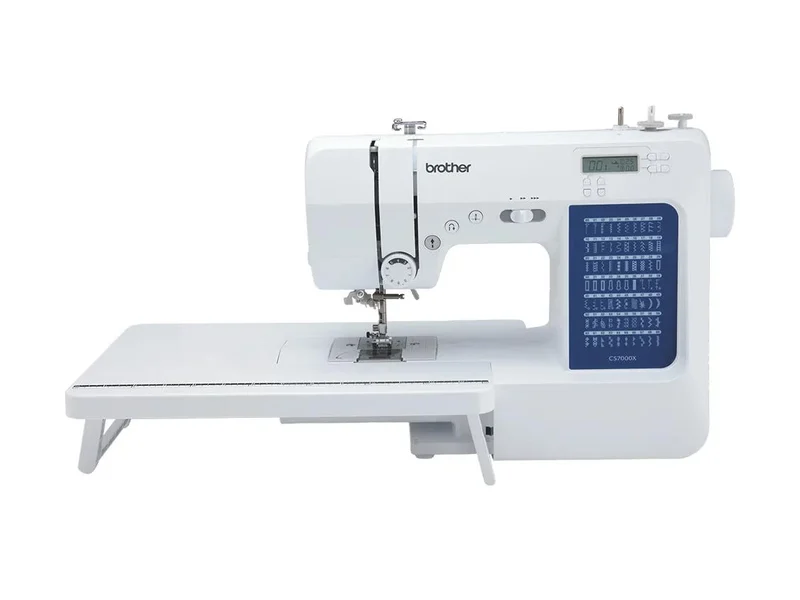
The most forgiving on-ramp into sewing, with real features you grow into rather than outgrow.
Best for: First-time sewists who want an easy learning curve and room to try quilting and garments as they improve.
- Computerized stitch selection with an LCD screen removes the guesswork beginners struggle with most
- Automatic needle threader plus a top drop-in bobbin make setup genuinely painless
- Adjustable sewing speed control lets you sew slowly without fighting the foot pedal
- Ships with a wide extension table and a walking foot, so it handles quilting and larger projects out of the box
- Lighter-weight build may feel less reassuring than a metal-frame machine
- Owners report it bogs down on very thick denim or many layers of heavy canvas
Own the Brother CS7000X Computerized Sewing & Quilting Machine? Tell us how it held up.
Thanks. Counted, and shown once enough owners have weighed in.
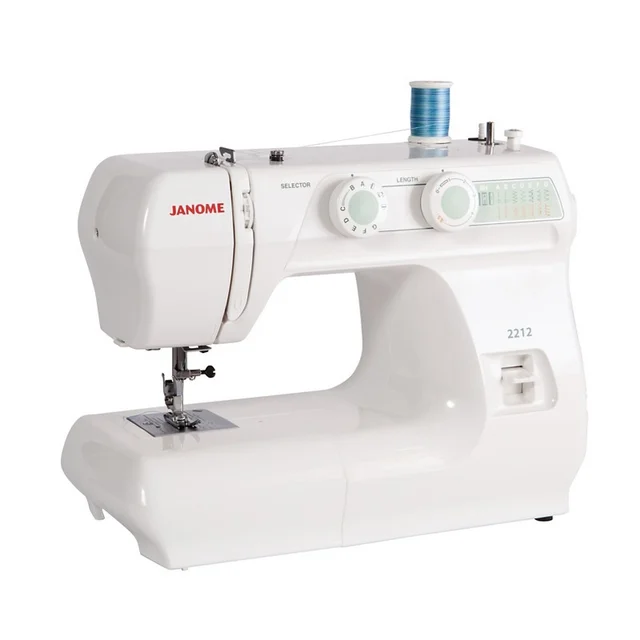
A no-nonsense mechanical machine that sews a beautiful, reliable stitch and shrugs off years of use.
Best for: Beginners who value durability and stitch quality over gadgets and want a machine to keep for years.
- Independent testing and owner reports consistently praise its clean, even stitch quality
- Simple dial controls mean almost nothing can go wrong electronically
- Simple mechanicals give it a reputation for lasting many years with basic care
- Portable enough to carry to classes
- A modest built-in stitch selection compared with computerized machines
- Fewer convenience features, so threading may take a little more patience
Own the Janome 2212 Mechanical Sewing Machine? Tell us how it held up.
Thanks. Counted, and shown once enough owners have weighed in.
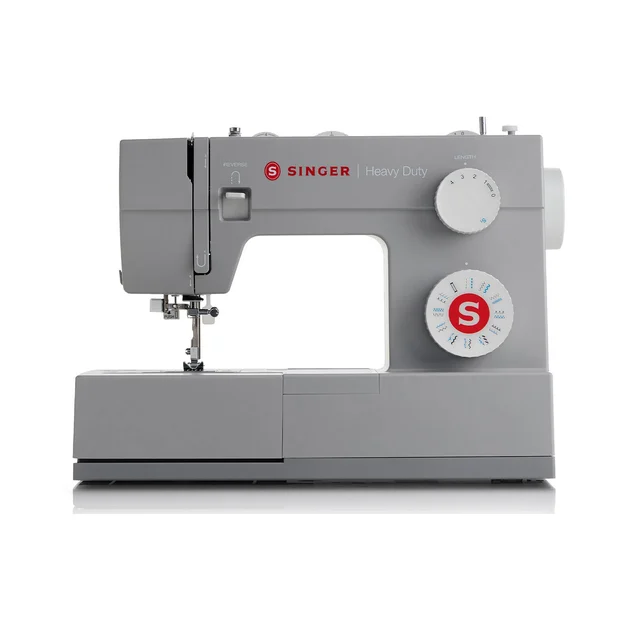
A powerful, fast machine built for thick fabrics, but more machine than many beginners need.
Best for: Newer sewists who already know they will tackle jeans hems, bags, curtains, and thick materials.
- A strong motor and heavy-duty metal frame suit denim, canvas, and multiple layers
- Fast top speed (up to 1,100 stitches per minute) makes long straight seams and home-decor projects quick
- Heavier build stays planted while sewing bulky materials
- That same speed and power can feel intimidating for a nervous first-timer
- Owners report the tension and stitch finesse can be fussy on lightweight, delicate fabrics
- 23 built-in stitches and a mechanical dial offer less hand-holding than a computerized model
Amazon had no buyable listing for this when we last checked. The link still works if it returns.
Find it on Amazon Read our detailed assessmentOwn the Singer Heavy Duty 4423 Sewing Machine? Tell us how it held up.
Thanks. Counted, and shown once enough owners have weighed in.
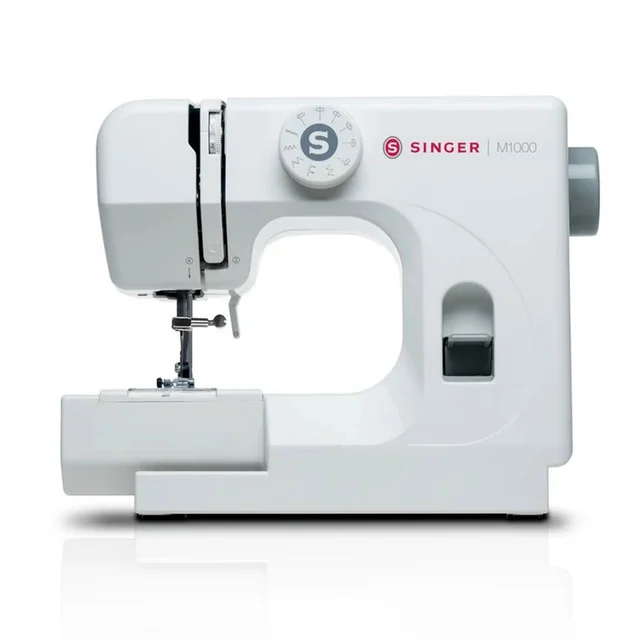
A tiny mending helper sold like a real machine - fine for quick fixes, frustrating for actually learning.
Best for: Someone who only wants an occasional-repair tool and explicitly does not plan to learn to sew properly.
- Very light and compact, easy to store or carry
- Genuinely handy for fast repairs and hemming on light fabrics
- Low upfront cost
- Only four built-in stitches and a small work area limit real projects
- Owners often report skipped stitches, tension trouble, and a flimsy feel
- Lightweight body can shift while sewing and struggles with anything thick
Own the Singer M1000 Mending Machine? Tell us how it held up.
Thanks. Counted, and shown once enough owners have weighed in.
| Criteria | Brother CS7000X Computerized Sewing & Quilting Machine Top pick Buy it Buy | Janome 2212 Mechanical Sewing Machine Buy it Buy | Singer Heavy Duty 4423 Sewing Machine It depends | Singer M1000 Mending Machine Skip it Buy |
|---|---|---|---|---|
| Best for | First-time sewists who want an easy learning curve and room to try quilting and garments as they improve. | Beginners who value durability and stitch quality over gadgets and want a machine to keep for years. | Newer sewists who already know they will tackle jeans hems, bags, curtains, and thick materials. | Someone who only wants an occasional-repair tool and explicitly does not plan to learn to sew properly. |
| Price tier | $$ · mid-range | $$ · mid-range | $$ · mid-range | $ · budget |
| Machine type | Computerized | Mechanical | Mechanical (heavy-duty) | Mechanical (compact) |
| Built-in stitches | 70 | Modest selection | 23 | 4 (32 applications) |
| Ease of setup | Auto needle threader + drop-in bobbin | Basic manual setup | Built-in needle threader + top drop-in bobbin | Manual needle threader, top drop-in bobbin |
| Heavy fabric handling | Moderate | Good for its class | Excellent | Poor |
| Build & durability | Lighter build, solid for the price | Simple mechanicals, long-lived reputation | Heavy-duty metal frame | Very lightweight, basic |
| Best use | All-round learning + light quilting | Everyday sewing that lasts | Thick fabrics & home decor | Quick mending only |
| Price tier | $$ · mid-range | $$ · mid-range | $$ · mid-range | $ · budget |
Which one is right for you?
- First-time sewists who want an easy learning curve and room to try quilting and garments as they improve. Buy it Brother CS7000X Computerized Sewing & Quilting Machine
- Beginners who value durability and stitch quality over gadgets and want a machine to keep for years. Buy it Janome 2212 Mechanical Sewing Machine
- Newer sewists who already know they will tackle jeans hems, bags, curtains, and thick materials. It depends Singer Heavy Duty 4423 Sewing Machine
- Someone who only wants an occasional-repair tool and explicitly does not plan to learn to sew properly. Skip it Singer M1000 Mending Machine
How we judged the field
We do not run our own sewing lab. Instead, we synthesize independent testing and a large body of owner reports to find where the consensus is strong and where it splits. For beginner and home-use machines, four things mattered most.
- Ease of use. How quickly can a nervous first-timer thread the machine, wind a bobbin, pick a stitch, and get a clean seam? Automatic needle threaders, top drop-in bobbins, and clear controls do more for a beginner than a long stitch list.
- Stitch quality. A machine that lays down an even, well-tensioned straight stitch on ordinary cotton is worth more than one with dozens of decorative options and inconsistent results.
- Fabric range. Beginners quickly want to try hems on jeans or a tote bag, so we looked at how each machine handles thicker layers as well as lightweight fabrics.
- Durability. Owner reports over months and years tell us which machines keep sewing and which develop tension gremlins or wear out.
We deliberately weighted usability and reliability over spec-sheet stitch counts, because that is what the evidence says keeps beginners sewing rather than giving up.
Brother CS7000X Computerized Sewing & Quilting Machine
Buy itThis is the machine we would hand a nervous beginner. Being computerized, it takes over the settings that trip people up: you select a stitch on the panel and it sets a sensible length and width for you. The automatic needle threader and top drop-in bobbin remove the two most common early frustrations, and the adjustable speed control lets you sew slowly and in control without wrestling a foot pedal. Reviewers consistently highlight how gentle the learning curve is, and the included wide table and walking foot mean it can follow you into quilting and larger garments. The trade-off is a lighter build and owner reports that it can bog down on very thick denim or many heavy layers. For general learning and home sewing, that is an easy compromise to accept.
Janome 2212 Mechanical Sewing Machine
Buy itIf the Brother is the friendliest machine, the Janome 2212 is the most dependable. It is mechanical - dials, not screens - so there is very little to go wrong electronically, and both independent testing and owner reports single out its clean, even stitch as a genuine strength. It has a more modest stitch selection and fewer conveniences, so setup asks a bit more patience. In return you get a machine with a strong reputation for lasting many years, one that beginners quickly stop thinking about and simply use. For someone who values a great basic stitch and long-term reliability over convenience features, it is the smart buy.
Singer Heavy Duty 4423 Sewing Machine
It dependsThe 4423 is a specialist wearing a beginner label. Its strong motor, heavy-duty metal frame, and fast top speed make short work of denim, canvas, curtains, and multi-layer projects, and the extra weight keeps it stable on bulky work. That power is exactly why it is not our default beginner pick: the speed can feel intimidating early on, and owners report the tension and stitch finesse can be fussy on lightweight, delicate fabrics. With 23 built-in stitches and a mechanical dial, it also offers less hand-holding than a computerized model. Buy it if you already know you will sew heavy materials; look elsewhere if your first projects are light garments and you want a gentle start.
Singer M1000 Mending Machine
Skip itThe M1000 is genuinely useful for what it is - a compact, low-cost tool for quick repairs and hems on light fabric - but it is too often bought as a first ‘real’ sewing machine, and there it disappoints. With just four built-in stitches, a small work area, and a lightweight body (about 5.5 lb), owners often report skipped stitches, tension trouble, and a machine that shifts around while sewing. It struggles with anything thick. As an occasional mending helper it is fine; as the machine you learn to sew on, it will frustrate you long before you finish a project. That is why we steer beginners away from it.
Sources
Specs in this review come from these pages.
Brother CS7000X vs Janome 2212: which should you buy?
These are our two recommendations, and the choice is about how you like to work. The Brother CS7000X is the easier machine to start on: computerized stitch selection, an automatic needle threader, speed control, and a wide quilting table make the first few weeks noticeably smoother, and its 70 stitches give you room to experiment. The Janome 2212 strips all of that away in favor of simple mechanicals, a superb basic stitch, and a build reputation for lasting many years.
Choose the Brother if you want the gentlest possible learning curve and expect to try quilting and a variety of stitches. Choose the Janome if you would rather have fewer things to break, a machine you can hand down, and stitch quality that punches above its price. Neither is a wrong answer; they simply suit different temperaments.
What to look for
- A drop-in (top-loading) bobbin. Easier to insert and check than a front-loading bobbin, and less prone to beginner mistakes.
- An automatic or assisted needle threader. Small feature, big daily difference - especially if your eyesight is not perfect.
- The stitches you will actually use. A reliable straight stitch, a zigzag, and a good buttonhole matter far more than a huge decorative-stitch count.
- Adjustable speed control. Lets you sew slowly and in control while you build confidence.
- The fabrics you plan to sew. If denim, canvas, and bags are in your future, prioritize a machine with the power to handle them; if not, do not pay for a heavy-duty motor you will not use.
- A build and brand with a track record. Owner reports over time are the best guide to which machines keep sewing and which develop problems.
Our final take
For most people learning to sew, the Brother CS7000X is the machine that makes the basics easy and still has room to grow, which is why it is our top pick. If you would rather trade convenience features for simple, long-lived mechanicals and a first-rate stitch, the Janome 2212 is the one to buy. Reach for the Singer Heavy Duty 4423 only if thick fabrics are clearly in your plans, and skip the Singer M1000 as a first real machine - keep it in mind purely as a quick-mending tool. Match the machine to how you will actually use it and you will spend your time sewing, not fighting your equipment.
Questions, answered
Should a beginner get a computerized or mechanical sewing machine?
Either works, and it comes down to temperament. Computerized machines like the Brother CS7000X pick the stitch settings for you and add conveniences such as adjustable speed control, which shortens the learning curve. Mechanical machines like the Janome 2212 have fewer things to break and teach you the fundamentals directly. If you want the smoothest start, go computerized; if you want simplicity and longevity, go mechanical.
How many stitches does a beginner actually need?
Far fewer than the box advertises. Independent testing and owner reports agree that a straight stitch, a zigzag, and a one-step or four-step buttonhole cover the vast majority of beginner projects. Extra decorative stitches are nice to have but rarely the reason to choose one machine over another, so weigh ease of use and stitch quality first.
Is a 'heavy-duty' machine better for a first-time sewist?
Not necessarily. A heavy-duty machine like the Singer 4423 has the motor and metal frame to push through denim and canvas, which is great if that is your plan. But the extra speed and power can feel intimidating at first, and owners note the tension can be finicky on delicate fabrics. Buy heavy-duty for the fabrics you will actually sew, not just because it sounds sturdier.
Why skip a cheap mini or mending machine?
Compact mending machines such as the Singer M1000 are built for quick repairs, not for learning to sew. With only a handful of stitches, a small work area, and a lightweight body, owners commonly report skipped stitches and tension problems. They are convenient for occasional fixes, but a beginner who wants to actually learn will be happier with a full-size machine.
How long should a beginner sewing machine last?
With basic care - keeping it clean, changing needles regularly, and using the right thread - a well-built machine like the Janome 2212 can last many years. Computerized models such as the Brother CS7000X hold up well too, though their electronics add more potential failure points than a simple mechanical machine. Budget mending machines tend to have the shortest useful life.
Deciding between the top two? See our head-to-head: Brother CS7000X Computerized Sewing & Quilting Machine vs Janome 2212 Mechanical Sewing Machine.
More in Home & Kitchen
Sewing Machines, Explained Plain-English guide → Brother CS7000X Computerized Sewing & Quilting Machine vs Janome 2212 Mechanical Sewing Machine Head-to-head →  The Best Sheet Pans: 4 Compared (and One to Skip)
  The Best Shower Filters: 4 Compared (and One to Skip)
  The Best Shower Heads: 4 Compared (and One to Skip)
  The Best Slow Cookers: 4 Compared (and One to Skip)