Explained
Sewing Machines, Explained
After reading this you'll understand the specs on a sewing machine box, know which features actually matter for how you sew, and be able to tell a genuine machine from an overhyped one.
In this guide
A sewing machine box is covered in numbers that sound impressive but rarely tell you how the machine feels to use. Beginners tend to fixate on stitch counts and 'heavy-duty' labels, when ease of threading, a reliable straight stitch, and the fabrics you'll actually sew matter far more. This guide decodes the jargon so you can match a machine to how you'll really use it.
The 30-second version
- Stitch count is the most oversold spec. A straight stitch, a zigzag, and a good buttonhole cover almost everything a beginner sews; dozens of decorative stitches are nice-to-have, not decision-makers.
- Ease of use beats feature lists. An automatic needle threader, a top drop-in bobbin, and clear controls do more to keep a beginner sewing than a longer spec sheet ever will.
- Computerized vs. mechanical is about temperament. Computerized machines pick settings for you and shorten the learning curve; mechanical machines have fewer things to break and often last longer.
- 'Heavy-duty' means fabric range, not beginner-friendly. A strong motor and metal frame power through denim and canvas but can feel fast and fussy on delicate fabrics, so buy it for the materials you'll actually sew.
- Build quality is what you feel years later. A well-made machine that lasts for years is worth more than a cheap one bristling with features you'll never trust.
The products this guide is about
Our verdict on each, with the full reasoning on the companion review.
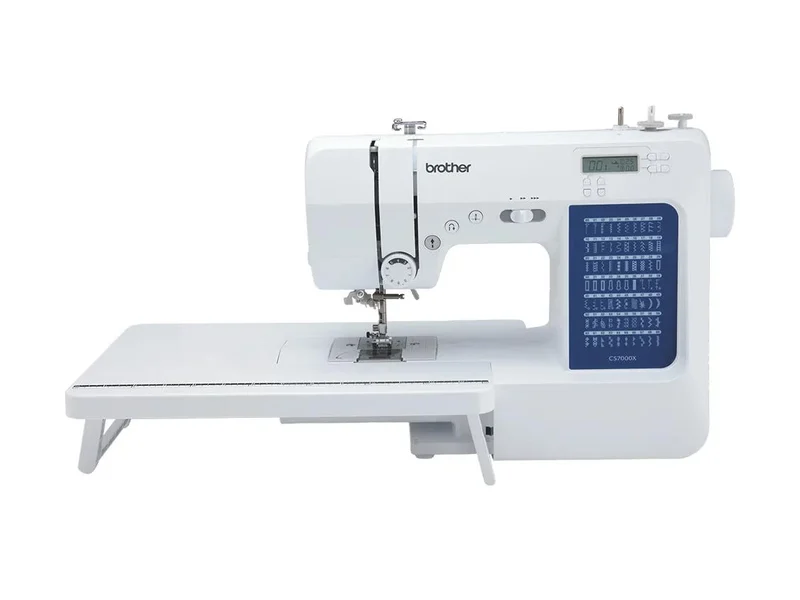
- Buy Brother CS7000X Computerized Sewing & Quilting Machine The most forgiving on-ramp into sewing, with real features you grow into rather than outgrow. Amazon
- Buy Janome 2212 Mechanical Sewing Machine A no-nonsense mechanical machine that sews a beautiful, reliable stitch and shrugs off years of use. Amazon
- It depends Singer Heavy Duty 4423 Sewing Machine A powerful, fast machine built for thick fabrics, but more machine than many beginners need.
- Skip Singer M1000 Mending Machine A tiny mending helper sold like a real machine - fine for quick fixes, frustrating for actually learning.
What actually matters
- Ease of setup and threading - how quickly you can thread the machine, wind and load the bobbin, and pick a stitch decides whether you keep sewing or give up in frustration.
- Stitch quality - an even, well-tensioned straight stitch on ordinary fabric is the single most useful thing a machine does, and it's where cheap machines fail first.
- Fabric range - beginners quickly want to hem jeans or sew a tote, so a machine's ability to handle thicker layers as well as lightweight cloth matters more than it seems at purchase.
- Machine type (computerized vs. mechanical) - this shapes the whole experience: automation and hand-holding versus simplicity and durability.
- Build quality and durability - metal internal parts and a solid frame tend to outlast mostly-plastic bodies, and owner reports over months and years are the best guide.
- Speed control - adjustable speed control lets you sew slowly and in control while you build confidence.
- The features you'll actually use - an assisted needle threader and a drop-in bobbin earn their keep every session; a huge decorative-stitch library usually doesn't.
The specs, in plain English
Green flags vs red flags
Green flags
- A top drop-in bobbin you can see and load from above
- An automatic or assisted needle threader
- Adjustable speed control for sewing slowly and in control
- Consistent praise for straight-stitch quality in independent testing and owner reports
- Metal internal parts or a solid frame, and a brand with a long durability track record
- The specific presser feet you need included in the box (e.g., a walking foot for quilting)
Red flags
- Marketing that leans on a huge stitch count while saying little about stitch quality
- A tiny work area and very light body sold as a full 'real' sewing machine
- Frequent owner reports of skipped stitches, tension trouble, or thread jamming
- A machine that shifts or 'walks' across the table while sewing
- No easy way to control speed for a nervous beginner
- Vague 'heavy-duty' claims with no mention of how it handles fine or lightweight fabrics
Who's who: the brands
- Brother - Known for approachable computerized machines with beginner-friendly features like automatic threaders and drop-in bobbins at accessible prices.
- Janome - Respected for well-built mechanical machines with excellent, reliable stitch quality and a reputation for lasting many years.
- Singer - A long-established household name with a broad range, from budget compact menders to popular heavy-duty models for thick fabrics.
- Juki - Rooted in industrial sewing, valued by keen home sewists and quilters for fast, precise, durable straight-stitch machines.
- Bernina - A premium Swiss maker prized for build quality, precision, and stitch consistency, aimed at enthusiasts willing to invest more.
How to read a listing without getting fooled
Read the spec sheet from the bottom of the marketing hierarchy up. Skip past the big stitch-count headline first - it's the number designed to catch your eye and the least predictive of satisfaction. Look instead for how the machine threads and loads its bobbin (drop-in and an automatic threader are wins), whether it has speed control, and what independent testing and owner reports say about straight-stitch quality and tension over time. Treat 'heavy-duty' as a statement about fabric range, not ease, and check how the same machine performs on delicate fabrics before assuming more power is better. Note which presser feet are included, since that tells you what the machine is genuinely equipped to do. If a listing talks a lot about features and very little about how the machine actually sews, that gap is the story.
How much should you spend?
Spend where it changes how the machine feels every session, not where it pads the spec sheet. The best value for most beginners sits at the point where you get a dependable straight stitch, easy threading and bobbin loading, and a solid build from a brand with a durability track record - that's the sweet spot, and it's well short of the top of the range. Paying more is worth it if you know you'll sew thick materials and need genuine motor power and a metal frame, or if you're committed enough that premium precision and longevity will pay off over years. Paying more is not worth it just to collect decorative stitches you'll never use. At the bottom of the market, the cheapest compact 'mending' machines are a false economy as a first real machine: their limitations tend to frustrate learners and their useful life is short.
Questions, answered
Should a beginner buy a computerized or mechanical machine?
Both work, and it comes down to temperament. Computerized machines pick sensible stitch settings for you and often add conveniences like adjustable speed control, which smooths the learning curve. Mechanical machines use simple dials, have fewer things to break, and teach the fundamentals directly. Choose computerized for the easiest start, mechanical for simplicity and longevity.
How many stitches do I actually need?
Far fewer than the box advertises. A reliable straight stitch, a zigzag, and a one-step or four-step buttonhole cover the vast majority of beginner projects. Extra decorative stitches are pleasant to have but rarely a good reason to choose one machine over another, so weigh ease of use and stitch quality first.
Is a 'heavy-duty' machine better for a first-timer?
Not necessarily. Heavy-duty machines have the motor and metal frame to push through denim and canvas, which is great if that's your plan. But the extra speed and power can feel intimidating early on, and the tension can be finicky on lightweight, delicate fabrics. Buy heavy-duty for the fabrics you'll actually sew, not just because it sounds sturdier.
Why avoid cheap mini or mending machines as a first machine?
Compact mending machines are built for quick repairs, not for learning to sew. With only a handful of stitches, a small work area, and a lightweight body, they commonly skip stitches, struggle with tension, and shift around while sewing. They're handy for occasional fixes, but a beginner who wants to genuinely learn will be happier with a full-size machine.
How long should a sewing machine last?
With basic care - keeping it clean, changing needles regularly, and using good thread - a well-built machine can last many years. Computerized models hold up well too, though their electronics add more potential failure points than a simple mechanical machine. Budget compact machines tend to have the shortest useful life.
Do I need to service a sewing machine?
A little routine care goes a long way: dust out lint from around the bobbin area, change the needle regularly, and use quality thread. Many mechanical machines run happily for years with just that, while an occasional professional tune-up can keep a machine you use heavily in good shape. Always follow the manual for your specific model.
Or jump to the head-to-head: Brother CS7000X Computerized Sewing & Quilting Machine vs Janome 2212 Mechanical Sewing Machine.