

Explained
Shower Filters, Explained
After reading this you'll know exactly what a shower filter can and can't do, which specs actually matter, and how to avoid paying for hard-water claims no filter can deliver.
In this guide
A shower filter is one of the cheapest ways to take the harsh chlorine smell out of your daily shower, and many people notice their skin and hair feel less dried-out afterward. The trap is that the category is crowded with 'softening' and 'limescale' promises that the underlying chemistry simply can't fulfill, plus cartridges whose real cost only shows up months later. This guide explains what these filters genuinely do so you can buy for the right reason.
The 30-second version
- They remove chlorine, not hardness. Shower filters neutralize chlorine and odor and can catch some metals and sediment, but they do not soften water or remove the dissolved calcium and magnesium that a real softener targets.
- The cartridge is the real cost. Sticker price barely matters; what you'll actually pay over time is the swap frequency and refill price, and cheap long-life cartridges beat frequent proprietary ones.
- Media should match your water. KDF and calcium sulfite handle free chlorine well, but if your utility uses chloramine you want an activated carbon or vitamin C stage too.
- Form factor is a lifestyle choice. An all-in-one filtered showerhead, an inline filter that keeps your existing head, and a filtered handheld all clean water similarly; pick the shape that fits your bathroom and habits.
- Ignore the softening marketing. If a listing leans heavily on 'soft water,' 'limescale,' or 'descaling,' treat it as a red flag rather than a feature.
What actually matters
- What it actually removes — the honest job is free chlorine and the smell that comes with it, plus some metals and sediment. Anything promising softer or descaled water is overreaching.
- Filter media — the type and combination of media (KDF, calcium sulfite, carbon, vitamin C) determine what gets neutralized and how well it holds up at hot shower temperatures.
- Cartridge lifespan and replacement cost — this is the true ongoing expense. A filter is only as good as the cartridge you keep fresh, so long intervals and affordable, easy-to-find refills matter more than the upfront price.
- Water pressure impact — a well-engineered filter keeps pressure strong; a poorly designed add-on can leave you with a weak, sputtering stream, especially on already-marginal plumbing.
- Form factor and install — whether it replaces your head, screws inline, or comes as a handheld affects both the look and how many parts you mount. The best options are tool-free and install in minutes.
- Your water type — free chlorine versus chloramine changes which media you need. A quick look at your local water report tells you which one you're dealing with.
- Honest certifications and claims — genuine third-party testing against specific contaminants is worth more than vague 'purifies' or 'softens' language on the box.
The specs, in plain English
Green flags vs red flags
Green flags
- Clearly lists its media (KDF, calcium sulfite, carbon, or vitamin C) instead of vague 'purifying minerals'
- States a realistic cartridge interval and offers affordable, easy-to-find replacement cartridges
- Sets expectations around chlorine and odor reduction rather than promising soft water
- Mentions a carbon or vitamin C stage if you're on chloramine
- Tool-free install on a standard fitting with a simple twist-out cartridge swap
- Backed by genuine third-party testing against named contaminants
Red flags
- Marketing built around 'softening,' 'limescale,' or 'descaling' that the media can't actually do
- Proprietary capsules or cartridges that lock you into pricier, brand-only refills
- Short cartridge life that means frequent, costly swaps
- No mention of what media is inside or what it specifically removes
- Vague claims like 'removes 99% of impurities' with no contaminant named
- Bulky designs that noticeably cut pressure, especially on weak plumbing
Who's who: the brands
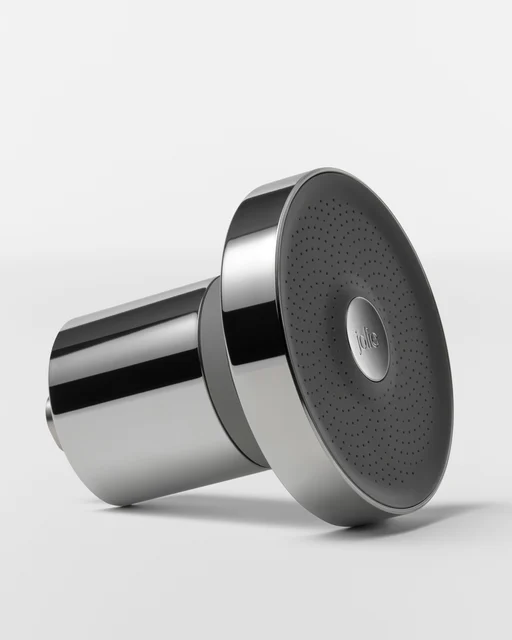
- Jolie - Known for a design-forward all-in-one filtered showerhead aimed at the skin-and-hair wellness crowd.
- AquaBliss - Value-focused multi-stage inline filters that keep your existing showerhead.
- Canopy - Wellness-brand hardware including a filtered handheld with a diverter and dock.
- Hello Klean - Compact, design-led inline capsule filters marketed heavily around hard water.
- Culligan - Long-established water-treatment brand with widely available, affordable shower filters and cartridges.
- Aquasana - Water-filtration specialist offering multi-stage shower filters, including combined showerhead-plus-filter units.
How to read a listing without getting fooled
Start by finding the media list, not the headline. A trustworthy listing names what's inside (KDF-55, calcium sulfite, activated carbon, or vitamin C) and tells you plainly that it reduces chlorine and odor. If the biggest words on the page are 'soft water,' 'descaling,' or 'limescale,' mentally translate those as marketing, because no shower filter removes the dissolved minerals that make water hard. Next, hunt for the cartridge interval and the price and availability of refills; a filter that's cheap to buy but expensive to keep running is the classic trap, and proprietary capsules are where costs quietly balloon. Treat 'removes 99% of impurities' with no named contaminant as noise. Finally, match the media to your water: if your utility uses chloramine, make sure there's a carbon or vitamin C stage, because plain KDF won't cope with it well.
How much should you spend?
The good news is that this is an inexpensive upgrade, and you don't need to reach for the top of the range to get the core benefit. What drives cost is form factor and media rather than filtration quality: all-in-one showerheads and filtered handhelds command a premium for their engineering and design, while a simple inline filter delivers the same chlorine reduction for far less. The real spending decision, though, isn't the sticker price at all, it's the lifetime cartridge cost. A modest inline filter with long-lasting, widely available refills usually costs less to own over a year than a premium unit that needs frequent proprietary capsules. Spend up only if you specifically want the look of an all-in-one head or the flexibility of a handheld, and value that convenience enough to accept higher ongoing refills. Paying more never buys you soft water, so don't let hard-water marketing justify a premium.
Questions, answered
Do shower filters actually soften hard water?
No. The media in these filters mainly neutralize chlorine and reduce odor; none of them remove the dissolved calcium and magnesium that make water 'hard.' Only a true water softener using ion exchange actually softens water. If a shower filter's marketing leans on limescale or 'softening,' treat that as a red flag.
What's the difference between chlorine and chloramine, and does it matter?
Yes, it matters. Most cities use free chlorine, which KDF and calcium sulfite handle well. A growing number use chloramine, which is much harder to remove and rewards a filter with a carbon or vitamin C stage. Check your local water report first so you pick a filter that matches, and set realistic expectations if you're on chloramine.
How often do I replace the cartridge, and what does it cost to keep running?
Most cartridges last a few months of normal use before performance drops, though inline multi-stage cartridges often run longer and small capsule-style units run shorter. The ongoing refill cost matters more than the upfront price, so favor filters with long intervals and affordable, easy-to-find cartridges over premium units that need frequent proprietary refills.
Will a shower filter hurt my water pressure?
A well-designed one won't. All-in-one filtered showerheads are engineered around the filter, so pressure stays strong. Inline filters that screw between your arm and your existing head can shave a little pressure, which is usually only noticeable if your plumbing was already weak.
Are the skin and hair benefits real?
Many owners report less dryness and itch after removing chlorine, plus softer-feeling hair, but this is general product information and results vary from person to person; it isn't a medical claim or a treatment for any condition. If you have a specific skin or scalp concern, consult a professional. Set expectations around chlorine reduction rather than dramatic transformation.
Inline filter, filtered showerhead, or handheld: which should I get?
They filter similarly, so it comes down to your bathroom and habits. Choose an all-in-one showerhead for the cleanest look and best-engineered pressure, an inline filter to keep the showerhead you already love while spending the least, or a filtered handheld if you want the flexibility of a wand and diverter and don't mind more parts and pricier refills.
Related guides
 Shower Heads After reading this, you'll be able to look at any shower head listing and know whether it will actually feel good in your bathroom - and whether its filter claims are real.
  Slow Cookers After reading, you'll understand every spec on a slow cooker box and know exactly which features matter for the way you actually cook.
  Snow Blowers After reading this you'll know exactly which type of snow blower fits your snowfall, your driveway surface, and how much you're willing to fuss with a machine.
  Sous Vide Immersion Circulators After reading this you'll understand exactly how an immersion circulator works and which specs are worth paying for.
  Sous Vide Machines After reading this you will understand what actually separates a good sous vide circulator from a frustrating one, and which specs to ignore.
  Stainless Steel Cookware Sets After reading this, you'll be able to look at any stainless cookware listing and know within a minute whether it's a genuine buy-for-life set or a disc-bottom pretender in shiny packaging.