Explained
Safety Glasses, Explained
After reading, you'll understand every marking on a pair of safety glasses, which edition of the standard applies, and why a listing that says it meets Z87.1 is worth nothing if the glasses are blank.
In this guide
First time buyers usually pick safety glasses on comfort, tint and brand, then discover that none of those things is what the product is rated on. The markings are the article. ANSI/ISEA Z87.1 specifies a short string of letters and numbers that must be permanently stamped on the lens and on the frame, and each character corresponds to a test that was passed. Learn six of them and you can shop this category better than most people who work in it.
The 30-second version
- The marking is the claim, so a pair with nothing stamped into the lens or frame is unrated no matter what the listing says.
- Z87 is basic impact and Z87+ is high impact, and the plus sign is the difference between a dropped ball and a steel ball fired at 150 feet per second.
- D3, D4 and D5 only appear on goggles and faceshields, because the droplet and dust tests in the standard are written for sealed protectors, not for spectacles.
- An X means the anti-fog was actually tested, and it only exists on protectors certified to the 2020 edition or later, so its absence is not always a criticism.
- Letters and numbers describe the lens tint, so a lens marked L2.5 lets through at most 29 percent of visible light and has no business being your indoor pair.
The products this guide is about
Our verdict on each, with the full reasoning on the companion review.
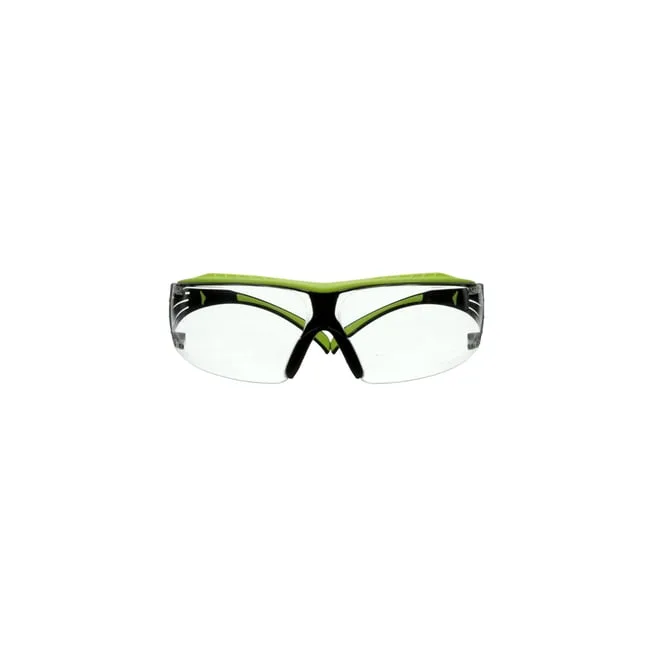
- Buy 3M SecureFit 400 Series Safety Glasses (SF401AF) The pair that disappears on your face, from the one maker in this group that publishes a real technical data sheet for the series. Amazon
- Buy Milwaukee Performance Safety Glasses (48-73-2020) The only pair here whose maker publishes a signed compliance certificate that names the exact part number you are buying. Amazon
- It depends DEWALT DPG82 Concealer Safety Goggle (DPG82-11) A sealed goggle that solves the problem spectacles physically cannot solve, at the cost of heat, bulk and a strap. Amazon
- Skip Pyramex Ztek Safety Glasses, Gray Lens (S2520S) A well made, fully marked, genuinely cheap pair that is sold by the box and worn indoors by people who should be wearing the clear one. Amazon
What actually matters
- Permanent marking - the standard requires the mark to be permanent and legible and specifies exactly where it goes: the lens, the frame, and at least one temple on a spectacle. A sticker or a claim on the packet is not a marking, and a blank pair has failed a requirement of the standard rather than merely lacking a nice-to-have.
- Impact rating - basic impact protectors pass a drop ball test with a 68 gram steel ball from 127 cm. High impact protectors pass a high mass test with a 500 gram pointed projectile and a high velocity test with a steel ball at 45.7 metres per second for spectacles. Any powered tool argues for the plus.
- Protector type - the standard treats spectacles, goggles, faceshields and welding helmets as different things with different test velocities and different available markings. It is the type, not the brand, that decides whether droplet, dust and fine dust ratings are even possible.
- Lens filtration - clear lenses have to pass at least 85 percent luminous transmission. Anything darker is a filter and gets a scale number: U for ultraviolet, R for infrared, L for visible light, W for welding shades. A tinted lens without one of those numbers is marked S for special purpose instead.
- Anti-fog - added to the standard in the 2020 edition as an optional test and an X marking, requiring the lens to stay fog free for at least eight seconds in a defined water bath test. The standard notes the test covers the lens only, not the whole device on a warm face.
- Coverage - the standard sets a minimum area the frame and lens must cover in front of each eye, and marks frames tested on a small headform with H. Coverage is why side shields are integral to most modern safety spectacles rather than clip-ons.
- Prescription route - prescription protectors are marked Z87-2, or Z87-2+ when impact rated, while a prescription carrier that sits behind a plano protector carries only the manufacturer's mark. Knowing which one you have tells you where the protection is actually coming from.
The specs, in plain English
Green flags vs red flags
Green flags
- The manufacturer's mark plus Z87 or Z87+ is physically stamped into both the lens and the frame or temple, not printed on a sticker.
- The maker publishes the actual marking string for the part number you are buying, so you can check the product against the description.
- A third party certification mark appears alongside the standard, such as an SEI mark for CSA Z94.3, or the maker states third party testing by name.
- The listing names an edition of the standard rather than saying Z87.1 with no year, and the edition is 2020 or newer.
- A clear lens is offered in the same frame as the tinted ones, so you can buy the right tint for the light you actually work in.
Red flags
- The words meet or meets ANSI Z87.1 in the description with no marking visible in any product photo.
- Markings that only appear on a sticker, a hang tag or the packaging rather than moulded or etched into the product.
- A tinted or mirrored pair sold as general purpose or all-day eye protection with no L number given.
- Fog-free, anti-fog or fog resistant language with no X marking and no statement of which edition the product was tested to.
- Marks from other standards intermixed into the Z87 string, which the standard's own examples list as unacceptable marking.
Who's who: the brands
- 3M - Publishes region-specific technical data sheets and a US line card that explains its own test claims, and offers prescription inserts across the SecureFit range.
- Pyramex - Publishes the exact lens and temple marking strings, weights and lens thicknesses for every part number, which makes its catalogue unusually easy to verify.
- Honeywell (Uvex) - Known for adjustable frames like the Genesis, with adjustable temple length and lens inclination and replaceable lenses, and states U6 ultraviolet filtration.
- Milwaukee - Sells through tool channels rather than safety distributors and publishes a downloadable compliance certificate naming individual part numbers.
- DEWALT - Its eyewear is made under licence by Radians and covers the goggle and sealed protector end of the range as well as ordinary spectacles.
How to read a listing without getting fooled
Read a safety eyewear listing in the order the standard writes the marking, not the order the marketing does. Start by looking for a photo that shows the temple or the corner of the lens close enough to read: you want a maker's logo, then Z87 or Z87+, then any letters and numbers after it. Next find the edition. A listing that says ANSI Z87.1 with no year is telling you less than one that says ANSI/ISEA Z87.1-2020, and since the 2020 edition introduced the anti-fog test, a product stated against 2015 cannot carry an X even if the coating is excellent. Then match the lens letters to your work: no letters means clear, a U number is ultraviolet, an L number is a tint and gets darker as the number rises, an S means a special purpose tint that sits outside the filter tables. Finally check the protector type against your hazard, because if you need a droplet or dust rating no spectacle can give you one and you should be shopping goggles.
How much should you spend?
This is a category where budget genuinely buys safety. A budget tier pair from a mainstream safety brand is routinely certified to the current edition with a high impact rating and a third party certification mark, and the cheapest pairs are often the best documented because safety distributors demand the paperwork. What more money buys is comfort, adjustability and coatings: lighter frames, adjustable temple length and lens angle, durable anti-fog that survives washing, and replaceable lenses. Mid-range is where anti-fog coatings that are actually tested and marked become common, and where frames start to fit a range of face shapes rather than one. Premium mostly buys ballistic ratings, prescription integration and optical quality you will not notice on a table saw. Buy at least two pairs at the budget or mid-range tier, one clear and one tinted, rather than one expensive pair you leave in a drawer.
Questions, answered
Which edition of ANSI/ISEA Z87.1 is current, and does an older edition make my glasses unusable?
The current edition is ANSI/ISEA Z87.1-2025, which ISEA published on 8 January 2026 as the sixth revision of the standard, replacing the 2020 edition. That does not make older eyewear illegal or unsafe. OSHA's own rule at 1910.133 still incorporates by reference the 2010, 2003 and 1989 editions, so protectors marked to any of those remain acceptable under the federal rule. The practical value of a newer edition is that it adds options: the 2020 edition added the anti-fog test and the X marking, and the 2025 edition is described as standardising the markings further and updating the impact and coverage language.
Polycarbonate or Trivex? Is one meaningfully better for impact?
For a marked safety protector the honest answer is that the standard rates the finished device, not the raw material, so a Z87+ pair passed the same tests whichever plastic it is made from. Almost all non-prescription safety glasses use polycarbonate. Trivex is a lens material owned by PPG and it is mostly encountered in prescription lenses. PPG published research with HOYA Vision Care in August 2025 stating that in Gardner impact testing, polycarbonate received irreversible dimpling damage under high impact forces while lenses made with Trivex showed only minimal surface blemishes at the same impact. That is the material supplier's own testing, so treat it as a supplier claim rather than an independent finding, and buy on the marking.
Does third party certification exist for safety glasses, or is it all self declaration?
Both exist, and telling them apart is the useful skill. The text of ANSI/ISEA Z87.1 sets out design, performance and marking requirements but does not itself require third party certification, so a plain Z87+ marking is the manufacturer declaring that its product met the standard. Voluntary third party certification is available: the Safety Equipment Institute, which is powered by ASTM International, runs certification programmes covering safety eyewear and face protectors using ANSI, CSA and ASTM standards, and its mark appears on some temples, often as an SEI mark next to CSA Z94.3. Some makers also state third party testing directly, as Milwaukee does when it lists its glasses as CSA third party tested.
When should I replace a pair of safety glasses?
Whenever the lens is scratched or pitted enough to interfere with vision, and immediately after any impact, because you cannot see internal damage in polycarbonate. Manufacturers are direct about this: 3M's own guidance says to replace the lens if it becomes scratched or pitted, and to avoid exposure to vapours and solvents that can cause surface crazing and reduce impact resistance. That last point catches people out, because cleaning safety glasses with acetone, thinners or harsh detergents can weaken the very property you bought them for. Use lens cleaner or mild soap and water, and keep a spare pair so a scratched lens is never the reason you work without protection.
Or jump to the head-to-head: 3M SecureFit 400 Series Safety Glasses (SF401AF) vs Milwaukee Performance Safety Glasses (48-73-2020).