Explained
Snow Shovels, Explained
After reading, you'll understand the difference between pushers, combination shovels and lifting shovels, and which specs matter for your space.
In this guide
Snow shovels look simple, so most people grab whatever the hardware store has on display. The differences show up in the first big storm: a narrow blade takes forever on a driveway, a steel edge scratches a new deck, a short handle leaves you bent over. Listings use terms like UHMW, combo blade and wear strip without explaining them. This guide covers what each means for the job you actually do.
The 30-second version
- Pushing beats lifting on flat ground, so a wide pusher is the easiest tool for driveways and walks.
- A combination blade does both jobs, pushing first and scooping the pile you cannot push.
- The wear edge matters for decks, since metal strips can mark composite and wood.
- Handle length should match your height, because a short shaft makes you bend more.
- Warranty terms vary widely, from 90 days to lifetime, so check before you buy.
The products this guide is about
Our verdict on each, with the full reasoning on the companion review.
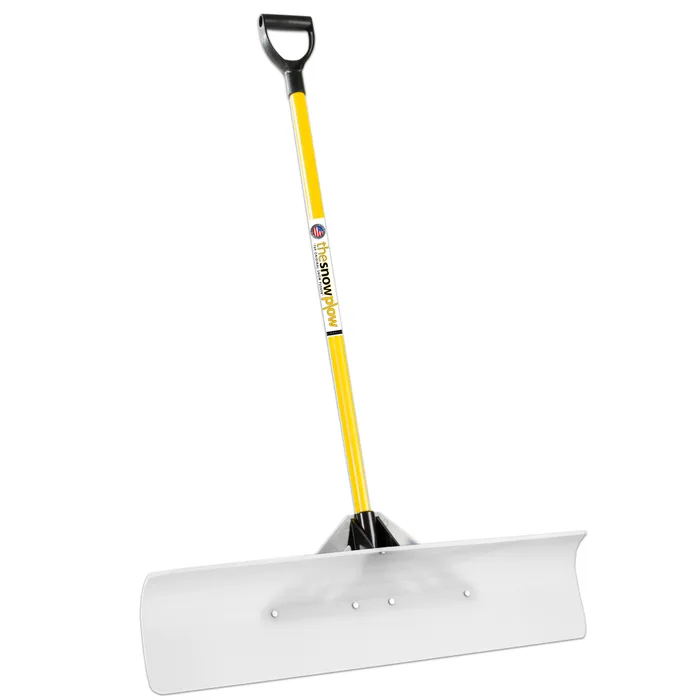
- Buy The SnowPlow 36" Original Snow Pusher A 36-inch UHMW polyethylene pusher built to push, scrape and back-scrape snow without lifting it.
- Buy Suncast 24" Combo Snow Shovel and Pusher (SC2450KDD) A low-cost 24-inch shovel that pushes with its flat edge and scoops with its curved back.
- It depends Bully Tools 22" Combination Snow Shovel/Pusher with Fiberglass Handle (92814) A made-in-USA combination shovel with a thick poly edge, a fiberglass handle and a 56-inch overall length.
- Skip Snow Joe Shovelution 18" Strain-Reducing Snow Shovel (SJ-SHLV01) An 18-inch lifting shovel with a second, spring-assisted handle.
What actually matters
- Tool type - Pushers slide snow without lifting, combination shovels push and scoop, and lifting shovels are built to throw. Pick the type that matches where the snow has to go.
- Blade width - Wider blades clear more per pass on open ground. Narrower blades are easier to lift full and to use on steps.
- Blade material - Plastic is light and sheds snow, especially slick plastics like UHMW. Metal chips ice better but is heavier.
- Wear edge - A strip along the bottom protects the blade from concrete and asphalt. Metal strips can scratch decks, while thick plastic edges are gentler.
- Handle length - A longer handle reduces bending for tall users. Too long and the tool becomes hard to control for shorter users.
- Grip - A D-grip gives control when pushing and lifting. It should be wide enough for gloved hands.
- Repairability - Replaceable blades and handles keep a good shovel in service. Riveted or bolted joints are easier to fix than molded ones.
The specs, in plain English
Green flags vs red flags
Green flags
- Blade width, length and handle details published by the maker.
- A wear edge suited to your surfaces.
- Replacement blades or handles sold separately.
- A warranty longer than one season.
- A D-grip sized for work gloves.
Red flags
- No blade material or dimensions listed.
- A warranty of only a few months.
- A metal wear strip if you mainly clear a composite deck.
- Strain-reduction percentages with no explanation of how they were measured.
- A short handle that forces you to bend if you are tall.
Who's who: the brands
- The SnowPlow (JM Enterprises) - Known for made-in-USA UHMW snow pushers in 30, 36 and 48 inch widths.
- Suncast - Known for plastic outdoor storage and low-cost snow shovels and pushers sold through retailers.
- Bully Tools - Known for made-in-USA shovels, garden tools and scrapers with fiberglass handles.
- Snow Joe - Known for snow blowers, ice scrapers and ergonomic shovels such as the Shovelution.
How to read a listing without getting fooled
Start with the blade: width, height and material, and whether the maker calls it a pusher, a shovel or a combination. Then check the wear edge, since that tells you how it will treat concrete versus a deck. Look at the overall length and handle material, and compare the length to your height. Check whether the maker publishes a weight and sells replacement parts. Finally read the warranty line, which can range from a few months to a lifetime and says a lot about how the maker expects the tool to hold up.
How much should you spend?
Budget combination shovels in the lowest tier handle walks and small driveways well, though warranties are often short and specs thin. Mid-range shovels usually add tougher handles, thicker blades, made-in-USA builds or longer warranties, which matter if you shovel often. Premium wide pushers cost more because of large blades in tougher plastics and replaceable parts, and they pay off on long, flat driveways. Spending more on an ergonomic gadget is worth it only if it fits how you actually clear snow.
Questions, answered
Should I own more than one snow shovel?
Many households do. A wide pusher clears the driveway and walks quickly, and a smaller combination shovel handles steps, narrow paths and the heavy ridge a plow leaves. Two tools also let two people work at once. If you only keep one, a combination shovel is the most flexible.
How long should a snow shovel handle be?
Long enough that you can push with a fairly upright back. Overall lengths in this group range from about 50 to 56 inches. Taller users generally prefer the longer end, and shorter users may find a very long shovel hard to steer. Try the grip height against your hip before buying if you can.
Can I use a snow shovel on a roof?
Some makers say their pushers can be used on roofs, but standing on a snowy roof is dangerous. A dedicated roof rake used from the ground is the safer tool for clearing roof snow. Never climb onto an icy roof to shovel.
How do I stop snow sticking to my shovel?
Slick blade materials like UHMW polyethylene shed snow more easily, and some blades have ribs designed to reduce sticking. Wet, heavy snow sticks to almost anything. Keeping the blade clean and dry between uses helps.
Or jump to the head-to-head: The SnowPlow 36" Original Snow Pusher vs Suncast 24" Combo Snow Shovel and Pusher (SC2450KDD).