Explained
Rice Cookers, Explained
After reading, you will know what fuzzy logic, micom, and pressure cooking actually do, and which one fits the rice you eat most.
In this guide
A rice cooker looks like a simple pot with a button, but the price range spans from a single cheap thermostat to a computer-controlled pressure vessel, and the marketing rarely explains the difference. What trips people up is assuming a fancier cooker means faster or that all cookers handle brown rice and short-grain equally. They do not. The right choice depends far more on the grain you eat than on the number of menu buttons.
The 30-second version
- The heating type is the whole story. A cooker is either a basic on/off thermostat, a microcomputer (micom) model, or a pressure model, and that single distinction predicts texture, versatility, and how long it lasts more than any other spec.
- Match the cooker to your grain, not the feature list. Long-grain and brown rice reward a good fuzzy-logic micom cooker; short-grain and sushi rice reward pressure. Buying pressure for jasmine rice is spending on texture you will not taste.
- Pressure changes texture, not speed. Pressure raises the boiling point and forces water into each grain for a plumper, stickier result, but it does not meaningfully shorten cook time, which is the most common misconception.
- The coating and seal fail first. A quality cooker lasts years, and the earliest failure is almost always the nonstick pan or the pressure gasket, so upkeep matters more than the spec sheet suggests.
- Size for your usual batch. Most cookers cook best at least half full, so buy for the meal you make on a normal night, not for the once-a-year crowd.
The products this guide is about
Our verdict on each, with the full reasoning on the companion review.
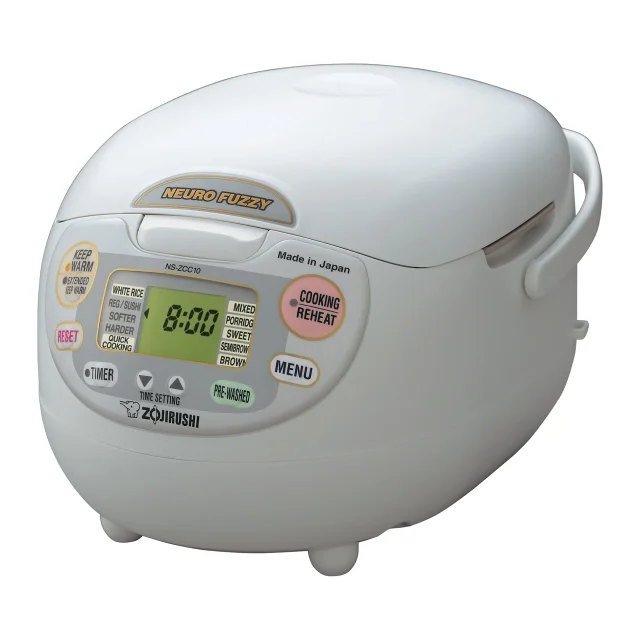
- Buy Zojirushi NS-ZCC10 Neuro Fuzzy A fuzzy-logic micom cooker that forgives sloppy measuring and stays consistent across grains. Amazon
- Buy Cuckoo CRP-P0609S A high-pressure micom cooker that changes rice texture, with a busy interface as the trade-off. Amazon
- It depends Tiger JBV-A10U A capable mid-range micom whose party trick is cooking a side dish while the rice cooks. Amazon
- Skip BLACK+DECKER RC506 A cheap single-thermostat cooker that boils over and scorches once you push past a small batch. Amazon
What actually matters
- Heating method decides everything downstream. On/off thermostat cookers cannot lower the heat once the pot boils, so they scorch and boil over; micom cookers read temperature and adjust the heating curve; pressure cookers add force to change grain texture. Know which tier you are buying before comparing anything else.
- Grain versatility matters because a cooker tuned for one grain can disappoint on another. Look for dedicated white, brown, mixed, and porridge settings if you cook a range, rather than a single generic cook button.
- Keep-warm quality is what separates a cooker you trust from one you babysit. Good models hold cooked rice for hours without drying or scorching it, while cheap thermostats grow unreliable and burn the bottom.
- Capacity relative to your household determines both fit and results. An oversized cooker run half-empty and an undersized one run to the brim both cook unevenly, so the number should track your typical batch.
- Coating durability governs lifespan. A thick, well-made nonstick pan survives years of use; a thin coating flakes early, and once it does the cooker is effectively done.
- Upkeep burden is a hidden cost. Pressure models add a gasket you must clean regularly or it traps odors, whereas a simple micom lid asks almost nothing of you.
The specs, in plain English
Green flags vs red flags
Green flags
- A clearly stated heating type (micom, fuzzy-logic, or pressure) rather than a vague 'smart' label
- Dedicated settings for the grains you actually cook, such as brown, mixed, or porridge
- A thick, well-reviewed nonstick pan and an included non-metal paddle to protect it
- An in-production current model rather than old stock coasting on a discontinued line
- Owner reports of consistent results batch after batch with no dialing in
Red flags
- A single on/off thermostat sold for anything but the smallest, occasional use
- Repeated owner complaints of boil-over, puddling, or scorching past a couple of cups
- A thin coating that owners report flaking or wearing within a year or two
- A keep-warm feature that reviewers say grows unreliable within months
- A wall of a dozen menus and a voice guide presented as the main reason to spend more
- Capacity far larger than your household, since a half-empty pot cooks unevenly
Who's who: the brands
- Zojirushi - A Japanese maker known for durable fuzzy-logic micom cookers that turn out even rice across many grains with little fuss.
- Cuckoo - A Korean brand recognized for high-pressure cookers that deliver plump, sticky short-grain and sushi-rice texture.
- Tiger - A Japanese maker of capable mid-range micom cookers, some with a synchronized tray that steams a side dish above the rice.
- BLACK+DECKER - A mass-market brand whose rice cookers sit at the budget, single-thermostat end, prioritizing low price over consistency and longevity.
How to read a listing without getting fooled
Start by finding the heating type, because a listing will bury it under feature counts. If it says micom, fuzzy logic, or pressure, you are in the durable tiers; if it only mentions a one-touch switch or a single thermostat, it is a basic cooker no matter how nice the photos look. Treat capacity as a serving guide and remember it is stated in uncooked cups using the maker's small cup, not a standard one. Read the menu list for the grains you eat rather than being impressed by the total number of settings, and weigh voice guides and a dozen presets as optional extras, not value. Finally, scan owner feedback for the words that reveal real-world behavior, such as boil-over, scorching, and coating wear, since those patterns matter more than the marketing bullet points.
How much should you spend?
Spend according to the rice you eat, not the longest feature list. The value sweet spot for most kitchens is a mid-range fuzzy-logic micom cooker: it forgives imprecise measuring, handles a wide range of grains, and holds up for years, which is where your money does the most work. Stepping up to a pressure model is worth it only if you specifically want the plumper, stickier texture that short-grain and sushi rice gain under pressure, and you accept the added gasket upkeep. Paying for a dozen menus, preset timing, or a voice guide rarely improves the rice itself, so treat those as conveniences rather than reasons to spend more. At the bottom end, the cheapest on/off cookers are a false economy for regular use: the savings evaporate when the pan boils over or the coating fails within a year, and you end up buying twice.
Questions, answered
What is the difference between a fuzzy-logic and a regular rice cooker?
A regular basic cooker rides a single thermostat that flips off when the pot runs dry, so it cannot correct anything mid-cook. A fuzzy-logic cooker is a microcomputer model that senses temperature and makes small adjustments as it goes, so it handles varied grains and forgives a heavy or light pour of water. The result is far more consistent rice with less attention from you.
Is a pressure rice cooker worth the extra money?
Only for texture. Pressure forces water into each grain for a plumper, stickier result that short-grain and sushi eaters notice immediately, but it is not meaningfully faster and it adds a gasket you must clean. If you mostly eat long-grain or brown rice, a fuzzy-logic micom cooker gives you more versatility for the money.
Why does my cheap rice cooker boil over?
Basic on/off cookers use one thermostat and cannot lower the heat once the pot reaches a boil, so starchy foam escapes the lid. Cooking fewer cups, rinsing the rice first, and adding a drop of oil helps. A micom cooker regulates the heat and largely avoids the problem.
How many cups should my rice cooker be?
Match capacity to your typical batch, not your largest gathering, because most cookers cook best when at least half full. A 5.5-cup uncooked model feeds roughly two to four people per batch. Choose six cups or larger only if you regularly cook for a crowd or meal-prep in bulk.
How long should a rice cooker last, and what fails first?
A quality micom or pressure model typically runs five to ten years with care, while budget thermostat cookers often fail within one to two. The first failure point is almost always the nonstick coating, so use the included paddle, avoid metal utensils, and hand-wash the pan. On pressure models, clean the gasket regularly so it does not trap odors.
Or jump to the head-to-head: Zojirushi NS-ZCC10 Neuro Fuzzy vs Cuckoo CRP-P0609S.