

Home & Kitchen
The Best Rice Cookers of 2026: Fuzzy Logic, Pressure, and One to Skip
We weighed four current rice cookers on grain versatility, texture, keep-warm quality, and long-term durability to find which earn counter space and which to skip.
The short version
For most kitchens, the Zojirushi NS-ZCC10 Neuro Fuzzy is the cooker to buy: its fuzzy-logic control forgives imprecise measuring and turns out even rice across white, brown, and porridge, though it is slow and tops out at 5.5 cups. Choose the Cuckoo CRP-P0609S if you want the plush, sticky texture only pressure delivers and will clean the gasket. The Tiger JBV-A10U suits one-pot cooks who value steaming a side alongside the rice. Skip the BLACK+DECKER RC506, which boils over and scorches once you leave small batches.
Our picks at a glance
- Zojirushi NS-ZCC10 Neuro Fuzzy - Buy. A fuzzy-logic micom cooker that forgives sloppy measuring and stays consistent across grains.
- Cuckoo CRP-P0609S - Buy. A high-pressure micom cooker that changes rice texture, with a busy interface as the trade-off.
- Tiger JBV-A10U - It depends. A capable mid-range micom whose party trick is cooking a side dish while the rice cooks.
- BLACK+DECKER RC506 - Skip. A cheap single-thermostat cooker that boils over and scorches once you push past a small batch.
The verdict in 30 seconds
What mattered most
- Heating method
- Grain versatility
- Texture and speed
- Keep-warm and upkeep
- Capacity (uncooked)
- Build and coating
A rice cooker is one of the few kitchen gadgets that earns its footprint only if it stays consistent for years. We synthesized independent expert breakdowns and long-run owner reports to compare three cookers worth buying and one worth avoiding. The gaps between tiers are real, but they are not always where the marketing points.
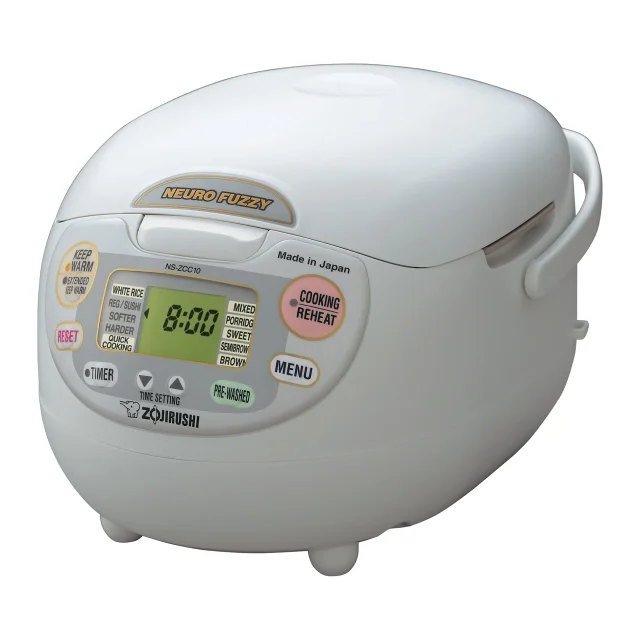
A fuzzy-logic micom cooker that forgives sloppy measuring and stays consistent across grains.
Best for: Small-to-medium households that cook varied grains and want set-and-forget consistency.
- Fuzzy-logic controller makes mid-cook corrections, so uneven water or a cold kitchen rarely ruins a batch
- Spherical nonstick pan circulates water for separate, evenly cooked grains across white, brown, and porridge settings
- Brown rice runs roughly an hour and a half; the deliberate cycles reward planning, not impatience
- Caps at 5.5 uncooked cups with no pressure mode, limiting large households and very sticky short-grain results
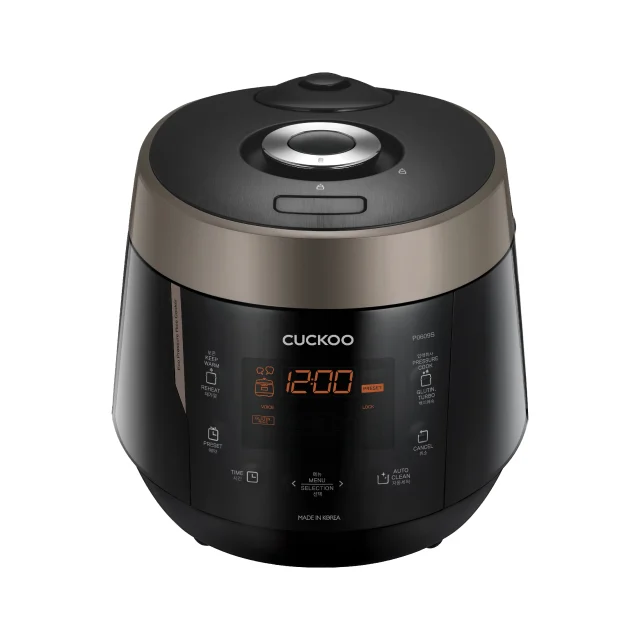
A high-pressure micom cooker that changes rice texture, with a busy interface as the trade-off.
Best for: Short-grain and sushi-rice devotees who want the plushest texture and will maintain the seal.
- High-pressure cooking (rated around 26 PSI) drives water into each grain for a distinctly plump, sticky short-grain texture
- Includes a GABA brown-rice mode, X-Wall diamond nonstick pot, and a steam auto-clean cycle that eases seal upkeep
- The pressure gasket needs regular cleaning and can hold odors if neglected, unlike a simple micom lid
- Twelve menus, preset timing, and a tri-lingual voice guide make the controls busier than most people need
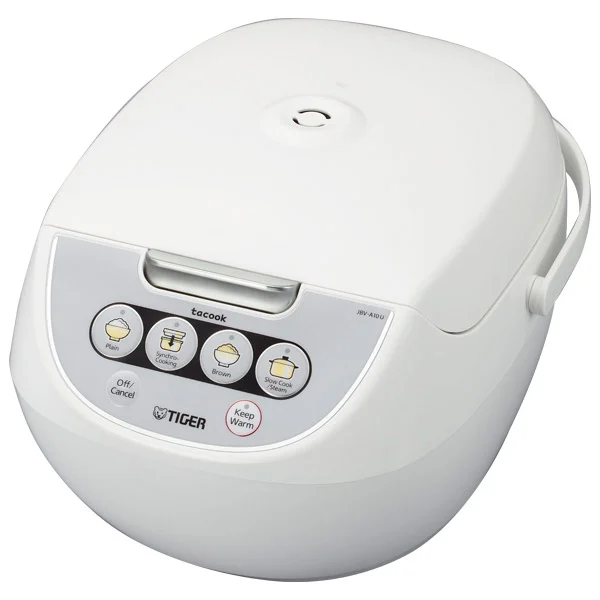
A capable mid-range micom whose party trick is cooking a side dish while the rice cooks.
Best for: One-pot cooks who value making rice and a side simultaneously over grain-texture precision.
- The tacook synchronized tray steams a protein or vegetables over the rice without flavors bleeding between them
- Doubles as a slow cooker and steamer, and holds cooked rice on keep-warm for up to about 10 hours
- Only four menu settings, so it lacks the fine grain-by-grain tuning of pricier micom cookers
- The thinner fluorine nonstick coating draws more owner complaints about wear than Zojirushi's pan
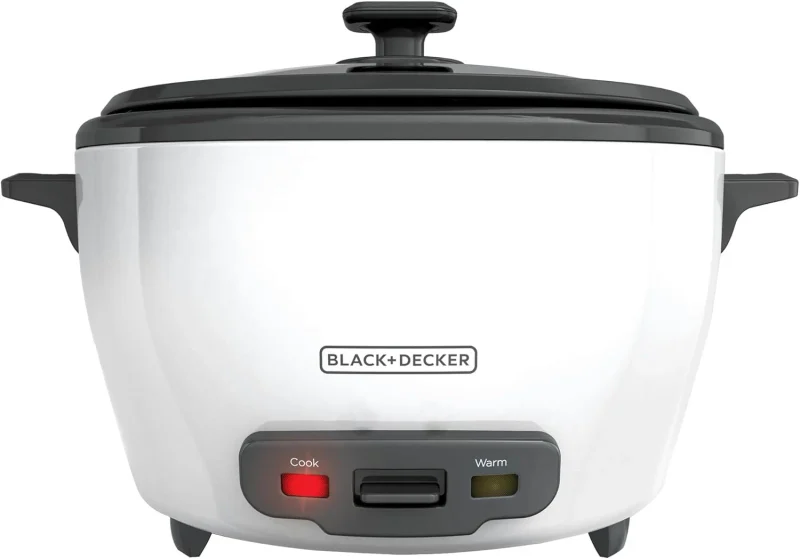
A cheap single-thermostat cooker that boils over and scorches once you push past a small batch.
Best for: A rare occasional cook who wants the cheapest possible pot and accepts a short lifespan.
- Genuinely inexpensive and simple, with a dishwasher-safe bowl, glass lid, and a steaming basket in the box
- PFAS-free ceramic nonstick coating and a one-touch switch keep operation approachable
- Owners repeatedly report starchy boil-over and puddling when cooking more than about two cups
- The keep-warm switch grows unreliable within months for many buyers, scorching rice, and the coating wears early
| Criteria | Zojirushi NS-ZCC10 Neuro Fuzzy Top pick | Cuckoo CRP-P0609S | Tiger JBV-A10U | BLACK+DECKER RC506 |
|---|---|---|---|---|
| Verdict | Buy it | Buy it | It depends | Skip it |
| Best for | Small-to-medium households that cook varied grains and want set-and-forget consistency. | Short-grain and sushi-rice devotees who want the plushest texture and will maintain the seal. | One-pot cooks who value making rice and a side simultaneously over grain-texture precision. | A rare occasional cook who wants the cheapest possible pot and accepts a short lifespan. |
| Price tier | $$ · mid-range | $$$ · premium | $$ · mid-range | $ · budget |
| Heating method | Fuzzy-logic micom | High-pressure micom | Micom | Single on/off thermostat |
| Grain versatility | Broad: white, sushi, mixed, porridge, semi-brown, brown | Broad plus pressure and GABA modes | Modest: white, brown, steam, slow cook | Minimal: white plus basket steam |
| Texture and speed | Even and separate, deliberately slow | Plumpest and stickiest, fast under pressure | Reliable, moderate pace | Uneven, boils over past a small batch |
| Keep-warm and upkeep | Extended keep-warm plus reheat | Keep-warm, reheat, steam auto-clean, gasket care | Up to ~10-hour keep-warm | Basic keep-warm, often unreliable |
| Capacity (uncooked) | 5.5 cups | 6 cups | 5.5 cups | 3 cups |
| Build and coating | Thick spherical nonstick, made in Japan | Diamond X-Wall nonstick, stainless lid | Fluorine nonstick, thinner | Ceramic nonstick, early wear reported |
Which one is right for you?
- Small-to-medium households that cook varied grains and want set-and-forget consistency. Buy it Zojirushi NS-ZCC10 Neuro Fuzzy
- Short-grain and sushi-rice devotees who want the plushest texture and will maintain the seal. Buy it Cuckoo CRP-P0609S
- One-pot cooks who value making rice and a side simultaneously over grain-texture precision. It depends Tiger JBV-A10U
- A rare occasional cook who wants the cheapest possible pot and accepts a short lifespan. Skip it BLACK+DECKER RC506
How we judged the field
RBE does not run a lab. We read across independent expert breakdowns and long-run owner reports, then weight the points that repeat: how evenly a cooker handles more than plain white rice, how forgiving it is when your water measurement drifts, how well it holds cooked rice for hours, and whether the nonstick coating and seals survive past the first year. We set aside spec-sheet superlatives and pay attention to the complaints that keep surfacing once the novelty wears off.
Rice cookers split into three honest tiers. Basic on/off units ride a single thermostat that trips when the pan runs dry, which is why they scorch and boil over. Micom (microcomputer) models read temperature and adjust the heating curve, so they cook brown rice and porridge without babysitting. Pressure models raise the boiling point to drive water into each grain, which changes texture more than it changes speed. We kept one model from each meaningful tier and added one budget unit as a cautionary example rather than a recommendation.
Every pick below is in production as of 2026. None is a discontinued model coasting on leftover stock.
Zojirushi NS-ZCC10 Neuro Fuzzy
Buy itThe Neuro Fuzzy is the model most owners stop shopping after. Its fuzzy-logic micom controller makes small mid-cook corrections, so a heavy pour of water or a cold kitchen rarely ruins the batch. The spherical nonstick pan heats from a curved bottom that keeps water circulating, and grains land separate rather than gummy. Menu settings span regular white with softer or firmer options, sushi, mixed, porridge, sweet, semi-brown and brown, plus rinse-free and quick cycles.
What owners like more is the repeatability: jasmine, short-grain and brown rice each finish close to the same texture batch after batch, with no dialing in. What they like less is patience. Brown rice runs roughly an hour and a half, and the fuzzy cycles are deliberate by design. It also tops out at 5.5 uncooked cups and has no pressure mode, so large households and anyone chasing very sticky, restaurant-style short-grain will feel the ceiling. For most small-to-medium kitchens, it is the low-drama answer.
Cuckoo CRP-P0609S
Buy itThe Cuckoo earns its place by doing something the micom cookers cannot: it cooks under high pressure, rated around 26 PSI, which forces water into the grain and yields a plumper, stickier result that short-grain and sushi eaters notice immediately. It backs that with a GABA brown-rice mode, an X-Wall diamond nonstick pot, a stainless inner lid, preset timing, and a steam auto-clean cycle that helps keep the pressure seal fresh.
What owners like more is texture and range. Rice comes out fuller than a standard cooker produces, and the multi-cook and steam functions add real flexibility. What they like less is the upkeep and the interface. The pressure gasket needs regular cleaning and can trap odors when ignored, and the twelve menus plus a tri-lingual voice guide make the controls busier than most cooks want. It is the right buy for a specific goal, not the default one.
Tiger JBV-A10U - Buy (depending on your needs)
It dependsThe Tiger is a competent mid-range micom whose distinguishing feature is the tacook synchronized cooking tray. It steams a protein or vegetables in a tray above the rice, and owners report the flavors stay separate rather than bleeding together, so a simple meal comes out of one appliance. It also slow-cooks and steams, and holds cooked rice on keep-warm for up to about ten hours.
What owners like more is that convenience: rice plus a side, unattended, is a genuine time-saver on a weeknight. What they like less is that the cooker offers only four menu settings, so it lacks the grain-by-grain tuning of the Zojirushi, and its thinner fluorine nonstick coating draws more wear complaints over time. Buy it if simultaneous cooking matters more to you than texture precision; look elsewhere if it does not.
BLACK+DECKER RC506
Skip itThe RC506 is the cautionary tier. It is a single-thermostat cooker with a one-touch switch, a ceramic nonstick bowl, a glass lid, and a steaming basket, and it is genuinely cheap. That is the whole case for it.
Against it, the pattern in owner reports is consistent. Push past roughly two cups and starchy water boils over, puddling on the counter and spitting from the steam vent. The keep-warm mechanism grows unreliable for many buyers within months, at which point the cooker stops switching over and scorches the bottom of the batch. The coating is reported to wear or flake inside a year or two. A basic cooker can be fine for the rare occasional cook, but the failure rate here makes it hard to recommend even at its low price.
Zojirushi NS-ZCC10 vs Cuckoo CRP-P0609S: which should you buy?
These two anchor the decision for anyone spending on a cooker meant to last. The Zojirushi wins on breadth and calm: it handles more grain types predictably, asks nothing of you beyond adding water and rice, and has the simpler lid to maintain. Its rice is even and clean, if not the plushest possible.
The Cuckoo wins on one axis, texture, and it wins it clearly. If your table is mostly short-grain, sushi, or sticky rice, pressure produces a fuller grain the Zojirushi cannot match. The cost is maintenance and menu clutter: a gasket to clean, a voice guide to tolerate, and more buttons than most people use. Choose the Zojirushi if you want the widest range with the least effort. Choose the Cuckoo if texture is the point and you will keep the seal clean.
What to look for
Start with the grain you eat most. Long-grain and brown rice reward a good fuzzy-logic micom; short-grain and sushi reward pressure. Then size the cooker to your typical batch, not your largest party, because most cookers perform best at least half full. A 5.5-cup uncooked model feeds two to four people comfortably.
Weigh upkeep honestly. Pressure cookers add a gasket you must clean, and any nonstick pan lasts longer if you use the included paddle and hand-wash it. Treat features like voice guidance and a dozen menus as optional rather than reasons to spend more. Finally, be wary of the cheapest on/off cookers: the savings evaporate quickly when the pan boils over or the coating fails.
Our final take
The Zojirushi NS-ZCC10 Neuro Fuzzy is the cooker most kitchens should buy. It turns out consistent rice across the widest range of grains with the least fuss, and it holds up. Step up to the Cuckoo CRP-P0609S only if you specifically want the plumper, stickier texture pressure delivers and will maintain its seal. The Tiger JBV-A10U is a reasonable mid-range choice for cooks who value steaming a side alongside the rice. Skip the BLACK+DECKER RC506; its boil-over and scorching problems make it a false economy.
Questions, answered
Is a pressure rice cooker worth it over a fuzzy-logic one?
Only for texture. Pressure raises the boiling point and forces water into each grain, giving plumper, stickier short-grain rice. It is not meaningfully faster. If you mostly eat long-grain or brown rice, a fuzzy-logic micom cooker delivers more versatility for the money.
Why does my cheap rice cooker boil over?
Basic on/off cookers use one thermostat and cannot lower heat once the pot reaches a boil, so starchy foam escapes the lid. Cooking fewer cups, rinsing rice first, and adding a drop of oil helps. Micom cookers regulate heat and largely avoid the problem.
How many cups of rice cooker do I actually need?
Match capacity to typical batches, not maximum ones. Most cookers cook best when at least half full. A 5.5-cup uncooked model feeds roughly two to four people per batch; choose 6 cups or larger only if you regularly cook for a crowd or meal-prep.
How long should a rice cooker last?
A quality micom or pressure model typically runs five to ten years with care. The first failure point is usually the nonstick coating, so use the included paddle, avoid metal utensils, and hand-wash the pan. Budget thermostat cookers often fail within one to two years.
Deciding between the top two? See our head-to-head: Zojirushi NS-ZCC10 Neuro Fuzzy vs Cuckoo CRP-P0609S.
More Home & Kitchen reviews
 The Best Roasting Pans: 4 Compared (and One to Skip)
  The Best Mid-Range Robot Vacuums in 2026 (and the One to Skip)
  The Best Santoku Knives: 4 Compared (and One to Skip)
  The Best Sewing Machines for Beginners: 4 Compared (and One to Skip)
  The Best Sheet Pans: 4 Compared (and One to Skip)
  The Best Shower Filters: 4 Compared (and One to Skip)