Explained
Reusable Food Storage Bags, Explained
After reading, you'll understand how material, seal design, heat limits and shape decide whether a reusable food bag fits your kitchen.
In this guide
Reusable bags look alike in photos, but the material underneath sets everything else. Silicone and PEVA plastic behave very differently with heat, weigh very different amounts and clean in different ways. Seals range from described and tested to not mentioned at all. Here is how to read the listings.
The 30-second version
- Silicone handles heat, while PEVA must stay out of the microwave.
- Platinum silicone is the grade to look for, and a vague description tells you less.
- The seal decides what you can store, so look for a leakproof claim for liquids.
- Shape affects cleaning, and open interiors wash better in a dishwasher.
- Capacity is often unpublished, so favour brands that state it.
The products this guide is about
Our verdict on each, with the full reasoning on the companion review.
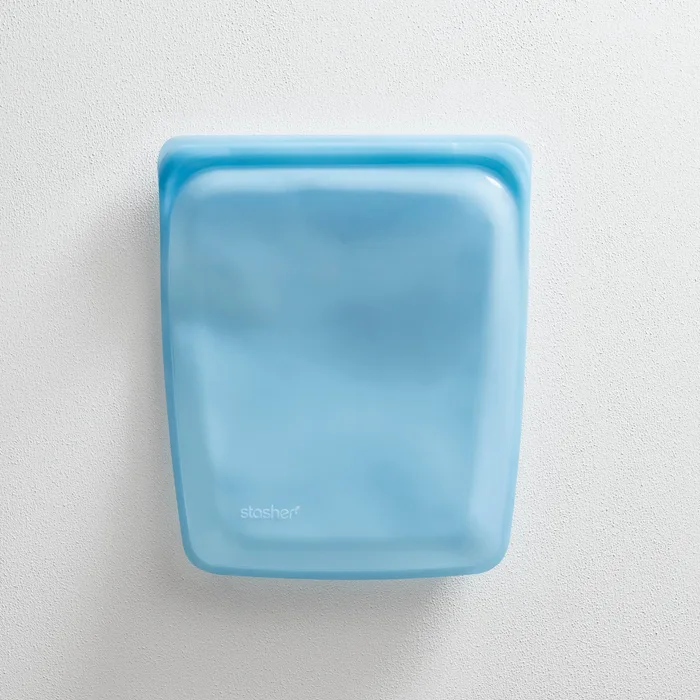
- Buy Stasher Half Gallon Bag Platinum silicone with a leak-free Pinch-Loc seal, safe from the freezer to a 425°F oven.
- Buy Zip Top Bag 3-Set Platinum silicone bags that stand up, stay open and come clean in the dishwasher.
- It depends (re)zip Reusable Gallon Bag A light, leakproof PEVA bag for the freezer and pantry that has to stay away from heat.
- Skip Porter Reusable Bag A one-piece silicone bag whose listing leaves out the grade of silicone and how the seal works.
What actually matters
- Material - silicone is heavier and heat-safe. PEVA is light and cheap but not for heat.
- Silicone grade - platinum-cured silicone is considered the higher grade. Brands that name it are easier to trust.
- Seal - pinch, zip and double-lock closures all work differently. A described design and a leak claim are good signs.
- Heat rating - oven ratings around 425°F let you cook in the bag. Check microwave safety separately.
- Capacity - a published volume helps you choose sizes. Missing capacity is a common gap.
- Cleaning - dishwasher safety is only useful if the shape lets water reach the corners. PEVA needs gentle washing.
- Shape - stand-up bags are easier to fill. Flat bags stack better in the freezer.
The specs, in plain English
Green flags vs red flags
Green flags
- A named silicone grade, such as platinum silicone.
- A published capacity and dimensions.
- A described seal and a leakproof claim.
- Clear heat, microwave and dishwasher limits.
- A full free-from list covering BPA, lead and phthalates.
Red flags
- "Premium silicone" with no grade.
- No capacity listed.
- No mention of how the seal works.
- Heat claims on a plastic bag.
- Care advice that contradicts how the seal is built.
Who's who: the brands
- Stasher - Known for platinum silicone bags with the patented Pinch-Loc seal, in many sizes.
- Zip Top - Makes stand-up platinum silicone bags, cups and dishes designed to stay open.
- (re)zip - Makes lightweight PEVA reusable bags in flat, stand-up and zippered styles.
- W&P - A kitchenware brand whose Porter line includes glass bowls, lunch boxes and silicone bags.
How to read a listing without getting fooled
Start with the material and, for silicone, the grade. Then find the heat limits for the oven, microwave and dishwasher, and check whether any of them are missing. Look for a stated capacity and dimensions, the seal design and whether the brand claims it is leakproof. Finally, read the care instructions, because how the brand tells you to clean the bag says a lot about how long the seal will last.
How much should you spend?
Budget reusable bags are usually PEVA, light and good for the freezer and pantry, or single silicone bags in common sizes. Mid-range sets bundle several silicone bags or add stand-up designs that are easier to fill and clean. Premium silicone lines add a wide range of sizes, published specs and oven ratings, and they last longest with daily use.
Questions, answered
How long do silicone food bags last?
With normal use, years, since silicone does not crack like plastic. The seal is usually the first part to wear. Avoid sharp knives, direct flames and turning bags inside out if the brand advises against it.
Can reusable bags go in the freezer?
All four types here are freezer safe. Leave a little room for liquids to expand, and lay bags flat so they freeze quickly and stack well. Thaw in the fridge or in cold water.
Why does my silicone bag feel greasy?
Oils can cling to silicone over time. Wash in hot soapy water or run it through the dishwasher, and some brands suggest a short bake in the oven to lift residue. Make sure the bag is completely dry before storing it.
Do reusable bags save money?
Over time, usually, because one bag replaces hundreds of single-use ones. Silicone costs more up front and pays back over longer use. Buy a few sizes you will actually use rather than a large set.
Or jump to the head-to-head: Stasher Half Gallon Bag vs Zip Top Bag 3-Set.