Explained
Rain Jackets, Explained
After reading this, you'll understand why every rain jacket is a compromise, why 'wetting out' usually isn't a defect, and which specs actually keep you dry.
In this guide
Rain jacket marketing sells membranes and big waterproof numbers, but the thing that trips up almost every first-time buyer is simpler: the water-repellent coating on the outside wears off, and when it does the jacket feels like it's leaking even though nothing is broken. Once you understand that every 'waterproof-breathable' shell is a balancing act between keeping rain out and letting sweat escape, the specs stop being mysterious and start being choices you can actually reason about.
The 30-second version
- Waterproof-breathable is always a compromise. the more freely a jacket breathes, the harder it has to work to block rain, so no single shell is best at both at once.
- 'Wetting out' is almost never a broken jacket. it's the surface coating (DWR) wearing thin, and a wash-in or spray-on re-proof usually brings the water-beading back.
- Taped seams and a restorable coating matter more than the membrane's brand name. a re-proofed mid-price shell will out-perform a fancy one you never maintain.
- Ventilation beats small breathability differences. pit zips and an adjustable hood do more for real-world comfort than a marginally more breathable membrane.
- Packability and durability pull in opposite directions. ultralight shells stuff tiny but tear more easily, while burlier fabrics last longer but weigh more.
The products this guide is about
Our verdict on each, with the full reasoning on the companion review.
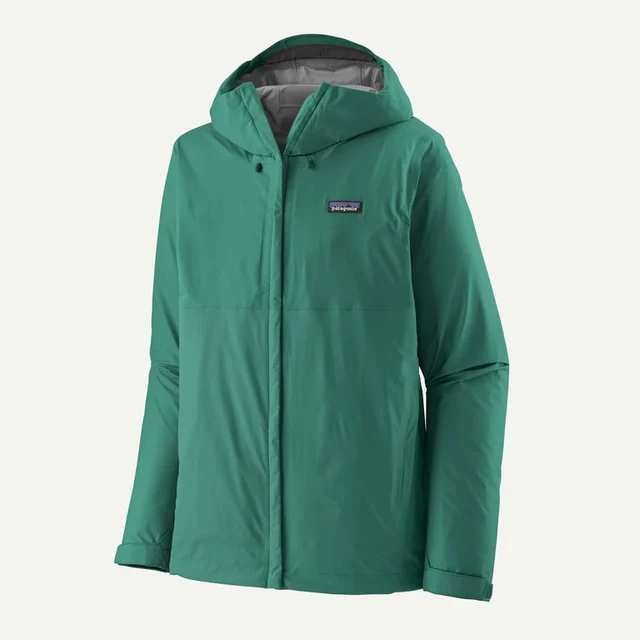
- Buy Patagonia Torrentshell 3L Rain Jacket A genuinely repairable 3-layer shell backed by a no-nonsense guarantee — the do-everything pick.
- Buy The North Face Antora Rain Hoodie The honest budget champ: a 2.5-layer everyday shell that keeps you dry if you keep the DWR fresh.
- It depends Arc'teryx Beta Jacket The best-made shell here — but you're paying flagship money for refinement, not for staying drier.
- Skip Frogg Toggs Ultra-Lite2 Rain Suit Astonishingly cheap and weirdly breathable — but it's a disposable emergency layer, not a real jacket.
What actually matters
- Fully taped (sealed) seams — this is non-negotiable. Every stitch is a needle hole, and untaped or only partially taped seams leak no matter how good the fabric is.
- A restorable DWR finish — the surface water repellent is a wear item, so choose a jacket you can wash and re-proof rather than one that can't be renewed.
- Ventilation — pit zips (underarm zippers) or a mesh-backed design let you dump heat and sweat, which matters more day-to-day than tiny membrane differences.
- Layer construction — 2-layer, 2.5-layer, and 3-layer builds trade comfort and durability against weight and price; know which compromise you're buying.
- Hood, cuff, and hem adjustability — a hood that won't cinch down funnels rain onto your face, and cuffs and hems that don't seal let water and wind creep in.
- Packability vs. durability — decide honestly whether you want something feather-light to stuff in a bag or something tough enough for years of rough use; you rarely get both.
- Repairability and warranty — a jacket you (or the brand) can fix is cheaper and less wasteful over its life than one you replace at the first torn cuff.
The specs, in plain English
Green flags vs red flags
Green flags
- The listing clearly states fully taped or fully sealed seams.
- The DWR is described as re-proofable, and the brand sells or recommends a wash-in or spray-on renewer.
- There are pit zips or another real way to vent, not just a front zip.
- The hood, cuffs, and hem are adjustable so you can seal out rain and wind.
- The maker offers a repair program or a strong warranty, signaling a jacket built to last.
Red flags
- Only 'water-resistant' or 'water-repellent' is claimed, with no mention of a membrane or sealed seams.
- Seams are 'critically taped' or the taping isn't mentioned at all.
- A huge waterproof number is the headline while seams, venting, and DWR go unmentioned.
- The fabric is a single nonwoven layer with nothing to re-proof — waterproof at first, but disposable once it wears or tears.
- No hood adjustment, no venting, and no obvious way to maintain or repair it.
Who's who: the brands
- Patagonia - Known for durable, repairable shells, a strong guarantee, and PFC-free coatings that re-proof cleanly.
- The North Face - Wide range from budget everyday shells to technical pieces, often using its in-house DryVent membrane.
- Arc'teryx - Premium, meticulously built Gore-Tex shells aimed at frequent outdoor users; you pay for refinement, fit, and durability.
- Marmot - Long-standing outdoor brand with its NanoPro membrane, spanning value and performance shells.
- Columbia - Approachable, widely available rain jackets with its own Omni-Tech waterproofing, aimed at casual and everyday use.
- Frogg Toggs - Ultra-cheap nonwoven rain suits best treated as emergency stash layers, not maintainable everyday jackets.
How to read a listing without getting fooled
Start at the bottom of the spec sheet, not the top. Ignore the biggest headline number and look first for the words 'fully taped seams' or 'fully sealed seams' — if they aren't there, be skeptical. Next, check whether there's a named membrane and whether the jacket is 2-, 2.5-, or 3-layer, which tells you more about comfort and lifespan than any rating. Then look for pit zips and hood/cuff/hem adjustment, because those decide how it actually feels in use. Treat waterproof (mm) and breathability numbers as rough context that's only comparable within a single brand's own line-up, not across brands, since they're measured differently. Finally, see whether the coating can be re-proofed and whether the maker will repair the jacket — a shell you can maintain and fix beats one with a slightly better number on paper.
How much should you spend?
You do not have to spend near the top to stay dry. The fundamentals that keep water out — sealed seams, a real membrane, and a renewable coating — show up at modest prices, and a well-cared-for mid-range shell will out-perform a neglected expensive one. Entry-level jackets keep you dry but tend to cut ventilation (no pit zips), use stickier 2.5-layer interiors, and skimp on hood and cuff adjustment. The mid-range is the value sweet spot for most people: taped seams, decent venting, often a more comfortable and durable 3-layer build, and sometimes a repair program. Stepping up to flagship prices mainly buys refinement — a more breathable membrane, a dialed-in fit, tougher face fabric, and lighter weight for the durability — which is worth it if you're out in weather constantly, and largely wasted if the jacket mostly walks you to the train. The cheapest nonwoven rain suits are fine as an emergency backup but shouldn't be your everyday jacket, because there's nothing to maintain when they wear out.
Questions, answered
Why does my rain jacket feel like it's leaking when it isn't torn?
That clammy, soaked feeling is usually the surface coating (DWR) wearing off, not a failed membrane. When water stops beading and soaks into the outer fabric, the jacket can't breathe, so your own sweat condenses inside and feels like a leak. Washing it with a technical cleaner and re-proofing with a wash-in or spray-on DWR usually restores the beading and fixes the problem.
What's the difference between waterproof and water-resistant?
Water-resistant fabrics handle a light, short shower but soak through in sustained rain. Waterproof jackets have an actual membrane plus sealed seams designed to keep out prolonged, heavy rain. If a listing only claims 'water-resistant' or 'water-repellent,' assume it won't keep you dry in a real downpour.
Is Gore-Tex worth paying extra for over an in-house membrane?
Sometimes. Gore-Tex and other top membranes generally breathe a bit better and are held to strict waterproofing standards, which helps if you work hard in sustained rain. But a well-made in-house membrane keeps you just as dry for everyday use, and every membrane still depends on that renewable surface coating. For commuting and casual hikes, an in-house membrane you keep re-proofed is the better value.
How do I wash and re-proof a waterproof jacket?
Wash it with a dedicated technical cleaner rather than regular detergent, since detergent residue kills water repellency. When water stops beading, apply a wash-in or spray-on DWR, and if the care label allows, tumble dry low or briefly warm the fabric to reactivate the finish. Doing this a couple of times a season keeps the jacket beading water for years.
Why shouldn't I use fabric softener on a rain jacket?
Fabric softener leaves a waxy, water-attracting residue that coats the fabric and destroys the DWR's ability to make water bead. The same goes for regular detergent buildup. Stick to a technical wash made for waterproof gear, and skip softener entirely.
Do I really need pit zips?
If you'll wear the jacket while exerting yourself — hiking, cycling, a fast commute — pit zips are the easiest way to dump heat and sweat, and they make a bigger real-world difference than small gaps in membrane breathability. For gentle, mostly standing-around use, you can live without them, but you'll notice their absence the moment you start working hard.
Or jump to the head-to-head: Patagonia Torrentshell 3L Rain Jacket vs The North Face Antora Rain Hoodie.