Explained
Rechargeable Hand Warmers, Explained
After reading, you'll understand how battery size, runtime claims, heat levels and weather ratings decide whether a rechargeable hand warmer keeps you warm.
In this guide
First-time buyers tend to compare battery size and nothing else. The runtime on the box is almost always for the lowest setting, and the heat on that setting may not be enough outdoors. Weather resistance, the charging port and even the shape decide whether you use it or leave it in a drawer. Here is how to read the listing.
The 30-second version
- Runtime claims use the low setting, so read a range like 3 to 8 hours as the real answer.
- Maximum heat varies a lot, from about 113°F to 136°F across popular models.
- A split pair warms both hands, while a single unit usually wins on toughness.
- IP ratings tell you about rain, and many warmers publish none at all.
- The charging port matters every day, because Micro-USB and Mini-USB need a cable you may not carry.
The products this guide is about
Our verdict on each, with the full reasoning on the companion review.
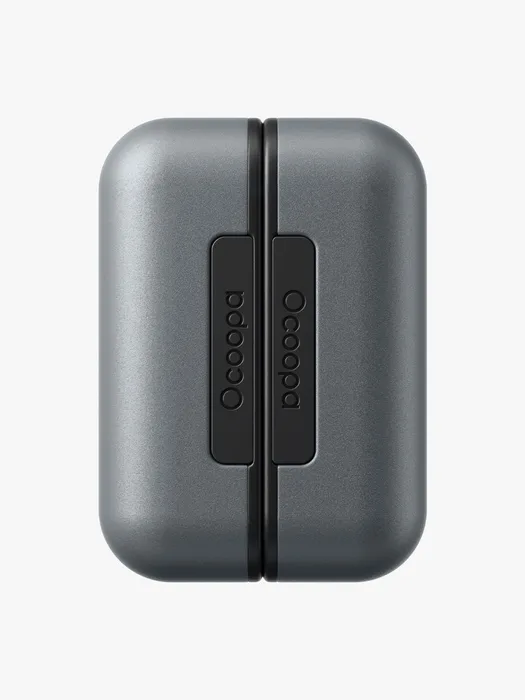
- Buy Ocoopa UT2s A split magnetic pair with a 5000mAh battery in each half, so both hands get their own heat.
- Buy Zippo HeatBank 6 Pro The rugged single warmer: IP57, drop bumpers and a flashlight around a 5200mAh battery.
- It depends Mobile Warming UTW Pro Hand Warmer A heated muff you strap around your waist, built for work where gloves come off and go back on.
- Skip Celestron Elements ThermoTorch 3 Astro Red A red-light astronomy flashlight with a warming function, not a hand warmer you should buy for warmth.
What actually matters
- Battery capacity - more mAh means more stored energy. Compare runtimes too, because the heating plate decides how fast it is used.
- Rated runtime - brands quote the lowest setting. On high, expect a fraction of the headline number.
- Maximum temperature - this is the ceiling, not the everyday setting. A higher ceiling helps in deep cold and in gloves.
- Heat levels - three or four settings let you trade warmth for runtime. Memory of the last setting is a small convenience.
- Form factor - split pairs, single units and waist muffs suit different days. Pick the shape you will actually carry.
- Weather rating - an IP code tells you how the housing handles dust and water. Wet gloves are the normal case, not the exception.
- Charging - the port type and charge time decide how easy it is to top up. USB-C is the most convenient today.
The specs, in plain English
Green flags vs red flags
Green flags
- A runtime range tied to specific heat settings.
- A published maximum temperature and number of heat levels.
- A stated IP rating or water-resistance feature.
- USB-C charging or a published charge time.
- A warranty of at least a year and a real support page.
Red flags
- A single runtime figure with no setting attached.
- No battery capacity listed.
- No maximum temperature published.
- An old Mini-USB or Micro-USB port with no cable in the box.
- Safety claims with no named certification.
Who's who: the brands
- Ocoopa - A hand warmer specialist known for split magnetic pairs and large batteries.
- Zippo - The lighter company, whose HeatBank line adds rugged, weather-rated rechargeable warmers.
- Mobile Warming - A heated apparel brand, part of Fieldsheer, that makes battery-heated muffs, gloves and vests.
- Celestron - A telescope maker whose Elements range combines flashlights, power banks and warmers.
How to read a listing without getting fooled
Start with the runtime and look for the setting it applies to; if the listing gives one number, assume it is for low. Next find the maximum temperature and the number of heat levels, then the battery capacity and voltage, and convert to watt hours if you need to compare. Check for an IP rating, the charging port and the charge time, and look at the weight and dimensions if it will live in a pocket. Finally, read the warranty and returns terms, since batteries are the part that fails.
How much should you spend?
Budget warmers are usually single units with small batteries, short runtimes and dated charging ports, and they are fine for occasional use. Mid-range models add bigger batteries, more heat levels, split designs or rugged housings with IP ratings, and they are the sweet spot for most people. Premium options tend to be heated muffs or apparel with 7.4V battery systems and long runtimes, worth it mainly for people who stand in the cold all day.
Questions, answered
Why does my hand warmer die faster than the box says?
Runtime is measured on the lowest setting, usually in mild conditions. Higher settings draw more power, and cold weather reduces how much a lithium battery can deliver. Charging your phone from the warmer uses the same battery. Expect the short end of any runtime range outdoors.
Can I leave a rechargeable hand warmer charging overnight?
Quality units stop charging when full, but it is still wise to charge on a hard surface away from bedding. Use a reputable charger and the cable type the maker specifies. Stop using any warmer that swells, smells or gets unusually hot while charging.
Are rechargeable hand warmers better than disposable ones?
They cost more up front and need charging, but you reuse them for years and control the heat. Disposable packets are lighter, need no power and last many hours at a steady low heat. For regular use, rechargeable wins; for a rare ski trip, packets are simpler.
Do rechargeable hand warmers work inside gloves?
Yes, and the heat builds up faster inside a glove, so a lower setting often feels warmer than you expect. Thin designs and split halves fit gloves best. A long or heavy unit will feel awkward in a glove.
Or jump to the head-to-head: Ocoopa UT2s vs Zippo HeatBank 6 Pro.