Explained
Pulse Oximeters, Explained
After reading this you will understand what a pulse oximeter measures, which specs genuinely matter, and how to pick one without overpaying.
In this guide
A fingertip pulse oximeter is a small clip that shines light through your fingertip to estimate the oxygen level in your blood and your pulse rate. The category looks intimidating because listings are crowded with terms like SpO2, perfusion index, and plethysmograph, and prices swing wildly for devices that look nearly identical. What trips people up most is assuming a higher price always means a more accurate number, when in practice the gap between a good budget clip and a flagship is often narrower than the price gap suggests.
The 30-second version
- Accuracy varies less than price. Credible clips can read similarly under steady, well-perfused conditions; the differences show up in tough conditions like cold hands or movement.
- Signal-quality feedback is the underrated feature. A perfusion index or waveform tells you whether to trust the number, not just what the number is.
- Connectivity is optional, not essential. Bluetooth and an app help only if you want to log trends or share readings with a clinician; otherwise a self-contained clip is simpler.
- No home clip is a clinical instrument. Treat the reading as a helpful signal, not a diagnosis, and confirm anything worrying with a professional.
The products this guide is about
Our verdict on each, with the full reasoning on the companion review.
- Buy Masimo MightySat Rx Fingertip Pulse Oximeter A consumer clip built on Masimo SET signal-extraction technology, aimed at difficult conditions.
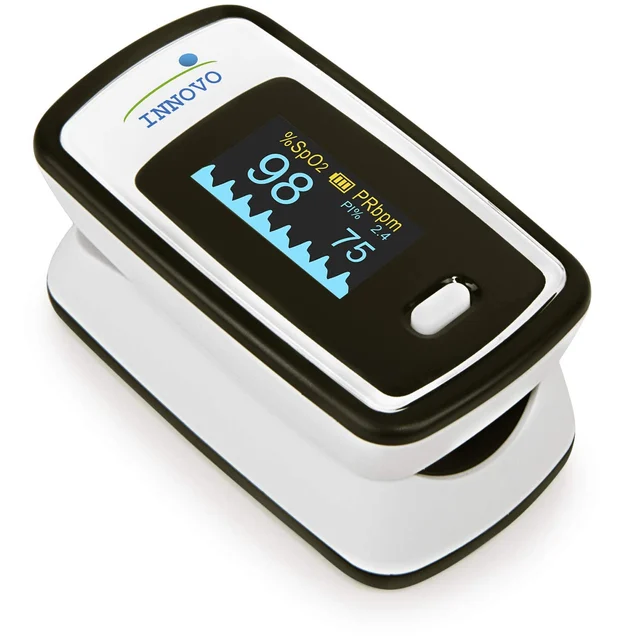
- Buy Innovo Deluxe iP900AP Fingertip Pulse Oximeter The value pick, a self-contained clip with a waveform and perfusion index at a mid-range price. Amazon
- It depends Zacurate Pro Series 500DL Fingertip Pulse Oximeter A popular budget clip that is fine for a reassuring check but may show its price in tougher conditions. Amazon
- Skip iHealth Air Wireless Pulse Oximeter (PO3) A tidy connected clip whose main appeal is its app, but it is outclassed on value by cheaper rivals. Amazon
What actually matters
- Reading dependability in tough conditions - the single most important trait. Cheap clips can wander when your finger is cold, poorly circulated, or moving, which is exactly when you want a trustworthy number.
- Signal-quality feedback (perfusion index or waveform) - lets you judge whether the reading is solid before you act on it, instead of trusting a number that may be based on a weak signal.
- Display readability - an OLED screen with adjustable brightness and multiple orientations stays legible in daylight and however you hold it; a fixed basic LED can wash out.
- Regulatory status - favoring devices whose maker states FDA clearance helps filter out the cheapest clips of unknown quality.
- Connectivity and logging - only matters if you want automatic trend tracking or to email a report to a clinician; it adds cost you can skip otherwise.
- Build, extras, and ease of use - one-button operation, included batteries, a lanyard, and a clip that fits different finger sizes make a device you will actually keep using.
The specs, in plain English
Green flags vs red flags
Green flags
- Clearly stated FDA-cleared or FDA-registered status from a recognizable brand
- A perfusion index or plethysmograph waveform so you can judge signal quality
- An OLED display with adjustable brightness and multiple orientations
- Owner reports that describe accuracy in real-world conditions
- Included batteries, a lanyard, and a clip that fits a range of finger sizes
Red flags
- No regulatory information at all, or a no-name seller with vague specs
- Only SpO2 and pulse shown, with no signal-quality indicator, at a mid-range or higher price
- Suspiciously perfect five-star readings with no mention of drift in cold or motion
- Marketing that implies it can diagnose conditions or replace a clinician
- A basic LED that washes out in daylight paired with a premium price
Who's who: the brands
- Masimo - Known for Masimo SET signal-extraction technology; the premium choice aimed at difficult conditions.
- Innovo - A value-focused brand whose clips pair a waveform and perfusion index with a mid-range price.
- Zacurate - A popular budget maker; simple, inexpensive clips that cover basic reassurance checks in steady conditions.
- iHealth - A connected-health brand whose clips lean on a companion app for logging and sharing readings.
How to read a listing without getting fooled
When you read a listing, start with the regulatory line and the brand: a clearly stated FDA-cleared or FDA-registered status from a recognizable maker filters out a lot of uncertified junk. Then look past the headline SpO2 accuracy claim, because nearly every listing quotes a similar figure under ideal conditions; the more telling detail is whether the device reports a perfusion index or waveform, which is what lets you judge a reading in the real world. Treat display type as a practical matter (OLED with adjustable brightness beats a fixed LED you cannot read in daylight), and treat Bluetooth as a feature you pay for only if you will actually log trends. Be skeptical of two things in particular: a mid-range or premium price attached to a bare-bones clip that only shows two numbers, and any language suggesting the device diagnoses illness rather than simply displaying a reading.
How much should you spend?
Spending is less about buying accuracy and more about buying features and convenience. At the budget end you get a credible clip that is fine for occasional reassurance checks in good conditions, but you typically give up signal-quality feedback and a readable display. The value sweet spot sits in the middle, where a well-made clip adds an OLED screen, a waveform, and a perfusion index without flagship pricing, and for most households that is where the money is best spent. Paying flagship prices is genuinely worth it in a narrow lane: if you are managing a diagnosed respiratory or cardiac condition, fly, or climb at altitude, a clip aimed at poor perfusion and motion can justify the premium. For a healthy person taking the occasional reading, that top tier is more than you need, and connectivity is worth extra only if you will actually use the logging.
Questions, answered
How accurate are consumer fingertip pulse oximeters?
They can be useful for spotting trends under steady, well-perfused conditions. They are not laboratory instruments, though: readings can differ from a clinical measurement and get less reliable with movement, cold or poorly circulated fingers, and dark nail polish. This is general product information, not medical advice. If you have symptoms, a diagnosed condition, or a reading that concerns you, consult a qualified healthcare professional rather than relying on a home device.
Do I need Bluetooth and a companion app?
Only if you want to log readings automatically or share a trend report with a clinician. A self-contained clip shows the same core numbers instantly with no phone required, and for most people taking occasional spot readings it is simpler and better value. Buy connectivity when ongoing monitoring is the point, not by default.
Does skin tone or nail polish affect the reading?
It can. Some fingertip oximeters can read high on people with darker skin pigmentation, which can mask low oxygen, and dark or metallic nail polish and artificial nails can interfere with the light sensor. A perfusion-index readout helps you judge whether the signal is strong; if in doubt, remove polish, warm your hands, hold still, and confirm anything worrying with a professional.
Why do some pulse oximeters cost several times more than others?
The premium often pays for more advanced signal processing, aimed at holding accuracy during movement and low blood flow where budget clips can struggle. For casual checks that margin is overkill; for someone managing a respiratory or cardiac condition, or flying and climbing at altitude, the added capability can be worth it.
What is a perfusion index and why should I care?
It is a number that reflects how strong the blood flow, and therefore the signal, is at your fingertip. A stable, higher perfusion index means the SpO2 reading is more trustworthy, while a very low one is a hint the number may be unreliable. A clip that shows it (or a waveform) lets you sanity-check a reading instead of trusting it blindly.
Or jump to the head-to-head: Innovo Deluxe iP900AP Fingertip Pulse Oximeter vs Masimo MightySat Rx Fingertip Pulse Oximeter.