

Health & Wellness
The Best Pulse Oximeters: 4 Compared (and One to Skip)
We reviewed maker information and owner reports on four current fingertip pulse oximeters, judged on accuracy, readability, connectivity, and honest value.
The short version
Fingertip pulse oximeters vary less in accuracy than in price, but the differences that remain matter. The Innovo Deluxe iP900AP is our overall pick, pairing an OLED display, waveform, and perfusion index in a self-contained clip at a fair price. The Masimo MightySat Rx uses Masimo SET technology, which Masimo positions for motion and low blood flow, and is worth its flagship cost only for medical or high-altitude use. The Zacurate Pro Series 500DL is a fine budget clip for occasional reassurance checks but may show its limits with cold hands or poor light. We would skip the iHealth Air, whose value hinges on its app while cheaper rivals do more. Remember that no consumer clip replaces a clinician's assessment. Best for: buyers who want a genuinely accurate home clip without overpaying, in which case the Innovo Deluxe iP900AP is the one to get.
Our picks at a glance
- Masimo MightySat Rx Fingertip Pulse Oximeter - Buy. A consumer clip built on Masimo SET signal-extraction technology, aimed at difficult conditions.
- Innovo Deluxe iP900AP Fingertip Pulse Oximeter - Buy. The value pick, a self-contained clip with a waveform and perfusion index at a mid-range price.
- Zacurate Pro Series 500DL Fingertip Pulse Oximeter - It depends. A popular budget clip that is fine for a reassuring check but may show its price in tougher conditions.
- iHealth Air Wireless Pulse Oximeter (PO3) - Skip. A tidy connected clip whose main appeal is its app, but it is outclassed on value by cheaper rivals.
The verdict in 30 seconds
What mattered most
- Reading dependability (maker positioning and owner reports)
- Regulatory status (check the maker's listing)
- Display & readability
- Extra metrics
- Connectivity & app
- Portability & extras
A fingertip pulse oximeter clips onto your finger and estimates blood-oxygen saturation (SpO2) and pulse rate in seconds. The gap between models is smaller than the price gap suggests: the premium unit is aimed at tough conditions, but a well-made budget clip covers most home check-ins. We compared four current models across the price range, and while three earn a place, one is hard to recommend when better-value options sit right next to it.
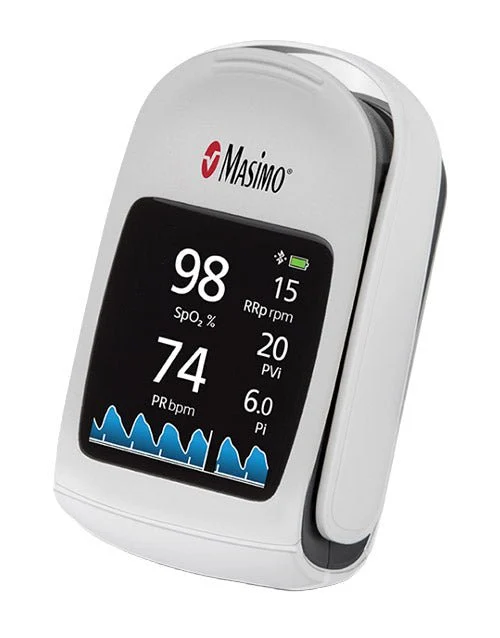
A consumer clip built on Masimo SET signal-extraction technology, aimed at difficult conditions.
Best for: People with a diagnosed respiratory or cardiac condition, pilots, and high-altitude athletes who want a clip aimed at difficult conditions and are willing to pay for it.
- Built on Masimo SET signal-extraction technology, which Masimo positions for use during movement and low blood flow
- Reports perfusion index, with further metrics on some configurations, on a display built for easy reading
- Bluetooth sync to Masimo's companion app makes it easy to log trends and share them with a clinician
- Costs considerably more than the other clips here, which is hard to justify for occasional home spot-checks
- Owners note a short learning curve to seat the finger correctly, and the most advanced metrics may be limited to the pricier configurations
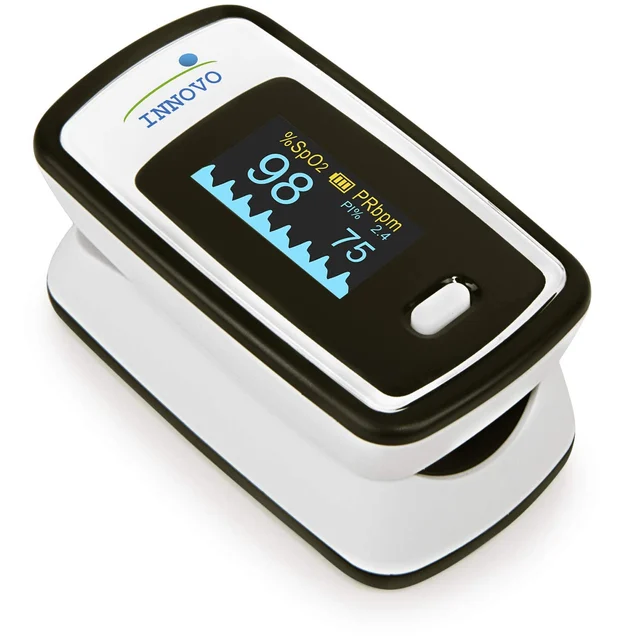
The value pick, a self-contained clip with a waveform and perfusion index at a mid-range price.
Best for: Most households wanting an accurate, feature-rich clip without paying flagship money, and anyone who prefers a self-contained device over an app.
- Owners and reviewers generally rate it well for everyday use and ease of use
- An OLED screen shows SpO2, pulse rate, a plethysmograph waveform, and perfusion index
- Simple one-button operation and a self-contained design make it grab-and-go
- No Bluetooth or app, so trend tracking means writing readings down yourself
- Takes one-time spot readings only and is not a substitute for a clinical-grade device
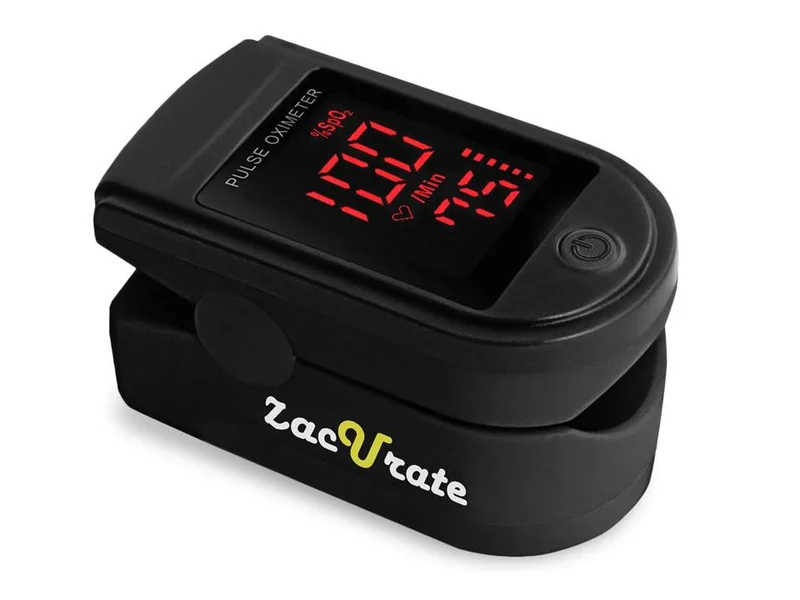
A popular budget clip that is fine for a reassuring check but may show its price in tougher conditions.
Best for: Budget-minded buyers who want an occasional at-home reassurance check and do not need connected features or clinical precision.
- One of the least expensive clips here, suited to occasional spot checks
- Compact and light, with a spring clip
- Simple, self-contained design with no setup
- Plain LED display that can be hard to read in bright light, with no perfusion index or waveform to judge signal quality
- Readings from any clip of this type can drift with cold hands, poor circulation, or movement, and there is no app for logging
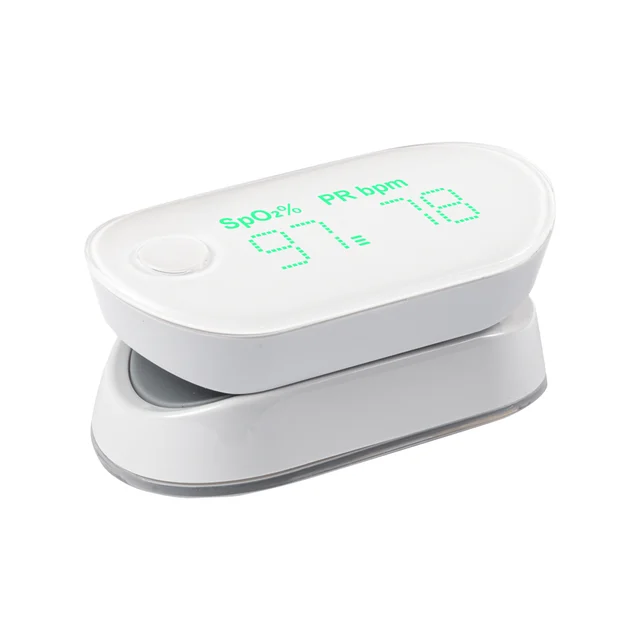
A tidy connected clip whose main appeal is its app, but it is outclassed on value by cheaper rivals.
Best for: Only buyers already committed to the iHealth app ecosystem who specifically want phone-logged readings; most people get more for their money elsewhere.
- Bluetooth sync to the MyVitals app stores readings and can generate a trend report to share with a clinician
- Rechargeable, with a display, perfusion index, and a plethysmograph waveform
- A smartphone-connected option for households already invested in the iHealth ecosystem. Check the maker's listing for regulatory status
- Most of its value depends on the app; without a paired phone it is just a basic spot-check clip at a mid-range price
- It is an older design that may trail newer self-contained units on price-to-feature value, and it only takes one-time readings
| Criteria | Masimo MightySat Rx Fingertip Pulse Oximeter | Innovo Deluxe iP900AP Fingertip Pulse Oximeter Top pick | Zacurate Pro Series 500DL Fingertip Pulse Oximeter | iHealth Air Wireless Pulse Oximeter (PO3) |
|---|---|---|---|---|
| Verdict | Buy it | Buy it | It depends | Skip it |
| Best for | People with a diagnosed respiratory or cardiac condition, pilots, and high-altitude athletes who want a clip aimed at difficult conditions and are willing to pay for it. | Most households wanting an accurate, feature-rich clip without paying flagship money, and anyone who prefers a self-contained device over an app. | Budget-minded buyers who want an occasional at-home reassurance check and do not need connected features or clinical precision. | Only buyers already committed to the iHealth app ecosystem who specifically want phone-logged readings; most people get more for their money elsewhere. |
| Price tier | $$$$ · flagship | $$ · mid-range | $ · budget | $$ · mid-range |
| Reading dependability (maker positioning and owner reports) | Masimo SET aimed at motion and low perfusion | Well rated for everyday use | Adequate in steady conditions; may drift when circulation is poor | Adequate for spot checks |
| Regulatory status (check the maker's listing) | Check maker's listing | Check maker's listing | Check maker's listing | Check maker's listing |
| Display & readability | Multi-metric display | OLED display | Basic LED; can wash out in bright light | OLED display |
| Extra metrics | Perfusion index; further metrics vary by configuration | Plethysmograph waveform + perfusion index | SpO2 and pulse rate only | Plethysmograph waveform + perfusion index |
| Connectivity & app | Bluetooth + companion app | None (self-contained) | None (self-contained) | Bluetooth + MyVitals app (app-dependent) |
| Portability & extras | Compact | Compact | Very small and light | Compact; rechargeable |
| Price tier | $$$$ · flagship | $$ · mid-range | $ · budget | $$ · mid-range |
Which one is right for you?
- People with a diagnosed respiratory or cardiac condition, pilots, and high-altitude athletes who want a clip aimed at difficult conditions and are willing to pay for it. Buy it Masimo MightySat Rx Fingertip Pulse Oximeter
- Most households wanting an accurate, feature-rich clip without paying flagship money, and anyone who prefers a self-contained device over an app. Buy it Innovo Deluxe iP900AP Fingertip Pulse Oximeter
- Budget-minded buyers who want an occasional at-home reassurance check and do not need connected features or clinical precision. It depends Zacurate Pro Series 500DL Fingertip Pulse Oximeter
- Only buyers already committed to the iHealth app ecosystem who specifically want phone-logged readings; most people get more for their money elsewhere. Skip it iHealth Air Wireless Pulse Oximeter (PO3)
How we judged the field
We do not run our own lab. Instead, we synthesize the sources that already exist: manufacturer specifications and aggregated owner reports. Where those sources agree, we treat the finding as solid; where they diverge, we say so.
For fingertip pulse oximeters, a handful of criteria separate a genuinely useful device from a novelty. Reading dependability matters most, especially how well a clip holds accuracy when your finger is cold, still, or poorly perfused, which is exactly when cheap units wander. We also weighed display readability, whether the device reports a perfusion index or waveform so you can judge signal quality, connectivity and logging, build and portability, regulatory status, and honest value for the money. No consumer clip is a clinical instrument, so we were careful not to treat any of them as one.
Innovo Deluxe iP900AP
Buy itThe Innovo is the clip we would hand to most people. It is well regarded for everyday use, and the hardware suits that: an OLED screen shows SpO2, pulse rate, a plethysmograph waveform, and perfusion index. One-button operation makes it easy to live with. It has no Bluetooth and takes one-time spot readings only, but for a self-contained home device the accuracy-to-price ratio is hard to beat.
Masimo MightySat Rx
Buy itThe MightySat is the premium pick. It is built on Masimo SET signal-extraction technology, which Masimo positions for use during movement and low blood flow, the conditions that can trip up budget clips. It reports perfusion index, with further metrics on some configurations, and it syncs over Bluetooth for trend logging. The catch is price: it costs considerably more than anything else on this list, and the most advanced metrics may be limited to the pricier configurations. For medical or high-altitude use, that premium buys real peace of mind; for casual checks, it is more than most people need.
Zacurate Pro Series 500DL
It dependsThe Zacurate is the budget favorite, and for a reason: it is inexpensive, compact, and simple. That makes it a reasonable pick for occasional reassurance checks. But its plain LED display can be hard to read in bright light, it offers no perfusion index or waveform to tell you whether the signal is trustworthy, and readings from any clip like this can drift with cold hands, poor circulation, or movement. If your needs are basic and your budget is tight, it delivers; if you want confidence in the number under less-than-ideal conditions, spend a little more.
iHealth Air (PO3)
Skip itThe iHealth Air is not a bad device, but it is a hard one to recommend today. It is rechargeable and pairs over Bluetooth with the MyVitals app to store readings and generate trend reports, which is genuinely handy if you are already in the iHealth ecosystem. The problem is value. Strip away the app and you are left with a mid-priced clip that does less than cheaper, self-contained rivals, and it is an older design that newer competitors may overtake at the same price or less. Unless you specifically need phone-logged readings tied to iHealth’s platform, your money goes further elsewhere.
Innovo Deluxe iP900AP vs Masimo MightySat Rx: which should you buy?
This is the choice most serious buyers face: the value pick versus the premium pick. The Innovo offers the core experience, an OLED display, a waveform, and a perfusion index, at a fraction of the cost. For the overwhelming majority of home users, it is the smarter buy.
The Masimo earns its flagship price in a narrower lane. If you are managing a diagnosed respiratory or cardiac condition, or you fly and climb where a trustworthy reading in low perfusion genuinely matters, its Masimo SET signal processing is aimed at poor conditions, and the Bluetooth logging helps you share data with a clinician. Put simply: buy the Innovo unless you have a specific reason to need the most dependable reading money can buy, in which case the Masimo is worth it.
What to look for
- Signal-quality feedback: a perfusion index or plethysmograph waveform tells you whether the reading is trustworthy, not just what the number is.
- Display you can actually read: an OLED screen with adjustable brightness and multiple orientations beats a fixed LED that washes out in daylight.
- Dependability in tough conditions: if you have cold hands or poor circulation, prioritize models whose makers address low perfusion and motion.
- Connectivity only if you need it: Bluetooth and an app are useful for logging and sharing with a clinician, but they add cost and are pointless if you just want a quick number.
- Regulatory status and honest expectations: favor FDA-cleared or FDA-registered devices, and remember none of them replaces a clinical assessment.
Our final take
The gap between a good budget clip and a premium one depends on your conditions, so the right choice comes down to how you will use it. For most households, the Innovo Deluxe iP900AP is the one to buy: a useful display and a fair price. Step up to the Masimo MightySat Rx only if you have a medical or high-altitude reason to want the steadiest possible reading. The Zacurate Pro Series 500DL is a sensible bare-bones budget option for occasional checks, while the iHealth Air is the one we would pass over, outdone on value by rivals that simply do more. Whichever you choose, treat the number as a helpful signal, not a diagnosis, and bring anything concerning to a healthcare professional.
Questions, answered
Are fingertip pulse oximeters accurate enough to rely on?
Consumer fingertip clips are useful for spotting trends and getting a general reading, and they can be less reliable than clinical devices. They are not laboratory instruments, and readings can differ from a clinical measurement, and accuracy can fall off with movement, cold or poorly circulated fingers, and dark nail polish. This article is general product information, not medical advice. If you have symptoms or a diagnosed condition, or a reading concerns you, consult a qualified healthcare professional rather than relying on a home device.
Does skin tone or nail polish affect the reading?
It can. Some fingertip oximeters can read high on people with darker skin pigmentation, which can mask low oxygen levels, and dark or metallic nail polish and artificial nails can interfere with the light sensor. Models with a perfusion-index readout (such as the Masimo, Innovo, and iHealth here) let you judge whether the signal is strong. If in doubt, remove nail polish, warm your hands, hold still, and confirm anything worrying with a professional.
Do I actually need Bluetooth and a companion app?
Only if you want to log readings automatically or share a trend report with a clinician. Connected models like the Masimo and iHealth make that easy, but a self-contained clip like the Innovo or Zacurate shows the same core numbers instantly with no phone required. For most people who take occasional spot readings, a good non-connected clip is simpler and better value.
Why does the Masimo cost so much more than the others?
You are paying for its Masimo SET signal-extraction technology, which Masimo positions for use during movement and low blood flow. For a healthy person taking the odd reading, that margin is overkill; for someone managing a respiratory or cardiac condition, or flying and climbing at altitude, the added capability can be worth the flagship price.
What counts as a normal SpO2 reading?
As general product information, healthy adults at sea level typically see readings in the mid-to-high 90s, and many devices flag lower numbers. Normal ranges vary with altitude, age, and individual health, and a single home reading is only a snapshot. This is not medical advice: if your readings are persistently low, you feel short of breath, or a result alarms you, seek guidance from a healthcare professional.
Deciding between the top two? See our head-to-head: Innovo Deluxe iP900AP Fingertip Pulse Oximeter vs Masimo MightySat Rx Fingertip Pulse Oximeter.
More Health & Wellness reviews
 The Best Radon Detectors: 4 Compared (and One to Skip)
  The Best Reading Glasses: 4 Compared (and One to Skip)
  The Best At-Home Red Light Therapy Devices: 4 Compared (and One to Skip)
  The Best Respirator Fit Test Kits: 4 Compared (and One to Skip)
  The Best Reusable Respirators: 4 Compared (and One to Skip)
  The Best Seat Cushions for Office Chairs: 4 Compared (and One to Skip)