

Health & Wellness
The Best Reading Glasses: 4 Compared (and One to Skip)
We compared four over-the-counter readers on lens quality, optical centering, frame durability, diopter range, and long-term owner reports.
The short version
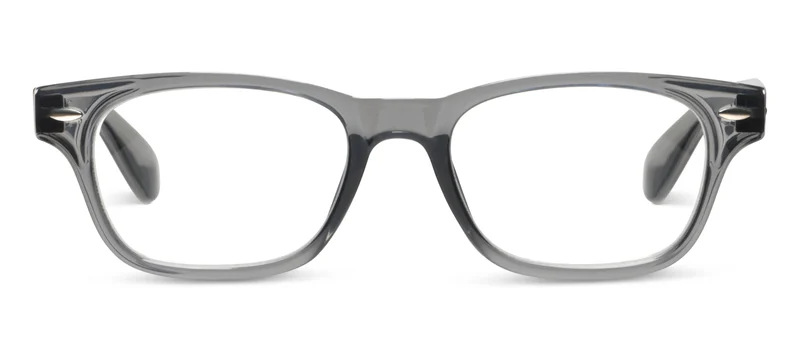
Most people should buy the Peepers Clark: good optical centering per owner reports, blue light filtering built into the lens rather than sprayed on, and strengths up to +4.00. If you read on paper for hours or want a frame with actual design to it, the eyebobs Total Wit has optical-grade lenses and an Italian-designed acetate build, and the same frame can take prescription lenses later. ThinOptics Moment Readers are excellent as a pocketable spare and frustrating as your only pair, thanks to tiny lenses and an unadjustable nose-pinch fit. Skip the Gaoye five-pack as a daily driver: one fixed optical center across every pair makes comfort a lottery, and that mismatch is the usual reason people get headaches from readers. Best for: anyone whose arms have gotten too short for the menu and who wants one pair that stays comfortable past the first half hour.
Our picks at a glance
- Peepers Clark Blue Light Reading Glasses - Buy. The best all-round OTC reader: good optics, lens-integrated blue light filtering, and a price that lets you own several pairs.
- eyebobs Total Wit Reading Glasses - Buy. Italian-designed acetate and optical-grade lenses make this the best-built pair here, if you can live with the premium.
- ThinOptics Moment Readers 3-Pack - It depends. Pocketable rimless readers that solve the always-with-you problem and nothing else.
- Gaoye 5-Pack Reading Glasses - Skip. Fine as scattered spares, wrong as the pair you actually read in every day.
The verdict in 30 seconds
What mattered most
- Lens material
- Optical centering consistency
- Anti-reflective coating
- Blue light filtering
- Diopter range
- Frame build
Over-the-counter reading glasses all look the same on the rack, but the gap between a comfortable pair and a headache-inducing one comes down to lens quality and whether the optical centers line up with your eyes. We looked at four popular options across the price range, from a designer acetate pair to the five-for-cheap multipack most people default to. Two are easy recommendations, one is a good second pair rather than a first, and one is the reason a lot of people think readers do not work for them.
The best all-round OTC reader: good optics, lens-integrated blue light filtering, and a price that lets you own several pairs.
Best for: Screen-heavy readers who want correct optics and low enough cost to keep a pair in every room.
- Blue light filtering is part of the lens itself, so there is no add-on film to peel
- Blue Light Focus lenses filter the 400 to 450 nm range, aimed at screen glare and evening eye strain
- Strengths run from +1.00 up to +4.00, so the brand stays useful as your near vision changes
- Ultra-lightweight polycarbonate frame with spring hinges
- A 90-day return policy makes getting the strength wrong a cheap mistake
- Molded polycarbonate frame lacks the hand-feel and heft of milled acetate
- Styling is conservative; less visual presence than a designer frame
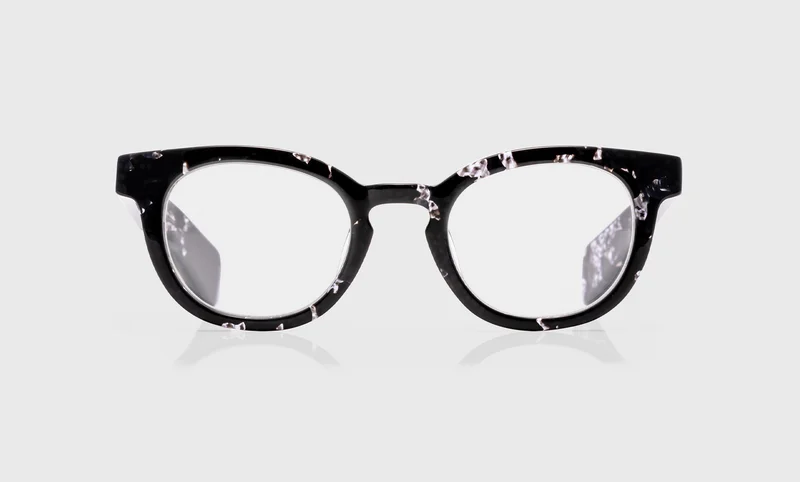
Italian-designed acetate and optical-grade lenses make this the best-built pair here, if you can live with the premium.
Best for: Paper readers and anyone who wants one good pair with real optical quality and some style.
- Optical-grade lenses with a scratch-resistant coating
- Italian-designed acetate frame with spring hinges looks and ages like real eyewear
- Strengths run from 0.00 (plano) to +4.00
- Same frame can be ordered with prescription lenses later if an eye exam turns up astigmatism
- 90-day return policy encourages trying at home
- Acetate is noticeably heavier than polycarbonate on long sessions
- By far the most expensive option here, which makes losing a pair painful
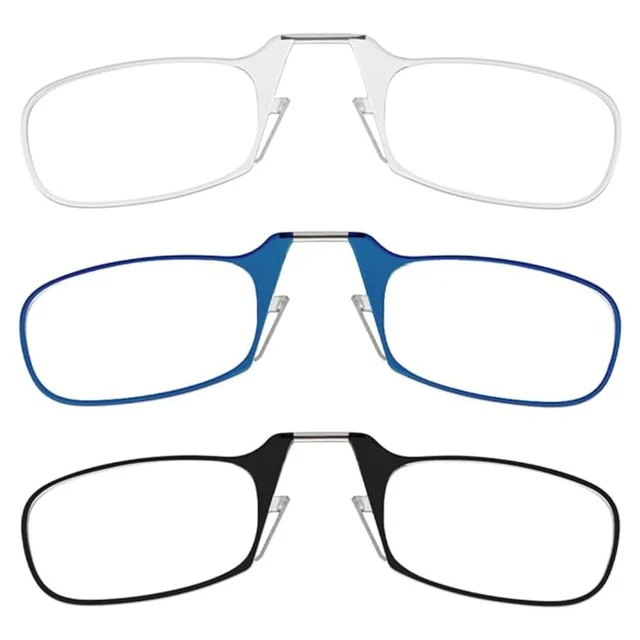
Pocketable rimless readers that solve the always-with-you problem and nothing else.
Best for: People who keep losing readers and want a pair that genuinely travels, as a supplement rather than a primary.
- Thin enough to live in a case on the back of a phone or on a keyring
- No conventional hinges or temples means one fewer thing to snap
- Three pairs lets you stash one in the bag, the car, and the kitchen
- Almost no perceptible weight on the face
- Small lenses give a narrow reading window; you have to aim your nose at the page
- Nose-pinch fit is unadjustable and slides on some bridge shapes
- Limited strength options (+1.00 to +2.50) and no anti-reflective coating marketed
- Owners report frames bend out of shape easily if crushed
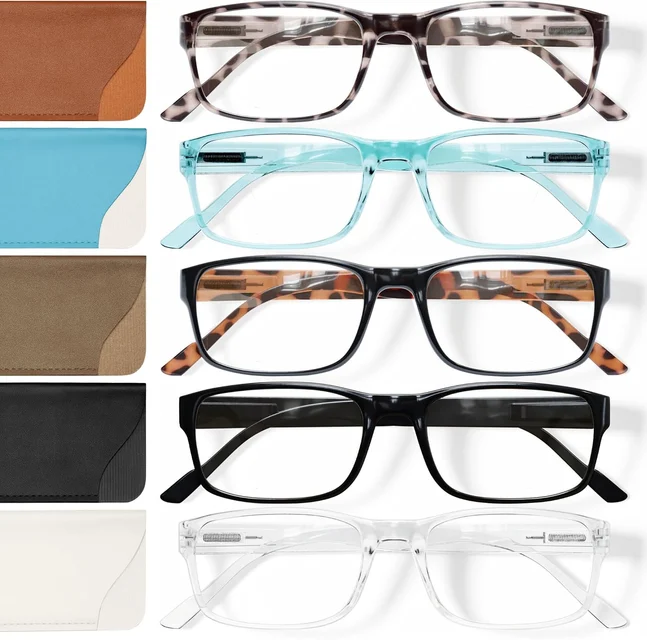
Fine as scattered spares, wrong as the pair you actually read in every day.
Best for: Emergency backups and occasional label-reading, not daily reading sessions.
- Five frames and five cases makes it easy to keep a pair in every room
- Spring hinges and light frames are more comfortable than the cheapest gas-station readers
- Low enough cost that losing one is meaningless
- One fixed optical center across all pairs means centering is a coin flip; misses cause prism effect and headaches
- Owner reports flag variation in strength and finish between pairs inside the same pack
- Thin coatings mark easily, hinges loosen, and frames warp with heat
- Blue light claim has no independent verification and the lenses show almost no filtering sheen
| Criteria | Peepers Clark Blue Light Reading Glasses Top pick | eyebobs Total Wit Reading Glasses | ThinOptics Moment Readers 3-Pack | Gaoye 5-Pack Reading Glasses |
|---|---|---|---|---|
| Verdict | Buy it | Buy it | It depends | Skip it |
| Best for | Screen-heavy readers who want correct optics and low enough cost to keep a pair in every room. | Paper readers and anyone who wants one good pair with real optical quality and some style. | People who keep losing readers and want a pair that genuinely travels, as a supplement rather than a primary. | Emergency backups and occasional label-reading, not daily reading sessions. |
| Price tier | $ · mid-range | $$ · premium | $ · mid-range | $ · budget |
| Lens material | Polycarbonate - Optical-grade | Polycarbonate, thin profile | Unspecified low-cost plastic | - |
| Optical centering consistency | Consistent; few owner complaints | Consistent; few owner complaints | Consistent but narrow lens window | Single fixed center across all strengths |
| Anti-reflective coating | Blue Light Focus lenses (400 to 450 nm) | Scratch-resistant; no AR on standard readers | Minimal | Minimal, marks easily |
| Blue light filtering | Part of the lens | Available as a lens option | Not on the standard readers | Claimed, unverified |
| Diopter range | +1.00 to +4.00 | 0.00 to +4.00 | +1.00 to +2.50 - Limited selection per pack | - |
| Frame build | Light polycarbonate, spring hinges | Italian-designed acetate, spring hinges | Rimless, nose-pinch, no temples | Molded plastic, hinges loosen over time |
| Portability | Normal; case included | Normal; heavier acetate | Best here; fits on a phone or keyring | Normal; five soft cases included |
| Price tier | $ · mid-range | $$ · premium | $ · mid-range | $ · budget |
Which one is right for you?
- Screen-heavy readers who want correct optics and low enough cost to keep a pair in every room. Buy it Peepers Clark Blue Light Reading Glasses
- Paper readers and anyone who wants one good pair with real optical quality and some style. Buy it eyebobs Total Wit Reading Glasses
- People who keep losing readers and want a pair that genuinely travels, as a supplement rather than a primary. It depends ThinOptics Moment Readers 3-Pack
- Emergency backups and occasional label-reading, not daily reading sessions. Skip it Gaoye 5-Pack Reading Glasses
How we judged the field
Reading glasses look interchangeable on a rack, and that is exactly why so many people end up with a drawer full of pairs they never wear. We do not run an optical lab. What we do is pull together independent testing of lens quality and frame durability, published teardowns of coatings and materials, and a large volume of long-term owner reports, then look for the points where those sources agree.
Four things mattered most. First, lens quality: how flat and distortion-free the lens is toward the edges, and whether the two optical centers actually line up with normal pupil spacing. Second, frame build: hinge type, temple flex, and whether the frame holds its shape after a season in a bag. Third, diopter coverage, because a brand that stops at a middling strength is useless to anyone whose near vision has moved on. Fourth, the practical stuff owners complain about later: coatings that peel, spring hinges that go slack, and return policies that make a wrong strength cheap to fix.
We deliberately included one high-volume budget multipack, because that is what a large share of buyers actually reach for, and it deserves a straight answer rather than a polite one.
Peepers sits in the sweet spot most people are looking for without knowing it: blue light filtering lenses and frames that look like eyewear rather than like a pharmacy impulse buy. The Clark is a polycarbonate frame the maker describes as super-strong and ultra-lightweight.
The lens story is the reason it leads. Peepers sells the Clark with Blue Light Focus lenses, which the maker says filter high-energy visible light in the 400 to 450 nm range, built into the lens rather than a separate add-on. Owners consistently report that the optical centering is right, which is the single most common failure point in low-cost readers and the usual cause of that vague ache behind the eyes after an hour.
Strengths run from +1.00 up to +4.00, so you can stay with the brand as your near vision changes rather than starting over. The frame has spring hinges, and the 90-day return policy makes ordering one step too strong a recoverable mistake.
Downsides are real but small. The polycarbonate frame does not have the hand-feel of milled acetate, and the styling leans safe. If you want something with presence, look at the next pick.
eyebobs built its whole business on the gap between throwaway readers and prescription eyewear, and the Total Wit is a clean example of what that buys you. Italian-designed acetate, optical-grade lenses, spring hinges, and a classic round shape with paddle temples that reads as designer eyewear rather than as a vision aid.
eyebobs describes its lenses as best-in-class optical quality, and all of its lenses are scratch-resistant. Anti-reflective coating comes on its other lens types but not on traditional readers, so expect some screen glare. If you read paper for long stretches, the optical quality is the reason to pay up.
Strengths run from 0.00 to +4.00, and the brand also sells the same frames with prescription lenses, which is a useful escape hatch if an eye exam later turns up astigmatism. Returns run 90 days.
The catches: acetate is heavier than polycarbonate, and this is the priciest pair here by a wide margin. Some colors are sold out at times. Losing a pair stings. Buy this as your one good pair, not as the one you leave in the car.
ThinOptics solves a problem no traditional reader solves: the pair you actually have with you. These are rimless, nose-pinch readers thin enough to live in a case that sticks to the back of a phone or clips to a keyring. Three pairs means one for the bag, one for the desk, one for the kitchen drawer, which is how most people use readers anyway.
Owners who love them love them for exactly that reason. There is no hinge to break because there are no conventional temples, the whole thing weighs almost nothing, and the always-with-you factor means they get used where a bulkier pair would have been left at home.
The compromises are equally clear. The lenses are small, so you get a narrow reading window and you have to point your nose at what you are reading. The nose-pinch fit works well on some bridges and slides on others, with no adjustment available. Strengths run only from +1.00 to +2.50, and ThinOptics does not market an anti-reflective coating on these, so screen glare may be more noticeable. Long-term owner reports also flag the frames as easy to bend out of shape if they get sat on.
Buy these as a second or third pair for portability. Do not buy them as your only pair if you read for hours.
Multipack readers are the default purchase in this category, and this is one of the best-selling examples. Five frames, assorted colors, spring hinges, a soft case for each, and a blue light claim on the box. The pitch is that you scatter them around the house and stop hunting for your glasses.
The pitch is not wrong, and cheap readers will not damage your eyes. The problem is consistency. Because every pair in the pack is molded to one fixed optical center and one strength, the odds that any given pair lines up with your pupil spacing are a coin flip. When it misses, you get prism effect: the eyes work to compensate, and you feel it as eye strain or a dull frontal headache after twenty or thirty minutes. Owner reports are full of exactly that pattern, along with variation between pairs inside the same pack.
The other recurring complaints are lens finish and durability. The coatings are thin and mark easily, the hinges loosen, and the frames warp with heat. The blue light claim has no independent verification we could find.
They work as emergency backups. As a primary pair for anyone who reads daily, they are the wrong economy, and the pattern of headaches they produce is why so many people wrongly conclude that readers do not work for them.
Peepers Clark vs eyebobs Total Wit: which should you buy?
These two split cleanly on materials and money. The eyebobs pair has the better frame: Italian-designed acetate feels and ages better than molded polycarbonate, and its lenses are marketed as best-in-class optical quality. If reading is a several-hour-a-day activity or you want one pair that looks intentional, that is worth the premium.
The Peepers pair wins on everything else. It is meaningfully lighter, which matters over a long session. Its blue light filtering is part of the lens, which makes it the better bet if screens are most of your reading. And because it costs a fraction of the eyebobs pair, you can own three of them and stop caring where you left one.
Our call: Peepers for most people, especially screen-heavy readers and anyone who loses glasses. eyebobs if you read on paper, want the best-made frame here, or want a frame you will actually enjoy wearing in front of other people.
What to look for
- Correct strength, not the strongest strength. Start one step lower than you think. Too much magnification shortens your working distance and causes its own strain.
- Optical centering. This is the difference between comfortable readers and headache readers. Brands that sell one frame in many strengths handle it better than multipacks molded to a single center.
- Lens material. Polycarbonate is lighter and impact resistant; CR-39 is another common optical plastic. Both are generally better than unbranded acrylic.
- A real anti-reflective coating. Look for a colored sheen on the lens surface. It cuts the ghost reflections that make evening reading tiring.
- Spring hinges. They absorb the abuse of one-handed removal, which is how most readers die.
- Diopter range that goes beyond what you need today. Near vision keeps changing into your sixties. A brand that stops early forces a restart.
- A return window. Getting the strength wrong is common. A 60 to 90 day window makes it a non-event.
- Skip the blue light premium unless it is built into the lens. Surface tints can wear off.
Our final take
For most people, the Peepers Clark is the right buy: good optics, integrated blue light filtering, strengths up to +4.00, and a price low enough that owning several pairs is reasonable. That combination fixes both problems people have with readers, the discomfort and the constant hunting.
If you want the best optics and a frame with some character, the eyebobs Total Wit can earn its premium, and the option to put prescription lenses in the same frame later is a real advantage.
ThinOptics Moment Readers are a good supplement and a poor primary. Multipacks like the Gaoye set are fine as scattered spares and a bad idea as the glasses you read in every day. If readers have given you headaches before, a properly centered single pair is the first thing to try.
Questions, answered
Can I just buy reading glasses off the shelf, or do I need an eye exam first?
You can buy them off the shelf, and over-the-counter readers will not damage your eyes. That said, this article is general product information, not medical advice. Readers only add magnification; they cannot correct astigmatism, they do not treat the underlying condition, and they cannot detect the eye diseases a routine exam is designed to catch. If your near vision changed suddenly, if one eye is clearly worse than the other, or if you are getting persistent headaches, see an eye care professional. OTC readers are a convenience product, not a substitute for an eye exam.
What strength should I start with?
Start lower than you think. Most people in their forties do fine with a mild strength, moving up roughly one step per decade. Print a standard near-vision chart, hold it at the distance you actually read at, and pick the weakest strength that makes the text comfortably sharp. Overshooting is the most common mistake: too much magnification shortens your working distance so you have to hold the page unnaturally close, which causes its own strain.
Why do cheap reading glasses give some people headaches?
Almost always optical centering. Every lens has an optical center, and it needs to sit roughly in front of your pupil. Multipack readers are molded with one fixed center regardless of strength or face size, so if your pupil spacing does not match, the lenses introduce a small prism effect. Your eye muscles compensate, and you feel it as strain or a dull frontal headache after twenty or thirty minutes. Single-pair brands that offer many strengths in one frame handle this far better.
Is blue light filtering worth paying for?
Only if it is built into the lens material rather than applied as a surface tint, and only if screens are most of your reading. The evidence that blue light filtering prevents eye damage is weak, but many owners report less glare and easier evening reading, and lens-integrated filtering does not wear off the way a coating can. If you mostly read paper, it is not worth a premium.
How many pairs should I actually own?
Two or three, and buy them in the same strength. The single biggest complaint about readers is not optics, it is never having them where you are. One good pair for extended reading, one pocketable pair for out of the house, and one spare in the room you read in most covers nearly everyone. Mixing strengths across pairs is a mistake; your eyes adapt to one and the others feel wrong.
Deciding between the top two? See our head-to-head: Peepers Clark Blue Light Reading Glasses vs eyebobs Total Wit Reading Glasses.
More Health & Wellness reviews
 The Best At-Home Red Light Therapy Devices: 4 Compared (and One to Skip)
  The Best Respirator Fit Test Kits: 4 Compared (and One to Skip)
  The Best Reusable Respirators: 4 Compared (and One to Skip)
  The Best Seat Cushions for Office Chairs: 4 Compared (and One to Skip)
  The Best Silk and Satin Sleep Bonnets: 4 Compared (and One to Skip)
  The Best Sleep Masks: 4 Compared (and One to Skip)