

Health & Wellness
The Best Radon Detectors: 4 Compared (and One to Skip)
We compared four ways to measure radon at home on the things that actually decide whether the number means anything: whether the device appears on a national proficiency program's list, what accuracy the maker publishes and after how long, and whether the result can be used for a decision or only for awareness.
The short version
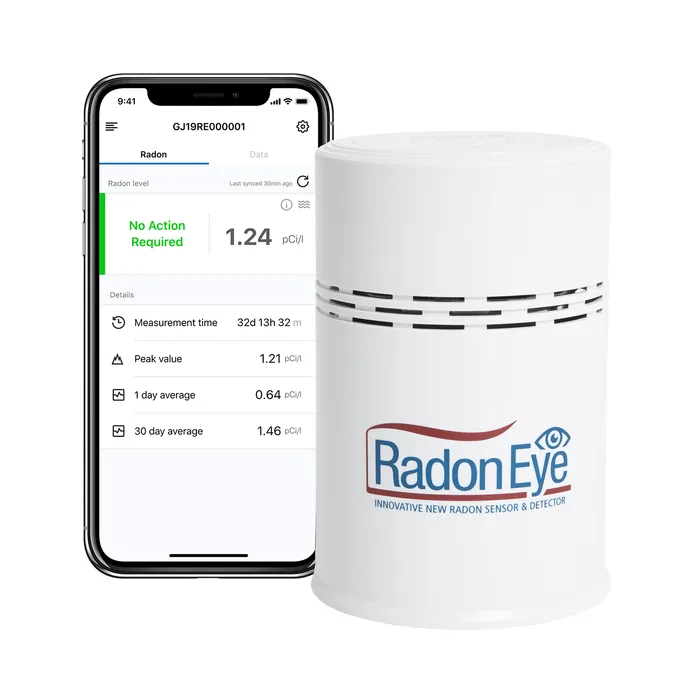
The Ecosense RadonEye is the pick among electronic monitors: a pulsed ionization chamber, a first reading in ten minutes, a manufacturer stated figure of plus or minus 10 percent at 370 Bq/m3 after ten hours as recorded on the Canadian proficiency program's consumer monitor list, and no subscription. The AccuStar Labs Alpha Track kit is the value pick and the one that actually settles the question, because it runs 91 to 365 days, it appears on the AARST-NRPP approved device list as device AT-8205, and a listed laboratory analyses it. The Airthings Corentium Home 2 suits a renter or anyone who wants to carry one detector between rooms and floors on two AA batteries, at the cost of waiting four to seven days for its stated 10 percent figure. Skip the Airthings View Radon: its published radon specification is the same passive diffusion chamber and the same roughly 10 percent after seven days at 5.4 pCi/L that the cheaper Corentium Home 2 quotes, so the premium buys Wi-Fi, an ePaper screen and hub duty rather than a better number. No consumer electronic monitor of any brand appears on the US AARST-NRPP or NRSB device lists, and Airthings itself says it does not recommend its Corentium Home, Wave or View monitors for professional home inspections. Best for: anyone who wants to know their year round average, and who understands that a two day reading is a screening result rather than a diagnosis.
Our picks at a glance
- Ecosense RadonEye - Buy. A plug in pulsed ionization chamber monitor that shows a first reading in ten minutes and is on C-NRPP's approved consumer monitor list.
- AccuStar Labs Alpha Track Radon Test Kit (AT-100) - Buy. A passive long term detector with laboratory analysis included, listed by AARST-NRPP as device AT-8205 and analysed by a listed laboratory.
- Airthings Corentium Home 2 - It depends. A battery powered handheld monitor you can move from room to room, with a published accuracy figure and no plug, app or account required.
- Airthings View Radon - Skip. A Wi-Fi connected radon monitor whose published radon performance matches the cheaper Corentium Home 2, so the premium buys connectivity rather than measurement.
The verdict in 30 seconds
What mattered most
- Measurement method
- On the US AARST-NRPP or NRSB device lists
- On C-NRPP's approved consumer monitor list
- Manufacturer stated accuracy
- How long before the number means something
- Power
Radon is a colourless radioactive gas that seeps out of soil and collects indoors, and EPA calls it the second leading cause of lung cancer in the United States. Because you cannot see or smell it, everything you know about your house comes from a measuring device, which makes the device's credibility the whole story. The consumer market splits cleanly in two: electronic monitors that display a number continuously, and passive kits you expose and mail to a laboratory. We picked one strong monitor, one lab analysed long term kit, one portable monitor that suits a narrower buyer, and one premium monitor whose extra money buys connectivity rather than a better measurement.
A plug in pulsed ionization chamber monitor that shows a first reading in ten minutes and is on C-NRPP's approved consumer monitor list.
Best for: Someone who wants a live number they can watch respond to weather, ventilation changes and a new mitigation fan, alongside a long term average.
- Ecosense states a first reading in ten minutes with results updated every ten minutes, and the RD200 FAQ says the unit reaches its ready state one hour after power on.
- C-NRPP's consumer-grade electronic radon monitor table lists Ecosense RadonEye RD200 as approved and records the manufacturer stated accuracy as plus or minus 10 percent at 370 Bq/m3 after ten hours of measurement.
- Ecosense publishes the sensor type, pulsed ionization chamber, along with dimensions of 3.14 by 3.14 by 4.70 inches, five monitoring modes and an integrated audio alarm.
- It is not on the AARST-NRPP or NRSB device lists; the RadonEye Pro RD200P is the model that appears on both, so this one cannot be used for professional measurement.
- It runs from a 12V adapter, so it needs an outlet wherever you want to test and it stops measuring in a power cut.
- The product page states greater than 90 percent accuracy without saying at what concentration or over what averaging period, and no measurement range is given in its specification block.
- C-NRPP's advice for every monitor on its consumer list is to leave it in place at least three months, which is a long way from the ten minute first reading the marketing leads with.
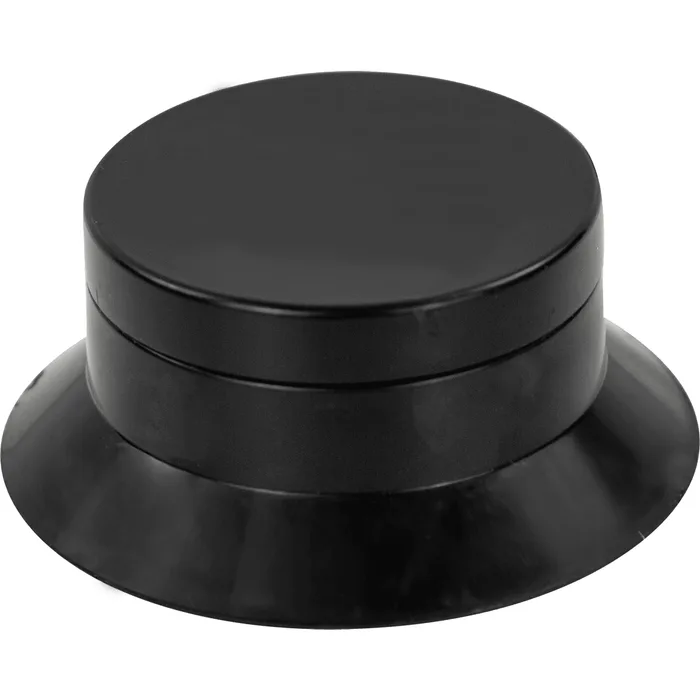
A passive long term detector with laboratory analysis included, listed by AARST-NRPP as device AT-8205 and analysed by a listed laboratory.
Best for: Anyone who wants a defensible year round average for the lowest lived-in level of their home before deciding whether to mitigate.
- It appears on the AARST-NRPP approved device list as AT-8205, AccuStar/RadonAway AT-100, with AccuStar Labs named as the approved analysis provider.
- AccuStar specifies a test duration of 91 to 365 days, which is the long term window EPA says is more likely to tell you your home's year round average.
- Nothing to plug in, nothing to charge and nothing to trust on a screen: the number comes back from a laboratory, and long term tests over 90 days do not require closed building conditions under ANSI/AARST MAH-2019.
- You wait a season and then some, and AccuStar states results arrive two to four weeks after the lab receives the device.
- AccuStar requires the device to reach the lab within 30 days of the end of the test and before the expiration date printed on it, so a forgotten kit in a drawer is a wasted kit.
- It gives one number for one place over one period, with no day to day trace, so it cannot show you whether a mitigation fan is working today.
- It is single use, so ongoing monitoring means buying kits again each year.
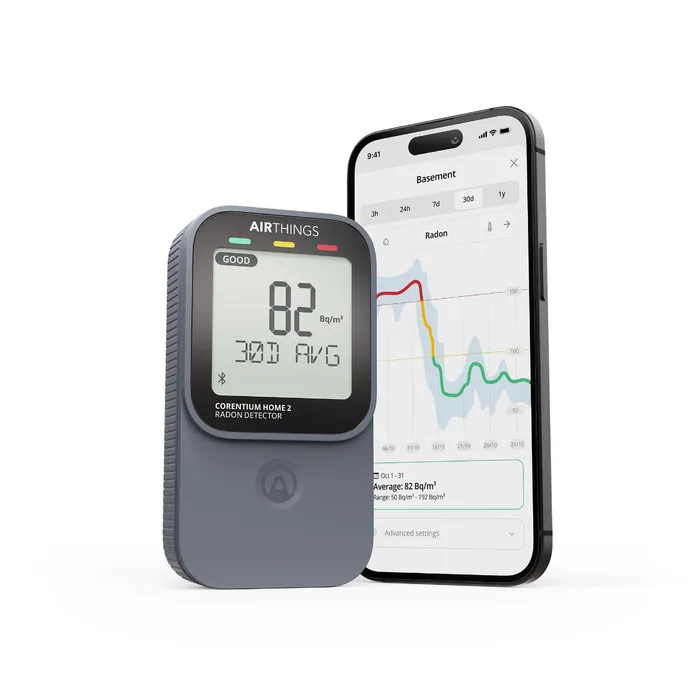
A battery powered handheld monitor you can move from room to room, with a published accuracy figure and no plug, app or account required.
Best for: A renter, or an owner who wants to survey several rooms and floors in turn with one device rather than wiring a monitor into each.
- Airthings publishes a specific accuracy figure: within 10 percent after 4 days at 10 pCi/L (370 Bq/m3), or 7 days at 5.4 pCi/L (200 Bq/m3).
- It runs on 2 AA batteries for up to 3 years and works as a standalone device with no connectivity at all, so it can go in a crawl space or a rental where there is no outlet to spare.
- The LCD shows 24 hour, 7 day, 30 day and long term averages after 30 days, and the battery compartment has a start new measurement button for moving it to a new room.
- It is not on the AARST-NRPP or NRSB device lists, and Airthings' own help centre says it does not recommend performing professional home inspections with Corentium Home, Wave or View monitors.
- Airthings' manual advises measuring at least one month before deciding to take action, so the 24 hour reading on the screen is not a decision.
- C-NRPP's approved consumer monitor table names Airthings Corentium Home rather than the Home 2 specifically, so do not read that listing as covering this exact model.
- Its measurement range tops out at 250 pCi/L (9999 Bq/m3), lower than the View Radon's stated ceiling.
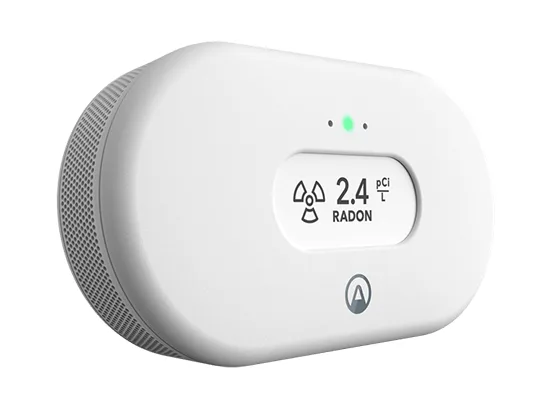
A Wi-Fi connected radon monitor whose published radon performance matches the cheaper Corentium Home 2, so the premium buys connectivity rather than measurement.
Best for: Only someone already committed to a multi room Airthings system who specifically needs the hub and the always on remote access.
- Airthings publishes the full radon specification: passive diffusion chamber, alpha spectrometry detection, 60 minute radon sampling and a range of 0 to 500 pCi/L (0 to 20,000 Bq/m3).
- It joins 2.4GHz Wi-Fi directly and can act as a hub for other Airthings monitors when powered by USB, which is genuinely useful in a multi room setup.
- The 2.9 inch ePaper display and red, yellow and green glow indicator make the current status readable across a basement without opening an app.
- Its stated radon accuracy, about 10 percent after 7 days and about 5 percent after 2 months at 5.4 pCi/L (200 Bq/m3), is the same performance the cheaper Corentium Home 2 quotes at that concentration.
- It is not on the AARST-NRPP or NRSB device lists, and Airthings says it does not recommend View monitors for professional home inspections, so the premium buys nothing toward a real estate test.
- It wants 6 AA batteries, three times what the Corentium Home 2 takes, unless you run it on USB.
- The extra money goes to Wi-Fi, the ePaper screen and hub duty, none of which changes the radon number you get.
| Criteria | RadonEye Top pick | Alpha Track Radon Test Kit (AT-100) | Corentium Home 2 | View Radon |
|---|---|---|---|---|
| Verdict | Buy it | Buy it | It depends | Skip it |
| Best for | Someone who wants a live number they can watch respond to weather, ventilation changes and a new mitigation fan, alongside a long term average. | Anyone who wants a defensible year round average for the lowest lived-in level of their home before deciding whether to mitigate. | A renter, or an owner who wants to survey several rooms and floors in turn with one device rather than wiring a monitor into each. | Only someone already committed to a multi room Airthings system who specifically needs the hub and the always on remote access. |
| Price tier | $$ · mid-range | $ · budget | $$ · mid-range | $$$ · premium |
| Measurement method | Continuous monitor, pulsed ionization chamber | Passive alpha track film, laboratory analysed | Continuous monitor, passive diffusion chamber with alpha spectrometry | Continuous monitor, passive diffusion chamber with alpha spectrometry |
| On the US AARST-NRPP or NRSB device lists | No (the RadonEye Pro RD200P is) | Yes, NRPP AT-8205 with AccuStar Labs analysis | No (the Corentium Pro is) | No (the Corentium Pro is) |
| On C-NRPP's approved consumer monitor list | Yes, listed as Ecosense RadonEye RD200 | Not applicable, passive lab kit | List names Airthings Corentium Home | List names Airthings View |
| Manufacturer stated accuracy | Plus or minus 10 percent at 370 Bq/m3 after 10 hours, per C-NRPP's table | Not published as a percentage; the laboratory issues the result | Within 10 percent after 4 days at 10 pCi/L or 7 days at 5.4 pCi/L | About 10 percent after 7 days and about 5 percent after 2 months at 5.4 pCi/L |
| How long before the number means something | Ready state 1 hour after power on; C-NRPP still advises 3 months | 91 to 365 days exposure, then 2 to 4 weeks at the lab | First 24 hour average after one day; the manual advises at least one month | Hourly sampling; the 7 day figure is the first with a stated tolerance |
| Power | 12V plug in adapter | None | 2 AA batteries, up to 3 years | 6 AA batteries up to 3 years, or USB |
| Connectivity | Bluetooth to the Ecosense app | None; postal return to the laboratory | Bluetooth LE and Airthings SmartLink, works standalone | 2.4GHz Wi-Fi, SmartLink and Bluetooth LE, can act as a hub |
| Usable for a real estate transaction | No | Not on its own; MAH-2019 encourages a qualified professional for property sales | No; Airthings does not recommend it for home inspections | No; Airthings does not recommend it for home inspections |
Which one is right for you?
- Someone who wants a live number they can watch respond to weather, ventilation changes and a new mitigation fan, alongside a long term average. Buy it Ecosense RadonEye
- Anyone who wants a defensible year round average for the lowest lived-in level of their home before deciding whether to mitigate. Buy it AccuStar Labs Alpha Track Radon Test Kit (AT-100)
- A renter, or an owner who wants to survey several rooms and floors in turn with one device rather than wiring a monitor into each. It depends Airthings Corentium Home 2
- Only someone already committed to a multi room Airthings system who specifically needs the hub and the always on remote access. Skip it Airthings View Radon
How we judged the field
Five things decide whether a radon device is worth owning. First, whether any national proficiency program has evaluated it, because radon is invisible and an unverified number is just a guess with a decimal point. Second, whether the maker publishes an accuracy figure tied to a concentration and an averaging period, since ‘accurate’ with no conditions attached is not a specification. Third, how long the device needs before its reading carries that tolerance, which is where the gap between marketing and physics is widest. Fourth, whether the output is a screen reading or a laboratory report, because only one of those travels. Fifth, whether the device fits the conditions the standards require, which for short tests means closed-building conditions and a placement envelope measured in inches.
The field splits into two honest halves. Passive kits are cheap, single use and analysed by a laboratory, and both the device and the lab can be checked against the AARST-NRPP list; the trade off is that you learn one number, weeks later. Electronic monitors give you a live trace and a rolling average, but not one consumer model from any brand is on the AARST-NRPP or NRSB device lists, and Airthings says outright that it does not recommend its consumer monitors for professional home inspections. Canada’s C-NRPP does run a separate consumer-grade evaluation, and six models pass it, which is the closest thing to third party verification a consumer monitor gets. We chose the strongest of those monitors, the long term lab kit that answers the actual question, a portable monitor for people who cannot mount anything, and a premium monitor whose own specification sheet undercuts its price.
Ecosense RadonEye
Buy itThe RadonEye is the consumer monitor with the least hand waving in its documentation. Ecosense names the sensor, a pulsed ionization chamber, states a first reading in ten minutes with updates every ten minutes, and its RD200 FAQ says the unit reaches its ready state one hour after power on. C-NRPP’s consumer table lists it as approved and records the manufacturer stated accuracy as plus or minus 10 percent at 370 Bq/m3 after ten hours of measurement, which is a real figure with a concentration and a period attached. Against that, the product page also carries a bare ‘greater than 90 percent accuracy’ claim with no conditions, and lists no measurement range at all. It needs an outlet, so it is not going in a crawl space, and it is the plain RadonEye rather than the Pro RD200P that carries the AARST-NRPP and NRSB listings. Buy it to watch radon move and to see whether a mitigation fan is doing its job, not to settle a sale.
AccuStar Labs Alpha Track Radon Test Kit (AT-100)
Buy itThe Alpha Track kit is the least exciting thing here and the most defensible. It is on the AARST-NRPP approved device list as AT-8205, AccuStar/RadonAway AT-100, with AccuStar Labs named as the approved analysis provider, so both the detector and the laboratory that reads it have been through the program. AccuStar specifies a 91 to 365 day exposure, which lands squarely in the long-term window EPA says is more likely to reflect your year round average, and long-term tests over 90 days do not require closed-building conditions under ANSI/AARST MAH-2019, so ordinary life does not invalidate the result. The costs are real: you wait a season, results arrive two to four weeks after the lab receives the device, and AccuStar requires it back within 30 days of the test ending and before the expiration date on the device. It tells you nothing about today. It is the right answer to the only question that actually matters, which is what your average is.
Airthings Corentium Home 2
It dependsThe Corentium Home 2 is the monitor for people who cannot or will not plug something in. Two AA batteries run it for up to three years, it works entirely standalone with no app or account, and the LCD builds to 24 hour, 7 day, 30 day and long term averages, with a start new measurement button in the battery compartment for moving it to a different room. Airthings publishes a proper accuracy figure, within 10 percent after 4 days at 10 pCi/L or 7 days at 5.4 pCi/L, which is honest about the fact that lower radon takes longer to pin down. The catches are the ones that apply to all consumer monitors and a couple that do not. It is not on the AARST-NRPP or NRSB lists, Airthings does not recommend it for home inspections, and its manual advises measuring at least a month before acting. C-NRPP’s approved list names the Corentium Home, not the Home 2, so treat that listing as adjacent rather than applicable. Right for a renter or a room by room survey.
Airthings View Radon
Skip itThe View Radon is a good product with a pricing problem you can see in Airthings’ own numbers. Its radon block reads passive diffusion chamber, alpha spectrometry, 60 minute sampling, 0 to 500 pCi/L, and accuracy of about 10 percent after 7 days and about 5 percent after 2 months at 5.4 pCi/L. Set that beside the Corentium Home 2’s published within 10 percent at 7 days at the same concentration and the radon performance is the same claim. What the extra money buys is 2.4GHz Wi-Fi, a 2.9 inch ePaper display, a red, yellow and green glow indicator, and the ability to act as a hub for other Airthings monitors when it is on USB power. Those are conveniences, not measurement. It also wants 6 AA batteries against the Home 2’s two, and it is on neither the AARST-NRPP nor the NRSB device list, so it does nothing for a property sale either. If you are not already building a multi room Airthings system, the money is better spent on a lab kit plus a cheaper monitor.
Sources
Specs in this review come from these pages.
- EPA, A Citizen's Guide to Radon (EPA 402/K-12/002) (epa.gov)
- EPA, What is EPA's Action Level for Radon and What Does It Mean? (epa.gov)
- World Health Organization, Radon fact sheet (who.int)
- ANSI/AARST MAH-2019, Protocol for Conducting Measurements of Radon and Radon Decay Products in Homes (standards.aarst.org)
- AARST-NRPP Approved Device List (nrpp.info)
- C-NRPP, Consumer-Grade Electronic Radon Monitors (c-nrpp.ca)
Ecosense RadonEye vs AccuStar Labs Alpha Track Radon Test Kit (AT-100): which should you buy?
The RadonEye and the Alpha Track kit are not really competing, and understanding why is the whole point of this category. The RadonEye answers ‘what is happening in this room right now, and what has the average been since I plugged it in’, which is what you want when you are hunting a source, checking whether sealing a sump cover helped, or confirming that a newly installed mitigation fan actually pulled the number down. The Alpha Track kit answers ‘what is my home’s year round average’, which is the question EPA’s action level is actually about. One is a dashboard gauge; the other is the annual inspection.
Choose the kit first if you have never tested and you simply need to know whether you have a problem, because it is the cheaper of the two and it is the one on the AARST-NRPP device list with a listed laboratory behind it. Choose the RadonEye first if you already know you have elevated radon, if you have just mitigated, or if you want to understand why your basement reads differently in January than in July. If you are buying or selling a house, neither one is the answer: ANSI/AARST MAH-2019 encourages a qualified radon measurement professional for real estate testing, and the professional grade monitors carry obligations, annual proof of calibration and device performance testing every two years, that no consumer unit does. Most households that care about this end up owning both a kit and a monitor, and that is the correct outcome rather than a failure of the market.
What to look for
- Check the device list, not the box: the AARST-NRPP approved device list names every detector and continuous monitor a certified professional may use, and searching it for the exact model number is a two minute check that beats any marketing claim.
- Demand a concentration and a time with any accuracy figure: ‘within 10 percent after 7 days at 5.4 pCi/L’ is a specification, while ‘over 90 percent accurate’ on its own tells you nothing about how long you must wait or at what level.
- Match the test length to the decision: EPA defines short-term tests as 2 to 90 days and long-term as more than 90 days, and says the long-term result is more likely to tell you your year round average.
- Respect the placement envelope: ANSI/AARST MAH-2019 requires a detector at least 3 feet from exterior doors and windows, 20 inches above the floor, 1 foot from an exterior wall and 1 foot below the ceiling, and a device sitting on a basement window ledge is measuring the wrong thing.
- Plan closed-building conditions before you start, not after: for any test under 4 days the standard requires them to begin 12 hours ahead and hold throughout, which rules out testing during a week when the patio door is open.
- Treat a real estate test as a different purchase entirely: MAH-2019 encourages a qualified measurement professional for transactions, and Airthings states plainly that it does not recommend its consumer monitors for professional home inspections.
Our final take
Radon buying goes wrong when people confuse a fast number with a trustworthy one. The market rewards a ten minute reading, and the physics rewards patience: EPA says levels swing day to day and season to season, and C-NRPP tells consumers to leave any approved monitor in place at least three months before drawing a conclusion. So buy for the question you are actually asking. If you want to know whether your home has a problem, an AARST-NRPP listed long term kit analysed by a listed laboratory is cheap, boring and correct. If you want to see the gas behave, and to confirm that mitigation works, a good monitor earns its place beside it. And if there is a house sale involved, hand the job to a qualified measurement professional, because no consumer monitor on the market is listed for it.
Questions, answered
What radon level should make me act, and why do I keep seeing two different numbers?
EPA recommends fixing your home if the radon level is 4 pCi/L or more, and it states that figure as 150 Bq/m3. EPA also recommends considering a fix between 2 and 4 pCi/L, which it gives as 75 to 150 Bq/m3. The World Health Organization proposes a national annual average reference level of 100 Bq/m3, and says that where that cannot be reached under country specific conditions the reference level should not exceed 300 Bq/m3. The two numbers are in different units and reflect different policy choices, not a disagreement about physics. To convert, one pCi/L is exactly 37 Bq/m3, so 4 pCi/L is 148 Bq/m3 and WHO's 100 Bq/m3 is about 2.7 pCi/L. EPA is explicit that no level of radon is safe and that risk continues below 4 pCi/L.
Is a two day charcoal test enough to decide whether to mitigate?
Not on its own. EPA's own guidance says radon levels tend to vary from day to day and season to season, so a short-term test is less likely than a long-term test to tell you your year round average. EPA's recommended sequence is a short-term test first, then a follow up: a long-term test for a better understanding of your year round average, or a second short-term test if you need results quickly. It then says to fix the home if the long-term result is 4 pCi/L or more, or to consider fixing if the average of two short-term tests is 4 pCi/L or higher. EPA adds that if a first short-term result is more than twice the 4 pCi/L action level, take a second short-term test immediately. Treat a two day number as a screen that tells you what to do next, not as a diagnosis.
What exactly are closed-house conditions and when do they apply?
They are the standardised conditions that make a short test comparable to other short tests. EPA says to close windows and outside doors and keep them closed as much as possible during the test, and that for a test lasting just 2 or 3 days you should also close them at least 12 hours before you begin. ANSI/AARST MAH-2019 puts the same rule in requirement language: closed-building conditions are to be initiated 12 hours prior for tests lasting less than 4 days, and maintained throughout the test period for tests lasting 2 to 90 days. Heating and cooling systems stay set to normal occupied temperatures, roughly 65 to 80 degrees Fahrenheit under the standard, and you do not run fans that bring in outdoor air. For long-term tests over 90 days the standard does not require closed-building conditions at all. EPA also says not to run a 2 or 3 day test during unusually severe storms or unusually high winds.
Can I use a digital monitor for a home sale?
No, and this is the clearest line in the category. None of the consumer electronic monitors from Airthings, Ecosense or their competitors appear on the AARST-NRPP or NRSB approved device lists; the professional variants do, namely the Airthings Corentium Pro, the Ecosense RadonEye Pro RD200P and the Ecosense EcoQube Pro EQ200. Airthings' own help centre states that it does not recommend performing professional home inspections with Corentium Home, Wave monitors or View monitors. ANSI/AARST MAH-2019 encourages that testing in association with a real estate transaction be conducted by a qualified radon measurement professional, and a listed continuous monitor in professional hands carries obligations a consumer unit does not, including annual proof of calibration and device performance testing every two years. On licensing, the picture is narrower than it is often described: the American Lung Association's summary of state credentialing, using AARST data, counts 20 states plus the District of Columbia with some form of radon industry regulation and notes that the majority of states have no credentialing requirement at all. Check your own state radon office before you assume either way.
Where do I put a detector, and how long before the reading means anything?
Put it on the lowest lived-in level of the home, in a room used regularly such as a living room, playroom, den or bedroom, and not in the kitchen or bathroom. ANSI/AARST MAH-2019 gives the numbers: not less than 3 feet from exterior doors and windows or other openings to the outdoors, 20 inches above the floor, 1 foot from an exterior wall, 1 foot below the ceiling, and 4 inches from other detectors and from objects above or beside it. Keep it away from drafts, high heat and high humidity. On timing, the manufacturers and the proficiency programs disagree with the marketing: Ecosense advertises a first reading in ten minutes and Airthings a first daily average after 24 hours, but Airthings' manual advises measuring at least one month before deciding to act, and C-NRPP tells consumers to leave any monitor on its approved list in place for at least three months to get an accurate representation of the average.
Deciding between the top two? See our head-to-head: Ecosense RadonEye vs AccuStar Labs Alpha Track Radon Test Kit (AT-100).
More Health & Wellness reviews
 The Best Reading Glasses: 4 Compared (and One to Skip)
  The Best At-Home Red Light Therapy Devices: 4 Compared (and One to Skip)
  The Best Respirator Fit Test Kits: 4 Compared (and One to Skip)
  The Best Reusable Respirators: 4 Compared (and One to Skip)
  The Best Seat Cushions for Office Chairs: 4 Compared (and One to Skip)
  The Best Silk and Satin Sleep Bonnets: 4 Compared (and One to Skip)