Explained
Respirator Fit Test Kits, Explained
After reading, you'll understand which fit test protocols OSHA accepts, what a fit factor of 100 or 500 means, why the sensitivity screening cannot be skipped, and when a kit is worth owning at all.
In this guide
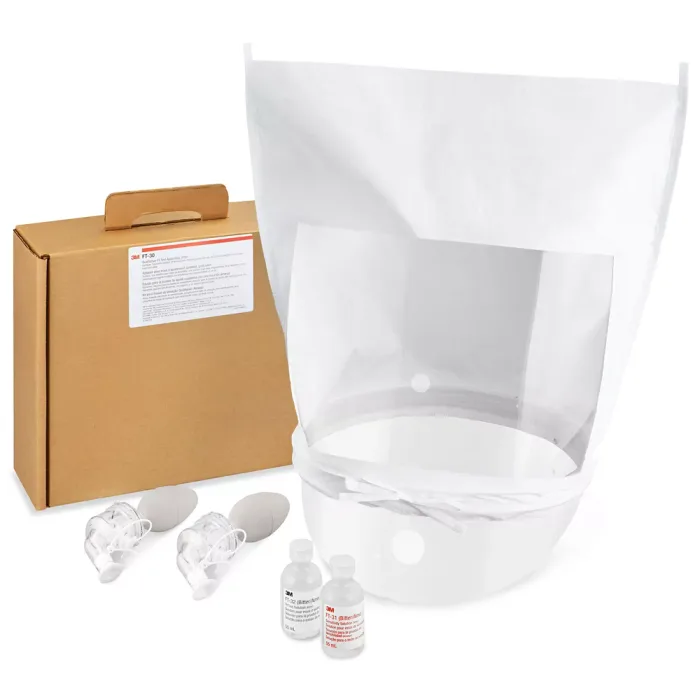
Most people buy a fit test kit expecting a gadget that scores their mask. What arrives is a hood, two squeeze bulbs and two small bottles, plus a procedure that takes two people about fifteen minutes and produces the word pass or the word fail. The gap between that expectation and the reality is where the confusion lives. Everything below is drawn from the protocol OSHA actually publishes and from the manufacturers' own data sheets.
The 30-second version
- A qualitative pass is worth a fit factor of 100, and nothing more, which caps the respirator at ten times the exposure limit.
- The sensitivity screening is the test, because without proof you can taste the agent, not tasting it during the run proves nothing.
- Facial hair ends the conversation, since Appendix A forbids running the test when any hair crosses the sealing surface.
- A fit test is not a seal check, and the seal check you do at every donning is the one that protects you day to day.
- It takes two people, because the protocol is written around a test conductor who is not the person wearing the mask.
The products this guide is about
Our verdict on each, with the full reasoning on the companion review.
- Buy 3M Qualitative Fit Test Apparatus FT-30, Bitter The complete Bitrex kit, with enough solution to test a whole crew and the fewest ways to get the protocol wrong. Amazon
- Buy Allegro Industries Bitter (Denatonium Benzoate) Fit Test Kit 2041 The same OSHA protocol at a lower cost of entry, with sealed ampules that solve the problem of solution sitting half used in a bottle for a year. Amazon
- It depends TSI PortaCount Respirator Fit Tester Model 8040 The only product here that answers with a number, which is exactly what you need if you run a respiratory protection program and pointless if you do not.
- Skip Allegro Industries Smoke Test Kit, Standard 2050 A legitimate OSHA protocol in a kit that belongs with trained administrators, because the test agent is corrosive and the pass signal is the absence of a cough. Amazon
What actually matters
- Accepted protocol - OSHA lists the qualitative and quantitative methods it will accept by name in Appendix A. A test that does not follow one of them is not an OSHA fit test, whatever the packaging claims.
- Fit factor - the ratio of contaminant outside the mask to contaminant inside it. Quantitative tests measure it directly; qualitative tests do not produce one at all.
- Sensitivity screening - the step where you prove you can detect the test agent at a known dose. It sets the dose used in the real test and makes a negative result meaningful.
- Agent choice - saccharin tastes sweet and tends to crystallise in nebulizers, denatonium benzoate tastes bitter and does not. If you cannot taste one, the fallback is the other, not skipping ahead.
- Consumable format - bottles give you many tests but sit open between sessions, ampules give you few tests but are sealed until use. This is the main practical difference between competing kits.
- Exercise regimen - seven one-minute exercises for a qualitative test, and the respirator may not be adjusted once they begin. Any adjustment voids the run and you start over.
- Hazard of the agent - taste solutions carry no GHS signal word. Irritant smoke tubes carry Danger, with severe skin burns, serious eye damage and respiratory irritation on the label.
The specs, in plain English
Green flags vs red flags
Green flags
- The instructions name a specific Appendix A protocol, such as Bitrex Solution Aerosol or Irritant Smoke, rather than saying OSHA compliant and stopping there.
- The kit contains both a sensitivity solution and a fit test solution, in separate labelled containers, not one bottle for both jobs.
- The manufacturer publishes a spec sheet listing the nebulizer, hood and solution volumes, so you can see what you are actually getting.
- Solutions come in sealed single-use ampules if the kit will spend most of its life in storage.
- The manufacturer states an expected number of fit tests per set of consumables, so you can work out what the second kit will cost you.
Red flags
- Any claim that the kit lets you fit test yourself, since the protocol is written around a separate test conductor.
- A kit sold as suitable for full facepiece respirators when the method it uses is qualitative and therefore capped at fit factor 100.
- No mention of a sensitivity or threshold screening step anywhere in the instructions.
- Replacement solutions that are hard to find or sold only in large quantities, which turns a cheap kit into a dead one.
- Marketing that treats a fit test as a substitute for the seal check you do every time you put the mask on.
Who's who: the brands
- 3M - Publishes the most detailed public guidance on qualitative fit testing and sells both the sweet FT-10 and bitter FT-30 kits with individually replaceable hoods, collars, nebulizers and solutions.
- Allegro Industries - The ampule specialist, offering sweet, bitter, banana oil and irritant smoke kits made in the United States with published spec sheets and safety data sheets for each.
- TSI - Makes the PortaCount quantitative fit testers, the instruments most respiratory protection programs use when they need a recorded fit factor rather than a pass.
- Gerson - Sells a saccharin qualitative fit test kit alongside its NIOSH-approved respirators, with sensitivity and fit test solutions available separately in both saccharin and bitter versions.
- Honeywell - Better known for the respirators themselves than for fit test kits, and worth checking against the current catalogue rather than assuming a kit is still listed.
How to read a listing without getting fooled
Start with the protocol name, because everything else follows from it. If the listing says Bitrex or saccharin solution aerosol, you are looking at a taste test capped at fit factor 100 and unsuitable for a full facepiece. If it says ambient aerosol CNC or controlled negative pressure, you are looking at an instrument that returns a number. Next, find the consumables and their yield: bottles quoted in hundreds of tests, or ampules quoted in threes and fives. Then look for what the listing does not say. Shelf life is usually absent, and manufacturers will tell you so directly if you read their FAQ rather than the product page. Finally, check whether the kit includes both solutions, the hood and two nebulizers, because a sensitivity nebulizer and a test nebulizer are not interchangeable once you have used them.
How much should you spend?
Taste-based qualitative kits sit at the budget to mid-range end and split by consumable format rather than by capability. An ampule kit is the cheaper way in and the more expensive way to run, because each ampule covers only a few tests. A bottle kit costs more up front and far less per test, which flips the maths as soon as you are testing more than a handful of people. Replacement solutions, hoods and nebulizers are all sold separately at low cost, so a well-chosen kit stays alive for years. Quantitative instruments are a different category entirely, sitting firmly in premium territory, and the purchase price is only part of it, because factory recalibration is an annual interval and the alcohol is a running cost. If you are testing one household's masks, the budget tier is genuinely sufficient. If you are documenting fit factors for other people, nothing below the premium tier will do the job.
Questions, answered
How often does a fit test need repeating?
Under OSHA's standard, fit testing happens before initial use of the respirator, whenever a different facepiece size, style, model or make is used, and at least annually after that. The test is tied to a specific make, model, style and size, so passing on one mask says nothing about a different one. Weight change, dental work or facial surgery are all reasons to retest sooner. Outside a workplace nobody enforces the annual interval, but the reasoning behind it does not change just because you are working in your own garage.
Do I need a medical evaluation before a fit test?
In a workplace, yes, and the order matters. OSHA requires the medical evaluation to be completed before an employee is fit tested or required to use a respirator, because wearing a tight-fitting negative pressure respirator adds breathing resistance and heat load. At home nobody will ask, but the underlying point still applies. If you have a heart or lung condition, or you find a mask makes you breathless, that is worth raising with a clinician before you spend hours in one, not after.
Is a fit test the same as the seal check I do when I put the mask on?
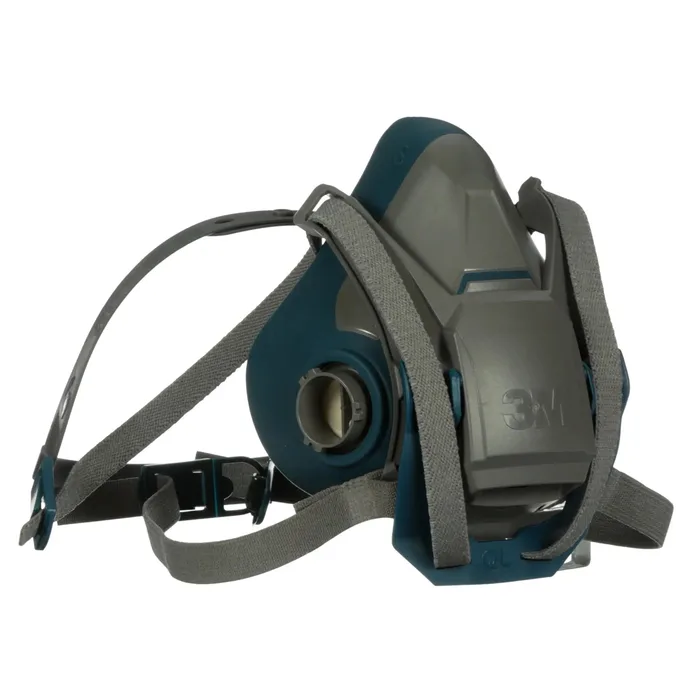
No, and confusing them is the most common mistake in this category. A fit test establishes, once, that a particular make, model and size of respirator can seal on your particular face, and it is done under a hood with a test agent. A user seal check is the ten-second check you perform every time you don the mask, by covering the filters and inhaling gently to feel the facepiece pull in and hold. The fit test tells you the mask is right for you. The seal check tells you that today, right now, you have put it on correctly.
Can I use the same kit on both a disposable N95 and a reusable half mask?
For a taste kit, yes. The qualitative protocols work on tight-fitting negative pressure air-purifying respirators generally, and manufacturers confirm you can use one brand's kit to test another brand's respirator as long as the protocol matches the standard you are working to. Quantitative instruments are fussier. The PortaCount 8040 handles Series-99, Series-100 and EN FFP3 filter media, but testing an N95 filtering facepiece requires the 8048 model with its N95-Companion technology. Check the filter efficiency the instrument needs before assuming it covers what you own.
Or jump to the head-to-head: 3M Qualitative Fit Test Apparatus FT-30, Bitter vs Allegro Industries Bitter (Denatonium Benzoate) Fit Test Kit 2041.