Explained
Sleep Bonnets, Explained
After reading, you'll understand how silk and satin differ and what a bonnet can realistically do for your hair.
In this guide
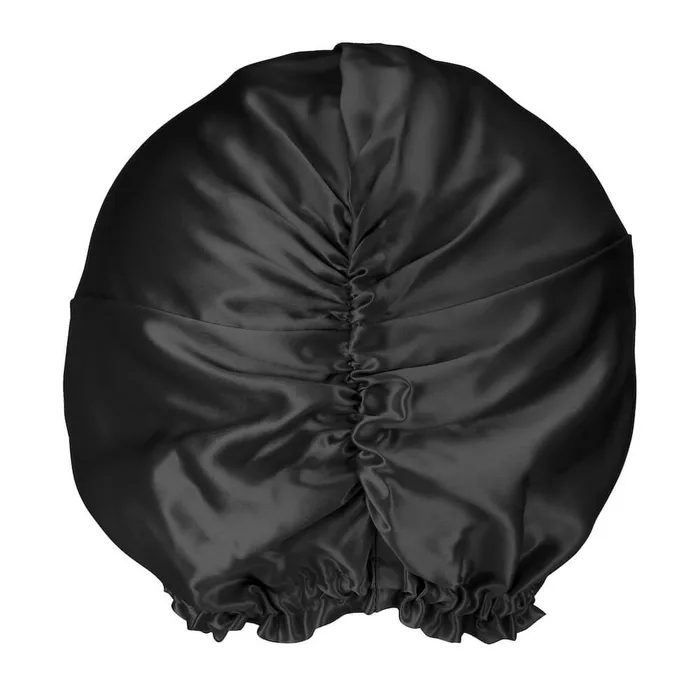
Sleep bonnets protect hair by replacing the friction of a cotton pillowcase with a smooth fabric. They come in silk and satin, in loose bonnets, turbans and caps, and with a wide range of claims. Knowing what the fabric terms mean, and which claims to ignore, makes choosing straightforward.
The 30-second version
- Friction is the real benefit, and both silk and satin reduce it.
- Momme measures silk, so a silk bonnet should state it.
- Fit decides if it works, because a bonnet that slips off protects nothing.
- Size matters for long hair, so look for large or XL options with dimensions.
- Growth claims are marketing, since no bonnet can grow hair or stop thinning.
The products this guide is about
Our verdict on each, with the full reasoning on the companion review.
- Buy Blissy Bonnet A fully specified 22-momme mulberry silk bonnet with an adjustable fit and 60-day returns.
- Buy Slip Turban A double-lined pure silk turban built for curly and thick hair, with modest, believable claims.
- It depends Grace Eleyae The Slap (Satin-Lined Cap) A satin-lined cap with an elastic band that stays on, for people who lose bonnets overnight.
- Skip Kitsch XL Adjustable Satin Bonnet An inexpensive satin bonnet sold on hair-thinning and growth claims, with no fibre content or size listed.
What actually matters
- Fabric - silk is a natural fibre; satin is a weave, often polyester. Both are smoother than cotton.
- Momme weight - for silk, higher momme usually means denser, more durable fabric.
- Fit - adjustable ties, bands or elastic keep the bonnet in place overnight.
- Size - long, thick or voluminous hair needs a larger bonnet or turban.
- Lining - double-lined bonnets keep smooth fabric on both sides.
- Care - silk needs gentle washing and air drying; satin is usually easier.
- Claims - look for friction and breakage claims, not growth or thinning claims.
The specs, in plain English
Green flags vs red flags
Green flags
- Fabric described precisely, with momme for silk.
- Dimensions or head-size range published.
- Adjustable fit.
- Clear care instructions.
- A return window.
Red flags
- Claims about hair growth or thinning.
- No fibre content for satin.
- No size information.
- No care instructions.
- Moisture or conditioning claims for fabric alone.
Who's who: the brands
- Blissy - Silk brand known for 22-momme mulberry silk pillowcases and bonnets.
- Slip - Silk brand known for its slipsilk pillowcases, sleep masks and turbans.
- Grace Eleyae - Known for the Slap, a satin-lined cap designed to stay on overnight.
- Kitsch - Budget hair accessories brand with satin bonnets, pillowcases and heatless curlers.
How to read a listing without getting fooled
Start with the fabric: for silk, look for momme and grade; for satin, look for the fibre content. Then check fit and size against your hair length and volume. Read the care instructions and return terms. Finally read the claims critically and discount anything about growth, thinning or moisture infusion.
How much should you spend?
Budget satin bonnets can work well if they fit and state their fabric. The mid-range includes quality satin caps and entry silk bonnets. Premium pricing buys pure mulberry silk, double linings and finer construction. Because a bonnet's main job is reducing friction, a well-fitting satin bonnet is a sensible choice, and silk is worth it mainly if you value the feel and breathability.
Questions, answered
Do I need a bonnet if I have a silk pillowcase?
Not necessarily. A silk or satin pillowcase also reduces friction, but a bonnet keeps hair contained and protected even if you move off the pillow. Many people with curly or styled hair use both.
Can I sleep in a bonnet with wet hair?
It is better to sleep with dry or nearly dry hair. Damp hair can take a long time to dry inside a bonnet and may feel uncomfortable.
How often should I wash a bonnet?
Regularly, because it collects hair products and scalp oils. Many people wash weekly, following the care label.
Are bonnets only for curly hair?
No. Bonnets can help any hair type that tangles, breaks or loses its style overnight, though they are especially popular for curly, coily, braided and textured hair.
Or jump to the head-to-head: Blissy Bonnet vs Slip Turban.