Explained
Sunrise Alarm Clocks, Explained
After reading this you will understand what a sunrise alarm clock does, which specs decide whether it works, and how to spot a model that will only frustrate you.
In this guide
A sunrise alarm clock, sometimes called a wake-up light, brightens gradually before your set time so you drift awake instead of being jolted by a buzzer. The category looks simple, but the thing that matters most, whether the light is bright and warm enough to reach your face at bedside distance, is exactly the thing spec sheets hide. Many models also bury core functions behind an app or a subscription, so it pays to know what you are reading.
The 30-second version
- The light is the whole point. A wake-up light lives or dies on whether it is bright and warm enough to rouse you at real nightstand distance, and that is the one spec marketing tends to obscure.
- Sunrise length and steps matter more than peak brightness. A long, finely stepped ramp wakes you gently, while a coarse, few-step sunrise can feel almost as abrupt as a buzzer.
- Decide whether you want a routine or just a light. Some units add sunset wind-down, guided breathing and sound machines, while others do one job, the sunrise, very well.
- Apps and subscriptions are the fine print. Check whether the core sunrise, sunset and alarm work on the device alone, or whether setup and the best features need a phone and a paid tier.
- Cheap can be false economy. Entry models often strip brightness and adjustability to hit a low price, leaving a light that struggles at the core task.
The products this guide is about
Our verdict on each, with the full reasoning on the companion review.
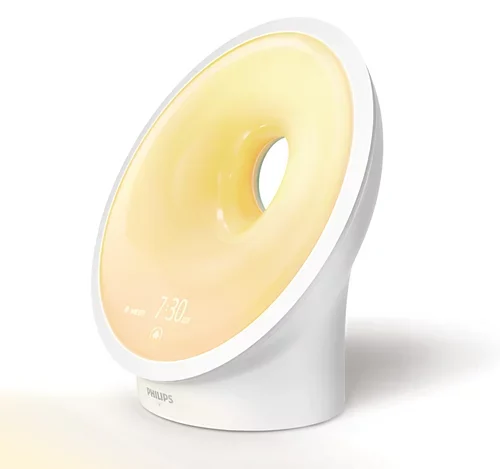
- Buy Philips SmartSleep Sleep & Wake-Up Light HF3650/60 A complete dusk-to-dawn routine - warm sunrise, sunset wind-down and guided breathing - with no app to babysit. Amazon
- Buy Lumie Bodyclock Shine 300 The purest wake-up light here, with the longest and most adjustable sunrise, run entirely from the unit. Amazon
- It depends Hatch Restore 3 A capable sound machine with a gentle sunrise, held back by an app and a subscription nudge. Amazon
- Skip Lumie Sunrise Alarm Lumie's entry model strips out too much - a coarse, often-too-dim sunrise that leaves you wanting the Shine.
What actually matters
- Brightness at bedside is the single most important thing, because a light that looks bright on a table across the room may be far too weak to wake you from arm's length.
- Colour temperature (warmth) matters because a warm, low-blue sunrise feels natural and calming, while a harsh white or multicolour glow can feel jarring in a dark room.
- Sunrise length and adjustability decide how gentle the wake is; a ramp you can stretch and fine-tune suits deep sleepers and dark winter mornings.
- Sunset wind-down is worth having if you want help falling asleep, not just waking, as the light and sound fade to cue your body toward rest.
- On-device versus app control affects reliability and daily friction; buttons that never depend on a phone or network are simpler, while apps add flexibility and sometimes a subscription.
- Sound and radio range from a token beep to a full sound machine with a large library, so weigh how much audio you actually want.
- Display glare and size matter every night, since a screen that cannot dim or switch off will glow at you, and a bulky unit can crowd a small nightstand.
The specs, in plain English
Green flags vs red flags
Green flags
- A warm, low-blue sunrise that owners describe as genuinely bright enough to wake them at bedside distance.
- A sunrise length you can adjust across a wide range, ideally in small steps, plus a matching sunset.
- Core functions, sunrise, sunset and alarm, that work fully on the device with no app or subscription required.
- A display that dims automatically or can be switched off entirely at night.
- Physical or clearly labelled controls that are easy to set in the dark.
Red flags
- Reviews or owners repeatedly noting the light is too dim to wake a heavier sleeper.
- A coarse sunrise with only a handful of brightness steps and little length adjustment.
- An app that is required just to complete setup, or key features locked behind a paid tier.
- A bright display or indicator light with no way to dim or disable it.
- Marketing that highlights colours, gadgets or sounds while staying vague about how bright the light actually is.
Who's who: the brands
- Philips - A long-established name in wake-up lights, known for complete on-device routines that pair a warm sunrise with sunset and breathing modes.
- Lumie - A specialist wake-up light maker; its higher-end models offer the longest, most finely adjustable sunrises, though its entry model cuts a lot.
- Hatch - Best known for app-driven smart sleep devices that double as strong sound machines, with some features behind an optional subscription.
How to read a listing without getting fooled
Read a wake-up light listing with one question in mind: how bright is the light at my pillow, not on a showroom table? Treat any lux or brightness figure as a best case measured close up, and look instead for owner comments about whether it actually wakes them. Check the sunrise range and how many steps it uses, since "up to 30 minutes" with only a handful of levels is coarser than a ramp adjustable in five-minute increments. Scan the fine print for the words app and subscription, and confirm the sunrise, sunset and alarm work on the device alone. Finally, look for whether the display can dim or turn off, because a screen that glows all night undoes much of the point.
How much should you spend?
Spend where it changes whether the product works, which here means brightness, sunrise adjustability and whether the routine runs without a paywall. Rock-bottom models tend to cut exactly those things, so they can feel like poor value even though they cost less; owners often find the light too dim and the sunrise too coarse. The sweet spot is a mid-to-upper tier unit with a warm, genuinely bright sunrise and on-device control. Paying more is worth it if you specifically want a long, finely adjustable sunrise or an added sunset and wind-down routine, and less worth it if you only need a gentle light and do not care about sound libraries or smart features. Be wary of ongoing subscription costs, and factor them in when comparing an app-based model against one that does everything out of the box.
Questions, answered
Do sunrise alarm clocks actually work?
For many people, yes. Gradually brightening light before your alarm can make waking feel less abrupt, especially on dark mornings. This is general information rather than medical advice; a wake-up light is not a treatment for a sleep disorder, and persistent sleep problems are worth discussing with a healthcare professional.
Are they bright enough to treat seasonal low mood?
Usually not. Wake-up lights are tuned for a gentle sunrise, not the high, sustained brightness used in dedicated light therapy. If treating winter low mood is your goal, look at a purpose-built bright-light therapy lamp and seek professional guidance.
Do I need the app or subscription?
It depends on the model. On many units the sunrise, sunset and alarm work on the device with no app and nothing paid. On app-first models you may need a phone just to set up, and a subscription can unlock extra sounds or content that you can often live without.
Is a sunrise clock better than a smart bulb on a timer?
For waking specifically, usually yes. A dedicated clock tends to start dimmer and warmer, does not depend on your network, and includes a proper alarm, snooze and display. Smart bulbs can mimic a sunrise but often jump to a jarring brightness.
Where should I place a wake-up light?
Within arm's reach on the nightstand, roughly level with your head, with a clear line of sight to your face. The light has to reach you to work, so do not hide it behind a lamp or a stack of books, especially with dimmer models.
Or jump to the head-to-head: Philips SmartSleep Sleep & Wake-Up Light HF3650/60 vs Lumie Bodyclock Shine 300.