Explained
Weighted Blankets, Explained
After reading, you will understand how a weighted blanket is built, why some sleep hot or leak beads over time, and how to pick the right weight and design for you.
In this guide
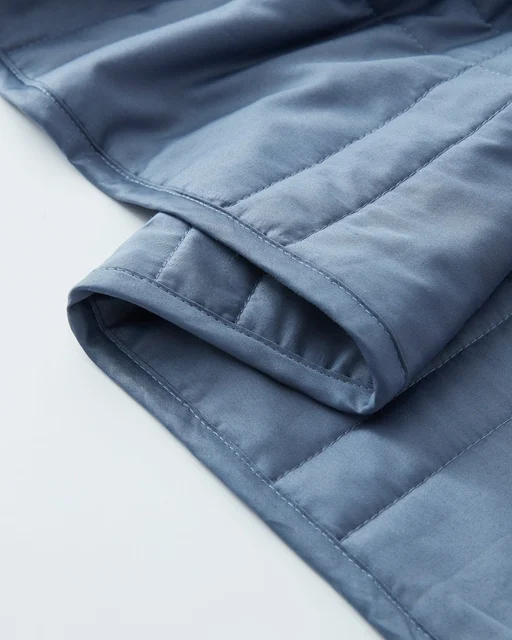
A weighted blanket is just a blanket made heavier on purpose, so it drapes over you with a gentle, even pressure. The trouble is that near-identical bags of glass beads get sold on very different promises and price tags, and the words on the box rarely tell you what actually matters. This guide decodes the fill types, construction, and temperature trade-offs so you can judge one on its merits rather than its marketing.
The 30-second version
- Weight should match your body, not your bravado. The common rule is roughly ten percent of your body weight; heavier feels trapping and slides off the bed rather than calming you.
- The fill decides almost everything. Glass microbeads, plastic pellets, or a bead-free knit change how the blanket feels, how warm it sleeps, and whether it can leak years later.
- Most weighted blankets sleep warm. Dense fill plus quilting traps body heat, and so-called cooling covers help only a little, so temperature is the first thing hot sleepers should check.
- Washing is the detail people forget. Some blankets go in the machine whole while two-part duvet styles only let you wash the cover, which changes how easy the blanket is to live with.
- Durability beats the sticker price. Cheap blankets tend to loosen at the seams and let beads pool or leak, so the lowest price is often the worst value over a few years.
The products this guide is about
Our verdict on each, with the full reasoning on the companion review.
- Buy Baloo Living Baloo Weighted Blanket A breathable, washable cotton-and-glass-bead blanket that gets the practical details right. Amazon
- Buy Bearaby Tree Napper A bead-free knitted blanket that runs the coolest and has nothing inside to leak. Amazon
- It depends Gravity Blanket The duvet-style original with a washable cover, better suited to cool rooms than warm ones. Amazon
- Skip YnM Weighted Blanket The budget default that too often loses its beads and its shape over time.
What actually matters
- Weight (in pounds) - the whole point of the product; aim for about ten percent of your body weight and round to the nearest size sold, because too heavy stops feeling like a hug and starts feeling like a pin.
- Fill type - glass microbeads, plastic poly pellets, or no fill at all (a heavy knit) determine feel, noise, warmth, and long-term reliability.
- Temperature and breathability - the fill and quilting trap heat, so if you sleep warm this matters more than almost anything else.
- Construction and pocketing - how the fill is sewn into pockets or grids decides whether the weight stays spread out or migrates into a heap at your feet.
- Washability - whether the whole blanket, only a removable cover, or just spot-cleaning is allowed governs how practical it is day to day.
- Size and weight range - some brands sell only whole-bed sizes and heavier weights, leaving smaller adults with few sensible options.
- Shell fabric - cotton, TENCEL lyocell, minky/fleece, or bamboo change both how it feels against skin and how hot it sleeps.
The specs, in plain English
Green flags vs red flags
Green flags
- Glass microbeads described as lead-free and non-toxic, sewn into small or graduated pockets
- A clearly stated care method, ideally whole-blanket machine washable
- A weight range that includes lighter options, not just heavy whole-bed sizes
- A breathable natural shell (cotton, TENCEL) or an open knit if you sleep hot
- Honest temperature language rather than a blanket promise that it 'sleeps cool'
Red flags
- Owner reports of beads leaking, pooling in corners, or seams loosening after washing
- A strong plastic or chemical smell on arrival that needs days to air out
- Vague fill described only as 'weighted filler' with no bead type named
- Medical claims that the blanket treats or cures anxiety, insomnia, or ADHD
- Only one weight offered per size, with no guidance on choosing weight
- A cooling cover pitched as a full fix for a blanket that is otherwise dense and warm
Who's who: the brands
- Baloo Living - Known for breathable cotton-and-glass-bead blankets that are genuinely machine washable and dryer safe as one piece.
- Bearaby - Makes bead-free hand-knit blankets from TENCEL and cotton that breathe well and have nothing inside to leak.
- Gravity - Popularized the category; sells duvet-style blankets with a removable, washable outer cover over a weighted inner.
- YnM - The budget default, with the widest span of weights and sizes but a mixed long-run durability reputation.
How to read a listing without getting fooled
Start by finding the weight in pounds and the size, then translate the fill jargon: glass microbeads mean a thinner, cooler blanket, while poly pellets or unnamed 'filler' usually mean bulkier and warmer. Read the pocketing description next, because graduated or small secured pockets keep the weight even while large loose ones let it drift. Treat 'cooling' claims skeptically unless the shell is an open knit or a genuinely breathable fiber like TENCEL, and always find the care label before you buy so you know whether the whole blanket washes or only a cover does. Finally, weigh the star-rated glow of the listing against long-run owner reports, where leaking beads and loosening seams show up months after the honeymoon photos.
How much should you spend?
Spend where it buys reliability rather than novelty. The value sweet spot is a mid-to-upper blanket with sealed glass-bead pockets or a bead-free knit, a breathable natural shell, and a clear washing story, because those are the traits that survive years of nightly use and laundry. Paying more is worth it for hot sleepers who need an open knit that truly vents heat, or for anyone who has had cheap beads pool and leak before. Paying the least is tempting for the widest size range, but the cheapest blankets tend to shed their weight and shape, making them a poor deal even at a low price. Think of a weighted blanket as a multi-year purchase and buy the durability, not the discount.
Questions, answered
How heavy should my weighted blanket be?
Aim for roughly ten percent of your body weight, then round to the nearest size sold. A 150-pound adult lands around fifteen pounds. Heavier is not better: an over-weight blanket feels trapping and tends to slide off the bed, undercutting the calming pressure you paid for.
Why do weighted blankets sleep so hot, and can I avoid it?
The fill plus the quilting that holds it traps body heat, and dense bead-filled quilted blankets run warmest. Cooling covers help only a little. If you overheat at night, choose an open-knit blanket or at least a breathable natural shell such as cotton or TENCEL, which vent heat far better than a packed quilted one.
Are the glass beads inside safe, and will they leak?
The micro glass beads used by established brands are non-toxic, lead-free, and sealed inside stitched pockets. The real risk is long-term leakage: on cheaper blankets, seams can loosen after repeated washing and let beads escape or pool in the corners. Bead-free knit blankets sidestep the issue entirely, since the weight is the yarn.
Can I put a weighted blanket in the washing machine?
It depends on the design. Many one-piece blankets go in the machine whole, and a few are dryer safe, while duvet-style models only let you wash the removable outer cover and require hand-washing or spot-cleaning the weighted inner. Always check the care label before buying, because cleaning is the step people most often regret overlooking.
Will a weighted blanket help my anxiety or insomnia?
This is general wellness information, not medical advice, so consult a qualified professional about any health condition. The deep-pressure sensation feels calming and comforting for many people and can make it easier to settle down, but the clinical evidence for treating anxiety or insomnia is thin and mixed. Treat a weighted blanket as a comfort aid, not a medical device.
Are weighted blankets safe for children and babies?
As general safety guidance, weighted blankets should not be used for infants or toddlers, because a young child may not be able to move out from under the weight, which poses a suffocation risk. For older children, choose a lighter weight scaled to their body and speak with a pediatric professional before use.
Or jump to the head-to-head: Baloo Living Baloo Weighted Blanket vs Bearaby Tree Napper.