Explained
Acupressure Mats, Explained
You'll understand why more spikes usually feels gentler, what the mat is made of, and what size and pillow setup you actually need.
In this guide
An acupressure mat looks like a simple product, a sheet of plastic points on a cushioned base, but the specs behind it decide whether it feels relaxing or unbearable. First-time buyers usually get tripped up by two things: assuming more spikes means more pain, and buying a mat too small to support their whole back.
The 30-second version
- More spikes usually means gentler, not harsher. a denser field of points spreads your body weight across more contact points, so each individual point carries less pressure.
- The base material shapes the whole feel. a firm foam or coir base pushes back harder, while a softer foam base gives slightly and takes some edge off the intensity.
- Size has to match your body, not just your budget. a mat that stops short of your lower back or shoulders leaves that area unsupported and can shift the sensation to your bare floor.
- Everyone goes through a break-in period. the first few sessions tend to feel sharp before your skin adjusts, and a shirt or towel layer makes that stretch more comfortable.
- A matching pillow extends the mat to your neck and shoulders. which is a separate, often tighter area that the flat mat alone doesn't reach.
The products this guide is about
Our verdict on each, with the full reasoning on the companion review.
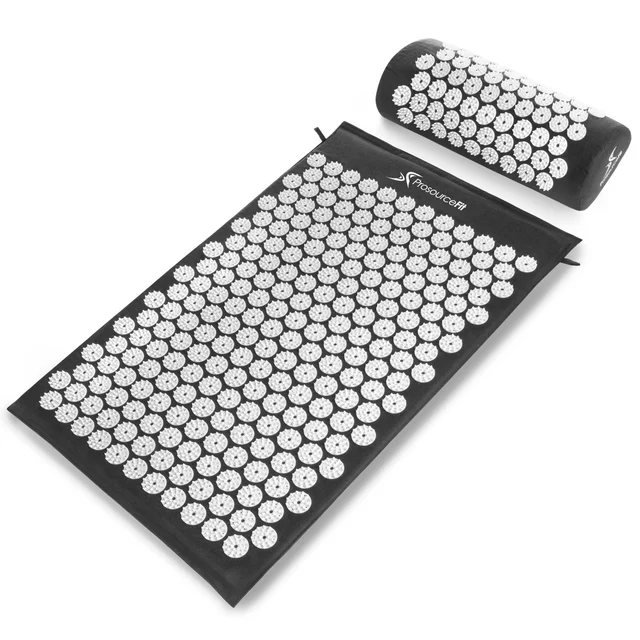
- Buy ProsourceFit Acupressure Mat and Pillow Set The set most people should actually buy: full-size mat, matching bolster, and enough spike coverage to do the job for a fraction of the premium tier.
- Buy Pranamat ECO Massage Set The premium pick for daily users: refined lotus spikes, natural materials, and build quality that reads as a long-term keeper.
- It depends Shakti Mat Classic Acupressure Mat A well-made, ethically produced mat with a sharper, more intense spike feel that suits some bodies and overwhelms others.
- Skip Spoonk Original Acupressure Mat and Pillow Set A likable, eco-minded travel mat that is simply smaller and thinner than the sets built for full-back daily use.
What actually matters
- Spike density and count: how many points sit in a given area of the mat. Higher density spreads your weight over more contact points, which generally softens the sensation rather than intensifying it.
- Spike shape and material: plain molded points feel sharper and more focused, while wider or rounded (often lotus-shaped) points spread contact and feel more diffuse. Material is usually a rigid plastic like ABS or a slightly more flexible one like HIPS.
- Base and filling: what sits under the fabric determines firmness and how much give the mat has. Options range from dense foam to natural fiber fillings like coconut coir, with foam generally softer and coir generally firmer.
- Cover fabric: cotton is the standard, breathable and easy to clean; linen and other natural weaves show up on premium mats and tend to feel a bit more substantial.
- Mat size and coverage: measured in length and width, this decides how much of your back, and which parts, actually rest on spikes versus hang off the edge.
- Pillow or bolster inclusion: a separate, usually curved piece meant for your neck, sold either bundled with the mat or as an add-on.
- Warranty and trial period: how long the maker stands behind the materials, which is a rough proxy for how confident they are the foam and spikes will hold up.
The specs, in plain English
Green flags vs red flags
Green flags
- A mat long and wide enough to support your full back, with an XL option listed for taller users
- A spike count and density clearly stated in the listing, not just a vague 'thousands of points'
- A matching pillow or bolster included or offered as a genuine set, not bundled separately at a markup
- A warranty or trial period measured in years or months, not just a short return window
- Clear material callouts for both the cover fabric and the base filling
Red flags
- Listing photos that only show a close-up of the spikes, with no sense of overall mat size
- No stated spike count or density anywhere in the description
- Reviews mentioning the foam flattening or the cover fraying within the first few months
- A 'set' that turns out to be a mat only, with the pillow sold as a separate add-on
- Vague marketing language about 'ancient healing' with no mention of materials or construction at all
Who's who: the brands
- ProsourceFit - Known for straightforward, budget-friendly fitness and wellness gear; their acupressure sets emphasize full-size coverage and value over premium materials.
- Pranamat - A premium, Europe-based maker focused on natural materials like linen and coconut fiber, positioned for buyers who use a mat daily long-term.
- Shakti Mat - An ethically produced, India-manufactured line known for organic cotton covers and a firmer, more intense spike feel favored by experienced users.
- Spoonk - An eco-minded brand built around lightweight, packable mats aimed at travel and casual first-time use rather than daily full-back sessions.
How to read a listing without getting fooled
Start by scanning the spike numbers: a full-size mat with several thousand points is standard, and a matching pillow usually adds a separate, smaller count. Don't assume a low number means gentler and a high number means harsher; it's closer to the opposite, since more points divide your weight into smaller, less concentrated pressure. Next check the dimensions against your own height, since a mat that's a few inches too short will leave your lower back or shoulders unsupported no matter how good the spikes are. Then look past the marketing photos for the actual base and cover materials, since 'premium' language means little without a named fabric or filling behind it. Finally, check whether the pillow is truly included in the set price or listed as a separate purchase, since that changes what you're actually comparing.
How much should you spend?
Cost mostly tracks two things: the materials in the base and cover, and whether a pillow is bundled in. Budget sets typically use standard cotton and foam construction and still deliver the core acupressure experience effectively, which is why they're a reasonable place for a first-time buyer to start. Spending more generally buys you natural fiber fillings, more refined spike shapes designed to ease the break-in, and certifications on the fabric, along with a longer warranty that reflects the maker's confidence in durability. That extra spending mostly pays off if you already know you'll use the mat regularly for years; if you're still finding out whether acupressure suits you, a mid-tier or budget set gets you a genuine answer without a premium commitment. Watch for sets where the mat and pillow are priced and sold separately, since buying both pieces individually often erases any savings a cheaper mat appeared to offer up front.
Questions, answered
Does a mat with more spikes hurt more?
Generally no. More spikes packed into the same area means your body weight is spread across more contact points, so each point carries less individual pressure. A mat with fewer, larger, sharper points can actually feel more intense than one with a dense field of smaller points.
What's the difference between the base material and the cover?
The cover is the outer fabric you see and touch, commonly cotton or linen. The base or filling is what's underneath it, usually foam or a natural fiber like coconut coir, and it determines how firm or giving the mat feels when you lie on it. Both matter, but the base has a bigger effect on overall intensity.
Do I need the matching pillow, or is the mat enough on its own?
The mat alone covers your back, but a neck and shoulders carry tension the flat mat can't reach well because of the curve involved. A matching bolster or pillow extends the same acupressure concept to that area, and buying it as part of a set is usually better value than adding it later.
How long does the uncomfortable break-in period last?
It varies by person and by mat, but most people notice the sharp, prickly feeling easing within the first few sessions as their skin adjusts. Starting with a thin shirt or towel between you and the spikes, and shorter sessions at first, makes that adjustment period more manageable, especially on firmer or sharper mats.
What size mat do I actually need?
Measure roughly from your shoulders to your lower back and match that against the mat's stated length, choosing an XL option if you're taller than average. A mat that's too short leaves part of your back resting on the floor instead of the spikes, which undercuts the point of buying one.
Is an acupressure mat safe to use every day?
This is a general wellness product, not a medical device or treatment, so it isn't meant to diagnose, treat, or cure anything. Many people use one daily as part of a relaxation routine without issue, but you should consult a healthcare professional if you have circulation issues, are pregnant, or manage a health condition before starting regular use.
Or jump to the head-to-head: ProsourceFit Acupressure Mat and Pillow Set vs Pranamat ECO Massage Set.