Explained
TENS Units, Explained
After reading, you will understand what a TENS unit actually does, how to decode its spec sheet, and which features matter for the kind of relief you want.
In this guide
A TENS unit sends mild electrical pulses through sticky pads on your skin to help mask everyday aches like a sore lower back or tired muscles. The confusing part is that listings pile on numbers and acronyms, channels, modes, intensity levels, TENS versus EMS, that sound important but often are not. This guide translates all of it so you can tell a genuinely useful feature from a spec-sheet flourish.
The 30-second version
- TENS masks pain, it does not cure it. The pulses interrupt how your nerves signal discomfort, so treat any unit as a comfort aid rather than a fix for the underlying cause.
- Channels matter more than mode counts. The ability to treat two areas independently is a real, everyday advantage; a headline number like "24 modes" mostly reflects preset variety you may never fully use.
- TENS and EMS are different jobs. TENS is for pain relief and EMS is for muscle conditioning, so decide which you actually want before paying for a combination unit.
- Pads are a recurring cost. The gel electrodes wear out and need replacing, so factor pad availability and longevity into the decision, not just the device price.
- Simplicity is a feature. Preset, grab-and-go devices get first-timers to comfortable relief faster than programmable units with deep menus.
The products this guide is about
Our verdict on each, with the full reasoning on the companion review.
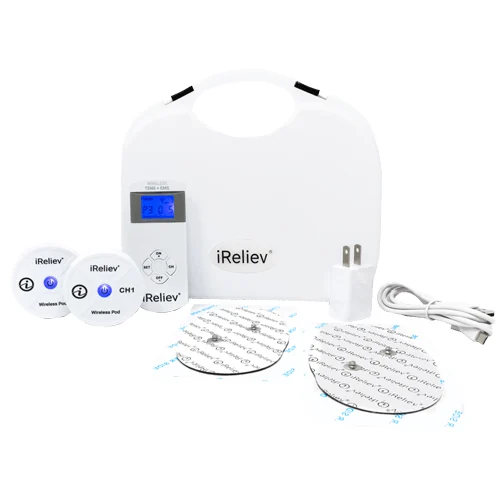
- Buy iReliev Wireless TENS + EMS Therapeutic Wearable System (ET-5050) Cable-free wearable pods and a full TENS-plus-EMS program suite make this the most flexible all-rounder for active households. Amazon
- Buy AUVON Dual Channel TENS + EMS Unit (24 Modes) A rechargeable dual-channel workhorse that delivers programmable, two-area therapy at an entry-level price. Amazon
- It depends Omron Max Power Relief TENS Unit (PM500) A pared-down, preset-driven TENS unit that trades flexibility for genuine grab-and-go simplicity. Amazon
- Skip Compex Sport Elite 3.0 Muscle Stimulator with TENS Kit A superb athletic muscle stimulator whose TENS pain mode is a sidecar to a training-focused feature set most home users will never touch.
What actually matters
- Therapy type (TENS vs EMS vs both): TENS targets nerves to reduce the sensation of pain, while EMS contracts muscles for conditioning and recovery. Buying the wrong one, or paying for both when you only need one, is the most common mismatch.
- Channels and independent control: A dual- or multi-channel unit can treat two body areas at once with separate settings, which matters if you routinely have more than one sore spot. Single-channel units handle only one pad pair at a time.
- Ease of use: How quickly you can start a sensible session without wading through menus. Preset body-area programs are faster for beginners; programmable units trade speed for finer control.
- Portability and power source: Wireless wearable pods let you move around mid-session, while wired leads keep you tethered. Rechargeable batteries avoid the ongoing cost of disposable cells.
- Intensity range and adjustability: Enough steps to find a comfortable, effective level without big jumps between settings. More levels help you fine-tune, but past a point the extra granularity is marketing.
- Pad quality and replacement supply: Reusable gel pads are consumable, so a reliable, easy-to-buy replacement supply keeps the unit useful over time.
The specs, in plain English
Green flags vs red flags
Green flags
- Clear, honest labeling of whether the unit is TENS, EMS, or both, so you know what you are buying
- Independent channel control if you want to treat more than one area at once
- Rechargeable battery with stated runtime, avoiding a constant supply of disposable cells
- Reusable pads with a readily available, reasonably priced replacement supply
- A manual that clearly explains safe pad placement and areas to avoid
- An established brand with support and in-stock accessories
Red flags
- Marketing that leans on a huge mode count while staying vague about channels and real capabilities
- No clear placement or safety guidance in the listing or manual
- Proprietary pads or connectors with scarce or costly replacements
- Claims that the device treats or cures a medical condition rather than helping mask pain
- A deep, unlabeled menu system with no simple starting presets for beginners
- Vague or missing battery and runtime details on a unit sold as portable
Who's who: the brands
- iReliev - Sells wireless wearable-pod systems that combine TENS pain relief with EMS muscle conditioning in one remote-controlled setup.
- AUVON - A value-focused brand offering programmable dual-channel TENS and EMS units at budget prices.
- Omron - A health-device maker whose TENS units emphasize simple, preset-driven operation and reusable pads.
- Compex - An athletics-oriented brand built primarily around advanced EMS training and recovery, with TENS included as a secondary mode.
How to read a listing without getting fooled
Start by confirming the one thing listings often bury: is this a TENS unit, an EMS unit, or both, and which one do you actually want? Next, look past the largest number on the box. A big "modes" count is mostly preset variety, whereas the channel count tells you something concrete, whether you can treat two areas at once. Check the power source (rechargeable versus disposable batteries) and whether the pads are reusable and easy to replace, since pads are an ongoing cost on every unit. Treat "FDA cleared" as a baseline that the device is sold for home use, not as proof it works better than a rival. Finally, read the fine print on battery life for any "wireless" claim, and make sure the manual spells out safe pad placement before you rely on the listing's marketing.
How much should you spend?
Spend according to how much control and mobility you genuinely need, not according to the feature list. The value sweet spot for most people is a programmable dual-channel unit: it treats two areas independently and covers the common pain-relief needs without a premium. Paying more buys real conveniences, chiefly wireless wearable pods that let you move during a session and combined TENS-plus-EMS programming, which are worth it for active users but wasted on someone who wants simple spot relief. At the top end sit athletics-focused muscle stimulators whose capability is overkill, and overpriced, for ordinary at-home pain relief. Spending less on a straightforward preset device is perfectly sensible if grab-and-go simplicity matters more to you than fine-tuning. Whatever the device costs, budget for replacement pads as a recurring expense, because they wear out regardless of which unit you choose.
Questions, answered
What is the difference between TENS and EMS?
TENS (transcutaneous electrical nerve stimulation) targets sensory nerves to help mask or reduce the perception of pain, while EMS (electrical muscle stimulation) contracts the muscle itself to support conditioning and recovery. Some units offer both, some are TENS-only for pain relief, and some are built primarily around EMS. Decide which job you want done before paying for a combination device.
Is a higher number of modes actually better?
Not usually. A high mode count reflects the variety of preset pulse patterns, and many of them overlap or go unused. A small set of well-designed presets covers most everyday needs. Independent channels, comfortable intensity steps, and good pads affect day-to-day satisfaction far more than a headline mode count.
Do the electrode pads wear out, and can I replace them?
Yes. Reusable gel pads gradually lose their stickiness with use, skin oils, and time, and makers rate pad life differently, from tens of uses to around 150 depending on the pad and storage. Many brands sell replacement pads, and keeping them clean and re-covered with their backing film between uses extends their life. Budget for replacements as an ongoing cost.
Should I get a rechargeable model or are disposable batteries fine?
Both work. Rechargeable units avoid the ongoing cost and hassle of replacing cells which many owners prefer for longer sessions. Battery-powered units are simple and travel well, but keep spares on hand. For occasional spot use either is fine; for frequent or longer sessions, rechargeable is more convenient.
Is there anyone who should be cautious about using a TENS unit?
This guide offers general information, not medical advice, so consult a qualified healthcare professional about your situation. In general terms, manufacturers commonly advise that people with a pacemaker or other implanted electronic or metallic device, people who are pregnant, and those with epilepsy or certain heart conditions should not use a TENS unit without professional guidance. Pads are generally kept away from the front of the neck, the eyes, broken or irritated skin, and areas of reduced sensation. Because individual circumstances vary, and because new, severe, or persistent pain warrants professional attention, speak with a healthcare professional about whether TENS is appropriate for you.
Or jump to the head-to-head: iReliev Wireless TENS + EMS Therapeutic Wearable System (ET-5050) vs AUVON Dual Channel TENS + EMS Unit (24 Modes).