Explained
Smart Bathroom Scales, Explained
After reading, you will know which smart scale features genuinely help, which are marketing noise, and how to pick one that fits your health apps and household.
In this guide
A smart bathroom scale does more than show your weight: it estimates body composition and sends every reading to an app. The trap for first-time buyers is assuming the extra numbers are precise clinical measurements, or chasing the longest metric list instead of the features that keep your daily trend honest and useful.
The 30-second version
- The trend is the product. A good smart scale repeats the same weight under the same conditions so the line over weeks is trustworthy, which matters far more than any single reading.
- Body-fat figures are estimates, not measurements. The composition numbers come from a small electrical current and a stored profile, so treat them as directional trends rather than exact clinical values.
- Connectivity decides usefulness. A scale only helps if it feeds the health app you already use, so confirm the ecosystem match before anything else.
- More metrics is not the same as more value. Many headline extras are novelty-grade for daily decisions, and a subscription paywall for basic history is a reason to walk away.
The products this guide is about
Our verdict on each, with the full reasoning on the companion review.
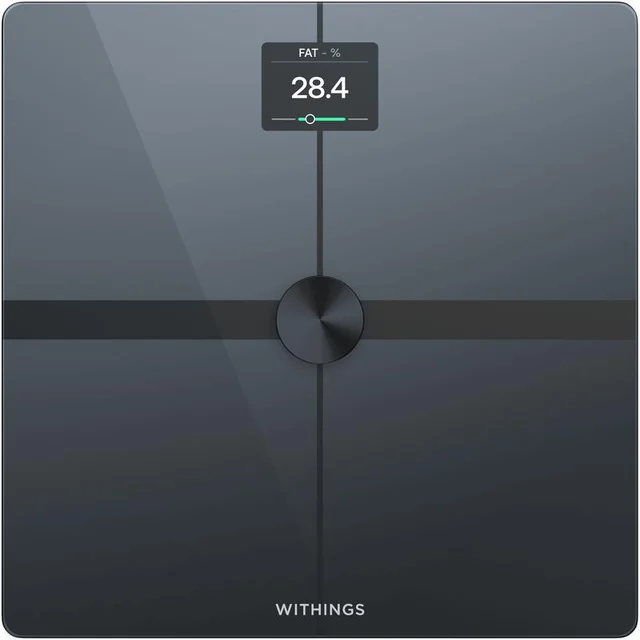
- Buy Withings Body Smart The most consistent, widely compatible scale for tracking weight trends without buying into extras. Amazon
- Buy eufy Smart Scale P3 A lot of body-composition detail and multi-user smarts for a mid-tier outlay.
- It depends Garmin Index S2 The scale to buy only if you already live in Garmin Connect. Amazon
- Skip Withings Body Comp A capable scale whose headline extras rarely earn the step up from the Body Smart. Amazon
What actually matters
- Repeatability - whether the scale returns a consistent number under the same conditions, because a jumpy reading makes the trend line useless.
- App and ecosystem sync - whether it pushes data to the platform you already use (Apple Health, Google, Samsung Health), since an isolated number does not help you.
- Connectivity type - Wi-Fi uploads automatically without your phone, while Bluetooth needs the phone nearby and the app open; this shapes how effortless daily weigh-ins feel.
- Multi-user handling - how many profiles it supports and whether auto-recognition reliably tells household members apart, especially those of similar weight.
- Subscription strings - whether core metrics and history are free, or whether the maker nudges you toward a paid plan to unlock value you expected in the box.
- Sensitivity features - whether the scale offers a mode that hides the weight number for anyone in the home who finds it distressing.
- Display and battery - a clear on-scale screen and long battery life reduce daily friction and maintenance.
The specs, in plain English
Green flags vs red flags
Green flags
- Syncs to the major health platforms you already use, over both Wi-Fi and Bluetooth
- Owner reports describe a steady, predictable weight trend rather than random jumps
- Core metrics and history are fully usable with no subscription required
- Reliable multi-user auto-recognition and a sensible number of profiles
- Offers a mode to hide the weight number for sensitive users
- Clear on-scale display and long battery life
Red flags
- Locks basic history or everyday metrics behind a paid plan
- Stays inside a single walled-garden app and will not sync to your health platform
- Markets exact body-fat percentages as if they were clinical measurements
- Charges a premium mainly for novelty metrics you will glance at once and ignore
- Fiddly on-scale controls or a surface that smears and becomes hard to read
- No option to hide the weight number when someone in the home needs it
Who's who: the brands
- Withings - Health-focused brand known for consistent trends, broad app sync, and a range from mainstream scales to cardiovascular-metric flagships.
- eufy - Value-oriented smart-home brand offering long metric lists and strong multi-user handling at a lower outlay.
- Garmin - Fitness-ecosystem brand whose scales fold weigh-ins into training, sleep, and recovery data for existing Garmin users.
- Fitbit - Wearable-first brand whose scales pair naturally with its activity and sleep tracking app.
- Renpho - Budget brand widely known for inexpensive Bluetooth scales with a broad metric list and a simple companion app.
How to read a listing without getting fooled
Start at the connectivity line, not the metric count. Confirm the scale offers the sync you need and lists your health platform by name, because a metric you never see in your own app is a metric that does not help. Read the body-composition list as estimates: any exact-looking body-fat percentage is inferred from impedance and a stored profile, so weight it as a trend, not a truth. Check the multi-user cap and whether auto-recognition is described as reliable if several people will share it. Finally, hunt for the words subscription, plan, or premium in the fine print; the everyday metrics and your own history should cost nothing beyond the hardware, and a paywall for basic features is the clearest warning sign on the page.
How much should you spend?
Spend where repeatability and sync live, not where the metric count peaks. Entry-level scales cover the essentials well: a steady weight trend and sync to a free app. Stepping up to mid-range typically buys sturdier connectivity, both Wi-Fi and Bluetooth, broader app support, and more dependable multi-user recognition, which is where most households find the sweet spot. The jump to flagship pricing usually pays for cardiovascular or novelty metrics that stay interesting rather than decision-changing, and sometimes arrives with subscription nudges. Paying more is worth it for polish, ecosystem breadth, and reliability; it is rarely worth it purely to collect extra numbers you will glance at once.
Questions, answered
Are smart scale body-fat readings accurate?
Treat them as estimates. Foot-to-foot bioelectrical impedance infers composition from a small current and a stored profile, so absolute body-fat can be off by several points versus a clinical scan. Weigh in at the same time under the same conditions and trust the trend, not the exact figure.
Do I need Wi-Fi, or is Bluetooth enough?
Wi-Fi uploads automatically the moment you step off, with no phone nearby, which suits daily weigh-ins. Bluetooth needs your phone in range and the app open. If you want a hands-off habit, prefer a scale with Wi-Fi; if you weigh in with your phone anyway, Bluetooth is fine.
Will a smart scale work with my health app?
It depends on the brand. Many scales push to Apple Health, Google, and Samsung Health, but some stay inside their maker's own app and will not sync elsewhere. Check the listed integrations against the platform you already use before you buy.
Is a subscription required to use a smart scale?
Not for the metrics most people use. The core weight and composition readings and your own history should work without paying. Some makers nudge flagship buyers toward a paid plan for coaching and long-term reports, but that should be optional, not a gate on the basics.
Can a smart scale tell me if I am healthy?
No. A smart scale is a general wellness tool for tracking trends over time, not a diagnostic device, and its estimates are not a substitute for professional assessment. This is general information, not medical advice; if you have questions about your weight, body composition, or any health metric, consult a qualified healthcare professional.
Or jump to the head-to-head: Withings Body Smart vs eufy Smart Scale P3.