Explained
Sleep Masks, Explained
After reading, you'll understand why most sleep masks leak light in the same place, and which design feature actually fixes it.
In this guide
Almost every sleep mask claims total blackout, and almost every first-time buyer discovers a sliver of light down the side of their nose. The fabric is rarely the problem. What separates a mask that works from one that does not is the shape at the nose bridge, whether anything rests on your eyelids, and whether the mask stays where you put it. Those are three mechanical questions, and the spec sheets of most masks answer none of them.
The 30-second version
- Light comes in at the nose, not through the fabric, so the bridge design is the whole game.
- Cups keep fabric off the lids, which lets you blink and matters if you wear lash extensions.
- Weight is a real comfort spec, and a mask that does not publish one is hiding something you will notice all night.
- Strap-free means pressure-based, so a weighted mask only stays put if you sleep still.
- Momme measures silk density, not softness, and a high number says durable rather than better for sleep.
The products this guide is about
Our verdict on each, with the full reasoning on the companion review.
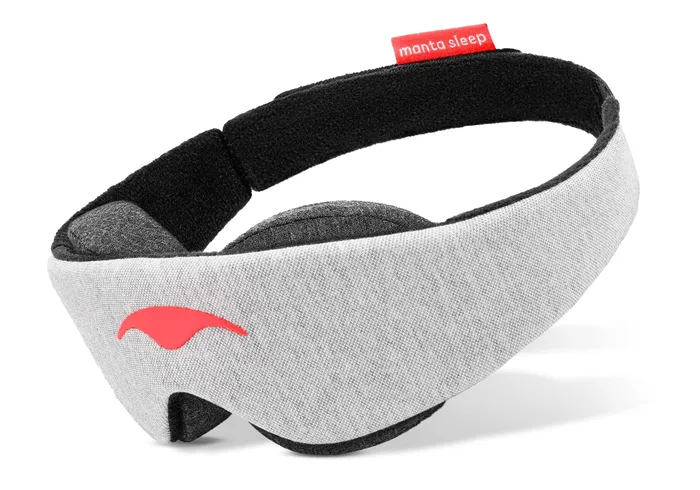
- Buy Manta Sleep Mask Detachable eye cups that slide along the strap, so you build the blackout seal around your own face instead of accepting an average one.
- Buy Ostrichpillow Eye Mask A 30 g contoured foam mask with every measurement published and a two-year warranty, which is more than most of this category manages.
- It depends Nodpod Weighted Sleep Mask A strap-free weighted pod that lies across your eyes, which is either the whole point or a dealbreaker depending on how much you move.
- Skip Drowsy Black Jade Silk Sleep Mask A beautiful padded mulberry silk band sold mostly on beauty claims, with none of the basic measurements a buyer would want.
What actually matters
- Nose bridge seal - this is where light enters on a flat mask, because the fabric spans the gap between your nose and cheek instead of following it. Either a moulded contour or a movable cup can close it, but nothing else will.
- Eyelid contact - a flat mask presses your lids shut, which most people never notice and some find unbearable. Cup designs create a cavity so nothing touches the lid or the lashes.
- Mask weight - at the low end masks weigh around an ounce and disappear; weighted masks are deliberately several times that. Both are valid, but you should know which one you are buying.
- Adjustment range - an elastic strap with a stated circumference tells you it will fit; a moulded shape with no adjustment tells you it might.
- Fabric against the skin - modal, silk and cotton all breathe differently and absorb sweat differently, which matters more in a warm room than any blackout claim.
- Washability - masks collect sweat, oil and skincare, so a mask you cannot wash easily becomes unpleasant fast. Check whether a laundry bag is required and whether the foam tolerates a machine.
- Warranty and returns - the only way to know whether a mask suits your face is to sleep in it, so a long returns window is worth more than a long list of features.
The specs, in plain English
Green flags vs red flags
Green flags
- The maker publishes a weight in grams or ounces.
- The full dimensions are listed, including strap length or circumference.
- The nose bridge treatment is described specifically rather than as a blackout claim.
- Washing instructions name a temperature, a cycle or a laundry bag.
- Returns run long enough to actually sleep in the mask for a week or two.
Red flags
- No weight and no dimensions anywhere on the product page.
- Blackout claimed in a headline with nothing said about the nose.
- Skin or sleep percentages quoted without the sample size next to them.
- Care instructions that say only washable.
- A strapless design with no measurement telling you what size head it fits.
Who's who: the brands
- Manta Sleep - Built its range around detachable, repositionable eye cups and sells variants for sound, cooling and weight on the same platform.
- Ostrichpillow - A travel comfort brand that publishes unusually complete specs and backs its products with a two-year warranty.
- Nodpod - Known for the strap-free weighted pod design, sold on deep-touch pressure rather than blackout engineering.
- Drowsy - A premium silk brand that positions its padded mulberry silk masks as beauty products as much as sleep tools.
How to read a listing without getting fooled
Read a sleep mask listing backwards. Ignore the blackout headline, which everyone claims, and go straight to the specification block. If there is a weight and a set of dimensions, the maker expects you to compare and you can. If there is not, assume the mask is heavier or larger than you are picturing. Next find the sentence that describes the nose, and if there is no such sentence, the mask is flat there and will leak on some faces. Then read the care instructions, because a mask that demands a mesh bag or hand washing is telling you how fragile the foam is. Finally check the returns window: fit is only discoverable by sleeping in it, so a short window shifts the risk onto you.
How much should you spend?
Budget masks are flat fabric with an elastic strap and no published specs, and they are a reasonable way to find out whether you like sleeping in a mask at all. The mid-range is where the engineering appears: contoured foam, moulded bridges, detachable cups, published weights and multi-year warranties. That tier is where most people should buy, and the difference between the good ones there is design philosophy rather than quality. Premium prices in this category usually buy silk and presentation rather than a better seal, and it is worth noticing that some of the most expensive masks publish the least information about what you are getting.
Questions, answered
Does wearing a sleep mask every night cause any harm?
For most people it is simply a comfort item, but two things are worth watching. A mask that presses firmly on the eyeballs rather than resting around them can leave vision briefly blurry on waking, which is the main argument for a cup design. And any mask worn nightly collects sweat and skin oil, so washing it regularly matters for skin health. If you have had recent eye surgery or an eye condition, ask your clinician before adding overnight pressure.
Why does my mask slide off during the night?
Usually because the retention method does not match how you sleep. A strap-free weighted mask relies on nothing but its own mass and will move the first time you turn over. An elastic strap that has stretched out has the same problem for a different reason. If you are a side or stomach sleeper, look for an adjustable strap with a stated circumference, and check whether the mask profile is low enough not to be pushed by the pillow.
Do I need a sleep mask if I have blackout curtains?
Often yes, because curtains rarely seal at the edges and because a mask also helps on planes, in hotels and during daytime sleep. A mask is also the only option if you share a room with someone who needs a light on. The two solutions are complementary rather than competing, and a mask is the portable one.
How often should I replace a sleep mask?
When it stops sealing or stops staying put, which usually means the elastic has lost its tension or the foam has compressed. With regular washing according to the maker's instructions, a well-built mask should last a couple of years of nightly use. Hook and loop closures tend to fail before the fabric does, so if the headband no longer holds its setting, that is your replacement signal.
Or jump to the head-to-head: Manta Sleep Mask vs Ostrichpillow Eye Mask.