Explained
Seat Cushions, Explained
After reading, you'll understand the fill types, the cutout debate, and the specs that separate a cushion that helps all day from one you stop using in a week.
In this guide
A seat cushion looks like the simplest purchase in the world until you start shopping and hit a wall of memory foam, gel, polymer grids, U-cutouts, and density ratings that all promise the same relief. The thing that trips up first-time buyers is assuming softer is better, or that a hole in the middle is the answer to tailbone pain. What actually matters is matching the fill and shape to how you sit, where your discomfort is, and how warm you run.
The 30-second version
- The fill is the biggest decision. Memory foam cradles and feels plush but traps heat; gel and polymer grids stay cooler and springier but feel firmer and flatter.
- A coccyx cutout is targeted, not universal. A U-shaped cutout helps if your soreness is right at the tailbone; for general discomfort, a plain contoured cushion can feel just as good.
- Softest is not best for all-day sitting. A cushion that lets you sink all the way through bottoms out and stops supporting you; medium-firm with a contour usually wins over eight hours.
- Shape beats gimmick for office use. Donut cushions are built for short-term, specific relief and tend to tilt the pelvis over a full workday, so a contoured cushion with a cutout is the safer everyday choice.
- Think about the whole chair. A seat cushion works from below only; if your lower back is the real complaint, you'll want a separate lumbar cushion too.
The products this guide is about
Our verdict on each, with the full reasoning on the companion review.
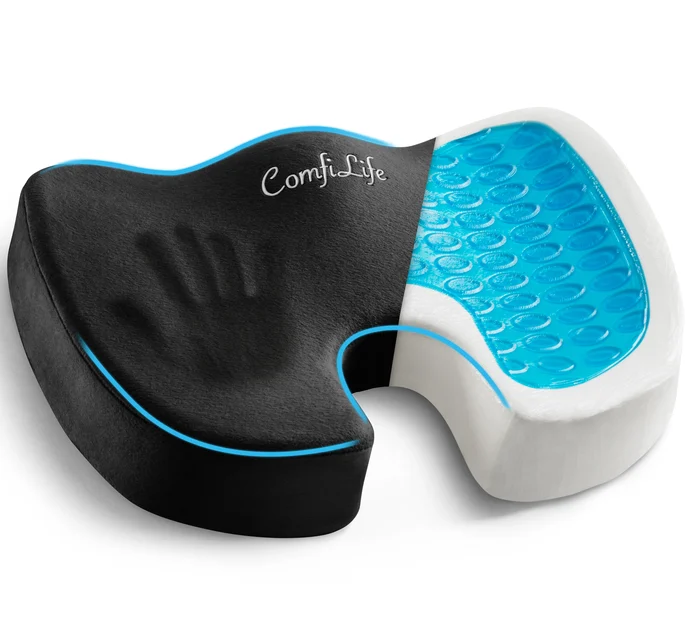
- Buy ComfiLife Gel Enhanced Seat Cushion The all-rounder: a contoured memory-foam base, a cooling gel top, and a proper coccyx cutout at a fair price. Amazon
- Buy Everlasting Comfort Memory Foam Seat Cushion A plush, all-memory-foam cushion with a deep coccyx cutout that owners say holds up shift after shift. Amazon
- It depends Purple Double Seat Cushion A premium, foam-free polymer grid that stays cool and buoyant - if you can stomach the price and the unusual feel. Amazon
- Skip Everlasting Comfort Donut Seat Cushion A tailbone-relief donut that's the wrong tool for all-day desk work, even from a brand we otherwise like.
What actually matters
- Fill material determines almost everything else about how a cushion feels and how warm it gets. Memory foam is plush and contouring, gel-topped foam adds some cooling, and a foam-free polymer grid runs coolest and lasts longest but feels the firmest.
- Pressure relief is the whole point: does the cushion genuinely take load off your tailbone and sit bones, or just add a soft layer? A well-judged contour or cutout offloads the sore spots instead of spreading pressure evenly.
- Coccyx cutout matters if your pain is specifically at the tailbone. The U-shaped notch removes direct contact there and shifts weight onto the sit bones; without tailbone-specific pain you may not need it.
- Heat and breathability decide whether you'll still be comfortable at hour six. Dense foam traps body heat, ventilated or grid designs let air move, and this is the single most common long-term complaint.
- Firmness and support feel is personal: some people want a soft sink-in cradle, others want firm buoyant support that holds them up. Neither is objectively better, but the wrong choice for you is a cushion you abandon.
- Grip and stability keep the cushion from sliding around on a rolling office chair. A rubberized or non-slip base sounds trivial but a cushion that wanders all day is a daily irritation.
- Durability is how well the cushion holds its height and shape after a year of daily squashing. Cheaper dense foam can pack down and lose support; grids and higher-density foams hold up longer.
- Cover and washability matter because you sit on it every single day. A removable, machine-washable cover is worth prioritizing.
The specs, in plain English
Green flags vs red flags
Green flags
- A contoured shape or a well-placed cutout that targets where you actually feel pressure, not just a flat soft pad
- A removable, machine-washable cover, since you'll use it daily
- A rubberized or non-slip base that keeps it planted on an office chair
- A large, consistent base of long-term owner reports describing how it holds up after months of daily use
- Some cooling feature (gel top or ventilated/grid design) if you tend to run warm
Red flags
- A donut/ring cushion marketed for general all-day office sitting rather than short-term relief
- Vague comfort claims with no mention of firmness, density, or how it holds shape over time
- No non-slip base on a cushion meant for a rolling chair
- Extremely cheap dense foam with reports of packing down or losing height within months
- Medical-sounding promises to cure or treat back or tailbone pain, which a comfort product cannot do
Who's who: the brands
- ComfiLife - Value-focused ergonomic cushions; known for contoured memory-foam-plus-gel seats with U-cutouts and a deep base of positive owner reports.
- Everlasting Comfort - Popular affordable brand spanning plush all-foam seat cushions, lumbar cushions, and donut rings; quality varies by which product in the line you pick.
- Purple - Premium maker known for its foam-free flexible polymer grid; cushions run cool, springy, and durable but firm, flat, and pricier.
How to read a listing without getting fooled
Start with the fill, because it tells you most of what you need to know: 'memory foam' means plush and warm, 'gel' or 'cooling gel top' means a bit cooler and firmer, and a 'polymer grid' means coolest, firmest, and heaviest. Next, look for the shape words. 'Contoured' or 'ergonomic' means it's molded to support you, which is what you want for all-day sitting; a plain 'pad' is just a soft layer. 'U-shaped cutout' is tailbone-targeted, while 'donut' or 'ring' signals a short-term relief product, not an office cushion, no matter how it's marketed. Treat glowing adjectives like 'orthopedic' or 'doctor-designed' as marketing unless they're backed by a clear description of the shape and materials. Finally, weigh the owner reports for the boring details that listings gloss over: does it stay cool, does it slide around, and does it still have its height after a year?
How much should you spend?
You don't need to spend at the top of the market to get a genuinely good cushion. The value sweet spot sits with a mid-range contoured memory-foam or gel-topped cushion from an established brand, which delivers reliable tailbone relief, a bit of cooling, and decent durability without a premium. Going cheaper often means thin, dense foam that packs down and runs hot within months, so the rock-bottom option tends to be a false economy. Spending more is worth it in one specific case: if you run hot and dislike the sink of foam, a premium foam-free polymer grid buys you noticeably better cooling and years of durability. It is not worth paying more for vague 'orthopedic' branding, novelty shapes, or features that don't match where you actually feel discomfort.
Questions, answered
Memory foam or gel, which should I get for an office chair?
Neither wins outright. Memory foam contours to you and feels plush but traps heat and can soften over time. A gel top or a polymer grid stays cooler and springier but feels firmer and flatter. Many cushions combine a foam base with a gel top to get some of both. If you run hot, lean toward gel or grid; if you want a soft, cradling feel, lean toward foam.
Do I actually need a coccyx (tailbone) cutout?
Only if your discomfort is specifically at the tailbone. A U-shaped cutout removes direct contact there and shifts your weight onto the sit bones. If your soreness is more general, a supportive contoured cushion without a cutout can feel just as good. It comes down to where you feel the pressure.
Why not just buy a donut cushion for tailbone pain?
Donut cushions are made for short-term, specific relief, taking all pressure off the center. For all-day desk sitting they often tilt the pelvis and pile weight onto the sit bones, and they lack ergonomic thigh support. For office work, a contoured cushion with a cutout is usually the better everyday choice.
Will a seat cushion help my lower-back pain too?
A seat cushion supports you from below, so it won't fix lower-back posture on its own. If your back is the main complaint, pair the seat cushion with a separate lumbar back cushion; several brands sell matching seat-and-back sets. Also make sure your chair height still lets your feet rest flat once the cushion raises you up.
Can a seat cushion treat back or tailbone pain?
These are general comfort products, not medical devices, and this guide is general information rather than medical advice. A good cushion may ease everyday desk discomfort, but it isn't a treatment. If you have persistent, severe, or worsening back or tailbone pain, or pain after an injury, see a doctor or physical therapist for a proper evaluation.
Or jump to the head-to-head: ComfiLife Gel Enhanced Seat Cushion vs Everlasting Comfort Memory Foam Seat Cushion.