Explained
Portable Air Conditioners, Explained
After this guide you'll be able to read any portable AC listing, spot the inflated numbers, and know exactly which design suits your room.
In this guide
Portable air conditioners are the appliance category where marketing numbers and reality drift furthest apart: the BTU figure on the box is often well above what the machine actually delivers, and a design detail as simple as how many hoses it uses can make or break its performance on a hot day. The category also quietly split into two eras - old-school fixed-speed single-hose boxes and modern inverter dual-hose machines - and they behave very differently. This guide decodes the jargon so you can tell which era a unit belongs to before you buy.
The 30-second version
- SACC is the honest number. Compare the smaller DOE/SACC BTU rating, not the big ASHRAE number on the box - a '14,000 BTU' portable often delivers 10,000-12,000 BTU of real cooling.
- Dual hoses beat single hoses. A second intake hose stops the unit from depressurizing your room and sucking hot outside air back in - it's a big real-world efficiency upgrade.
- An inverter compressor is worth insisting on for any room you sleep or work in: variable speed means quieter operation, steadier temperatures, and lower power bills than fixed-speed on/off cycling.
- Check the window kit before you buy. Standard kits fit common sliding windows; casement, crank-out, and unusually wide windows often need extra parts or DIY panels.
- Weight matters more than you think. These machines run roughly 60 to 80 pounds, so 'portable' really means 'rolls on one floor' - plan where it will live before it arrives.
The products this guide is about
Our verdict on each, with the full reasoning on the companion review.
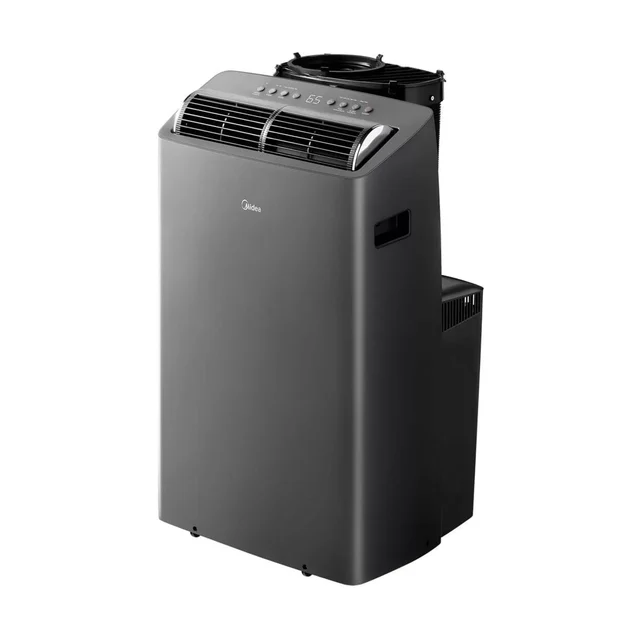
- Buy Midea Duo Smart Inverter Portable AC (MAP12S1) The dual-hose inverter pick - hose-in-hose design with noise as low as 42 dBA, per Midea. Amazon
- Buy Whynter NEX ARC-1230WN Dual Hose Inverter Portable AC The big-room pick - the most rated cooling in this group, with hose-in-hose dual hoses and an inverter. Amazon
- It depends LG LP1419IVSM Dual Inverter Smart Portable AC An inverter machine hampered by a single hose and a premium price. Amazon
- Skip BLACK+DECKER BPP10WTB Portable Air Conditioner Cheap and simple, but a single-hose design without an inverter that owners describe as loud.
What actually matters
- Real cooling capacity (SACC) matched to your room size - an undersized unit runs flat-out all day and never catches up, while the right size cycles down and stays quiet.
- Hose design - dual-hose (including hose-in-hose) units avoid the negative-pressure penalty of single-hose units, and the gap widens on the hottest days when you need cooling most.
- Compressor type - inverter (variable-speed) compressors ramp smoothly instead of slamming on and off, which is the difference between a background hum and a sleep-wrecking cycle.
- Noise character, not just decibel numbers - how a unit sounds at the low speeds it holds overnight matters more than its maximum rating.
- Window kit compatibility with your actual window type and dimensions - a poor seal leaks hot air back in and undoes much of the cooling.
- Drainage design - self-evaporative units exhaust most moisture out the hose automatically; older or cheaper designs need regular tank emptying, especially in humid climates.
- Smart features and controls - Wi-Fi apps and voice control are convenient for pre-cooling a room, but companion apps are the weakest part of even excellent machines, so never let the app decide the purchase.
The specs, in plain English
Green flags vs red flags
Green flags
- The listing states a SACC (DOE) rating up front instead of burying it under a big ASHRAE number
- Dual-hose or hose-in-hose design paired with an inverter compressor - the modern formula
- A published coverage rating in square feet that lines up sensibly with its SACC figure
- Self-evaporative operation plus a continuous-drain option for humid climates
- Owner reports specifically praise how quiet it is overnight, not just how cold it gets
Red flags
- Only one big BTU number in the title and no SACC figure anywhere in the specs
- Fixed-speed compressor at anything above a rock-bottom price - the technology is a tier behind
- Single-hose design sold at a premium price against dual-hose competitors
- Room-size claims that look generous for the stated BTU - a sign the marketing is leaning on the inflated rating
- Recurring owner complaints about loud compressor cycling or a window kit that won't seal
Who's who: the brands
- Midea - Maker of the Duo line, a hose-in-hose dual-duct inverter design with noise as low as 42 dBA per Midea.
- Whynter - A portable-cooling specialist known for hose-in-hose dual-hose machines, including the 12,000 BTU SACC NEX ARC-1230WN.
- LG - Major appliance maker whose LP1419IVSM Dual Inverter portable is a single-hose design in the premium tier.
- BLACK+DECKER - Budget brand - simple, light, single-hose units with an included window kit.
- De'Longhi - Italian appliance maker whose Pinguino line is a single-hose option, positioned on design and simplicity more than raw output.
- Honeywell (licensed) - A widely licensed name on mid-market portables - availability is broad, but check the actual specs since designs vary a lot under the badge.
How to read a listing without getting fooled
Start by ignoring the number in the product title - that's almost always the inflated ASHRAE rating. Scroll to the spec table and find the SACC or DOE BTU figure; that's the machine's real cooling power, and it's what the coverage claim should be judged against (roughly, 8,000-10,000 BTU SACC for bedrooms and offices, more for large or sun-baked rooms). Next, establish the architecture: how many hoses, and what kind of compressor? 'Dual hose' or 'hose-in-hose' plus 'inverter' or 'variable speed' puts the unit in the modern tier; a single hose and no mention of inverter means old-school, whatever the price. Check the decibel spec but weight it lightly - manufacturers measure at the friendliest setting - and lean on owner reports about overnight noise instead. Finally, read the window-kit details and the drainage section: 'self-evaporative' with a continuous-drain port is what you want, and the kit's minimum and maximum window dimensions need to match your actual window before you click buy.
How much should you spend?
Price in this category tracks three things: real cooling capacity, hose count, and compressor technology. The cheapest tier buys you a single-hose, fixed-speed machine - fine for occasional use in a small room, but loud and inefficient enough that most buyers regret it as a daily driver. The value sweet spot sits in the mid-range, where dual-hose inverter machines live: that one step up buys a quieter compressor and lower running costs. Spending beyond that mainly buys capacity - bigger SACC numbers for large open-plan spaces or brutally hot climates - and is only worth it if your room genuinely demands it. Paying premium money for a single-hose design, however polished, is the one combination to avoid.
Questions, answered
What do the two different BTU numbers on portable ACs mean?
The bigger number is the older ASHRAE rating, measured under ideal conditions that ignore real-world losses. The smaller one is SACC (the DOE standard), which accounts for hot-air infiltration and heat radiating from the exhaust hose. SACC is the honest number - a '14,000 BTU' portable is often really a 10,000-12,000 BTU machine. Always compare units on SACC.
Is a dual-hose portable AC really worth it over single-hose?
Often, yes. A single-hose unit exhausts your cooled room air outside, creating negative pressure that pulls hot outdoor air back in through gaps - so it partly undoes its own work. A dual-hose unit uses outdoor air to cool its hot side instead. Dual-hose machines avoid that penalty, and the advantage grows on the hottest days.
What size portable AC do I need?
As a rough guide, about 8,000-10,000 BTU SACC covers most bedrooms and offices up to roughly 400-450 square feet, and 12,000 BTU SACC-class machines handle larger spaces up to about 600 square feet. Strong sun, high ceilings, poor insulation, and hot climates all push you toward the bigger size - and if you're stuck with a single-hose design, size up.
Do portable air conditioners need to be drained?
Modern self-evaporative units exhaust most condensed moisture out the hose automatically, so routine draining is rare in cooling mode. In very humid weather the internal tank can still fill and trigger a shutoff, so muggy-climate owners often connect a continuous drain hose. Dedicated dehumidifier mode usually requires a drain regardless.
Why are inverter portable ACs quieter?
A fixed-speed compressor is either running flat-out or off, and the abrupt starts are what wake people up. An inverter compressor varies its speed continuously, so once the room reaches temperature it settles into a low, steady hum instead of cycling. Many owners cite this as a livability difference between budget and inverter units.
Will a portable AC work with my casement or slider window?
Included window kits are designed for standard sliding and double-hung windows within the kit's stated dimension range. Casement and crank-out windows usually need an accessory kit or a DIY panel of plexiglass or foam board to seal the opening. Measure your window and check the kit specs before buying - a leaky install lets hot air pour back in and noticeably hurts cooling.
Or jump to the head-to-head: Midea Duo Smart Inverter Portable AC (MAP12S1) vs Whynter NEX ARC-1230WN Dual Hose Inverter Portable AC.