

Home & Kitchen
The Best Portable Air Conditioners: 4 Compared (and One to Skip)
Four current portable ACs - dual-hose inverters vs single-hose stalwarts - compared on real cooling power, noise, efficiency, and hassle.
The short version
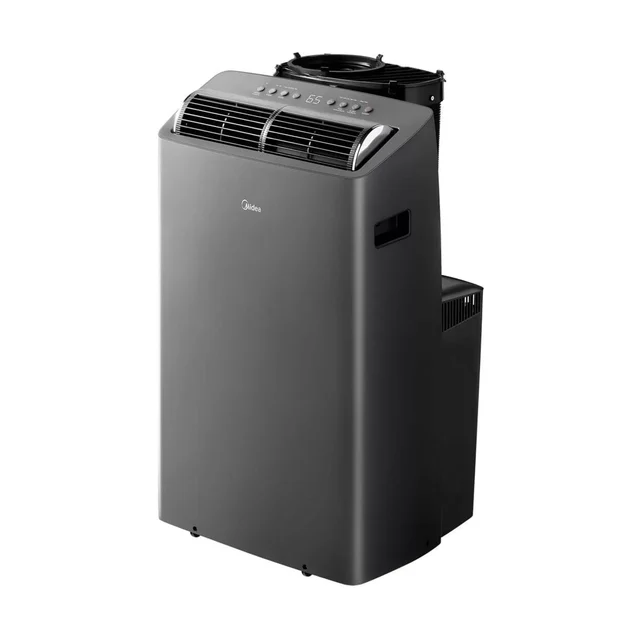
Dual-hose inverter machines are the better design for portable AC, and the Midea Duo (MAP12S1) is the one to get: a hose-in-hose dual-duct design with noise as low as 42 dBA and an inverter compressor, per Midea. The Whynter NEX ARC-1230WN is the runner-up - it offers the most rated cooling here and is the right call for big rooms up to 600 sq ft. LG's LP1419IVSM is a well-built, quiet inverter unit, but its single-hose design and premium price make it a conditional pick at best. The budget BLACK+DECKER BPP10WTB is the one to skip: light and cheap, but a single-hose design without an inverter. Best for: the Midea Duo for most bedrooms and living rooms; the Whynter for large or very hot spaces.
Our picks at a glance
- Midea Duo Smart Inverter Portable AC (MAP12S1) - Buy. The dual-hose inverter pick - hose-in-hose design with noise as low as 42 dBA, per Midea.
- Whynter NEX ARC-1230WN Dual Hose Inverter Portable AC - Buy. The big-room pick - the most rated cooling in this group, with hose-in-hose dual hoses and an inverter.
- LG LP1419IVSM Dual Inverter Smart Portable AC - It depends. An inverter machine hampered by a single hose and a premium price.
- BLACK+DECKER BPP10WTB Portable Air Conditioner - Skip. Cheap and simple, but a single-hose design without an inverter that owners describe as loud.
The verdict in 30 seconds
What mattered most
- Real cooling power (SACC)
- Hose design
- Compressor type
- Noise character
- Rated coverage
- Smart features
Portable air conditioners have quietly gotten much better: the newest dual-hose inverter designs cool faster, run quieter, and sip less power than the single-hose boxes that dominated the category for a decade. We compared four current, widely available models spanning roughly 10,000 to 12,000 BTU of real (SACC) cooling. Two earn a clear buy, one is a solid machine that only makes sense for certain rooms, and one budget stalwart is worth skipping unless rock-bottom cost is the only criterion.
The dual-hose inverter pick - hose-in-hose design with noise as low as 42 dBA, per Midea.
Best for: Anyone who wants the best overall mix of cooling speed, quietness, and efficiency in a bedroom, office, or living room up to about 450 sq ft
- Hose-in-hose dual-duct design forces hot air out and keeps cool air in, rather than pulling room air through a single hose
- Variable-speed inverter with noise as low as 42 dBA, per Midea
- Midea says the inverter saves over 40% energy versus the federal standard; SmartHome app, smart watch and voice assistant control
- Heavy and bulky, and the chunky hose-in-hose window kit takes more effort to set up than a basic single hose
- App connectivity gets mixed reports from owners - occasional dropouts and clunky pairing
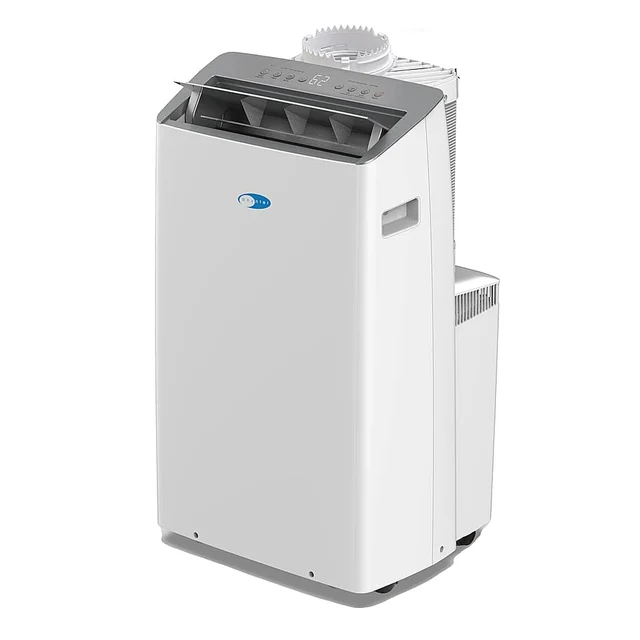
The big-room pick - the most rated cooling in this group, with hose-in-hose dual hoses and an inverter.
Best for: Large living rooms, open-plan spaces, and hot climates where a smaller unit would run flat-out all day
- Highest rated cooling output here (12,000 BTU SACC), rated for spaces up to 600 sq ft
- Whynter lists a dehumidifying capacity of 87 pints per day
- Inverter compressor; Whynter lists 42.5 dB on low and 56.5 dB on high, plus Wi-Fi and Alexa or Google Home voice control
- Big, heavy, and expensive - overkill for a small bedroom
- Owners report the companion app is the weakest part of an otherwise excellent machine
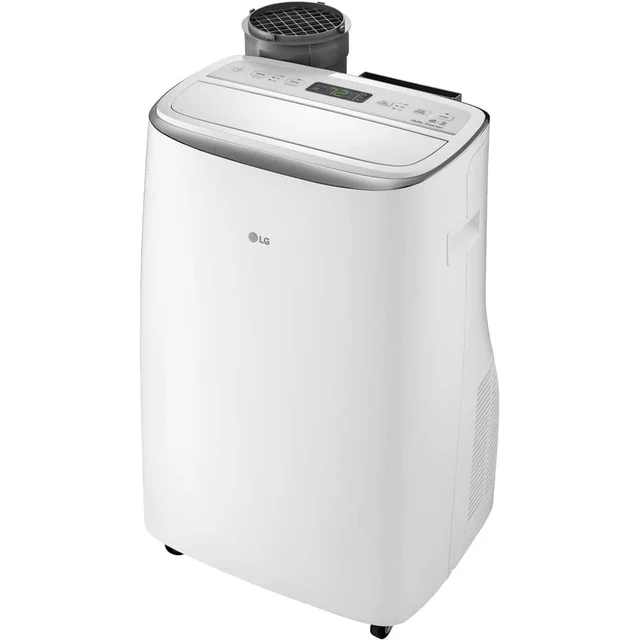
An inverter machine hampered by a single hose and a premium price.
Best for: Buyers loyal to LG's ecosystem who need quiet cooling in a mild-to-moderate climate and can find it discounted
- Dual Inverter compressor with variable-speed operation, built for quiet running at low speeds
- LG ThinQ app and voice control, with LG's owner's manual still current
- Oscillating top vent spreads air well across medium rooms
- Single-hose design creates negative pressure that pulls warm air back in, hurting efficiency on the hottest days
- Heavy for a single-hose unit, and priced in the premium tier alongside dual-hose competitors
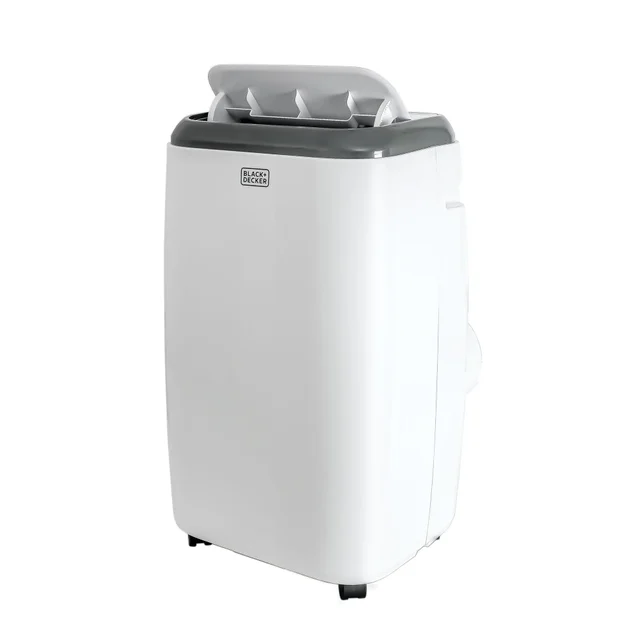
Cheap and simple, but a single-hose design without an inverter that owners describe as loud.
Best for: Occasional use in a small room on a tight budget
- Lightest unit in this group at 60 lb, with an included window kit and 4.9 ft hose
- Remote included, with cool, fan and dehumidifying modes and self-evaporating operation
- No inverter listed; owners report loud compressor cycling
- Single hose means it can struggle once rooms get hot; remote control only, no Wi-Fi listed
| Criteria | Midea Duo Smart Inverter Portable AC (MAP12S1) Top pick Buy it Buy | Whynter NEX ARC-1230WN Dual Hose Inverter Portable AC Buy it Buy | LG LP1419IVSM Dual Inverter Smart Portable AC It depends Buy | BLACK+DECKER BPP10WTB Portable Air Conditioner Skip it Buy |
|---|---|---|---|---|
| Best for | Anyone who wants the best overall mix of cooling speed, quietness, and efficiency in a bedroom, office, or living room up to about 450 sq ft | Large living rooms, open-plan spaces, and hot climates where a smaller unit would run flat-out all day | Buyers loyal to LG's ecosystem who need quiet cooling in a mild-to-moderate climate and can find it discounted | Occasional use in a small room on a tight budget |
| Price tier | $$ · mid-range | $$$ · premium | $$$ · premium | $ · budget |
| Real cooling power (SACC) | 10,000 BTU | 12,000 BTU | 10,000 BTU (DOE) | 10,000 BTU |
| Hose design | Dual (hose-in-hose) | Dual (hose-in-hose) | Single hose | Single hose |
| Compressor type | Inverter (variable speed) | Inverter (variable speed) | Dual Inverter (variable speed) | No inverter listed |
| Noise character | As low as 42 dBA (maker figure) | 42.5 dB low, 56.5 dB high (maker figure) | Quiet at low speeds, louder at max | Owners report loud compressor cycling |
| Rated coverage | Up to 450 sq ft | Up to 600 sq ft | See LG for coverage | Up to 450 sq ft |
| Smart features | Wi-Fi app + Alexa/Google | Wi-Fi app + Alexa/Google | LG ThinQ app + voice | Remote control only |
| Weight / bulk | Heavy (~73 lb) | Heavy (~77 lb) | Heavy (see LG) | Lightest (60 lb) |
| Price tier | $$ · mid-range | $$$ · premium | $$$ · premium | $ · budget |
Which one is right for you?
- Anyone who wants the best overall mix of cooling speed, quietness, and efficiency in a bedroom, office, or living room up to about 450 sq ft Buy it Midea Duo Smart Inverter Portable AC (MAP12S1)
- Large living rooms, open-plan spaces, and hot climates where a smaller unit would run flat-out all day Buy it Whynter NEX ARC-1230WN Dual Hose Inverter Portable AC
- Buyers loyal to LG's ecosystem who need quiet cooling in a mild-to-moderate climate and can find it discounted It depends LG LP1419IVSM Dual Inverter Smart Portable AC
- Occasional use in a small room on a tight budget Skip it BLACK+DECKER BPP10WTB Portable Air Conditioner
How we judged the field
We don’t run a lab. Instead, we worked from each maker’s published specifications and aggregated owner reports covering installation headaches and app quality. Four criteria mattered most: real cooling output (SACC, not inflated ASHRAE numbers), noise character during normal overnight use, efficiency (where hose count and compressor type dominate), and day-to-day livability - window-kit fit, drainage, weight, and controls. All four models are current and widely available in 2026.
Midea Duo Smart Inverter Portable AC (MAP12S1)
Buy itThe Midea Duo is the machine that reset expectations for this category, and the current MAP12S1 generation remains the best all-rounder. Its hose-in-hose dual-duct design looks like a single fat hose but functions as a true dual-hose system: outdoor air cools the condenser, so the unit never depressurizes your room. Midea rates it as low as 42 dBA, and the variable-speed inverter is designed to modulate rather than slam on and off, with Midea claiming over 40% energy savings versus the federal standard. Owners note two recurring gripes: it’s heavy and bulky to wrestle into place, and the Wi-Fi app can be temperamental. Neither dents the core value. For most bedrooms, offices, and living rooms, this is the one to buy.
Whynter NEX ARC-1230WN Dual Hose Inverter Portable AC
Buy itThe Whynter NEX ARC-1230WN answers a different question: what if you need serious cooling for a genuinely large space? With 12,000 BTU SACC - the most real cooling in this group - and a rating for rooms up to 600 sq ft, it’s the pick for open-plan areas and brutal climates. Its hose-in-hose dual-duct layout plus inverter compressor keep noise to 42.5 dB on low and 56.5 dB on high, per Whynter, and it lists 87 pints per day of dehumidifying. The costs are the obvious ones - at about 77 lb it is one of the heaviest units here, it is premium-priced, and owners grumble about the NetHome Plus app. If your space is bigger than a bedroom, spend up for this; if it isn’t, the Midea does the job for less.
LG LP1419IVSM Dual Inverter Smart Portable AC
It dependsLG’s LP1419IVSM is a well-engineered machine that has aged into an awkward spot. Its Dual Inverter compressor is built for quiet running at low speeds. Build quality and the ThinQ app are real assets. The problem is architecture: it’s a single-hose design, so on the hottest days it pulls warm outside air back into the room through every gap, blunting its efficiency exactly when you need it most - and it sits in the premium tier alongside dual-hose competitors that don’t have that handicap. If you’re in a mild climate, value quiet operation, and find it on a good discount, it will serve you well. At full price against the Midea Duo, it’s hard to justify.
BLACK+DECKER BPP10WTB Portable Air Conditioner
Skip itThe BPP10WTB is the archetypal budget portable AC: a single hose, a fixed-speed compressor, and a low sticker price. Credit where due - it’s the lightest unit here at 60 lb, the window kit and hose are included, and for occasional use in a small, not-too-hot room it does produce cold air. But owner reports describe the compressor cycling on and off loudly, and there’s no inverter, no Wi-Fi listed, and no path around the single-hose efficiency penalty. Unless budget is the only constraint, spending more on the Midea Duo buys a dual-hose inverter design.
Midea Duo Smart Inverter Portable AC (MAP12S1) vs Whynter NEX ARC-1230WN: which should you buy?
These two share the same winning formula - hose-in-hose dual ducts plus an inverter compressor - so the choice comes down to room size and budget. The Midea Duo costs less, and its 10,000 BTU SACC comfortably handles bedrooms, offices, and typical living rooms up to about 450 sq ft. The Whynter NEX brings 20% more rated cooling capacity and a 600 sq ft rating, but you pay for it in price, weight, and footprint. The rule: buy the Midea unless you know your space or climate will max it out; buy the Whynter when it will. Both apps are mediocre; neither should decide the purchase.
What to look for
- Dual hoses over single. A second (intake) hose prevents negative pressure and is a big upgrade in cooling efficiency.
- Compare SACC, not ASHRAE. The smaller DOE/SACC number reflects real cooling; marketing leads with the bigger one.
- Insist on an inverter compressor if the unit will run in a bedroom - variable speed means quieter, steadier, cheaper cooling.
- Check the window kit against your window type and dimensions before buying; casement and slider windows often need extra parts.
- Mind the weight and wheel quality if you’ll move it between rooms or up stairs - these machines run roughly 60 to 80 lb.
- Self-evaporative drainage can save you from emptying tanks; humid-climate users should still confirm a continuous-drain option.
Our final take
The portable AC market has split into two eras, and three of these four machines make the case plainly. The Midea Duo is the best portable air conditioner for most people: dual-hose efficiency, inverter quiet, and mid-range pricing in one package. The Whynter NEX ARC-1230WN is the justified upgrade for big rooms and punishing heat. The LG LP1419IVSM remains a quality machine that only makes sense discounted or in gentler climates, its single hose an anchor on otherwise excellent engineering. And the BLACK+DECKER BPP10WTB, honest budget workhorse though it is, belongs to the old era - loud, inefficient, and outclassed. Buy the new era; your sleep and your power bill will both notice.
Questions, answered
What's the difference between single-hose and dual-hose portable air conditioners?
A single-hose unit exhausts hot air outside using air it takes from your room, which creates negative pressure that pulls warm outside air back in through gaps - so it partly fights itself. A dual-hose unit draws outdoor air through a second (intake) hose to cool the condenser, so it doesn't depressurize the room. In practice, dual-hose models like the Midea Duo and Whynter NEX avoid that penalty, which matters most on very hot days.
Why do portable ACs list two different BTU numbers?
The bigger number is the older ASHRAE rating; the smaller one is SACC (DOE), a stricter standard that accounts for real-world losses like hot-air infiltration and duct heat. SACC is the number to compare. A '14,000 BTU' portable is often 10,000–12,000 BTU SACC - which is why we list SACC in our comparison table.
What size portable AC do I need for my room?
As a rough guide from manufacturer sizing: the 10,000 BTU SACC Midea Duo and BLACK+DECKER are rated for up to 450 sq ft, while the 12,000 BTU SACC Whynter NEX is rated for up to 600 sq ft. Sun exposure, ceiling height, insulation, and local climate all shift this - when in doubt, size up, especially with a single-hose design.
Do portable air conditioners need to be drained?
Many modern units, including the Whynter and BLACK+DECKER here, list self-evaporation - they exhaust condensed moisture out the hose. In very humid conditions the internal tank can still fill and trigger a shutoff, so owners in muggy climates note they occasionally drain the unit or run a continuous drain hose. Dehumidifier mode usually requires a drain.
Are inverter portable air conditioners worth the extra cost?
Often, yes. A non-inverter compressor like the BLACK+DECKER's is typically either full-blast or off, which means louder operation, temperature swings, and higher energy use. Inverter compressors ramp up and down smoothly, so they tend to be quieter, more efficient, and better at holding a set temperature.
Deciding between the top two? See our head-to-head: Midea Duo Smart Inverter Portable AC (MAP12S1) vs Whynter NEX ARC-1230WN Dual Hose Inverter Portable AC.
More in Home & Kitchen
Portable Air Conditioners, Explained Plain-English guide → Midea Duo Smart Inverter Portable AC (MAP12S1) vs Whynter NEX ARC-1230WN Dual Hose Inverter Portable AC Head-to-head →  The Best Portable Blenders: 4 Compared (and One to Skip)
  The Best Portable Generators for Home Backup: 4 Compared (and One to Skip)
  The Best Pressure Canners: 4 Compared (and One to Skip)
  The Best Range Hoods: 4 Compared (and One to Skip)