Explained
Portable Blenders, Explained
After reading, you'll understand how to compare portable blenders on power, capacity and safety.
In this guide
Portable blenders promise fresh smoothies anywhere, but they vary widely in power, battery life and build quality. The specifications that matter are battery voltage, blends per charge and blending capacity, and in this category it is also worth checking safety recalls before buying.
The 30-second version
- Voltage signals power, and 11.1V blenders handle ice better than low-voltage models.
- Blends per charge vary, usually from about 13 to 20 short cycles.
- Blending capacity is less than vessel size, because blenders need room to create a vortex.
- Recalls happen, so check the CPSC database for your model.
- Warranties vary, from one to three years.
The products this guide is about
Our verdict on each, with the full reasoning on the companion review.
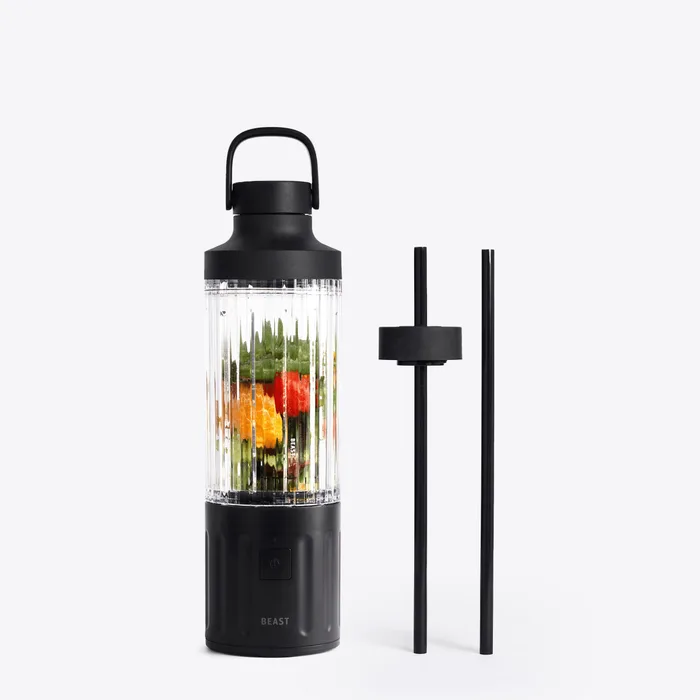
- Buy Beast GO Cordless A powerful, fully specified cordless blender with a travel lock and a 2-year warranty.
- Buy Cuisinart Personal Portable Blender PBL-100 An 18 oz cordless blender with the most blends per charge and the longest warranty here.
- It depends nutribullet Flip Insulated Blender Tumbler A blender and insulated steel tumbler in one, which keeps drinks cold all day and weighs the most.
- Skip BlendJet 2 The best-known portable blender, recalled by the millions, from a company the CPSC says has gone out of business.
What actually matters
- Battery voltage - higher voltage generally means more power for frozen ingredients.
- Blends per charge - how many short blending cycles a full charge gives.
- Capacity - how much the jar holds and how much it can blend.
- Blade and jar build - stainless steel blades and thick Tritan or steel cups last longer.
- Cleaning - self-cleaning cycles and dishwasher-safe parts make daily use easier.
- Travel lock - prevents accidental starts in a bag.
- Warranty and recalls - clear cover and a clean safety record matter for battery appliances.
The specs, in plain English
Green flags vs red flags
Green flags
- Battery voltage and blends per charge published.
- Blending capacity stated separately from vessel size.
- A travel lock.
- A multi-year warranty.
- No recalls for the model on the CPSC database.
Red flags
- A recent recall for the model.
- No warranty term.
- Claims of crushing anything with a low-voltage motor.
- No published dimensions or weight.
- Unclear company ownership or support.
Who's who: the brands
- Beast - Premium blender brand with the cordless GO motor base that works across its blending vessels.
- Cuisinart - Long-established kitchen appliance brand with a portable blender backed by a 3-year limited warranty.
- nutribullet - Personal blender brand whose portable range includes the insulated Flip.
- BlendJet - The brand behind the viral BlendJet 2, subject to a large CPSC recall.
How to read a listing without getting fooled
Start with battery voltage and blends per charge, then check the blending capacity and whether the maker says it handles ice and frozen fruit. Look at dimensions and weight if you will carry it daily. Check cleaning instructions, whether there is a travel lock, and the warranty term. Finally search the CPSC recall database for the model before buying.
How much should you spend?
Budget portable blenders are usually lower-voltage models best for protein shakes and soft fruit. The mid-range includes higher-voltage blenders from established brands with better warranties, and it suits most people. Premium features like insulated cups or cross-compatible systems cost more. A low price is less attractive if the warranty is short or the company's support is unclear.
Questions, answered
Can I take a portable blender on a plane?
Rules for lithium batteries and blades vary by airline and country and change over time. Check current guidance from your airline and aviation authority before travelling.
Why does my portable blender stop mid-blend?
Usually the battery is low, the jar is overfilled, or ingredients are too thick. Charge fully, add more liquid, reduce the load and cut frozen fruit into smaller pieces.
Can I blend hot liquids?
Most portable blenders are not designed for hot liquids, which can build pressure. Follow the maker's instructions, and blend cool or cold ingredients.
What should I do if my blender is recalled?
Stop using it and follow the recall instructions on the CPSC notice. For the BlendJet 2, the CPSC says the remedy is no longer available and recalled units should be discarded, not donated or resold.
Or jump to the head-to-head: Beast GO Cordless vs Cuisinart Personal Portable Blender PBL-100.