Explained
Portable Induction Cooktops, Explained
You'll know why your pans matter more than the burner, what the power and temperature numbers actually control, and how to spot a unit built to last.
In this guide
A portable induction cooktop is a countertop plate that heats through the pan itself instead of heating a coil or ceramic surface underneath it. That's what makes it fast and efficient, but it also means the burner is useless with the wrong cookware, and the spec sheet is full of numbers that only matter once you understand how induction actually works.
The 30-second version
- Your cookware decides everything. if a magnet doesn't stick firmly to the bottom of a pan, that pan will not heat on induction, no matter how good the burner is.
- Power levels and temperature levels are different controls. power presets set output as a percentage of wattage, while temperature settings try to hold an actual degree target, and the two aren't interchangeable.
- More steps mean finer control. a burner with 15-20 increments can hold a bare simmer; one with 5-6 coarse steps will swing between too hot and too cool.
- Auto-shutoff is a safety feature, not a flaw. the plate cools and stops heating the instant compatible cookware is lifted off or goes undetected, which is normal behavior, not a malfunction.
- Double burners split their wattage. two zones on one unit share a single power budget, so running both at max simultaneously means neither runs at full strength.
The products this guide is about
Our verdict on each, with the full reasoning on the companion review.
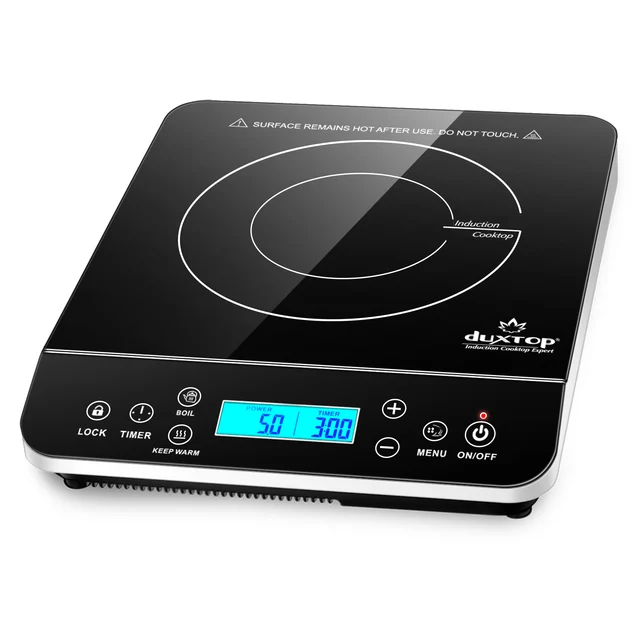
- Buy Duxtop 9600LS Portable Induction Cooktop The reliable, no-drama single burner that does almost everything most people need.
- Buy NuWave PIC Double Precision Induction Cooktop Two independently controlled zones when a single burner just isn't enough.
- It depends Breville Control Freak Induction Cooking System Lab-grade temperature accuracy that most home cooks don't actually need.
- Skip iSiLER 1800W Portable Induction Cooktop Cheap and cheerful, but the corners it cuts show up quickly.
What actually matters
- Magnetic cookware compatibility: induction uses a magnetic field to generate heat directly inside the metal of the pan, so the pan itself must be ferromagnetic (cast iron, most stainless steel) or it simply won't heat.
- Wattage: the maximum power the unit can draw, usually in the 1500-1800W range for portable single burners; higher wattage means faster boils and better performance under a heavy stockpot.
- Power levels vs temperature levels: power mode gives you a percentage of total wattage (simple, fast response); temperature mode uses a sensor to try to hold a target degree reading (more consistent for delicate cooking, but slower to react and less precise than it sounds).
- Heating zone size: the actual coil diameter under the glass, which is often smaller than the glass surface itself; a pan that doesn't roughly match the zone will heat unevenly, hot in the middle and cool at the edges.
- Single vs double burner: one zone is compact and simple for most cooking; two zones let you run separate pans at once but share total wattage and take up more counter space.
- Auto pan detection and shutoff: sensors that cut power when no compatible cookware is present or when a pan is lifted off, reducing the chance of an idle burner overheating.
- Fan and noise behavior: the electronics need active cooling, so a fan runs during use and often for a short period after you turn the unit off; this is standard, not a defect.
The specs, in plain English
Green flags vs red flags
Green flags
- A double-digit number of power AND temperature steps, not just a handful of presets
- Clear pan-detection and auto-shutoff behavior described in the manual or listing
- A stated coil/zone diameter that matches the pans you actually own
- Owner reports mentioning years of regular use without failure
- A visible timer, child lock, and keep-warm mode as standard features
- Fan noise described as steady background hum rather than rattling or grinding
Red flags
- Only 5-6 total power settings with no separate temperature mode
- No stated coil size, forcing you to guess whether your cookware will center properly
- Owner reports of frequent error codes or units failing within the first year
- No mention of auto-shutoff or pan detection at all
- Listing photos showing only aluminum or copper cookware being used (a sign the seller doesn't understand induction)
- Unusually low price for the stated wattage, which often means thinner components and a shorter lifespan
Who's who: the brands
- Duxtop - Known for reliable, fine-control single burners that hold up well over years of daily use.
- NuWave - Focuses on flexible multi-zone and precision-programmable induction units, including double-burner models.
- Breville - Makes commercial-grade, lab-accurate induction systems aimed at serious and professional cooks.
- iSiLER - Budget-focused brand offering basic, compact single burners at an entry-level price point.
- Cosori - Consumer kitchen appliance brand that also makes accessibly priced portable induction burners.
- Max Burton - Long-running commercial and home induction cooktop maker often used in food-service settings.
How to read a listing without getting fooled
Start by checking whether the listing states an actual coil or zone diameter, not just the overall glass dimensions; a burner that only advertises overall size may have a coil far smaller than it looks. Count the real number of distinct power and temperature settings rather than trusting marketing terms like "precise control," since a unit with six steps is not fine control no matter how it's described. Look for explicit mentions of pan detection and auto-shutoff, and treat wattage as a ceiling, not a promise, since every setting below maximum only uses a portion of it. Finally, weigh owner reports on longevity and error codes more heavily than the initial feature list, since that's where cheaper units tend to reveal their corners cut.
How much should you spend?
Entry-level single burners get you basic touch controls, a fixed handful of power steps, and enough wattage to boil water, which is fine for occasional or backup use but tends to show its limits on fine simmering and long-term durability. Stepping up into the mid-range typically buys you finer power and temperature increments, sturdier components, and a stronger track record in owner reports, which is where the value sweet spot sits for most households. Beyond that, premium multi-zone units add a genuine second cooking surface, and flagship precision systems add lab-grade temperature holding with a sensor probe, features that matter enormously to a narrow set of buyers, like recipe developers or candy and chocolate work, but add cost far out of proportion to what everyday boiling, searing, and simmering actually require. Spend based on how finely you need to control heat and how hard you'll use the burner, not on the highest wattage number you can find.
Questions, answered
How do I know if my pots and pans will work?
Hold a refrigerator magnet to the bottom of the pan. If it sticks firmly, the pan is magnetic and will heat on induction. Cast iron and most stainless steel pass this test; plain aluminum, copper, and glass or ceramic cookware do not, since they aren't magnetic.
What's the difference between power levels and temperature levels?
Power levels set output as a percentage of the unit's total wattage, similar to a gas burner's flame size, and respond instantly. Temperature levels use a built-in sensor to try to hold an actual degree target, which is useful for gentler cooking but reacts more slowly and depends on how accurately the sensor reads the surface.
Why is my burner making noise or clicking on and off?
A cooling fan runs whenever the unit is powered on and often for a short while after, which is normal. Some units also pulse power on and off rapidly to hold a low setting, which can sound like clicking or humming. Persistent rattling, grinding, or frequent error codes are the signs actually worth worrying about.
Do I need a single burner or a double?
A single burner covers most one- and two-person cooking and is easier to store. A double is worth it if you regularly need to run two pans at once, such as a main and a side, but remember that most double units share one total wattage budget between both zones, so running both at full power simultaneously means neither gets maximum output.
Is it normal for the middle of my pan to heat faster than the edges?
Yes, to a degree. The magnetic coil under the glass is usually smaller than the visible cooking surface, so a pan much larger than that coil will show a hotter center and cooler edges. Matching your pan size to the stated coil diameter minimizes this.
Are portable induction cooktops safe to use around kids or leave briefly unattended?
They're generally safer than an open flame because they only heat when compatible cookware is detected and shut off automatically when the pan is removed, and most include a child lock to disable the controls. That said, they're still a heat-producing appliance: use the timer, keep vents clear, and don't leave actively cooking food unattended for long periods.
Or jump to the head-to-head: Duxtop 9600LS Portable Induction Cooktop vs NuWave PIC Double Precision Induction Cooktop.