Explained
Range Hoods, Explained
After reading, you'll know what actually makes a range hood work and how to pick one that matches how you really cook.
In this guide
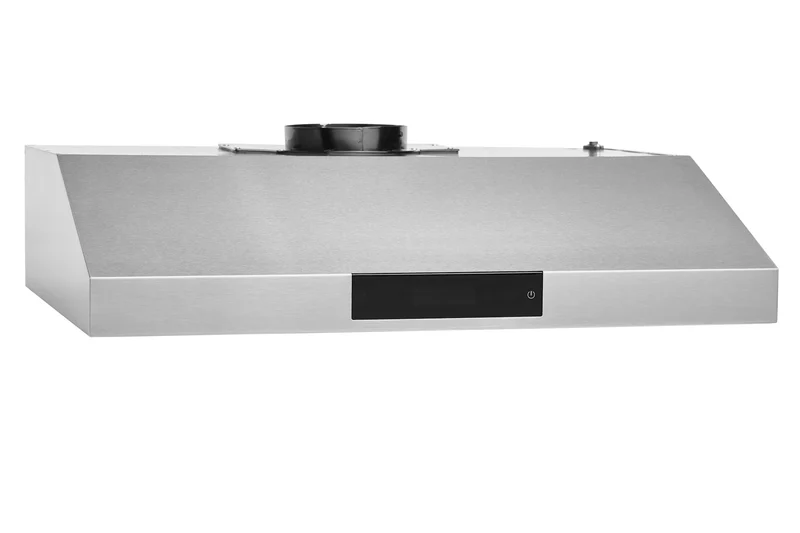
A range hood has one job: pull smoke, grease, heat, and humidity out of your kitchen while you cook. The big number on the box (CFM) gets all the attention, but whether the hood vents outside, what filters it uses, and how it's sized for your cooktop matter far more. Most buyers get talked into a spec sheet instead of matching a hood to how they actually cook.
The 30-second version
- Ducted usually beats ductless. A hood that vents outside removes smoke and heat; a recirculating one just filters air and blows it back into the room.
- CFM is a ceiling, not a promise. The airflow rating assumes ideal ducting, so a long, kinked duct run can cut real-world performance.
- Match the hood to your cooking, not the stove. Light electric cooking needs far less air than a high-BTU gas range, frequent searing, or a wok.
- The motor is a common failure point. A lifetime motor warranty is a useful signal of long-term value.
- You'll rarely run it at max. Quiet mid-speeds matter more day to day than the loud top-end rating the box brags about.
The products this guide is about
Our verdict on each, with the full reasoning on the companion review.
- Buy Hauslane Chef Series UC-PS18 (30-inch) A dual-motor under-cabinet workhorse with a rated 860 CFM equivalent airflow.
- Buy Broan-NuTone Sahale BKSA130SS (30-inch) A quiet, low-profile budget hood that nails the basics for everyday cooking.
- It depends ZLINE GL2i-36 Island Mount Range Hood (36-inch) A well-built island hood with 400 CFM at top speed, but the install is a project. Amazon
- Skip Broan-NuTone 413001 Ductless Under-Cabinet Range Hood (30-inch) A cheap recirculating hood that filters air instead of removing it - skip it if you can vent outside. Amazon
What actually matters
- Ducted vs. ductless venting - whether the hood sends air outside or recirculates it is the single biggest factor in whether it actually clears your kitchen. Choose a convertible model to keep the option open.
- Real airflow for your cooking - a hood only needs enough capacity for how you cook. Gas ranges, high-heat searing, and open islands demand more; light everyday electric cooking needs much less.
- Filter type - stainless baffle filters channel and trap grease better and tend to last under repeated washing; mesh is lighter-duty but fine for occasional cooking.
- Noise at usable speeds - powerful hoods are loud at full power, so how quiet they are at the mid speeds you'll actually use matters more than the max rating.
- Size and mount - the hood should span your cooktop and match your layout, whether under-cabinet, wall, or island (island hoods lose capture on all four open sides).
- Duct run quality - short, smooth, wide ducting with minimal bends makes any hood quieter and more effective than a cramped, twisty run.
- Warranty on the motor - the motor is a part that can give out, so warranty coverage there tells you more than a blanket product warranty.
The specs, in plain English
Green flags vs red flags
Green flags
- Convertible design so you can duct outside now or later
- Stainless baffle filters if you cook with real heat, and dishwasher-safe filters either way
- A lifetime or long motor warranty, since the motor is a common failure point
- Multiple fan speeds, including a quiet low setting for everyday use
- A width that spans your cooktop and a mount that fits your layout
- Bright, integrated LED lighting over the cooking surface
Red flags
- Ductless-only with no option to vent outside, when your kitchen could be ducted
- A huge CFM number as the headline with little said about filters, noise, or venting
- Thin, flimsy mesh filters marketed for heavy cooking
- Loud at low and mid speeds, not just at full power
- A short or vague warranty, especially on the motor
- A hood narrower than your cooktop, which leaves smoke uncaptured at the edges
Who's who: the brands
- Hauslane - Known for value-focused under-cabinet hoods, including high-output dual-motor models aimed at people who cook with real heat.
- Broan-NuTone - A long-standing maker spanning budget builder-grade units to everyday hoods.
- ZLINE - Design-led stainless hoods, including striking island and chimney models where looks are a big part of the appeal.
- Cosmo - Stainless hoods with modern styling across a range of price points.
- Zephyr - Higher-end, design-forward ventilation; check each model's noise ratings.
How to read a listing without getting fooled
Start by finding out whether the hood vents outside or only recirculates, since that decides more than any other spec. Treat the CFM figure as a best-case ceiling that a poor duct run will erode, not a guarantee; a convertible model that vents outside on a short, smooth duct will beat a higher-rated hood that recirculates. Check the filter type against how you cook, look for a noise rating at the speeds you'll actually use rather than just the loud maximum, and confirm the width matches your cooktop. Finally, read the warranty closely and see whether the motor, the part most likely to fail, is covered for the long haul.
How much should you spend?
What you pay tracks build quality, real airflow, filter type, and warranty more than the badge. The value sweet spot is a well-built, convertible under-cabinet or wall hood that vents outside, uses durable filters, and covers the motor; that's plenty for most kitchens and worth stretching for over a bare builder-grade unit. Spending more is justified when you cook with serious heat and need genuine extraction, or when an island hood's all-sides finish and ceiling install are unavoidable. It's not worth paying up purely for a big CFM headline or a design statement if you cook lightly, and the cheapest ductless-only hoods are often a false economy that leaves smoke and heat in the room.
Questions, answered
How much CFM do I actually need?
It depends on how you cook, not just the stove. Light everyday cooking on an electric range gets by with a modest hood, while a gas range, frequent searing, or wok cooking calls for a higher-output ducted hood. Island hoods tend to need more capacity because air escapes on all four open sides.
Ducted or ductless, does it really matter?
A lot. A ducted hood sends smoke, grease, heat, and humidity outside; a ductless one just runs air through a charcoal filter and blows it back into the kitchen. If you can vent outside, do it, and buy a convertible model so you keep the option.
Are baffle filters worth it over mesh?
For heavier cooking, yes. Baffle filters channel and trap grease more effectively and tend to hold up better over years of washing. Mesh filters are fine for lighter, occasional cooking.
What size range hood should I get?
At minimum, match the hood to the width of your cooktop; going a size wider improves capture, especially for gas or heavy cooking. Under-cabinet and wall hoods are the common choices, while island hoods need to be sized up because they lose air on every side.
Why are range hoods so loud, and can I make mine quieter?
Powerful hoods are loudest at full power, which you rarely need except during heavy searing. Running the hood a speed or two down, and installing a short, smooth, properly-sized duct with minimal bends, keeps any hood noticeably quieter than a cramped or undersized run.
Or jump to the head-to-head: Hauslane Chef Series UC-PS18 (30-inch) vs Broan-NuTone Sahale BKSA130SS (30-inch).