Explained
Pole Saws, Explained
After reading, you'll know how much reach you actually need, which specs matter for your branches, and how to cut overhead without getting hurt.
In this guide
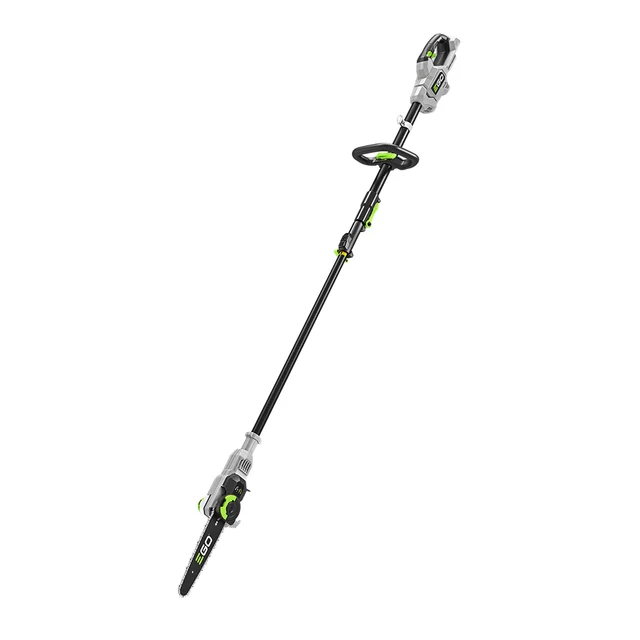
A pole saw is a small chainsaw on the end of a long pole, built so you can trim high branches with both feet on the ground instead of dragging a ladder into a tree. The category confuses first-time buyers because the number that sells the tool (total reach) isn't the number that keeps you safe (how high you can actually control the cut), and because 'weight' on the shelf tells you nothing about how heavy the saw feels held straight up at full extension. Get those two ideas straight and the rest of the choice is easy.
The 30-second version
- Reach is oversold, safe working height is what counts. so add your own height and arm reach to the tool's length and plan around the branch you can actually control, not the tallest one you can touch.
- Weight at full extension beats raw power for most people, because a saw you can't hold up steadily is one you can't cut safely, and fatigue is where accidents start.
- Match the bar length to the branches you cut most, not the thickest branch you can imagine, since a bigger bar mostly adds weight out at the far end of the pole.
- Cordless has become the sensible default for moving around a yard, while corded trades a tether and cord-management hassle for unlimited runtime near an outlet.
- The hidden cost is the battery platform you commit to, so owning compatible batteries already, or being willing to buy into a system, often decides the smart pick.
The products this guide is about
Our verdict on each, with the full reasoning on the companion review.
- Buy EGO POWER+ 10" Telescoping Pole Saw (PS1001) The best all-round pole saw: a light carbon-fiber telescoping shaft, real reach, and a 10-inch bar driven by one 56V battery.
- Buy Milwaukee M18 FUEL 10" Pole Saw w/ QUIK-LOK (2825-21PS) A pro-grade 10-inch pole saw and, thanks to the QUIK-LOK system, the head of a whole modular yard tool set for M18 owners.
- It depends DeWalt 20V MAX XR Cordless Pole Saw (DCPS620) A light, tall-reaching 20V pole saw that's a great value if you already own DeWalt batteries, and a narrower buy if you don't.
- Skip Sun Joe SWJ803E Electric Multi-Angle Pole Chain Saw (10-inch) An inexpensive corded pole saw with a 10-inch bar, but the cord tether undercuts the whole point of working up high and on the move.
What actually matters
- Reach matched to your trees. A tool that extends to roughly 10 to 13 feet puts branches around 15 feet up within safe ground-level reach for most people, which covers the vast majority of yard pruning. Needing more than that regularly is a sign the job belongs to a tree service, not a homeowner pole saw.
- Bar length and cut capacity. The bar is the flat metal guide the chain runs around, and its length caps how thick a branch you can cut in one pass. Bigger cuts thicker but weighs more up high; size the bar a couple of inches over the branches you cut most often.
- Weight and balance at full extension. The only weight that matters is how the saw feels held overhead with the battery fitted and the pole extended, not collapsed on a store shelf. A lighter, better-balanced saw is one you can actually control for a full session.
- Power source and runtime. Battery voltage roughly tracks cutting muscle, and for cordless models the useful number is cuts per charge plus how easily you can add a spare pack. Corded gives unlimited runtime but ties you to an outlet.
- Auto-oiler and chain tensioning. You can't easily service a chain that's ten feet in the air, so an automatic oiler with an easy-to-check reservoir and simple, tool-free tensioning is close to essential rather than a luxury.
- Conversion and platform. Some poles are a powered shaft that accepts other heads (trimmer, edger, hedge tool), turning one purchase into several tools. Buying into a battery system you already own usually saves the most money overall.
- Safety features. A low-kickback chain, a pole that locks positively at each length, and a shoulder strap all reduce risk during the overhead, arms-extended work a pole saw is built for.
The specs, in plain English
Green flags vs red flags
Green flags
- A telescoping or locking pole that clicks firmly into each length with no wobble or slip under load.
- An automatic oiler with a see-through or easy-to-check reservoir, plus tool-free chain tensioning you can adjust by hand.
- A light, well-balanced feel when the pole is extended and the battery is fitted, not just when it's collapsed.
- A low-kickback chain and, ideally, a shoulder strap to spread the load during long sessions.
- A battery that fits a platform you already own, or a clearly priced kit that includes battery and charger.
- Honest reach guidance that talks about safe working height, not just a big total-length number.
Red flags
- A headline reach figure with no mention of how high you can safely and steadily cut.
- Manual-only oiling or fiddly, tool-required chain tensioning on a saw you'll be using overhead.
- A listing that hides whether it's a bare tool, so the real cost jumps once you add a battery and charger.
- A big, heavy bar and battery paired with a flimsy pole, which feels unmanageable at full extension.
- A pole lock that feels loose, sticky, or vague, since slippage under load is a genuine hazard.
- Marketing that implies you can safely cut far higher by stretching or standing on something.
Who's who: the brands
- EGO - Known for high-voltage 56V cordless outdoor tools that cut close to gas, often with light, well-balanced designs.
- Milwaukee - Pro-grade M18 cordless platform with strong cutting power and modular attachment systems that share one battery across many tools.
- DeWalt - Widely owned 20V MAX battery platform with light, tall-reaching tools popular with existing DeWalt owners.
- Sun Joe - Budget-focused outdoor tools, including corded electric pole saws aimed at small yards and tight budgets.
How to read a listing without getting fooled
Start by separating the reach headline from your real working height: whatever total length the listing brags about, your safe overhead reach is that number plus your own height and arm reach, and you should plan to stay comfortably inside what you can control. Next, find the bar length and match it to the branches you actually cut, not the biggest limb you can picture. Then check whether the price is for a complete kit or a bare tool, because a cheap-looking bare tool can cost more than a kit once you add a battery and charger, and confirm which battery platform it uses so you're not committing to a second system by accident. Look for the words 'automatic oiler' and 'tool-free tensioning,' and be skeptical of any weight figure that isn't described at full extension. Finally, read owner reports and independent testing for how the saw behaves held up high over time, since balance and pole stability are things a spec sheet can't convey.
How much should you spend?
Pole saw prices climb mainly with cutting power, build quality, and how light and well-balanced the tool stays at full extension, so you're often paying for a shaft you can hold up comfortably as much as for the motor. The value sweet spot for most homeowners is a capable cordless kit that includes the battery and charger, cuts the mid-size limbs a typical yard throws at you, and doesn't punish your arms after a few minutes. Spending up is genuinely worth it if you prune often, cut thicker limbs, or want a modular shaft that converts into other yard tools, and it's easy to justify when the saw shares batteries you already own. Spending up is not worth it if you trim a few times a year near an outlet, where a simpler corded model does the job, or if a pricier saw's only advantage is more reach than you can safely use. The most expensive mistake is ignoring the battery platform, since committing to a new system can quietly cost more over time than the saw itself.
Questions, answered
How much reach do I really need, and how high can I safely cut?
Add your own height and arm reach to the tool's length: a pole saw that extends to about 10 to 13 feet lets most people cut branches roughly 15 feet up while standing safely on the ground, which covers the great majority of yard pruning. Resist the urge to cut higher by stretching or standing on something, because control drops fast at full extension and falling limbs become unpredictable. If you routinely need more than about 15 feet of overhead reach, that's tree-service territory, not a homeowner pole saw.
Cordless or corded, which should I get?
For working up high and moving around a yard, cordless has become the easier and safer choice, because you can turn and reach freely without a cord to manage overhead or trip on while you're looking up. A corded saw gives unlimited runtime and a lower price, but the tether limits how far you roam and adds an extension cord to the risk picture. Unless you only ever cut a few feet from an outlet in a small yard, the flexibility of cordless usually wins.
What bar length and cut capacity do I actually need?
Match the bar to the branches you cut most. An 8-inch bar handles thinner limbs and keeps weight low for reach, while a 10-inch bar takes on thicker limbs in a single pass. As a rule, the bar should be a couple of inches longer than the branch you cut most often. Going bigger than you need mostly adds weight out at the end of a long pole, which is exactly where fatigue and control problems begin.
Do I need an auto-oiler, and how do I maintain a pole saw?
Yes, an automatic oiler matters, because a dry chain and bar wear out fast and cut poorly, and reaching an overhead chain to oil it by hand is impractical. Your main jobs are to keep the oil reservoir topped up and check the chain tension before each session; beyond that, keep the chain sharp, clear sawdust from the bar groove, and store the saw with a little oil on the chain. A well-oiled, properly tensioned chain is safer and does far more cutting per charge.
Are pole saws safe to use, and what should a beginner watch for?
They're safe with the right habits, and the biggest rule is to never stand directly under the branch you're cutting, because it will fall toward you. Plan an escape path, keep bystanders and pets well clear of the drop zone, and never cut anywhere near power lines. Watch for the branch binding or the bar kicking back at the tip, wear a helmet or hard hat plus eye and ear protection and gloves, and consider chaps for lower work. Because you're working overhead at arm's length, take breaks before fatigue sets in, since tired arms are where control and accuracy slip. This is general safety information, not a substitute for the manufacturer's instructions or professional help when a job is beyond a homeowner tool.
Or jump to the head-to-head: EGO POWER+ 10" Telescoping Pole Saw (PS1001) vs Milwaukee M18 FUEL 10" Pole Saw w/ QUIK-LOK (2825-21PS).