

Outdoors & Fitness
The Best Pole Saws: 4 Compared (and One to Skip)
We compared four pole saws across cordless and corded on reach, bar and cut capacity, runtime, weight at full extension, and safety.
The short version
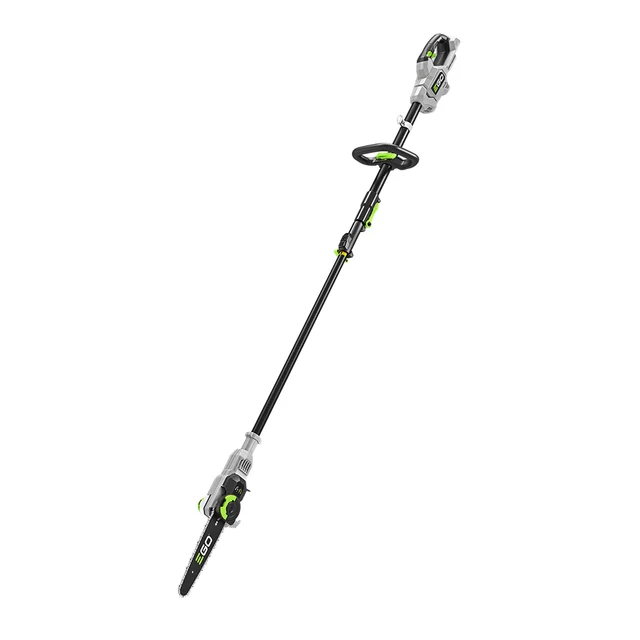
For most people the EGO POWER+ 10" Telescoping Pole Saw (PS1001) is the one to buy: a carbon-fiber telescoping shaft that reaches roughly 13 feet, a 10-inch low-kickback bar, near-gas cutting from a single 56V battery, and a light, balanced feel at full extension, all as a ready-to-run kit. If you already own Milwaukee M18 tools, the M18 FUEL pole saw with QUIK-LOK cuts hard and turns one shaft into a whole modular tool set. The DeWalt 20V MAX (DCPS620) reaches the highest and is lovely and light, but its 8-inch bar and usual bare-tool pricing make it a clear buy mainly for existing DeWalt owners. The corded Sun Joe SWJ803E is cheap and cuts fine, yet the cord tether limits reach and mobility exactly where a pole saw needs it, so it's the one to skip unless budget rules everything. Best for: homeowners who want to trim high branches safely from the ground with a light, capable cordless saw.
Our picks at a glance
- EGO POWER+ 10" Telescoping Pole Saw (PS1001) - Buy. The best all-round pole saw: a light carbon-fiber telescoping shaft, real reach, and a 10-inch bar driven by one 56V battery.
- Milwaukee M18 FUEL 10" Pole Saw w/ QUIK-LOK (2825-21PS) - Buy. A pro-grade 10-inch pole saw and, thanks to the QUIK-LOK system, the head of a whole modular yard tool set for M18 owners.
- DeWalt 20V MAX XR Cordless Pole Saw (DCPS620) - It depends. A light, tall-reaching 20V pole saw that's a great value if you already own DeWalt batteries, and a narrower buy if you don't.
- Sun Joe SWJ803E Electric Multi-Angle Pole Chain Saw (10-inch) - Skip. An inexpensive corded pole saw with a 10-inch bar, but the cord tether undercuts the whole point of working up high and on the move.
The verdict in 30 seconds
What mattered most
- Power source
- Bar length & cut capacity
- Reach, extended
- Runtime
- Weight & balance at full extension
- Auto-oiler & conversion
Trimming high branches from the ground beats dragging a ladder into a tree, and a good pole saw makes it safe and quick. We synthesized independent testing and aggregated owner reports across four popular pole saws that span self-contained cordless, a modular battery attachment system, and a corded electric option: two we'd happily recommend, one that only makes sense for a specific buyer, and one most people should now skip. The right pick comes down to how high you cut, how thick the branches are, and whether you already own a battery platform.
The best all-round pole saw: a light carbon-fiber telescoping shaft, real reach, and a 10-inch bar driven by one 56V battery.
Best for: Homeowners who want one capable, low-hassle cordless pole saw for high branches without buying into an attachment system.
- Carbon-fiber telescoping shaft reaches roughly 13 feet on its own and further with the optional extension, so you can cut high branches from the ground
- 10-inch bar and low-kickback chain handle limbs most homeowners face, and owners report near-gas cutting from the 56V motor
- Notably light and well balanced for its reach, which independent testing and owners agree cuts arm fatigue at full extension
- Ships as a kit with battery and charger, plus an LED cut-line indicator and automatic oiling, so it works out of the box
- The included battery powers around 100 cuts, so heavy pruning days want a spare pack
- It's a dedicated pole saw, not a modular head, so the shaft won't convert into other yard tools
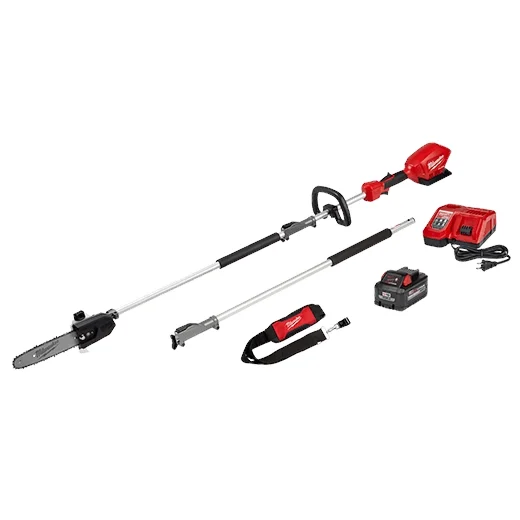
A pro-grade 10-inch pole saw and, thanks to the QUIK-LOK system, the head of a whole modular yard tool set for M18 owners.
Best for: Owners already invested in Milwaukee M18 who want serious cutting power and a modular attachment system.
- Brushless M18 FUEL power and a high-output pack give cutting speed independent testing rates among the strongest in the cordless class
- QUIK-LOK modular shaft accepts other attachment heads, so the same pole becomes a string trimmer, edger, or hedge tool
- 10-inch bar, metal-reinforced build, and automatic oiling make it durable for regular, heavier limbing
- Shares one battery with a huge M18 lineup, so existing owners skip buying into a second platform
- Premium price, and the high-output battery it wants adds cost and weight up top
- Overkill if you don't already own M18 tools and only prune a few times a year

A light, tall-reaching 20V pole saw that's a great value if you already own DeWalt batteries, and a narrower buy if you don't.
Best for: Existing DeWalt 20V MAX owners who prioritize maximum reach and light weight over the biggest cut capacity.
- Brushless motor and a long pole give reach up to about 15 feet, among the tallest here for overhead branches
- Light and well balanced with the smaller 8-inch bar, which owners say makes it easy to control at full height
- Automatic oiling and low maintenance keep upkeep minimal
- Runs on the widely owned 20V MAX platform, so batteries are shared across a large tool range
- The 8-inch bar and chain limit branch diameter compared with the 10-inch saws, so thick limbs take more passes
- Commonly sold as a bare tool, so the real cost climbs once you add a battery and charger if you're not already on 20V MAX
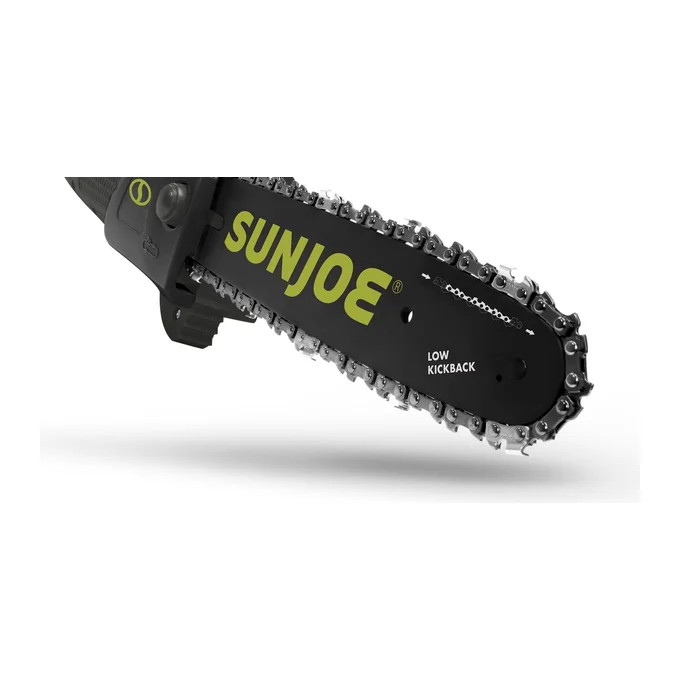
An inexpensive corded pole saw with a 10-inch bar, but the cord tether undercuts the whole point of working up high and on the move.
Best for: Buyers on the tightest budget with a small yard, cutting close to an outlet and unbothered by an extension cord.
- Lowest entry cost of the group and never needs a battery charged
- 10-inch bar with a multi-angle cutting head and automatic oiling
- Unlimited runtime while plugged in, so long pruning sessions never pause to recharge
- Light powerhead and simple design with little to maintain
- A power cord tethers you to an outlet, so reach and mobility around a yard are limited and you're managing a cord underfoot while looking up
- Extending the pole with a live cord overhead is more awkward and less safe than an untethered cordless saw
- Cordless pole saws have closed the price and power gap, leaving little reason to accept the tether for typical yards
| Criteria | EGO POWER+ 10" Telescoping Pole Saw (PS1001) Top pick | Milwaukee M18 FUEL 10" Pole Saw w/ QUIK-LOK (2825-21PS) | DeWalt 20V MAX XR Cordless Pole Saw (DCPS620) | Sun Joe SWJ803E Electric Multi-Angle Pole Chain Saw (10-inch) |
|---|---|---|---|---|
| Verdict | Buy it | Buy it | It depends | Skip it |
| Best for | Homeowners who want one capable, low-hassle cordless pole saw for high branches without buying into an attachment system. | Owners already invested in Milwaukee M18 who want serious cutting power and a modular attachment system. | Existing DeWalt 20V MAX owners who prioritize maximum reach and light weight over the biggest cut capacity. | Buyers on the tightest budget with a small yard, cutting close to an outlet and unbothered by an extension cord. |
| Price tier | $$ · mid-range | $$$ · premium | $$ · mid-range | $ · budget |
| Power source | 56V battery (2.5Ah kit) | M18 battery (high-output kit) | 20V MAX (often bare tool) | Corded electric (8-amp) |
| Bar length & cut capacity | 10 in, mid-size limbs | 10 in, mid-size limbs | 8 in, thinner limbs | 10 in, mid-size limbs |
| Reach, extended | ~13 ft (more with extension) | ~10 ft tool, ~15 ft overhead | Up to ~15 ft, tallest here | ~9 ft pole, near tether |
| Runtime | ~100 cuts per charge | Long, high-output pack | Depends on pack fitted | Unlimited while plugged in |
| Weight & balance at full extension | Lightest, carbon-fiber shaft | Heaviest, big pack up top | Light, easy to control | Light head, cord underfoot |
| Auto-oiler & conversion | Automatic oiler, dedicated pole | Automatic oiler, modular QUIK-LOK | Automatic oiler, dedicated pole | Automatic oiler, multi-angle head |
| Safety | Low-kickback chain, LED cut line | Low-kickback chain, metal build | Low-kickback chain, light control | Low-kickback chain, corded caution |
| Price tier | $$ · mid-range | $$$ · premium | $$ · mid-range | $ · budget |
Which one is right for you?
- Homeowners who want one capable, low-hassle cordless pole saw for high branches without buying into an attachment system. Buy it EGO POWER+ 10" Telescoping Pole Saw (PS1001)
- Owners already invested in Milwaukee M18 who want serious cutting power and a modular attachment system. Buy it Milwaukee M18 FUEL 10" Pole Saw w/ QUIK-LOK (2825-21PS)
- Existing DeWalt 20V MAX owners who prioritize maximum reach and light weight over the biggest cut capacity. It depends DeWalt 20V MAX XR Cordless Pole Saw (DCPS620)
- Buyers on the tightest budget with a small yard, cutting close to an outlet and unbothered by an extension cord. Skip it Sun Joe SWJ803E Electric Multi-Angle Pole Chain Saw (10-inch)
How we judged the field
We don’t run our own cutting lab. Instead we synthesize independent testing, expert teardowns, and aggregated owner reports, then weigh them against what actually matters for a pole saw. Our priorities, in order: usable reach and how steady the saw feels at full extension; bar length and cut capacity matched to real branches; cutting power and, for cordless, runtime per charge; weight and balance out at the end of a long pole, which is where fatigue lives; the practical stuff, meaning the automatic oiler, chain tensioning, and whether the shaft converts into other tools; and finally value, including whether you already own a compatible battery platform.
We deliberately spanned the range, from a self-contained cordless saw to a modular battery attachment system to a corded electric model, so the comparison reflects the real choice you face rather than four near-identical tools. Across sources, three themes came up again and again: high-voltage cordless saws have closed most of the gap to corded and gas, weight at full extension matters more than raw power for most people, and the biggest hidden cost is the battery platform you commit to.
EGO POWER+ 10” Telescoping Pole Saw (PS1001) - buy
This is the pole saw we’d hand most homeowners. The carbon-fiber telescoping shaft extends to roughly 13 feet on its own, and further with the optional extension pole, so you can reach branches around 15 feet up while keeping both feet on the ground. The 10-inch bar and low-kickback chain take on the mid-size limbs most yards throw at you, and owners consistently describe the 56V motor as cutting close to a small gas saw. What sets it apart at height is weight: the carbon-fiber build is notably light and well balanced, which independent testing and owners agree cuts the arm fatigue that makes long pruning sessions miserable. It ships as a kit with battery and charger, adds an LED cut-line indicator for shaded cutting and automatic oiling, and simply works out of the box. The honest caveats: the included battery is good for around 100 cuts, so a big pruning day wants a spare, and because it’s a dedicated pole saw rather than a modular head, the shaft won’t convert into other yard tools. Neither is a dealbreaker for typical use.
Milwaukee M18 FUEL 10” Pole Saw w/ QUIK-LOK (2825-21PS) - buy
If you already own Milwaukee M18 tools, this is arguably the smarter buy than starting a new platform. The brushless M18 FUEL motor paired with a high-output battery delivers cutting speed independent testing rates among the strongest in the cordless class, and the 10-inch bar and sturdy, metal-reinforced build stand up to regular, heavier limbing. Its real party trick is the QUIK-LOK system: the same powered shaft accepts other attachment heads, so one purchase can become a string trimmer, edger, or hedge tool, which is genuinely useful if you’re kitting out a yard. It carries the expected automatic oiler. The trade-offs are cost and heft: it’s a premium tool, and the large high-output pack it wants adds both price and weight up top, which you feel at full extension. For an M18 owner who prunes regularly, it’s an easy recommendation; for someone buying in cold to trim twice a year, the EGO is the more sensible spend.
DeWalt 20V MAX XR Cordless Pole Saw (DCPS620) - it depends
The DeWalt reaches the highest here, with a long pole that puts branches around 15 feet up within range, and it’s light and easy to control thanks to the smaller 8-inch bar. Owners praise how manageable it feels at full height, and it pairs automatic oiling with low maintenance and the widely owned 20V MAX battery platform. So why “it depends”? Two reasons. First, the 8-inch bar and chain limit branch diameter compared with the 10-inch saws, so thick limbs take more passes. Second, it’s commonly sold as a bare tool, so the real cost climbs once you add a battery and charger. If you already own 20V MAX batteries and value reach and light weight over cut capacity, it’s a strong, sensible buy. If you’re starting from scratch and want the biggest cut in a single pass, the 10-inch cordless saws make more sense for the money.
Sun Joe SWJ803E Electric Multi-Angle Pole Chain Saw (10-inch) - skip
None of this is a knock on the SWJ803E as a machine; it’s an inexpensive corded pole saw with a 10-inch bar, a multi-angle cutting head, automatic oiling, and the nice property of unlimited runtime as long as it’s plugged in. The problem is fit for the job. A pole saw earns its keep by letting you move around a tree and reach freely while looking up, and a power cord fights exactly that: it tethers you near an outlet, limits how far you roam, and adds a cord to manage underfoot while your attention is overhead. Extending a live cord above your head is more awkward and less safe than an untethered saw. Cordless pole saws have closed both the price and power gap enough that, for typical yards, there’s little reason to accept the tether. Corded electric earns its place only in a narrow case: a small yard, cutting close to an outlet, on the tightest budget. If that’s not you, skip it and put the money toward a cordless saw.
EGO PS1001 vs Milwaukee M18 FUEL QUIK-LOK: which should you buy?
These are the two strongest saws here, and the decision is refreshingly clear. Both cut hard, both carry a 10-inch bar and automatic oiling, and both are pleasant to work with overhead. The EGO gives you a light carbon-fiber telescoping shaft, strong reach, and a lower, mid-range price, and as a self-contained kit it’s the better choice if you’re starting fresh and just want one excellent pole saw that’s easy to hold up for a while. The Milwaukee counters with class-leading cutting power and, crucially, the QUIK-LOK modular system: if your garage already runs on M18, you skip buying into a platform and gain a shaft that becomes a whole set of yard tools. So the tiebreaker is your existing batteries and whether you want a tool system. No cordless platform yet, or you value the lightest reach? Take the EGO PS1001. Already on Milwaukee M18, or you want one shaft that also trims and edges? The M18 FUEL pole saw is the pick. Either way you get a saw that handles the vast majority of overhead pruning without a ladder.
What to look for
- Reach matched to your trees: aim for a tool that extends to about 10 to 13 feet, which puts roughly 15 feet of overhead branch within safe ground-level reach; more than that is tree-service work.
- Bar length and cut capacity: an 8-inch bar suits thinner limbs and lighter weight, while a 10-inch bar cuts thicker branches in one pass; size it a couple of inches over the branches you cut most.
- Weight and balance at full extension: the lightest, best-balanced saw is the one you can actually hold up and control; feel it extended with the battery fitted, not collapsed on the shelf.
- Power and runtime: a high-voltage cordless saw cuts close to corded, and for battery models check cuts-per-charge and whether a spare pack is easy to add.
- Automatic oiler and tensioning: insist on an auto-oiler with an easy-to-check reservoir and simple chain tensioning, since you can’t easily service the chain overhead.
- Conversion and platform: a modular attachment shaft like QUIK-LOK turns one purchase into several tools, and buying into a battery system you already own saves the most.
- Safety features: low-kickback chain, a secure locking pole, and a shoulder strap all help; always cut from beside, never under, the branch.
Our final take
For most people, the modern answer is a light, high-voltage cordless pole saw, and the EGO POWER+ 10” Telescoping Pole Saw (PS1001) is the best all-round pick: real reach from a carbon-fiber telescoping shaft, a 10-inch low-kickback bar, near-gas cutting from one 56V battery, and a balanced feel at full extension, ready to run out of the box. If you already own Milwaukee M18, the M18 FUEL pole saw with QUIK-LOK is the harder-cutting choice that shares your batteries and turns one shaft into a modular tool set, and DeWalt 20V MAX owners will love the DCPS620 for its tall reach and light weight, if they can live with the smaller 8-inch bar. The corded Sun Joe SWJ803E remains a cheap, capable saw, but for the overhead, move-around work a pole saw is built for, its cord tether makes it the one to skip unless budget rules everything. Buy the saw that matches how high and how thick you cut and the batteries you already own, and you’ll spend far more time trimming than fussing.
Questions, answered
How much reach do I need, and how high can I safely cut?
Add your own height and arm reach to the tool's length: a pole saw that extends to about 10 to 13 feet lets most people cut branches roughly 15 feet up while standing safely on the ground. That covers the great majority of yard pruning. Resist the urge to cut higher by stretching or standing on something, because control drops fast at full extension and falling limbs become unpredictable. If you routinely need more than about 15 feet of overhead reach, that's tree-service territory rather than a homeowner pole saw.
Cordless or corded pole saw, which is better?
For working up high and moving around a yard, cordless has become the easier and safer choice. Battery pole saws like the EGO PS1001 and Milwaukee M18 FUEL let you turn and reach freely without a cord to manage overhead or trip on while you're looking up. A corded saw such as the Sun Joe gives unlimited runtime and a low price, but the tether limits how far you roam and adds an extension cord to the risk picture. Unless you only ever cut a few feet from an outlet, the flexibility of cordless usually wins.
What bar length and cut capacity do I actually need?
Match the bar to the branches you cut most. An 8-inch bar, like the DeWalt DCPS620, handles limbs up to roughly 6 inches and keeps weight low for reach, while a 10-inch bar on the EGO, Milwaukee, or Sun Joe takes on thicker limbs in a single pass. As a rule the bar should be a couple of inches longer than the branch you cut most often. Going bigger than you need mostly adds weight out at the end of a long pole, which is where fatigue and control problems start.
Do pole saws need an auto-oiler, and how do I maintain one?
Yes, an automatic oiler matters, because a dry chain and bar wear out fast and cut poorly, and reaching the chain overhead makes manual oiling impractical. All four saws here oil the chain automatically, so your job is to keep the oil reservoir topped up and check the chain tension before each session. Beyond that, keep the chain sharp, clear sawdust from the bar groove, and store the saw with a little oil on the chain. A well-oiled, properly tensioned chain is safer and does far more cutting per charge.
Are pole saws safe to use, and what should a beginner watch for?
They're safe with the right habits, and the biggest rule is to never stand directly under the branch you're cutting, because it will fall toward you. Plan your escape path, keep bystanders clear, and watch for the branch binding or the bar kicking back at the tip. Always wear a helmet or hard hat, eye and ear protection, and gloves, and don't cut near power lines. Because you're working overhead at arm's length, take breaks before fatigue sets in, since tired arms are where control and accuracy slip.
Deciding between the top two? See our head-to-head: EGO POWER+ 10" Telescoping Pole Saw (PS1001) vs Milwaukee M18 FUEL 10" Pole Saw w/ QUIK-LOK (2825-21PS).
More Outdoors & Fitness reviews
 The Best Pull-Up Bars: 4 Compared (and One to Skip)
  The Best Rain Jackets: 4 Compared (and One to Skip)
  The Best Resistance Bands Sets: 4 Compared (and One to Skip)
  The Best Road Bikes for Beginners: 4 Compared (and One to Skip)
  The Best Robot Lawn Mowers: 4 Compared (and One to Skip)
  The Best Rowing Machines: 4 Compared (and One to Skip)