Explained
Pocket Knives, Explained
After reading, you'll understand what a steel designation and an HRC number mean together, which lock suits how you use a knife, and why clip position is not a detail.
In this guide
Pocket knife listings are full of names that look like part numbers: S30V, VG-10, D2, AXIS, FRN, G10. Each is doing real work, and none of them is explained on the box. Once you know what the four or five that matter actually describe, the shortlist gets short quickly, and you can tell in seconds whether a listing is hiding something.
The 30-second version
- Steel and hardness go together, and a steel name without an HRC figure is half a specification.
- Weight decides whether you carry it, and a full ounce separates the lightest folder here from the heaviest.
- The lock determines how you close it, and only a crossbar-style lock is genuinely ambidextrous.
- A four-position clip is the left-hander's feature, and most knives do not have one.
- A maker that will not name the steel is telling you it is unspecified budget stainless.
The products this guide is about
Our verdict on each, with the full reasoning on the companion review.
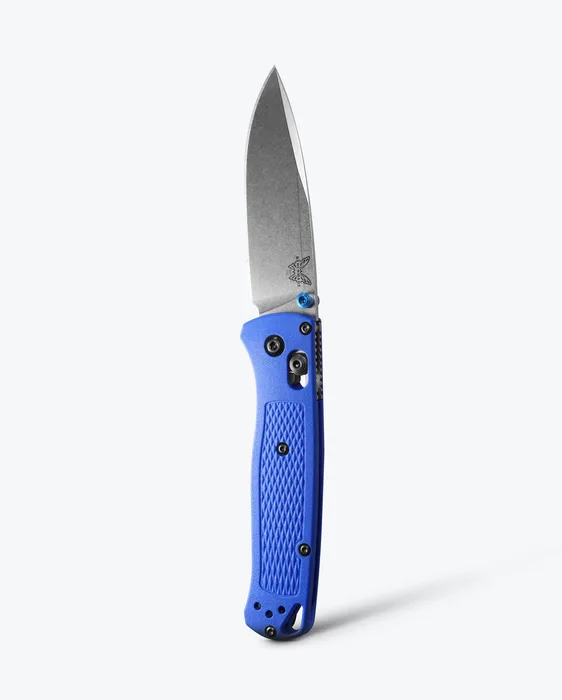
- Buy Benchmade Bugout 535 Under two ounces, premium steel, and the best one-handed lock in the category.
- Buy CIVIVI Elementum The budget folder that publishes more of its own specification than knives costing five times as much.
- It depends Spyderco Delica 4 Lightweight A thirty-year-old Japanese design with the only genuinely ambidextrous clip in this group.
- Skip Gerber Paraframe I One of the best-selling folders in the country, sold without a single published dimension.
What actually matters
- Blade steel - the alloy the blade is cut from. CPM-S30V and VG-10 are stainless steels tuned for different balances of edge holding and ease of sharpening; D2 is a semi-stainless tool steel that holds an edge well and can spot in damp carry.
- Rockwell hardness (HRC) - how hard the steel has been heat treated, quoted as a range like 58-60 HRC. Harder holds an edge longer and chips more readily; softer rolls rather than chips and sharpens faster.
- Weight - the specification most tied to whether the knife gets used. The Benchmade Bugout at 1.85 ounces and the CIVIVI Elementum at 2.89 ounces feel like different categories in a pocket.
- Lock type - what holds the blade open and how you release it. Liner and frame locks are simple and mostly right-handed, back locks are strong and usually two-handed to close, crossbar locks like Benchmade's AXIS work from either side.
- Blade stock thickness - how thick the steel is at the spine. Thinner slices better and is measured in fractions of a millimetre: 2.5mm on the Delica against 3mm on the Elementum is a noticeable difference in food and cardboard.
- Handle material - Grivory and FRN are glass-filled nylons that save weight, G10 is a laminate that is stiffer and heavier, and steel liners inside either add rigidity and mass.
- Pocket clip - how deep it carries and whether it moves. A four-position clip covers left and right and tip-up and tip-down; a fixed clip decides for you.
The specs, in plain English
Green flags vs red flags
Green flags
- The steel is named and a hardness range is given alongside it.
- A weight is published in ounces or grams.
- Blade length, closed length and blade stock thickness are all listed.
- The clip positions are stated, not just that a clip is included.
- A warranty or a sharpening service is described on the product page.
Red flags
- The blade is described only as stainless steel.
- No weight and no blade length anywhere in the listing.
- Photographs only, with a paragraph of copy in place of a specification block.
- A skeletonised or cut-out handle sold on looks, with no mention of grip under load.
- Assisted or automatic opening advertised without any note about local legality.
Who's who: the brands
- Benchmade - Oregon manufacturer known for the AXIS crossbar lock, a lifetime warranty and a free sharpening service.
- Spyderco - Colorado company whose Japanese-made Delica and Endura popularised the opening hole and the clip-carry folder.
- CIVIVI - Value line from WE Knife, known for publishing full specifications on inexpensive G10 and D2 folders.
- Gerber - Portland brand with a wide hardware-store presence, including the open-frame Paraframe series.
- Kershaw - Part of Kai USA alongside Zero Tolerance, best known for affordable assisted-opening folders.
How to read a listing without getting fooled
Find the specification block before you read a word of the copy. You want four numbers: blade length, closed length, weight and blade stock thickness, plus the steel with its hardness. A listing that gives all five has been engineered and measured. A listing that gives none has been photographed. After that, read what holds the blade open, and match it to how you use a knife: if you often have one hand full, a crossbar lock is worth real money, and if you are left-handed, look for a four-position clip before anything else. Treat handle material names as weight indicators, since FRN and Grivory are light and flexible while G10 over steel liners is stiff and heavy. Finally, check whether a warranty is described at all, because in this category most listings do not mention one.
How much should you spend?
Pocket knives span a wider price range than almost any small tool, and the useful part of that range is narrow. The budget tier now buys a genuinely good knife: named tool steel, G10 scales, steel liners and a bearing pivot are all available there, which was not true a decade ago. The mid-range is where the Japanese and American classics sit, and what you are buying is a design with a long service record, better steel and usually a better clip. The premium tier buys weight savings, a crossbar lock, domestic manufacture and a warranty that matters if you carry the knife every day for years. Above that, you are buying materials and finish rather than function. The genuinely poor value is the cheap hardware-store folder, which costs about the same as a well-specified budget knife and tells you nothing about itself.
Questions, answered
How often does a pocket knife need sharpening?
It depends far more on what you cut than on how often. Cardboard and rope dull an edge quickly; opening letters and food barely touches it. A steel like CPM-S30V will go noticeably longer between sharpenings than VG-10, and take longer to bring back when it does. A practical habit is a few passes on a ceramic rod when the knife stops cutting paper cleanly, rather than waiting until it is genuinely blunt.
Is a serrated edge worth having?
Only for specific jobs. Serrations cut rope, webbing and fibrous material better than a plain edge and stay usable longer once dull, which is why they appear on rescue and marine knives. They are worse at everything else, especially food and clean slicing, and they are much harder to sharpen at home. Partially serrated blades compromise both ways. For general carry, a plain edge is the right default.
What does deep carry mean on a pocket clip?
A deep carry clip sits the knife lower in the pocket so that less of the handle shows above the seam, sometimes only the clip itself. It is more discreet and less likely to snag, and it makes the knife slightly slower to draw. Benchmade fits a mini deep carry clip to the Bugout. Standard clips leave half an inch or more of handle proud of the pocket.
Can I put any knife in a dishwasher or leave it wet?
No. Even stainless blades have carbon steel springs, bearings or pivot hardware in places, and a dishwasher will attack the handle material and any coating too. Semi-stainless tool steels like D2 will spot from damp carry alone. Rinse, dry, and put a drop of light oil on the pivot occasionally, which is most of the maintenance a folder ever needs.
Or jump to the head-to-head: Benchmade Bugout 535 vs CIVIVI Elementum.