

Outdoors & Fitness
The Best Pocket Knives: 4 Compared (and One to Skip)
We compared four everyday carry folders on published blade steel, blade length, weight, lock type and how each one actually rides in a pocket.
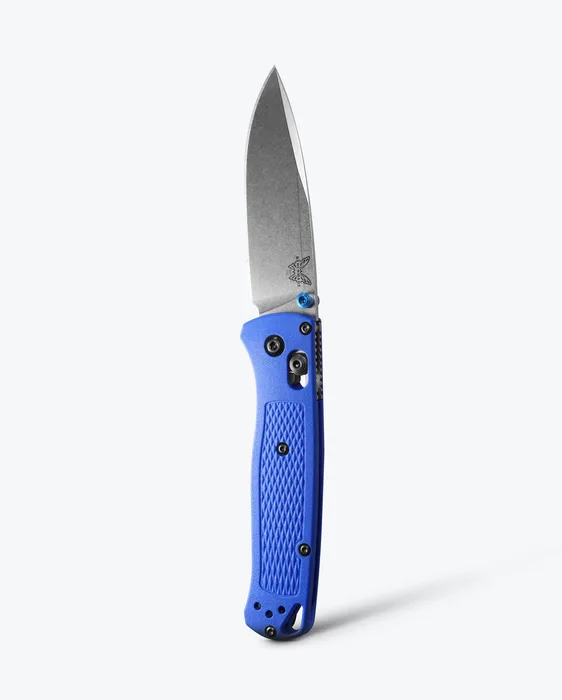
The short version
The Benchmade Bugout 535 is the one to buy if you want to stop thinking about it: 1.85 ounces with a 3.24 inch CPM-S30V blade, the AXIS lock that opens and closes one-handed from either side, and a lifetime warranty with free sharpening from a knife made in Oregon City. The CIVIVI Elementum is the value pick and the most knife per pound anywhere here, with a 2.96 inch D2 blade on caged ceramic bearings, G10 scales over steel liners, and a published spec sheet down to the pivot design. The Spyderco Delica 4 Lightweight is the specialist's answer, a 2.6 ounce Japanese back-lock with VG-10 and the only four-position ambidextrous clip in this group, and it looks like nothing else on the shelf. The Gerber Paraframe I is the one to skip: a skeletonised open frame that Gerber's own product page describes without publishing a blade length, a weight or a steel type. Best for: anyone who wants a folder they will still be carrying in five years.
Our picks at a glance
- Benchmade Bugout 535 - Buy. Under two ounces, premium steel, and the best one-handed lock in the category.
- CIVIVI Elementum - Buy. The budget folder that publishes more of its own specification than knives costing five times as much.
- Spyderco Delica 4 Lightweight - It depends. A thirty-year-old Japanese design with the only genuinely ambidextrous clip in this group.
- Gerber Paraframe I - Skip. One of the best-selling folders in the country, sold without a single published dimension.
The verdict in 30 seconds
What mattered most
- Blade steel
- Blade length
- Weight
- Closed length
- Lock type
- Pocket clip
A pocket knife is a tool you either forget you are carrying or resent all day, and the difference is mostly weight and how the clip sits. Underneath that, the things that separate a folder worth keeping from one that ends up in a drawer are all published numbers: what the blade is made of and how hard it is run, how thick the stock is, what holds it open, and whether the clip can move to the side you actually carry on. The interesting part of this category is how far the published detail varies. Two of the four below give you a full dimensional spec sheet. One gives you a paragraph.
Under two ounces, premium steel, and the best one-handed lock in the category.
Best for: Anyone who carries a knife every day and notices weight, and who wants a lock that works ambidextrously.
- 1.85 ounces with a 3.24 inch blade, the lightest knife here by a full ounce.
- CPM-S30V run at 58-60 HRC, a stainless steel chosen for edge holding rather than ease of sharpening.
- The AXIS lock opens and closes with either hand and keeps your fingers out of the blade path when you close it.
- The Grivory handle is light but flexes noticeably compared with a G10 or steel-lined scale.
- The clip is tip-up right carry only on this configuration, with no four-position option.
- S30V is harder to bring back to a fine edge at home than softer stainless.
- It is several times the price of the CIVIVI and gives up 0.28 inches of blade to it in closed length efficiency.
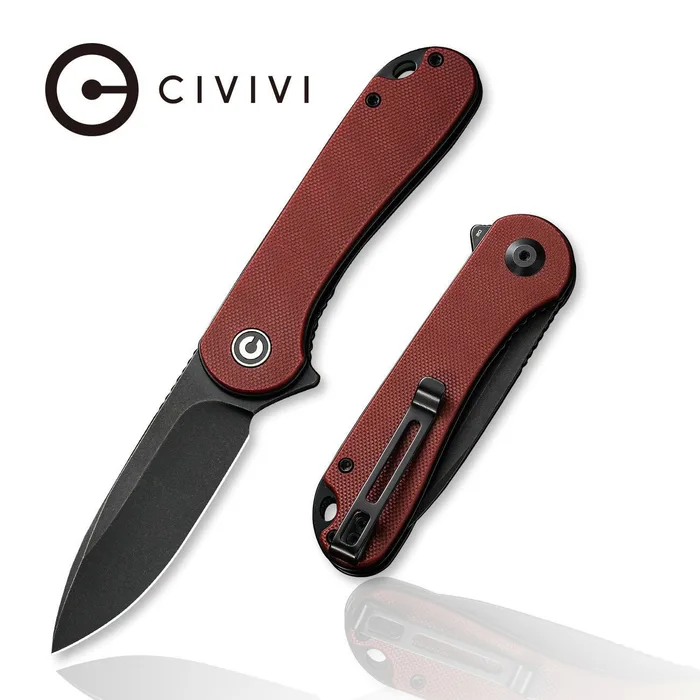
The budget folder that publishes more of its own specification than knives costing five times as much.
Best for: A first serious folder, or a knife you would rather lose than worry about.
- Full published spec sheet: 6.99 inches overall, 2.96 inch blade, 4.03 inches closed, 0.12 inch blade stock.
- D2 tool steel at 58-60 HRC on a caged ceramic ball bearing pivot, which is why it drops open the way it does.
- G10 scales over stainless liners, a construction usually reserved for knives well above this price.
- D2 is a semi-stainless tool steel and will spot if you carry it wet and forget about it.
- At 2.89 ounces it is the heaviest knife here despite having a shorter blade than the Bugout.
- The clip is tip-up right carry only, so left-handed carry means living with it.
- CIVIVI does not publish a country of origin or a warranty on the product page.
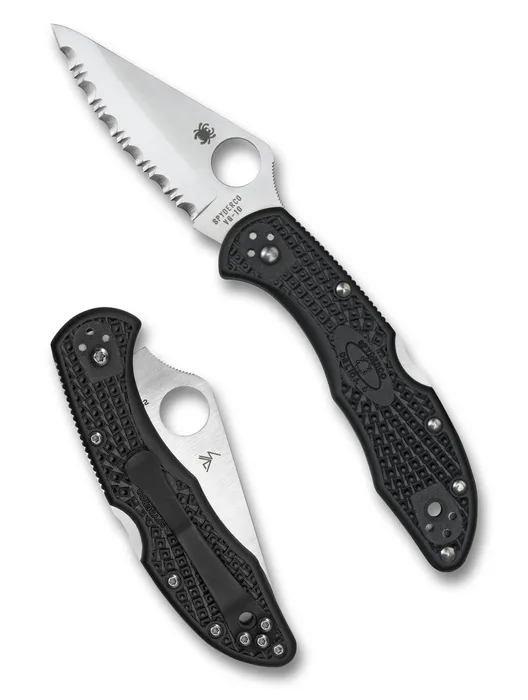
A thirty-year-old Japanese design with the only genuinely ambidextrous clip in this group.
Best for: Left-handed carriers, and anyone who values a clip that adapts over a knife that looks conventional.
- A four-position pocket clip, so left or right, tip-up or tip-down, is a choice rather than a constraint.
- 2.6 ounces with a 2.9 inch VG-10 blade, made in Japan, with skeletonised steel liners inside the FRN handle.
- The Bi-Directional Texture pattern on the handle grips wet without the abrasiveness of coarse G10.
- The back lock needs two hands to close safely, unlike the Bugout's AXIS lock.
- VG-10 holds an edge less long than S30V, though it is easier to sharpen back.
- The large opening hole and the blade profile are divisive, and it is the least discreet knife here.
- At 0.098 inch blade stock it is the thinnest here, which is good for slicing and less good for prying, which you should not do anyway.
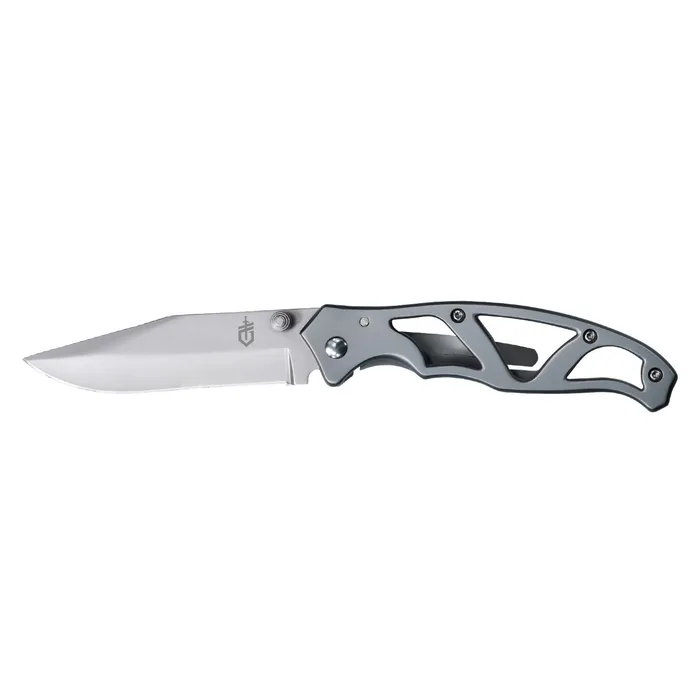
One of the best-selling folders in the country, sold without a single published dimension.
Best for: A drawer or a toolbox, where losing it costs nothing and you will not use it hard.
- The open skeletonised frame is genuinely easy to rinse clean, which matters for a knife used on food or bait.
- It is cheap enough to keep in a glovebox and not care about.
- Gerber offers it in plain and serrated edges and in two frame sizes.
- Gerber's product page publishes no blade length, no weight and no steel type.
- The skeletonised frame is the ergonomic problem: the cutouts press into your hand under any real force.
- The integrated frame clip is fixed, so carry side and orientation are not adjustable.
- Every other knife here tells you what its blade is made of, which is the first question to ask about a knife.
| Criteria | Bugout 535 Top pick | Elementum | Delica 4 Lightweight | Paraframe I |
|---|---|---|---|---|
| Verdict | Buy it | Buy it | It depends | Skip it |
| Best for | Anyone who carries a knife every day and notices weight, and who wants a lock that works ambidextrously. | A first serious folder, or a knife you would rather lose than worry about. | Left-handed carriers, and anyone who values a clip that adapts over a knife that looks conventional. | A drawer or a toolbox, where losing it costs nothing and you will not use it hard. |
| Price tier | $$ · premium | $ · budget | $ · mid-range | $ · budget |
| Blade steel | CPM-S30V, 58-60 HRC | D2, 58-60 HRC | VG-10 | Not published |
| Blade length | 3.24 in / 82mm | 2.96 in / 75mm | 2.9 in / 74mm | Not published |
| Weight | 1.85 oz / 52g | 2.89 oz / 82g | 2.6 oz / 74g | Not published |
| Closed length | 4.22 in / 107mm | 4.03 in / 102mm | 4.25 in / 108mm | Not published |
| Lock type | AXIS lock | Liner lock | Back lock | Frame lock |
| Pocket clip | Mini deep carry, tip-up | Tip-up, right carry | Four-position, ambidextrous | Fixed, part of the frame |
| Handle | Grivory | G10 over stainless liners | FRN over skeletonised liners | Open stainless frame |
| Stated country of manufacture | Oregon City, USA | Not published | Japan | Not published |
Which one is right for you?
- Anyone who carries a knife every day and notices weight, and who wants a lock that works ambidextrously. Buy it Benchmade Bugout 535
- A first serious folder, or a knife you would rather lose than worry about. Buy it CIVIVI Elementum
- Left-handed carriers, and anyone who values a clip that adapts over a knife that looks conventional. It depends Spyderco Delica 4 Lightweight
- A drawer or a toolbox, where losing it costs nothing and you will not use it hard. Skip it Gerber Paraframe I
How we judged the field
Five things decide whether a folder gets carried. Weight comes first and is the most underrated: a knife you notice in your pocket is a knife you eventually leave at home, and the spread here runs from 1.85 ounces to nearly three. Second is the steel and the hardness it is run at, because those two numbers together set how long an edge lasts and how much work it is to bring back. Third is the lock, which determines whether the knife can be opened and closed one-handed and whether your fingers pass through the blade path on the way. Fourth is the clip: how deep it carries, whether it can move, and whether it will tear a pocket seam. Fifth is what the maker is willing to publish, which in this category is a sharper divider than price.
The field splits by where the money goes. The premium American folders spend it on light handles, bearing or bar locks and a warranty, which is the Benchmade position. The value end of the market, now dominated by Chinese-made knives to genuinely good specifications, spends it on materials you can list: G10, steel liners, ceramic bearings, named tool steel. The Japanese classics sit apart, built around a design frozen decades ago and refined since, which is the Spyderco position. And below all of it sits the hardware-store folder, which sells on price and a photograph. We took one of each.
The Bugout is what happens when a knife company treats weight as the primary specification. It is 1.85 ounces, which is roughly the weight of a pen, and it carries a 3.24 inch CPM-S30V blade at 58-60 HRC, so nothing has been given up on the cutting end to get there. The savings come from the handle: Grivory, a glass-filled nylon, with no steel liners. That is also the honest trade, because the scales flex if you squeeze them hard, and people who expect a slab of G10 notice immediately. The lock is the reason to buy it. Benchmade’s AXIS bar is spring-loaded and accessible from both sides, so the knife opens one-handed, closes one-handed, and closes without your fingers crossing the path the blade takes. It is 4.22 inches closed with a mini deep carry clip that puts almost the whole knife below the pocket line. Benchmade makes it in Oregon City, covers it for life and will sharpen it for free. For a knife you intend to carry daily for years, that combination is hard to argue with.
The Elementum is the knife that made the budget category serious, and reading its spec sheet shows why. CIVIVI publishes everything: 6.99 inches overall, a 2.96 inch blade, 4.03 inches closed, 0.12 inch blade stock, 0.43 inch handle thickness, 2.89 ounces, D2 at 58-60 HRC with a hollow grind and a black stonewashed finish, G10 scales, stainless liners, and a caged ceramic ball bearing pivot. That last item is why the flipper action feels the way it does, and it is a detail most knives at this price do not have, let alone print. The compromises are real but narrow. D2 is a semi-stainless tool steel, so it will develop spots if you carry it wet and ignore it. It is the heaviest knife in this comparison despite having a shorter blade than the Bugout, because liners and G10 weigh what they weigh. The clip is tip-up right carry only. And CIVIVI does not state a country of origin or a warranty on the page. None of that stops this being the most sensible first serious folder on sale.
The Delica has been in production since 1990, which in this category counts as an argument. The current Delica 4 Lightweight is 7.11 inches overall, 4.25 inches closed, with a 2.9 inch VG-10 blade on 0.098 inch stock, a 2.56 inch cutting edge, and a weight of 2.6 ounces. It is made in Japan. The handle is fibreglass-reinforced nylon with skeletonised stainless liners nested inside it and Spyderco’s Bi-Directional Texture pattern moulded into the surface, which holds in the wet without the sandpaper feel of aggressive G10. The feature that earns it a place is the four-position clip: left or right, tip-up or tip-down, all without buying anything. Two things make it a depends rather than a buy. The back lock is safe and strong but wants two hands to close, which after the Bugout feels like a step back. And the knife is conspicuous. The big opening hole and the humped spine are instantly recognisable, and that is either the appeal or the reason you will not carry it.
The Paraframe is one of the most widely sold folding knives in the country, and Gerber’s own product page for it consists of a marketing paragraph. There is no blade length. There is no weight. There is no steel type. For a category where the first question anyone asks is what the blade is made of, that absence is the review. What the page does describe is the design: an open, skeletonised stainless frame with a frame lock and an integrated clip, which Gerber positions as minimalist and easy to clean. Both of those are true, and if your use case is rinsing fish slime off a knife it is a genuine advantage. The problem is what the cutouts do to your hand. Under any real cutting force the edges of the skeletonised frame press into your palm and fingers, and that is exactly when you want a handle to be comfortable. The clip is part of the frame, so carry position is fixed. At this price the CIVIVI exists, publishes its entire specification and is a better knife in every measurable way.
Benchmade Bugout 535 vs CIVIVI Elementum: which should you buy?
The Bugout and the Elementum bracket the sensible range, and the decision is genuinely about money rather than compromise. The Bugout buys you an ounce less weight, a longer blade, a better steel, a lock that works from either hand, a warranty for life and free sharpening. Those are real and they compound over years of daily carry. The Elementum buys you the same published transparency, better materials in the handle, a bearing pivot that feels superb, and change left over. If you have never carried a good folder and are not sure you will, the Elementum answers the question at low cost.
There is a practical tiebreaker. The Bugout is meaningfully lighter, at 1.85 ounces against 2.89, and in this category weight is what determines whether a knife is in your pocket on the day you need it. If you wear light trousers, carry a phone and keys already, or have ever taken a knife out because it was dragging, the Bugout is worth the difference. If your pocket already contains a multi-tool and a torch, the extra ounce will not register and the Elementum is the smarter buy. Left-handed readers should note that neither has an adjustable clip, which is what pushes them toward the Spyderco.
What to look for
- A named steel with a hardness figure: “CPM-S30V, 58-60 HRC” tells you something, and “stainless steel” tells you nothing.
- Published weight in ounces or grams: it is the specification that decides whether you actually carry the knife, and the spread here is more than a full ounce.
- Which hand the lock works for: an AXIS or crossbar lock is ambidextrous, a liner lock favours right-handed use, and a back lock usually wants two hands to close.
- Whether the clip can move: a four-position clip like the Delica’s covers left and right and tip-up and tip-down; a fixed clip makes that decision for you.
- Blade stock thickness: thinner stock like the Delica’s 0.098 inch slices better, thicker stock like the Elementum’s 0.12 inch feels more robust and wedges in deep cuts.
- Whether a warranty is stated: Benchmade publishes a lifetime warranty and free sharpening, and most of this category publishes nothing at all.
Our final take
Pocket knives are a category where the published specification really does predict the experience. The Benchmade Bugout is the one to buy for daily carry: at 1.85 ounces with a 3.24 inch S30V blade and a lock that works from either hand, it is the knife most likely to be in your pocket rather than on a shelf, and the lifetime warranty and free sharpening make the price easier. The CIVIVI Elementum does the same job for a fraction of the money and publishes just as much about itself, which is why it is a genuine value pick rather than a downgrade. The Spyderco Delica 4 is the answer for left-handed carry and for anyone who wants a clip that adapts. And a folder whose maker will not tell you what the blade is made of has told you what you need to know.
Questions, answered
What blade steel should I actually care about?
Care about the pairing of steel and hardness, not the name alone. CPM-S30V at 58-60 HRC, as Benchmade runs it in the Bugout, holds an edge a long time and takes patience to resharpen. VG-10, which Spyderco uses in the Delica, gives up some edge retention and comes back quickly on a stone. D2, in the CIVIVI, is a tool steel rather than a true stainless: it holds an edge well and will spot if you leave it damp. The wrong answer is a knife whose maker does not name the steel at all, because that almost always means unspecified 3Cr or 7Cr stainless.
Is a heavier knife a stronger knife?
Not usefully. The Bugout is the lightest knife here at 1.85 ounces and has the longest blade, because Benchmade put the weight savings into the handle rather than the blade. The CIVIVI weighs 2.89 ounces with a shorter blade, and most of that difference is steel liners under G10 scales. Liners add rigidity and a little strength, and they also add the ounce that decides whether you carry the knife on a hot day. For everyday cutting, none of these is close to its strength limit.
What is the difference between a liner lock, a back lock and an AXIS lock?
A liner lock uses a springy leaf of the handle liner that snaps behind the blade tang, and you push it aside with your thumb to close. A back lock uses a rocker bar along the spine of the handle with a notch that drops into the tang, and you press the exposed part of the bar to release, which usually needs both hands to do safely. Benchmade's AXIS lock uses a spring-loaded bar riding in slots on both sides, so you can pull it back with either hand and your fingers never cross the closing blade path. All three are strong enough for cutting; the difference is how you close them.
Does a four-position clip matter if I am right-handed?
It matters less, but it is not only about handedness. A four-position clip, like the Delica's, lets you choose tip-up or tip-down carry as well as left or right, and tip-down suits some pockets and some opening styles better. If you are right-handed and carry tip-up, a fixed clip like the Bugout's or the Elementum's is perfectly fine. If you are left-handed, this is the single biggest usability difference in this group and it eliminates two of the four knives.
How do I know whether a knife is legal to carry where I live?
Blade length limits, lock type restrictions and rules on assisted opening vary by country, state and often by city, and they change. Published blade length is the number those rules are usually written against, which is another practical reason to buy from a maker that prints it: the Bugout at 3.24 inches and the Delica at 2.9 inches fall on different sides of some common limits. Check your own local rules before buying rather than after, and be aware that carrying in a courthouse, an airport or a school is normally restricted regardless of blade length.
Deciding between the top two? See our head-to-head: Benchmade Bugout 535 vs CIVIVI Elementum.
More Outdoors & Fitness reviews
 The Best Pole Saws: 4 Compared (and One to Skip)
  The Best Pull-Up Bars: 4 Compared (and One to Skip)
  The Best Rain Jackets: 4 Compared (and One to Skip)
  The Best Resistance Bands Sets: 4 Compared (and One to Skip)
  The Best Road Bikes for Beginners: 4 Compared (and One to Skip)
  The Best Robot Lawn Mowers: 4 Compared (and One to Skip)