Explained
Polarized Sport Sunglasses, Explained
After reading, you'll understand what polarization does, what a UV claim should say, and which spec-page details separate a good pair from a vague one.
In this guide
First-time buyers often assume polarized means protected, and that a dark lens means UV safe. Neither is true, because glare reduction, tint and UV blocking are three different features. Makers also use soft words like impact-resistant and UV protection that sound official but name no standard. Knowing which words can be checked makes a spec page much easier to read.
The 30-second version
- Polarization cuts glare, it does not block UV.
- UV400 is checkable, while "UV protection" alone tells you little.
- Tint category sets how dark the lens is, so match it to your light.
- Impact-resistant is not a rating, so look for a named ANSI or EN number if you need one.
- Replacement lenses extend a pair's life, but only some makers list them for each model.
The products this guide is about
Our verdict on each, with the full reasoning on the companion review.
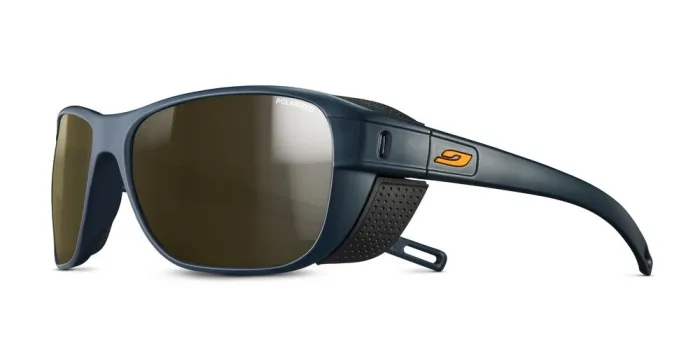
- Buy Julbo Camino Spectron Polarized The best-documented pair here, with polarization, light transmission, weight and frame material all stated.
- Buy Goodr Panther's Power Hour (Cheetah G) A budget running and hiking pair that states UV400, polarization and a lens material.
- It depends Smith Riptide XL A large-coverage lifestyle frame with ChromaPop polarized lenses, at a premium that buys color more than documentation.
- Skip Knockaround Premiums A popular fashion pair whose page leaves out the details an outdoor buyer needs.
What actually matters
- Polarization - Polarized lenses reduce glare from flat reflective surfaces such as water and wet roads. A number like 99% is more useful than the word alone.
- UV protection - This comes from the lens material or a coating, not from polarization or tint. UV400 or a named standard is easier to check than a general claim.
- Tint category - A category 3 lens is a dark tint for bright conditions, while lighter categories suit dim light. Pick based on where and when you wear them.
- Light transmission - Often shown as VLT, it is the percentage of light that passes through. A lower number means a darker lens.
- Lens material - Polycarbonate is light and common, while glass is offered by some makers at a higher tier. Check the page names it.
- Frame weight and grip - Weight in grams and non-slip pads decide whether you wear the pair all day.
- Replacement lenses - Being able to swap a scratched lens saves the frame, but only if the maker sells a lens that fits your exact model.
The specs, in plain English
Green flags vs red flags
Green flags
- Polarization stated for the exact lens, ideally with a percentage
- UV400 or a named UV standard written in the page text
- Frame weight given in grams
- A named lens material and frame material
- Grip pads and a replacement lens or parts page for the model
Red flags
- One product name covering both polarized and non-polarized lens options
- A UV claim shown only in a graphic
- Impact-resistant with no standard named
- No weight, lens material or replacement information
- Gas-station price paired with large performance claims
Who's who: the brands
- Julbo - A mountain eyewear maker whose pages list lens category, light transmission and frame weight.
- Goodr - A budget sport brand known for running and outdoor frames with UV400 and no-slip grips.
- Smith - Known for its ChromaPop color technology and a replacement lens program.
- Knockaround - A budget fashion-leaning brand with a lifetime warranty and many lens options per frame.
How to read a listing without getting fooled
Start with the lens line and confirm it says polarized for the exact colorway you want. Then look for a UV statement in text, a lens material, a frame weight and a note on grip. Check whether the maker sells replacement lenses or parts for that exact model, and whether any impact standard is named. If a page leaves several of those out, assume the maker could not or did not want to state them.
How much should you spend?
Budget pairs can state UV400 and polarization well, so a low price is not a reason to avoid them, but expect fewer documented details and a pair you replace. Mid-range pairs tend to give more numbers, such as polarization percentage and weight, and sometimes parts. Premium pairs add lens technology and glass options, but the price does not guarantee more published detail, so judge by the page, not the tier.
Questions, answered
Do dark lenses mean more UV protection?
No. Tint darkness controls how much visible light reaches your eye, while UV blocking is a separate property. A very dark lens without UV protection can be worse than a light one, because your pupil opens wider and lets in more UV. Look for a UV400 or named UV statement regardless of tint.
Is mirror coating the same as polarization?
No. A mirror coating reflects some light off the front of the lens and changes its look. Polarization is a filter inside the lens that targets glare. Many pairs have both, but one does not imply the other.
Will polarized lenses work with my phone or dashboard?
Some screens can look dim or patchy through polarized lenses. Tilting your head can change how they look. Try the pair with the screens you use most before relying on it for driving.
Why does the frame material matter?
A lighter frame with grip pads is more comfortable on long days and stays put when you sweat. The material also affects how flexible it is and whether the maker offers parts. Julbo, for example, sells temples and nose pieces for some models.
Or jump to the head-to-head: Julbo Camino Spectron Polarized vs Goodr Panther's Power Hour (Cheetah G).