Explained
Pickleball Paddles, Explained
After reading this, you'll be able to look at any paddle listing and know whether it's built for power, control, or forgiveness - and which of those your game actually needs.
In this guide
Pickleball paddles have gone from simple wood-and-graphite slabs to engineered equipment with thermoformed carbon faces, foam-injected edges, and flexing frames - and the marketing jargon has exploded along with the technology. The trap for first-time buyers is shopping by brand hype or price instead of by play style, because a paddle built for a power player will actively fight a touch player, and vice versa. The good news: only a handful of specs really matter, and once you can read them, the whole market makes sense.
The 30-second version
- Core thickness is the single most useful spec: thicker cores (16-20mm) absorb pace for control and forgiveness, thinner cores (under 14mm) rebound the ball for power.
- A textured carbon face is the modern baseline - it grips the ball for spin, and smooth graphite or fiberglass faces are a generation behind, even at budget prices.
- Shape is a trade, not an upgrade: elongated paddles add reach and leverage but shrink the sweet spot; widebody shapes forgive mishits but give up reach.
- Match the paddle to how you win points, not to what the pros use - power paddles amplify errors as readily as winners if your soft game isn't ready.
- Durability and warranty matter more than they used to, because modern thermoformed paddles have had industry-wide core-softening and breakage issues.
The products this guide is about
Our verdict on each, with the full reasoning on the companion review.
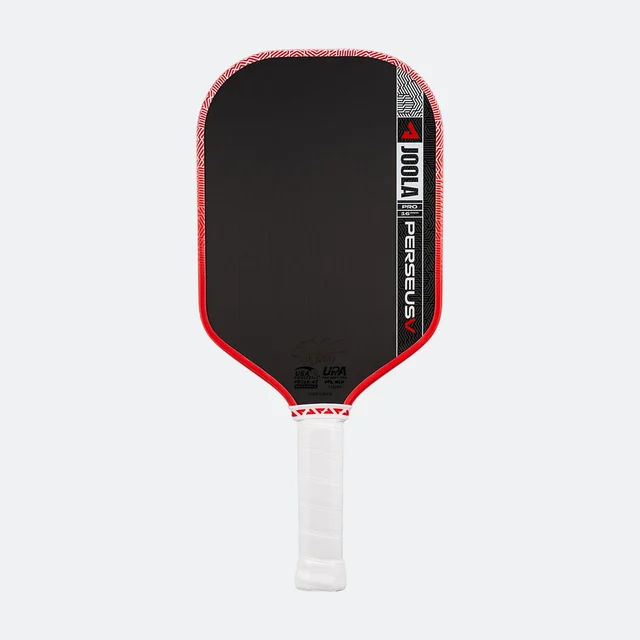
- Buy JOOLA Perseus Pro V 16mm The current benchmark all-court paddle: elite spin and easy power with enough control to stay honest.
- Buy Selkirk LUXX Control Air Invikta The control paddle to beat: a thick, plush face that soaks up pace and drops the ball wherever you point it. Amazon
- It depends Paddletek Bantam TKO-C 12.7mm One of the hardest-hitting paddles you can buy - thrilling if you can handle it, chaotic if you can't. Amazon
- Skip ONIX Graphite Z5 A beloved beginner classic whose dated graphite-and-nomex design has finally been lapped by modern budget paddles. Amazon
What actually matters
- Core thickness - the number that tells you what a paddle is for. Thick (16-20mm) cores soak up an opponent's pace so dinks, drops, and resets feel controlled; thin (under 14mm) cores spring the ball back for pop and put-away power. Most improving players are happiest in the 14-16mm middle.
- Face material - textured or raw carbon fiber grips the ball and generates the topspin that defines the modern game. A smooth graphite or fiberglass face costs you spin no matter how good your technique is, which is why even budget paddles have moved to carbon.
- Shape - elongated paddles extend your reach at the net and add leverage on drives, but concentrate the sweet spot; widebody paddles put a big forgiving hitting zone where beginners actually make contact. Attackers lean elongated; new players lean widebody.
- Weight and balance - a head-heavy paddle plows through the ball for power but slows your hands in fast exchanges; a head-light paddle is quicker in hand battles. Static weight matters less than how the weight is distributed, which is why demoing beats reading spec sheets.
- Sweet spot and forgiveness - how the paddle behaves when you miss the center, which happens constantly at every level. Thicker cores, widebody shapes, and clever frame designs all enlarge the effective sweet spot; thin elongated power paddles shrink it.
- Durability and warranty - thermoformed construction made paddles more powerful but introduced core-softening and breakage problems across the industry. A maker's track record and warranty terms are now a genuine buying criterion, not fine print.
- Approval status - if you'll ever play a sanctioned event, the paddle must be on the governing body's current approved-equipment list, and standards have tightened recently. Casual players can ignore this; competitors can't.
The specs, in plain English
Green flags vs red flags
Green flags
- A textured or raw carbon face on any paddle, including budget ones - it's the single biggest spin upgrade.
- Core thickness clearly stated and matched to the paddle's claimed purpose (thick for control models, thin for power models).
- A real warranty with a track record of being honored - some makers offer limited lifetime coverage and owners confirm the service.
- Current approval for sanctioned play from the sport's governing body, listed by exact model name.
- Owner reports spanning months of play that don't mention the core going dead or the face losing grit.
- Independent testing that measures spin and power rather than just repeating the maker's marketing claims.
Red flags
- A smooth graphite or fiberglass face marketed as premium - that's a previous-generation design regardless of the price.
- No core thickness listed anywhere, or vague language like 'tournament core' with no number.
- Power-paddle marketing aimed at beginners - thin, lively paddles punish developing players and teach bad habits.
- A pattern of owner complaints about core crushing, dead spots, or delamination within a season.
- Miracle claims of maximum power AND maximum control in one paddle - physics makes that a trade-off, and honest makers say so.
- Deep-discount clones with copied cosmetics but no approval listing and no warranty support behind them.
Who's who: the brands
- JOOLA - Table-tennis heritage brand that became a pickleball flagship maker; its Perseus line is one of the best-known all-court paddles in the sport.
- Selkirk - Pickleball specialist known for control-oriented designs, edgeless aerodynamic builds, and a limited lifetime warranty.
- Paddletek - Long-running pickleball maker whose Bantam line includes thin-core, power-oriented paddles.
- ONIX - One of the sport's classic names - its Graphite Z5 widebody taught a generation to play, though its smooth-face design now trails modern budget carbon paddles.
- Six Zero - Newer direct-to-consumer brand selling carbon-face paddles below flagship prices.
- CRBN - Carbon-face specialist aimed at spin-focused players.
How to read a listing without getting fooled
Start with two numbers and one photo. First, find the core thickness - if it's 16mm or more, you're looking at a control-leaning paddle; under 14mm, a power paddle; no number listed is itself a warning. Second, check the face material: 'raw carbon,' 'textured carbon,' or a T-number carbon grade means modern spin capability, while 'graphite' or 'fiberglass' with no texture claim means a dated surface. Then look at the shape in the photo - long and narrow is elongated (reach, smaller sweet spot), short and wide is widebody (forgiveness, less reach). Treat everything else - proprietary frame names, foam acronyms, pro endorsements - as flavor text until independent testing or owner reports confirm it does something. And ignore any listing that promises maximum power and maximum control at once: those pull in opposite directions, and a trustworthy maker tells you which side of the trade its paddle sits on.
How much should you spend?
The biggest performance jump in this category is cheap: moving from a dated smooth-face design to any modern textured carbon paddle transforms spin, and that upgrade now lives at the budget end of the market. The value sweet spot for most improving players is the mid-range, where you get current-generation faces, sensible 14-16mm cores, and decent build quality without flagship pricing. Flagship money buys real but smaller refinements - better power-to-control blending, cleverer frames, more consistent quality - and makes sense once you play several times a week and know your style. Spending more is least worth it for brand-new players, who will outgrow their first paddle's feel before they can exploit a flagship's advantages, and it's most worth it when a premium price also buys a strong warranty, since modern paddles are consumable items whose cores eventually soften.
Questions, answered
What core thickness should I start with?
For most players, 14-16mm is the safe middle: enough absorption for the soft game, enough liveliness for drives. Go thicker (up to 20mm) if you win with placement and patience or want maximum forgiveness; go thinner only once you have the control to handle the extra pop, because thin cores amplify mistakes.
Do I really need a carbon fiber face?
If you plan to play regularly, yes. Textured carbon grips the ball and generates the topspin that keeps aggressive shots in the court - it's the defining weapon of the modern game. Smooth graphite and fiberglass faces can't match that grip, which is why even inexpensive paddles have moved to carbon and why dated smooth-face designs are worth skipping.
Is a power paddle or a control paddle better for a beginner?
Control, almost always. A thicker, more forgiving paddle lets you develop dinks, drops, and resets - the shots that actually win recreational points - while a lively power paddle sends developing swings long and teaches you to steer instead of stroke. Save the thin power paddle for when your soft game no longer needs the training wheels.
How long should a paddle last, and what wears out?
Modern thermoformed paddles can lose liveliness with heavy regular play, and hard hitters wear them faster. The face texture also smooths over time, costing spin. This is why warranty terms and a maker's durability track record are worth weighing as part of the purchase, not as an afterthought.
Does an expensive flagship paddle make you play better?
It helps at the margins, not the fundamentals. The biggest gains come from moving to a modern textured carbon face - which mid-range paddles already have. Flagships add refinement: better blending of power and control, more stable frames, more consistent quality. If your rating is climbing and you play often, they're worth it; they won't fix technique.
What does 'approved for sanctioned play' mean and do I need it?
The sport's governing body tests paddles for legal surface roughness, size, and power, and only listed models may be used in sanctioned tournaments. Casual players can use anything. If you might ever compete, buy from the current approved list and check it by exact model name before an event, since standards have tightened over the past few seasons.
Or jump to the head-to-head: JOOLA Perseus Pro V 16mm vs Selkirk LUXX Control Air Invikta.